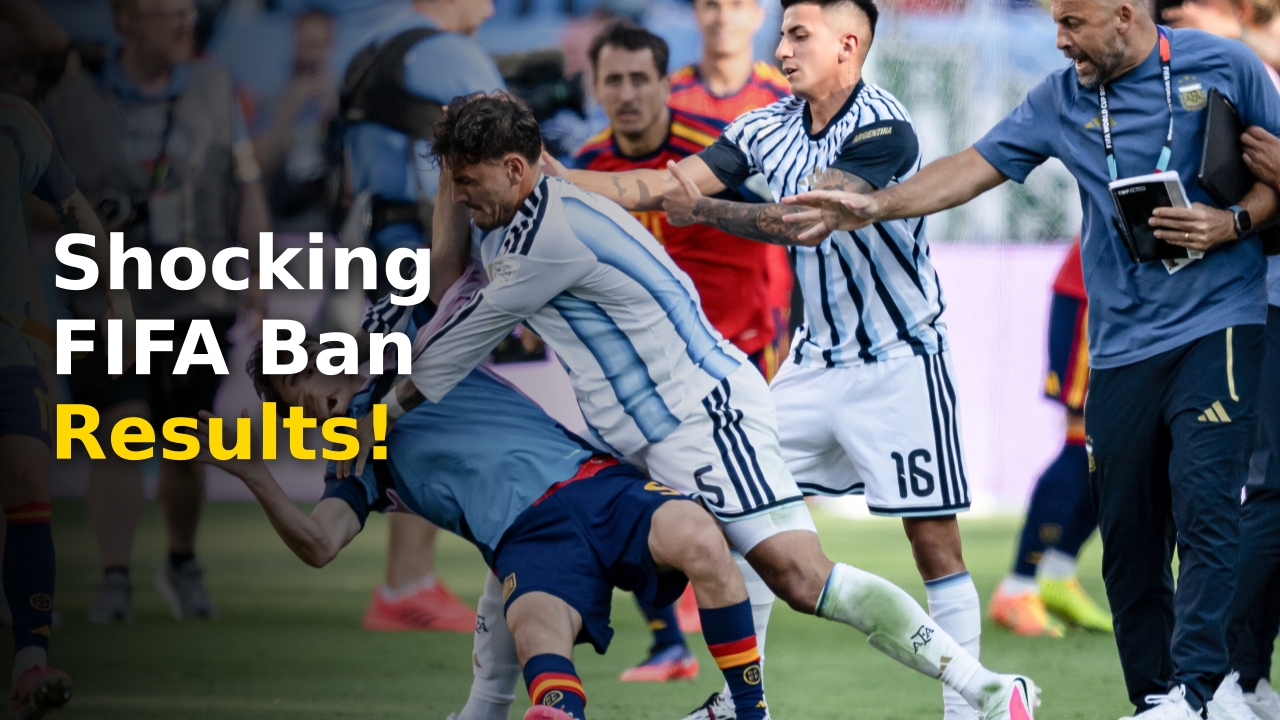
The recent FIFA Ban issued against the Argentina national team has sent shockwaves through the global football community following a violent confrontation at the World Cup final. You might wonder how a moment of pure adrenaline can spiral into a career-altering disciplinary action, but the governing body has made its stance crystal clear. The fallout from the clash with Spain is not just about missed games; it is about a total shift in the landscape for the reigning champions.
This FIFA Ban serves as a stern reminder that even on the world’s biggest stage, conduct remains paramount. Three specific players are now facing the music for their roles in the scuffle that marred an otherwise historic final. While Spain celebrated their second title and a record-breaking 38-match unbeaten streak, Argentina was left to pick up the pieces of a fractured reputation and a depleted roster.
If you are looking for the latest insights into how these sanctions affect your favorite stars, you can find more at the [latest football celebrity news](https://brightcelebrity.com/) website. The emotional weight of the loss, combined with the physical nature of the extra time period, created a powder keg that eventually exploded. FIFA’s disciplinary committee did not hesitate to drop the hammer, ensuring that the consequences would be felt for years to come.
FIFA Ban: Chaos Erupts in Final
The tension during the World Cup final was palpable from the opening whistle. Spain dominated possession, leaving Argentina frustrated and chasing shadows for most of the match. When Ferran Torres finally broke the deadlock in the second period of extra time, the mental fatigue of the South American side turned into visible aggression. The atmosphere turned toxic as players from both benches began to engage in heated verbal exchanges.
Leandro Paredes became the focal point of the controversy. His actions against Eric Garcia and the young phenom Gavi were caught by dozens of high-definition cameras. The image of Paredes grabbing Garcia by the throat is already being compared to the most infamous moments in tournament history. This specific act of violence is what primarily triggered the severe FIFA Ban that now looms over his international career.
The scuffle wasn’t limited to just two players. It was a full-scale melee that required security intervention to prevent further escalation. Nahuel Molina and Thiago Almada were also identified as primary aggressors in the post-match reports. FIFA’s disciplinary code, which can be reviewed in detail on [Wikipedia](https://en.wikipedia.org/wiki/FIFA), provides the framework for these harsh penalties which are classified as assault cases.
You have to consider the psychological state of the Argentina squad at that moment. They had just lost their crown to a Spain team led by the 19-year-old sensation Lamine Yamal. The frustration of being outplayed for 120 minutes finally boiled over into physical violence. It was a sad end to a tournament where Argentina had shown glimpses of brilliance but ultimately failed to keep their composure when it mattered most.
The referees and FIFA officials spent hours reviewing footage from every possible angle. They weren’t just looking at the initial push but the sustained aggression shown by the coaching staff as well. Roberto Ayala, a legendary figure in Argentina soccer, was not exempt from the sanctions. His involvement in the touchline brawl added another layer of embarrassment to the federation.
Fan behavior also played a significant role in the severity of the total package of fines. FIFA noted discriminatory chants coming from the Argentina section throughout the final. This, combined with the players’ actions, created a narrative of a team that had lost its way. The federation now faces a massive rebuilding project both on and off the pitch.

Shocking Penalties for Top Stars
The 10-match FIFA Ban handed to Leandro Paredes is the most significant takeaway from this disciplinary sweep. This isn’t just a slap on the wrist; it is a full-year expulsion from international duty. Since the Argentina calendar only features 10 games through June 2027, Paredes will essentially be a spectator for the foreseeable future. This leaves a massive hole in the midfield that Lionel Scaloni must somehow fill.
Nahuel Molina also faces a daunting path back to the starting lineup. His seven-game suspension means he will miss the bulk of the upcoming friendly schedule and potential competitive matches. FIFA also imposed a staggering $90,000 fine on both Molina and Paredes. For many players, these financial hits are significant, but the loss of competitive minutes is far more damaging to their long-term market value.
Thiago Almada escaped with a lighter one-game ban, but the $30,000 fine still stings. FIFA’s goal was clearly to send a message to the entire federation. They wanted to ensure that no player felt they could act with impunity, regardless of their status or the importance of the match. The collective fines for the players and the federation have now exceeded several hundred thousand dollars.
Key Disciplinary Figures
- Leandro Paredes: 10-match ban for physical assault on Eric Garcia and Gavi.
- Nahuel Molina: 7-match ban for involvement in the secondary scuffle.
- Thiago Almada: 1-match ban for unsporting behavior post-match.
- Roberto Ayala: 3-game ban for coaching staff misconduct.
- Gavi: 1-match ban for his role in the Spain retaliation.
The Argentina soccer federation is also reeling from a $110,000 fine. This penalty covers a range of incidents, including the display of a political banner regarding the Falkland Islands. FIFA has long maintained a strict policy against political messaging during matches, and the semifinal win against England was seen as the primary catalyst for this specific violation.
Additionally, the federation must spend $100,000 on mandatory anti-racism projects. This is a direct response to the reports of fan behavior in the stands. While Argentina walked away with $34 million in prize money, the combined fines and mandatory spending have significantly chipped away at those winnings. The financial cost of this loss is proving to be much higher than just the gold medals they missed out on.
Historical Context of FIFA Sanctions
To understand the weight of this FIFA Ban, we have to look back at the 2014 World Cup in Brazil. Back then, Luis Suarez shocked the world by biting Giorgio Chiellini during a group-stage match. The ensuing four-month ban from all soccer activities was considered the gold standard for severe FIFA penalties. The current 10-match ban for Paredes sits comfortably alongside that landmark decision.
FIFA has become increasingly aggressive in its pursuit of on-field discipline. In the past, scuffles were often handled with simple yellow cards and minor fines. However, the rise of global broadcasting and the emphasis on “Fair Play” have forced the organization to take a harder line. The classification of these incidents as “assault cases” marks a significant shift in how violence is viewed within the sport.
| Player Name | Ban Length | Financial Penalty | Incident Year |
|---|---|---|---|
| Leandro Paredes | 10 Matches | $90,000 | 2024 |
| Luis Suarez | 4 Months / 9 Games | $100,000 | 2014 |
| Nahuel Molina | 7 Matches | $90,000 | 2024 |
| Roberto Ayala | 3 Matches | $30,000 | 2024 |
When you compare these numbers, it’s obvious that FIFA is no longer playing around. The 10-match threshold for Paredes suggests that the physical contact with Eric Garcia was viewed as a high-level offense. Molina’s seven-game ban also places him in the upper echelon of historically sanctioned players. This isn’t just about one game; it’s about the standard of conduct expected from world-class athletes.
The exclusion of Paredes for an entire year effectively removes a veteran leader from the locker room. This could have a ripple effect on younger players who look up to him. The FIFA Ban serves as a cautionary tale for any athlete who lets their emotions dictate their actions on the field. The legacy of this final will now always be tied to these disciplinary records.

Political Fallout and Massive Fines
Beyond the physical scuffle, the FIFA Ban context includes a heavy focus on political neutrality. The decision by Argentina players to carry a banner about the Falkland Islands (Islas Malvinas) after their semifinal victory was a calculated risk that backfired. FIFA’s statutes are very clear: political, religious, or personal slogans are strictly forbidden during matches.
The Falklands issue is a deeply sensitive topic in both Argentina and the United Kingdom. By bringing this onto the pitch, the players invited scrutiny that ultimately hurt their federation’s bank account. The $110,000 fine for this and other incidents is a clear signal that the football pitch is not a place for geopolitical debate. This adds to the sense that the team was distracted by external issues during the tournament.
Fans weren’t helping the situation either. The reports of discriminatory chants forced FIFA to take action against the federation as a whole. The requirement to spend $100,000 on anti-racism initiatives is a positive outcome of a negative situation, but it highlights a recurring problem within certain fanbases. FIFA is pushing for a more inclusive environment, and Argentina is now under the microscope.
Breakdown of Federation Penalties
- Political Banner Fine: Significant portion of the total $110,000 penalty.
- Discriminatory Chants: Led to mandatory $100,000 anti-racism project spending.
- Staff Misconduct: Multiple members of the technical area were cited for aggression.
- Failure to Control Players: A general charge leveled against the federation leadership.
You can expect the Argentina federation to appeal these decisions. The path usually leads through FIFA’s internal appeal process and eventually to the Court of Arbitration for Sport (CAS) in Switzerland. However, given the clear video evidence of the assaults, a significant reduction in the FIFA Ban for Paredes seems unlikely. The focus will likely shift to reducing the financial burden and the length of Molina‘s suspension.
The timing of these bans is particularly painful. With no competitive games currently on the schedule for several months, these suspensions will eat into the preparation for the next major cycle. Friendlies are the only place for Argentina to test their new tactics, and they will be doing so without some of their most experienced defenders and midfielders.
Future for Argentina Soccer Squad
What does the future hold for a team that has just lost its title and its top stars to a FIFA Ban? Lionel Scaloni faces the biggest challenge of his managerial career. He must find a way to maintain the team’s competitive edge while integrating new players into the system. The absence of Enzo Fernandez—who was sent off during the final—combined with the long-term bans for Paredes and Molina, creates a defensive crisis.
Spain, on the other hand, is entering a golden era. Gavi’s one-game suspension for his role in the scuffle is a minor hurdle. He will miss a Nations League match against England at Wembley on September 26, but he will be back in the fold shortly after. The contrast between the two teams’ futures couldn’t be more stark. One is ascending to legendary status, while the other is bogged down in legal battles and disciplinary hearings.
The Argentina federation will need to use some of that $34 million prize money to fix their internal disciplinary culture. The “anti-racism projects” are just the beginning. They need to address the temperament of their players to ensure that a meltdown like the one seen in the final never happens again. The eyes of the world will be on them during their next international window.
We must also look at the impact on individual careers. A 10-match FIFA Ban can destroy a player’s momentum. Paredes was at a point where he needed consistent minutes to maintain his spot in a competitive European league. Now, he faces a year of training without the reward of representing his country. It is a heavy price to pay for a few seconds of lost temper.
The global audience for soccer is growing, and with it, the demand for professionalism. FIFA is clearly aware that the World Cup final is the ultimate showcase for the sport. By issuing these bans, they are protecting the brand of the tournament as much as they are punishing the individuals. The message is simple: the game is bigger than any one player or any one rivalry.
Ultimate Verdict on Final Scuffle
In the end, the FIFA Ban represents a turning point for international football discipline. The severity of the 10-match suspension for Paredes sets a new precedent for how physical altercations will be handled in the future. You can no longer expect a simple apology to suffice when physical assault is involved. The financial and sporting costs are simply too high to ignore.
As Argentina prepares for a June 2027 return for some of its stars, the team will have to evolve. The era of the aggressive, confrontational style that defined some of their recent successes may have to come to an end. To stay at the top, they must adapt to the modern game where every move is monitored and every foul is scrutinized by a disciplinary committee.
The bottom line is that Spain earned their victory on the pitch, and Argentina earned their penalties off it. This FIFA Ban will be remembered as the final chapter of a tournament that was as controversial as it was exciting. Whether Argentina can bounce back from this remains to be seen, but the road to redemption will be long, expensive, and filled with difficult lessons.
More Like This
For more updates, check out our latest entertainment and sports news.