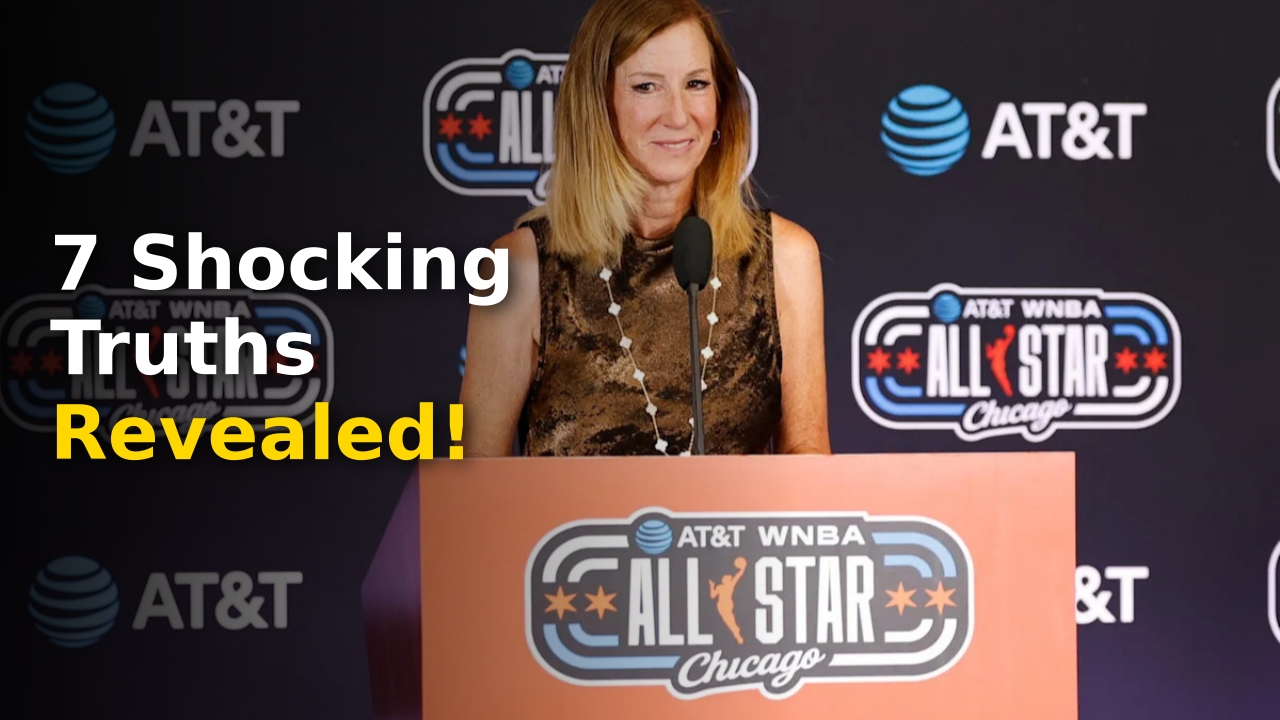
WNBA Divisiveness is reaching a boiling point as league Commissioner Cathy Engelbert sounds the alarm on what she calls the weaponization of women’s professional basketball. You have likely noticed the temperature rising around the league lately, with headlines shifting from incredible three-pointers to intense political debates. The commissioner is making it clear that she believes outsiders are using the league to push specific agendas that have very little to do with the game itself.
During a recent pregame gathering in Dallas, Engelbert sat down with Wings CEO Greg Bibb to address the growing noise. Outside the American Airlines Center, the atmosphere was charged as demonstrators gathered before the Indiana Fever took on the Dallas Wings. This clash of opinions isn’t just happening in the stands; it’s a digital war that is spilling onto the court and into the locker rooms of your favorite players.
The commissioner’s stance is firm: people who have never actually sat through a game or written a single report on the league are now the loudest voices in the room. This influx of new, often critical, attention is creating a friction that the league is struggling to manage. As the WNBA grows in popularity, it is finding itself squarely in the crosshairs of a broader cultural struggle that spans the entire country.
WNBA Divisiveness and the Political Football
WNBA Divisiveness is being fueled by what both Engelbert and NBA Commissioner Adam Silver describe as the league becoming a political football. This term suggests that the sport is being tossed back and forth by different groups to score points in a cultural game that has nothing to do with basketball. You can see this play out every time a controversial topic hits social media, causing a firestorm of comments from people who couldn’t name five players on a roster.
Engelbert pointed out that many individuals driving these heated discussions have never actually engaged with the WNBA as fans or journalists. They are coming from the outside with preconceived notions, looking for a platform to air their grievances. This has created a unique challenge for a league that has traditionally been a tight-knit community of dedicated supporters and athletes.
The commissioner’s frustration was evident as she spoke about the “bad-faith efforts” to demean the players and the organization. When a league becomes a proxy for national debates, the focus often shifts away from the incredible talent and hard work of the athletes. You are seeing a shift where the box score is secondary to the social media discourse surrounding the game.
The Rise of Online Vitriol
- Social media platforms are seeing a massive spike in targeted harassment toward specific players.
- League officials are monitoring digital platforms 24/7 to catch hate speech before it trends.
- Mental health services for players have been significantly expanded to handle the increased pressure.
- Players are being coached on how to handle invasive or politically charged questions during media sessions.
The league’s anti-hate task force, established earlier this year, is working overtime to mitigate this damage. They met virtually on August 12 to discuss the specific issue of online vitriol. The goal is to create a digital safe space for players, but in today’s hyper-connected world, that is proving to be an uphill battle. You can find more about the intersection of celebrity and sports culture in our exclusive sports coverage.
The task force isn’t just looking at the fans; they are also looking at how the league’s own platforms are managed. They want to ensure that the WNBA brand remains inclusive without being swallowed by the divisiveness that plagues other areas of public life. It is a delicate balancing act that requires constant vigilance and a clear understanding of the digital landscape.
Security at arenas is another major focus for Engelbert’s team. As protests become more common outside games, the safety of the fans and the players is paramount. Enhancing conduct standards in the arenas ensures that the physical space remains a place for basketball fans, even as the world outside continues to debate the league’s policies.

Transgender Eligibility and the Task Force
The core of the current WNBA Divisiveness often centers on the complex topic of transgender athletes in women’s sports. The league’s anti-hate task force recently met to discuss this very issue, looking at eligibility and the impact of gender identity on the game. While the August 12 meeting concluded without any immediate changes to the rules, the conversation is far from over.
Currently, the league’s collective bargaining agreement (CBA) states that only players who are women are eligible to play. However, the agreement is relatively silent on the specifics of gender identity or sex assigned at birth. This ambiguity has led to a vacuum that various political and social groups are eager to fill with their own interpretations and demands for change.
Earlier this month, former NBA players Enes Kanter Freedom and Royce White made headlines by claiming they identify as women and declaring eligibility for the draft. This move was seen by many as a direct challenge to the league’s current structure. While the league hasn’t altered its stance, these high-profile declarations have certainly added fuel to the fire and intensified public scrutiny.
Current Eligibility Framework
- The CBA currently restricts eligibility to those who identify as women.
- No specific language exists regarding hormonal requirements or surgical transitions.
- The task force is engaging with stakeholders to refine these definitions in the coming months.
- Stakeholder meetings include medical professionals, legal experts, and player representatives.
Engelbert has been proactive in communicating with team presidents and general managers about these sensitive topics. She distributed a memo this month indicating that the league is committed to addressing the topic of transgender women in basketball head-on. The goal is to reach a consensus that protects the integrity of the game while remaining a modern, inclusive organization.
The task force is looking at four primary areas of focus: social media monitoring, arena conduct, security, and mental health. These pillars are designed to wrap a protective layer around the league during this turbulent time. You are likely to see more official statements as the league prepares for the 2025 season and the potential for new regulations.
Despite the lack of an immediate eligibility change, the WNBA spokesperson emphasized that the league will keep engaging with stakeholders. This suggests that the status quo might be temporary. The league is clearly taking its time to ensure that any decision made is backed by data, legal standing, and the support of the players union.
Timeline of WNBA Divisiveness Events
To understand why WNBA Divisiveness has spiked so sharply, you have to look at the chain of events that started earlier this summer. It wasn’t just one incident, but a series of moments that built on top of each other. From athlete comments to arena security blunders, the timeline shows a league trying to catch up with a rapidly changing narrative.
| Date | Event Description | Impact Level |
|---|---|---|
| April 2025 | Anti-Hate Task Force Established | High |
| July 21 | Sophie Cunningham ESPN Profile | Medium |
| August 12 | Virtual Task Force Meeting | High |
| August 16 | Atlanta Security Incident | Severe |
| Late August | Dallas Protests & Engelbert Comments | Critical |
The Sophie Cunningham profile on July 21 is widely seen as the spark for recent protests. Her comments regarding the exclusion of transgender girls and women from sports drew immediate reactions from both sides of the debate. Since then, groups supporting and opposing her position have been a fixture outside games involving the Indiana Fever.
Things took a turn for the worse during the August 16 game in Atlanta. Security guards asked fans to cover up shirts that carried messages about transgender athletes. This move backfired significantly, leading to a public apology from the league which stated, “This should not have happened.” This incident highlighted the confusion on the ground regarding how to handle free speech in the arena.
Now, with the league admitting its mistake in Atlanta, the door is open for more demonstrators to make their voices heard. The Dallas game was just the latest example of how these issues are following the teams across the country. You are looking at a league that is trying to remain neutral while being forced into the center of a national conversation.

The Future of WNBA Divisiveness
Where does the league go from here? The current state of WNBA Divisiveness suggests that the road ahead will be anything but smooth. Cathy Engelbert is clearly focused on protecting the brand and the players, but the external pressures are mounting. The league’s popularity is a double-edged sword; with more eyes comes more scrutiny and more opportunity for political friction.
The next few months will be crucial as the task force continues to engage with stakeholders. You can expect more refined language regarding eligibility to emerge before the next draft. This will be a high-stakes decision for Engelbert, as it will likely alienate one side of the debate regardless of the outcome. The commissioner’s goal is to ensure the league doesn’t lose its identity in the process.
For the players, the focus remains on the game, but the noise is getting harder to ignore. Indiana Fever games, in particular, have become a focal point for these discussions. As long as the WNBA remains in the spotlight, it will remain a target for those looking to use its platform for broader societal arguments.
What to Expect in 2025
- Potential updates to the Collective Bargaining Agreement regarding gender identity.
- Increased security presence at all high-profile games and draft events.
- More robust mental health support systems for players facing online harassment.
- Clearer directives for arena staff regarding fan attire and messaging.
Ultimately, the league is striving to get back to a place where the focus is strictly on the athleticism and competition. However, in the current climate, that might be a utopian dream. The WNBA Divisiveness is a reflection of the world at large, and the league is just the latest stage for this ongoing drama.
You should keep a close eye on the league’s official statements as they navigate these choppy waters. The decisions made today will shape the future of women’s sports for decades to come. Cathy Engelbert has a massive task ahead of her, and the whole world is watching to see if she can lead the league through this storm without losing its soul.
As the season progresses, the WNBA Divisiveness will either simmer down or explode into something even bigger. For now, the commissioner is standing her ground, calling out the bad-faith actors, and trying to keep the “political football” from deflating the league’s incredible momentum. Whether she succeeds depends on the league’s ability to stay unified in the face of unprecedented external pressure.
More Like This
For more updates, check out our latest entertainment and sports news.