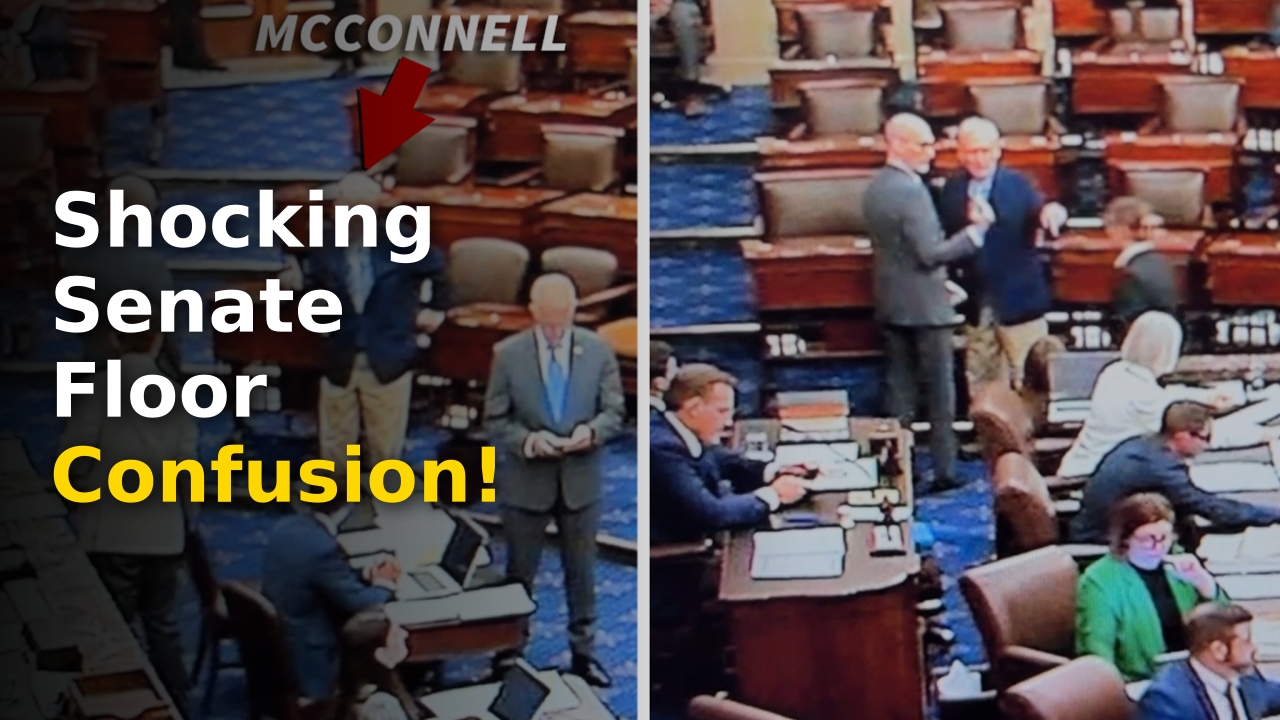
Mitch McConnell is the subject of intense public scrutiny after recent footage surfaced showing the senator appearing disoriented during critical legislative sessions. As you watch the viral clips from the June 4th vote-a-rama, it becomes impossible to ignore the questions surrounding the health and decision-making capabilities of one of the longest-serving leaders in United States political history.
The footage, which has since ignited a firestorm across social media, captures a series of instances where the Senator from Kentucky struggled to navigate basic procedural voting requirements. Whether you are a political enthusiast or a casual observer, these moments raise urgent concerns about the transparency of leadership within the Senate chambers.
Understanding The Mitch McConnell Confusion
The incident occurring on June 4th was anything but standard legislative procedure. During an 18-hour marathon session known as a vote-a-rama, senators were tasked with casting ballots on 29 separate measures. This type of high-pressure environment is designed to test endurance, yet the video evidence shows Mitch McConnell appearing to require significant assistance to identify the correct voting side.
In the first recorded segment, the Senator casts a ‘yea’ vote, only to be approached by his Chief of Staff after a clerk intervenes. The confusion is palpable as they huddle together, resulting in a swift reversal of his initial vote. This cycle of error and correction suggests a disconnect that many voters find alarming given his position of immense power.
Further investigation into the footage reveals Senator Bernie Moreno stepping in to assist. In a moment that feels more like a coach guiding a student than a peer-to-peer political interaction, Bernie Moreno provides a visual prompt—a thumbs down—which the senior senator then mirrors. This reliance on visual cues from fellow legislators highlights a departure from the independence one would expect from a ranking member of the Senate.
Perhaps the most jarring piece of evidence involves the Senate Clerk himself. In the third video clip, the clerk is seen signaling the voting direction by keeping his hand tucked under a desk while indicating a thumbs down gesture. As the clerk makes the signal, the Senator follows suit, effectively outsourcing the cognitive work of his legislative duties to an unelected administrative staffer.
These instances are not isolated, according to reports that span several hours of the marathon session. Observers noted that for nearly six hours, the senator sat in a state of stationary silence while the chamber busied itself with the day’s agenda. This lack of engagement has prompted analysts to look deeper into the physical and mental toll of high-stakes government service.
As we examine the timeline, we see that these events took place just 10 days before the senator required hospitalization. While the official public relations team has remained tight-lipped, the video evidence serves as a primary source that invites the public to draw their own conclusions regarding his readiness to serve. 
Key Concerns From Observers
- Lack of independent decision-making during fast-paced voting sessions.
- Reliance on non-verbal cues from junior senators like Bernie Moreno.
- Proactive intervention by Senate Clerks to prevent voting errors.
- Extended periods of inactivity despite the high volume of legislative action.
Procedural Breakdown Of The Vote-A-Rama
The legislative process is meant to be transparent and decisive. When a member of the Senate is seen struggling with the basic ‘yea’ or ‘nay’ protocol, it disrupts the flow of the entire legislative body. The June 4th marathon session was a grueling test of stamina, but for Mitch McConnell, it became a focal point for media concern regarding his aging process and cognitive focus.
The role of a Chief of Staff typically involves managing logistics, but in these clips, the role shifts toward custodial care. Watching the Chief of Staff physically guide a voting member through a procedural step is highly irregular. It underscores the potential administrative burden of supporting a leader who may no longer be performing at peak cognitive capacity.
Many critics point out that the Senate operates on strict procedural rules that leave little room for error. When a vote is cast incorrectly, the entire count is compromised. The fact that the Senate Clerk had to intervene directly indicates that the institutional machinery of the Senate is compensating for the senator’s visible lapses in real-time.
The psychological impact of being in the public eye while experiencing such moments cannot be understated. If you were in his position, the pressure to maintain a facade of competence would be immense. However, the requirement of the office demands a level of acuity that directly impacts the laws governing millions of American citizens.
Critics argue that the lack of public appearances since June 14th only fuels the speculation. When a high-profile figure retreats from the public eye after a sequence of concerning events, the information vacuum is inevitably filled with rumors and questions. The silence from his office serves as a barrier rather than a bridge to the truth.
Ultimately, the videos do not just record a mistake; they record a pattern. A pattern of hesitation, prompting, and visible confusion that has become a defining narrative of his recent tenure. We must ask whether the institution is equipped to handle such leadership gaps or if the system requires a shift in how it assesses the fitness of its most influential members.
The Data Behind The Legislative Session
To understand the scope of the June 4th events, one must look at the sheer intensity of the work involved. The following table breaks down the intensity of that specific session and the observed incidents.
| Event Metric | Details |
|---|---|
| Session Duration | 18 Hours |
| Total Votes Cast | 29 |
| Incidents of Assistance | 3 Observed |
| Primary Facilitators | Chief of Staff, Senator Moreno, Clerk |
The numbers reflect a high-pressure environment that typically requires sharp mental fortitude. When you compare these incidents to his previous performance records, the deviation is stark. The necessity for third-party intervention at such a high frequency suggests that the standard for legislative participation was not met during this specific window of time.
Observers suggest that this data point is part of a larger trend in aging political figures. The debate regarding term limits and age restrictions in Congress has gained significant traction. This specific incident serves as a primary exhibit for those arguing that the current structure of the Senate creates a liability for national security and policy integrity.
The role of Bernie Moreno in this event also highlights the internal power dynamics at play. When junior members take on a mentorship or guidance role for a leader, it signals a shift in the influence hierarchy. This transition is often subtle but becomes glaringly obvious in the high-definition context of video evidence.
We must also consider the administrative costs associated with providing this level of support. Senate staff are paid by taxpayers to facilitate the legislative process, not to provide one-on-one nursing or guidance for individual members. The cost-benefit analysis of this arrangement is a topic that deserves deeper investigation by legislative oversight committees.
As the debate continues, the public is left to analyze the footage. Does this represent a temporary lapse due to fatigue, or is it symptomatic of a long-term decline that has been hidden from the public? The answer remains elusive, hidden behind the walls of his office and the silence of his inner circle.
Ultimately, these sessions are the backbone of our government. If the participants in these sessions are not fully aware of the actions they are taking, the very foundation of the legislation they pass becomes suspect. The call for transparency has never been louder, and the public is clearly demanding accountability.
The Long Silence And Its Impact
Since the events of June 14th, the public has seen virtually nothing of the Senator. This absence creates a vacuum that is usually filled by speculation regarding his health status. In an era of instant communication, such a retreat is highly unusual and suggests that something of significance is happening behind the scenes.
You might wonder what this means for his constituents in Kentucky. When a representative is absent, their voice is muted in the Senate, effectively disenfranchising the people who elected them. This situation highlights the importance of regular health check-ups and the ethical obligation to inform the public about the status of their representatives.
The health of political leaders is a sensitive topic, often shrouded in privacy protections. Yet, when that health directly impacts the ability to fulfill a public trust, the argument for privacy starts to clash with the necessity for public transparency. Balancing these two needs is one of the most difficult challenges in modern governance.
The media cycle has moved on to other topics, but the questions regarding the June 4th events remain unanswered. If you search for updates, you will find a myriad of conflicting reports and unverified theories. This state of uncertainty is precisely why many are calling for a more rigorous process for assessing the cognitive and physical health of top-tier politicians. 
The historical significance of this moment cannot be denied. Future political scientists will look back at this event as a turning point in the conversation about age, health, and accountability in American politics. The legacy of his career is now being viewed through the lens of these final, difficult, and highly public moments of confusion.
We, as citizens, have the right to demand more. Whether through voting or public discourse, our role is to keep the pressure on our institutions to perform their duties with integrity and clarity. The journey from the halls of power to the quiet chambers of private life is a transition that everyone faces, but for a public servant, it must be handled with dignity and transparency.
Final Thoughts On The Future
The saga of Mitch McConnell provides a sobering look at the reality of high-stakes political life. Whether the confusion was a byproduct of exhaustion or something deeper, the visual record will serve as a permanent reminder of the fragility of power. We have seen how quickly the narrative changes from policy debate to personal scrutiny, and this case is no exception.
As you move forward and continue to follow these stories, remember that the goal is always truth and accountability. Our democracy relies on the active participation of leaders who are fully present and capable of making the difficult decisions that face our nation. The events of June 4th underscore that this is not a given, but a requirement that must be actively monitored and enforced.
Reflecting on this event, it is clear that the Mitch McConnell incident will be studied for years to come. It serves as a catalyst for important conversations regarding the age of our political leadership and the mechanisms we have in place for continuity of service. As we look ahead, we should expect more scrutiny, more transparency, and a renewed focus on ensuring our representatives remain fit to serve. The future of the Senate depends on our collective ability to demand the very best from those who hold the most important seats in our government.
More Like This
For more updates, check out our latest entertainment and sports news.