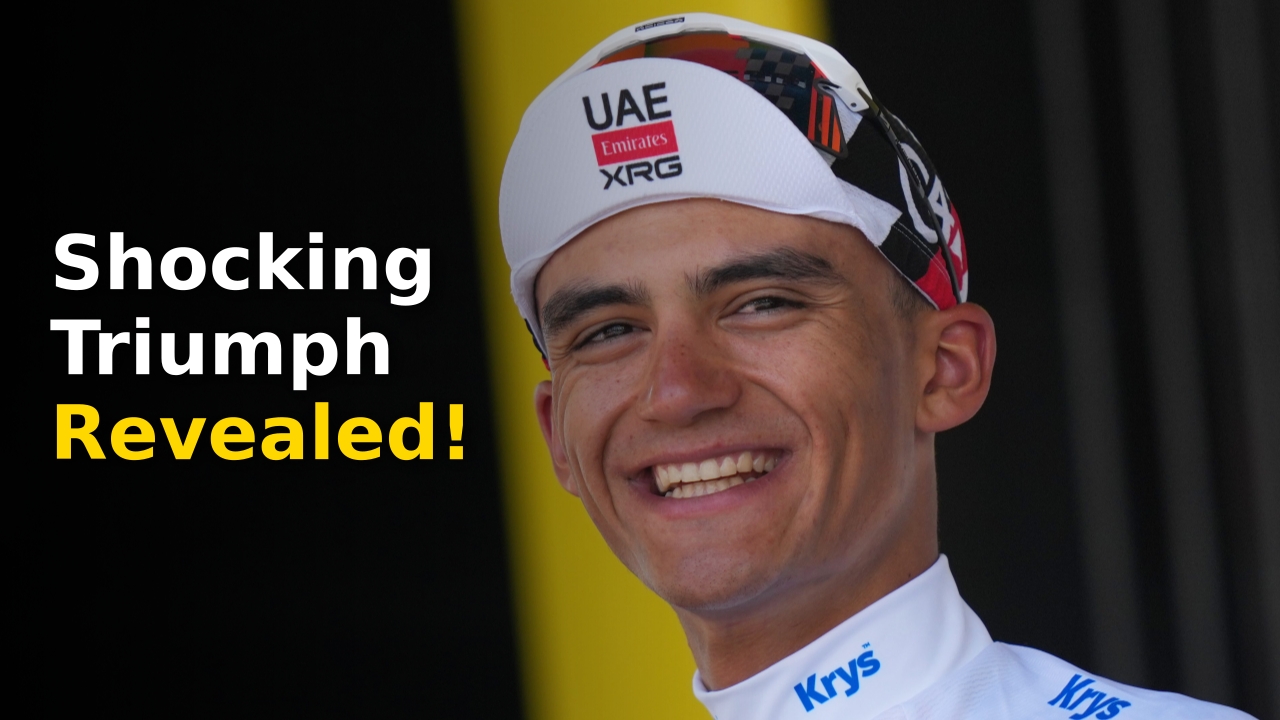
Did you ever think you would witness a historic cycling moment unfold in a mere three minutes? Del Toro has just shattered expectations on the global stage, proving that speed and raw determination can conquer any elite field. The brilliant Mexican prodigy secured a breathtaking victory in the opening prologue of the prestigious German race, instantly capturing the leader’s jersey. You are watching history in the making, and this spectacular result is only the beginning of a sensational week.
The lightning-fast 2.6-kilometer route in the historic town of Bad Orb became the ultimate proving ground. Riding for the world-renowned UAE Team Emirates, the young sensation outclassed established veterans and specialized time trialists. This triumph sets an electrifying tone for the remainder of the event, leaving fans and analysts in absolute awe of what Del Toro has accomplished.
This phenomenal victory by Del Toro signals a major shift in the professional peloton. As a rising star who continues to rewrite the record books, his performance in Germany cements his status as one of the most exciting talents in modern cycling. Professional cycling is witnessing a monumental shift, and you have a front-row seat to this masterclass.
The Bad Orb Sensation
The quiet, picturesque streets of Bad Orb transformed into a high-octane arena of pure speed on August 19, 2026. Spectators lined the flat, technical course, eager to witness the opening battle of the Deutschland Tour. In a race where every millisecond counts, the margins for error were virtually non-existent, forcing riders to take extreme risks on every turn.
Riders had to negotiate sharp corners while maintaining maximum aerobic capacity throughout the short sprint. The 2.6-kilometer course demanded an explosive burst of power right from the starting ramp. It was a test of absolute threshold power, requiring athletes to push their heart rates to the absolute limit in a bid for the podium.
The technical layout of the course favored those who could maintain a perfect aerodynamic position while delivering high wattage. The dry asphalt allowed for aggressive cornering, but the sheer speed made every bend a potential disaster zone. Cyclists knew that even the slightest slip would ruin their chances of a top finish.
Chasing the Clock
To succeed on such a short track, a cyclist must possess a rare combination of explosive track speed and flawless aerodynamic positioning. The competitors faced cool, crisp German afternoon air, which added an extra layer of difficulty to their warm-up routines. Achieving peak muscle temperature was critical before launching onto the course.
Maintaining a perfect aerodynamic tuck on a flat course is a science that teams spend millions refining. Even a minor shift in head position can cost valuable tenths of a second over such a short distance. The elite field knew that the winner would need to average near-record velocities to stand on the top step of the podium.
The pressure on the early starters was immense as they set the initial benchmark times. The crowds cheered loudly as each rider blasted past, their disc wheels roaring against the pavement. It was a sensory overload of speed, technology, and pure human athletic power.
A High-Speed Tactic
Many teams opted for ultra-lightweight setups, discarding heavy hydration systems to shed every possible gram. The strategy was clear: go all-out from the gun and hold absolutely nothing back. Mechanics worked tirelessly in the pit lane, checking tire pressures to the exact decimal point.
Riders had to balance the risk of crashing on technical corners with the reward of shaving off fractions of a second. This delicate high-stakes calculation separated the brave from the reckless on the asphalt of Bad Orb. The margin of victory in these short events is often thinner than a razor blade.
As the late afternoon sun began to dip, the wind speeds shifted slightly, adding a tactical element. Team directors radioed constant updates to their riders, adjusting cornering lines based on real-time data. It was chess played at fifty kilometers per hour on two wheels.
Del Toro Masters the Clock

When Del Toro rolled down the start ramp, the tension in the air was palpable. The reigning Mexican national time trial champion looked incredibly focused, his eyes locked onto the tarmac ahead. What followed was a masterclass in pacing, power delivery, and tactical execution that stunned the European cycling elite.
Crossing the finish line with a staggering time of 3 minutes and 8 seconds, the young prodigy stopped the clock to seize provisional leadership. His blistering average speed of 49.66 kilometers per hour left the commentators speechless. It was a performance that combined raw physiological power with beautiful, fluid motion on the bike.
His execution was practically flawless, cutting tight lines through the corners without losing momentum. Spectators watched in amazement as he maintained his speed through the most technical segments of the course. It was clear from the first split time that he was on a historic ride.
Flawless Time Trialing
His background as a national champion certainly paid dividends on this flat, unforgiving course. He demonstrated an innate ability to maintain a rock-solid core while transferring maximum torque to his pedals. Every pedal stroke was a display of peak athletic efficiency.
His pacing strategy was executed to perfection, saving just enough energy for the final, grueling 500-meter sprint to the line. This precision allowed Del Toro to establish a benchmark that the late starters simply could not match. The sheer depth of his physical reserves was on full display.
As competitors crossed the finish line one by one, his time remained untouched at the top of the leaderboard. The realization began to sink in that the young Mexican had pulled off a massive upset. His joy was clear as he watched the final riders fail to beat his mark.
The UAE Team Advantage
Riding for UAE Team Emirates grants access to some of the most advanced sports science and wind-tunnel testing in the world. The team’s technical staff meticulously analyzed the wind patterns and road surface in Bad Orb hours before the start. This rigorous approach ensured their athletes had the absolute best equipment setup.
This level of elite preparation, combined with the rider’s undeniable talent, created the perfect storm. The victory serves as a testament to the collaborative effort between athlete, mechanic, and coach. It proves that success at this level requires an entire ecosystem of excellence.
For Del Toro, this isn’t just an isolated moment of brilliance; it is a calculated step forward in his European campaign. The confidence gained from beating established specialists will carry him far in the upcoming stages of the tour.
Rivals Left in the Dust
The competition was fierce, with several world-class sprinters and time trial specialists hot on the leader’s heels. Chief among them was the sensational French rider Paul Magnier, representing the powerhouse Soudal Quick-Step squad. The tactical battle between the top teams added an extra layer of drama to the opening day.
Magnier crossed the line a mere heartbeat later, finishing only a second behind Del Toro. The Frenchman’s time of 3:09 and average speed of 49.21 kilometers per hour secured him a highly respectable second place. It was an agonizingly close margin that highlighted the competitive nature of the field.
Despite his best efforts, Magnier could not find that extra second on the flat stretches of the course. He praised the winner’s performance after the race, acknowledging the high level of competition. The rivalry between these young riders is set to define the next decade of professional road racing.
The French Threat
Magnier entered the German tour riding a massive wave of momentum. Having already secured three stunning stage wins at the prestigious Giro d’Italia, he was widely tipped as a major favorite. His explosive acceleration makes him a constant threat in any short-distance event.
His recent victory at the classic ADAC Cyclassics Hamburg proved his superb late-season form. While he narrowly missed out on the gold jersey, his performance promises an intense battle for the sprints in the days to come. He remains highly motivated to reclaim the leader’s jersey.
The French media has closely followed his progress, hailing him as the next great hope for French sprinting. His tactical awareness and physical power make him a versatile threat across various terrains. Fans can expect him to launch several aggressive attacks in the coming stages.
Rex Claims the Podium
Rounding out the top three was Magnier’s Belgian teammate, the formidable Laurenz Rex. Rex stopped the clock at 3 minutes and 13 seconds, maintaining an impressive average speed of 48.36 kilometers per hour. His power output on the straight sections was truly remarkable.
The strong presence of Soudal Quick-Step on the podium highlights their depth and tactical options. However, they were ultimately forced to play second fiddle to the solo brilliance of the Mexican leader. The Belgian squad will undoubtedly seek revenge in the road stages ahead.
Rex expressed satisfaction with his podium finish, noting that his form is exactly where it needs to be. His role will now shift to supporting his team’s GC contenders while hunting for individual stage wins. The battle for the team classification is already heating up.
The Grueling Road Ahead

While the opening prologue was a short, flat affair, the landscape of the race is set to change dramatically. The transition from flat speed to brutal mountain passes will test the young leader’s versatility and stamina. The true test of his championship credentials begins now as the road heads upward.
The remaining four stages will push the riders to their absolute physical limits. The rolling hills and steep alpine climbs of Germany await the peloton, promising a thrilling spectacle for fans worldwide. Maintaining the leader’s jersey will require a monumental defensive effort from his entire team.
Tactics will shift from individual time-trialing to complex team dynamics. Strong crosswinds, narrow roads, and aggressive breakaway attempts will characterize the upcoming road stages. The leaders must remain vigilant to avoid losing valuable time in the overall standings.
| Stage | Route Details | Distance (km) | Terrain Type | Key Challenge |
|---|---|---|---|---|
| Stage 1 | Bad Orb to Schwäbisch Hall | 215.3 | Hilly | Two steep 5% climbs |
| Stage 2 | Schwäbisch Hall to Heilbronn | 178.5 | Rolling Hills | Technical descent |
| Stage 3 | Heilbronn to Stuttgart | 192.1 | Mountainous | High-altitude finish |
| Stage 4 | Stuttgart to Munich | 160.4 | Flat / Sprint | Mass bunch sprint |
Analyzing Stage One
The first full road stage spans a brutal 215.3 kilometers from Bad Orb to Schwäbisch Hall on Thursday, August 20, 2026. This lengthy route is designed to drain the riders’ reserves before they even reach the final selection. Endurance and nutritional strategy will play a decisive role in the outcome.
It features two categorized climbs of under 3 kilometers each. However, both climbs present average gradients exceeding 5%, which will instantly expose any weaknesses. These climbs will act as launchpads for aggressive attacks from general classification contenders looking to isolate the leader.
The final descent into the finish town is technical and could create gaps if the weather turns wet. Riders must balance caution with the need to stay positioned near the front of the peloton. A split in the bunch during the final kilometers could prove disastrous for the GC hopefuls.
Defensive Race Strategy
As the overall leader, the pressure will be on his team to control the peloton from the drop of the flag. They must monitor dangerous breakaways while keeping their young leader safe from unexpected crashes. This defensive strategy requires immense discipline and energy from every squad member.
Every rider on the squad must sacrifice their personal ambitions to protect the coveted leader’s jersey. The team will need to set a steady tempo at the front of the pack, keeping any breakaway gaps within a manageable range. This tactical chess match will unfold over several hours of intense racing.
The sports directors will be monitoring the situation closely from the team car, analyzing live power data and communication channels. Quick decision-making will be crucial if rivals attempt to launch long-range attacks. It is a test of collective strength and intelligence.
Del Toro Eyeing Global Glory
This sensational result in Germany is not a fluke; it is part of a steady, meteoric rise to the top of international cycling. Over the past year, we have seen Del Toro capture hearts worldwide with his historic performances. His transition to the European professional circuit has been nothing short of spectacular, turning heads at every race.
He recently made headlines by securing a monumental, historic podium finish for Mexico at the prestigious Tour de France. His emotional reactions and fierce battling spirit earned him the adoration of millions of fans back home. It was a breakthrough moment that proved he belongs among the sport’s absolute elite.
His ability to perform under the highest level of pressure has set him apart from his peers. He possesses a rare mental toughness that allows him to thrive when the stakes are highest. This victory in Germany is another chapter in what is becoming a legendary sporting journey.
A Dream Fulfilled
For the young star, competing at this elite level is literally a dream come true after years of intense training. His impressive performance against legendary riders like Seixas proved his world-class pedigree on the road. He continues to prove that his early successes were just a preview of his immense potential.
He has consistently shown that he can hold his own against the absolute best in the business. This relentless drive is what makes him one of the most promising rising sports stars of his generation. Every race is an opportunity to learn, adapt, and conquer new challenges.
The support from his family and country has been a massive source of motivation throughout his journey. He often speaks about the pride he feels representing his nation on the global stage. This deep connection to his roots fuels his competitive fire during the toughest moments on the road.
Global Sports Legacy
Mexico has a rich sporting heritage, but cycling has rarely seen a talent of this caliber on the European circuit. His success is inspiring a whole new generation of young Latin American athletes to pursue professional road racing. He is breaking down barriers and proving that dreams of cycling glory are fully achievable.
As the race heads into more challenging climbing terrain, all eyes will be on his ability to defend the lead. Regardless of the final outcome on August 23, 2026, his spectacular start has already made this a tournament to remember. The cycling world is watching, and his future has never looked brighter.
We can expect many more historic achievements from Del Toro as his professional career continues to unfold beautifully on the global stage. His journey is a testament to what can be achieved through talent, hard work, and an unwavering belief in one’s abilities.
More Like This
For more updates, check out our latest entertainment and sports news.