A Rotary Mazda is the ultimate dream for gearheads who value high-revving thrills and sleek Japanese aesthetics. You have likely spent years scouring the internet for news of a successor to the legendary RX-7 or RX-8. The wait continues to be a mix of excitement and frustration as the brand keeps teasing us with pixels instead of pistons.
You might be wondering why Mazda continues to invest so heavily in a car that only exists inside a game console. The recent reveal of the RX-Vision GT3 Evo has reignited the fire in the enthusiast community. However, the reality of this beautiful machine remains strictly confined to the world of Gran Turismo 7 on the Sony PlayStation.
Rotary Mazda Digital Tease
You are looking at one of the most beautiful automotive designs of the 21st Century, but you cannot drive it to work. The RX-Vision GT3 Evo is a masterclass in aerodynamics and visual storytelling that first debuted over six years ago. It remains a stunning reminder of what the engineers in Hiroshima are capable of when they are not restricted by emissions laws.
The Rotary Mazda legacy is built on the unique Wankel engine technology that defines the brand’s sporting heritage. By focusing on virtual racing, the company keeps the spirit of the rotary alive without the massive financial risk of mass production. It is a brilliant, if painful, marketing strategy that keeps you engaged with the brand for 2026 and beyond.
Digital racing platforms allow designers to push the limits of physics without the constraints of real-world safety regulations. You see this in the Evo package, which features an aggressive front splitter and a massive rear wing designed for maximum downforce. These elements would likely never pass pedestrian safety standards in Japan or the United States.
The internal team at Mazda clearly has a passion for this project that transcends simple corporate branding. You can feel the soul of the 787B Le Mans winner in every curve of the virtual bodywork. It is a love letter to a golden era of racing that refuses to fade away into history.
Many fans believe that these digital exercises are actually secret testing grounds for future production models. You might find it interesting that Kazunori Yamauchi, the creator of Gran Turismo, often works closely with manufacturers on these designs. This collaboration ensures that the virtual car behaves as a real one would on the track.
Despite the lack of a physical showroom model, the hype surrounding this Rotary Mazda update is massive. It proves that the demand for a lightweight, front-engine, rear-drive sports car is still incredibly high among younger drivers. You are part of a global audience that is hungry for something more than another electric SUV.
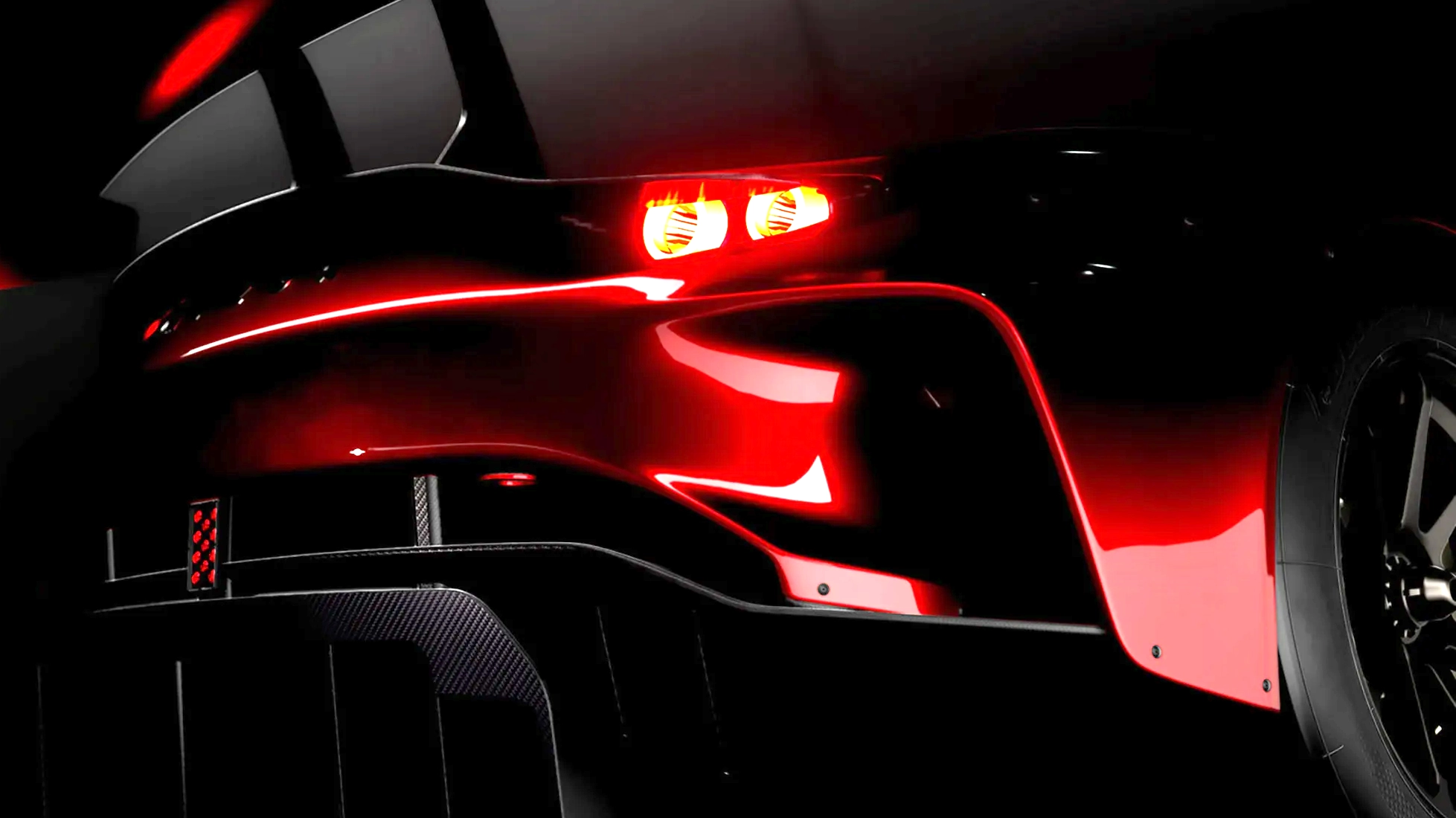
RX-Vision GT3 Aero Overhaul
The latest update for the RX-Vision GT3 Evo focuses specifically on the science of air management at high speeds. You will notice a revised front fascia that directs airflow more efficiently into the cooling ducts for the virtual Skyactiv-R engine. The carbon fiber components are rendered with such detail that you can almost feel the texture through the screen.
Aerodynamic stability is the core of this overhaul, ensuring the car remains glued to the asphalt at Circuit de la Sarthe. You can now adjust the wing angles with greater precision within the game’s tuning menu. This level of depth is what keeps the Rotary Mazda community coming back to the simulator year after year.
Engineers have also tweaked the suspension geometry to better handle the increased downforce provided by the new aero kit. You will find that the car is much more predictable during high-speed transitions and heavy braking zones. It is a technical achievement that showcases the brand’s commitment to the “Jinba Ittai” philosophy of driver and car as one.
The visual impact of the Evo package cannot be overstated, as it transforms a sleek coupe into a terrifying track monster. You might notice the wider wheel arches that accommodate larger Michelin racing slicks for improved lateral grip. Every vent and scoop serves a purpose, even if that purpose is only calculated by a computer processor.
While you wait for news on exclusive automotive trends and potential real-world releases, this digital beast is the closest thing available. The attention to detail extends to the interior, where the minimalist racing cockpit is a futuristic take on classic RX-7 layouts. It is a cohesive vision of a future that many hope will eventually arrive in metal and rubber.
The Skyactiv-R engine sound has also been refined in the latest patch to provide a more visceral experience. You can hear the signature high-pitched scream of the triple-rotor setup as it approaches the 10,000 RPM redline. It is a sound that evokes memories of the 1991 Le Mans victory and sends chills down the spine of any true enthusiast.
Key Aero Enhancements
- Enhanced front splitter for increased front-end bite during turn-in.
- Revised rear diffuser to reduce drag and improve top-end speed on the Mulsanne Straight.
- Active cooling vents that respond to engine temperatures in real-time.
- Lightweight carbon fiber side skirts to manage underbody airflow.
- Adjustable dual-plane rear wing for varied track configurations.
Virtual Performance Metrics
When you look at the raw data, the RX-Vision GT3 Evo is a formidable competitor against the world’s best supercars. It produces over 560 horsepower from its naturally aspirated rotary power plant. This power-to-weight ratio makes it a favorite for competitive players in the Gran Turismo World Series.
The technical specifications of this Rotary Mazda project are grounded in reality, even if the car itself is not. You can see the dedication to weight distribution, with a perfect 48:52 front-to-rear balance. This creates a neutral handling characteristic that rewards smooth inputs and precise racing lines.
| Spec Feature | Digital RX-Vision GT3 | Estimated Real Cost |
|---|---|---|
| Engine Type | Skyactiv-R 4-Rotor | $250,000+ |
| Horsepower | 562 HP | N/A |
| Weight | 1,250 kg | Extreme Carbon Build |
| Top Speed | 210 MPH | High R&D Expense |
The use of advanced materials like magnesium and titanium in the virtual build suggests a high-end price tag if it were real. You are essentially driving a multi-million dollar prototype for the price of a video game. This accessibility is what makes the Gran Turismo experience so compelling for automotive enthusiasts globally.
The physics engine in Sony‘s latest title accurately simulates the torque curve of a rotary engine. You will find that the car lacks low-end grunt but comes alive as the revs climb past 7,000 RPM. It requires a different driving style compared to the turbocharged V8s found in many European rivals.
Fuel consumption is another factor that is realistically modeled in long-distance endurance races. You have to manage your fuel maps carefully, as the rotary engine is notoriously thirsty when pushed to its limits. This adds a layer of strategy to the gameplay that mirrors real-world racing challenges.
The tire wear on the Rotary Mazda is also unique due to its balanced weight distribution. You can often stay out on track longer than competitors because you aren’t punishing the front tires as heavily. It is a subtle detail that highlights the engineering thought put into this digital masterpiece.
Gran Turismo Racing Heritage
The relationship between Mazda and the Gran Turismo franchise stretches back over two decades. You probably remember driving the RX-7 LM Edition in the original PlayStation games of the late 1990s. This partnership has allowed the brand to maintain its performance image even when it wasn’t selling sports cars.
The RX-Vision GT3 Evo is the pinnacle of this virtual evolution, representing years of shared data and design. You can participate in official Gazoo Racing and Mazda branded championships that offer real-world prizes. It has become a legitimate pathway for young drivers to enter the world of professional motorsport.
Many professional racing drivers use the Rotary Mazda in the simulator to sharpen their skills during the off-season. You are using the same tools as the pros when you boot up your console at home. This bridge between the virtual and real worlds is stronger now than it has ever been in the history of gaming.
The popularity of the RX-Vision on social media has forced the company to acknowledge the massive fan base. You see Mazda executives frequently appearing at Gran Turismo events to discuss the future of the brand. While they remain tight-lipped about a production version, their presence speaks volumes about the car’s importance.
Designers at Mazda‘s Design Division in Irvine, California, often contribute to the virtual livery designs. You can download thousands of fan-made skins that pay homage to famous Rotary Mazda racing cars from the past. The level of community creativity is a testament to the enduring appeal of the rotary engine.
The GT3 Evo specifically targets the competitive eSports scene, where balance of performance is crucial. You will find that the car is regularly updated to ensure it remains competitive against brands like Porsche and Ferrari. It is a constantly evolving project that lives and breathes in the cloud.
Iconic Rotary Engine Legacy
To understand why the Rotary Mazda is so beloved, you have to look back at the 1967 Cosmo Sport. This was the first production car to feature a twin-rotor engine, setting the stage for decades of innovation. The engine’s compact size and high power output made it a perfect fit for a low-slung sports car.
The RX-7 became a cultural icon in the 1990s, specifically the FD generation with its sequential twin-turbochargers. You might recognize it as the car of choice for Keisuke Takahashi in the hit anime Initial D. This media exposure cemented the car’s status among a generation of car enthusiasts who are now the primary buyers of sports cars.
However, the Wankel engine has always faced significant hurdles regarding fuel efficiency and oil consumption. You are likely aware of the apex seal issues that plagued some of the older models if they weren’t maintained perfectly. These technical challenges are the primary reason we haven’t seen a new Rotary Mazda in showrooms since 2012.
Engineers have never stopped working on the technology, however, developing the 13B and 20B engines to their absolute limits. The Skyactiv-R project is the latest iteration of this quest for perfection, aiming to solve the rotary’s inherent flaws. It uses advanced ignition systems and new materials to improve thermal efficiency and reduce emissions.
The Rotary Mazda engine is also being explored as a range extender for electric vehicles, like in the MX-30 R-EV. While not the dedicated sports car you want, it shows that the company is still finding ways to keep the rotary alive. It is a versatile piece of technology that may yet find its way back into a performance chassis.
The passion of the Rotary Mazda owners’ clubs around the world is a powerful force that the company cannot ignore. You can find massive gatherings of RX models from London to Tokyo every year. This loyalty is why the brand continues to tease us with digital concepts—they know we are still here, waiting.
Why Fans Crave the Rotary
- The unique exhaust note that sounds like nothing else on the road.
- The smooth, linear power delivery that feels endless as you rev the engine.
- The historical significance of Mazda being the only brand to master the technology.
- The lightweight nature of the engine which allows for superior chassis balance.
- The simple, elegant design of the rotary’s internal moving parts.
Future Rotary Mazda Plans
Is there any hope for a physical version of the Rotary Mazda you see on your screen? Recent reports suggest that a dedicated “RE Development Department” has been re-established within the company. This news has sent shockwaves through the industry, suggesting that a real-world sports car is more than just a dream.
The Iconic SP concept, which debuted more recently, looks remarkably similar to a scaled-down version of the RX-Vision. You might find that the brand is moving toward a hybrid rotary setup to meet modern 2026 emissions standards. This would combine the soul of a rotary with the torque and efficiency of an electric motor.
While the RX-Vision GT3 Evo remains a digital exclusive for now, its influence on the brand’s design language is obvious. You can see elements of its styling in every new Mazda model, from the Mazda3 to the CX-90. The “Kodo: Soul of Motion” philosophy is at its most potent in the lines of this virtual racecar.
The company is carefully watching the market to see if there is a sustainable business case for a high-end halo car. You represent the demographic they are most interested in—enthusiasts who are willing to pay for a premium, soulful driving experience. If the digital engagement remains high, it makes the case for a production model much stronger.
Until that day comes, you can continue to push the Rotary Mazda to its limits in the virtual world of Gran Turismo. The Evo update ensures that the car remains at the cutting edge of digital performance for the foreseeable future. It is a placeholder for our collective dreams, rendered in stunning 4K resolution.
The Rotary Mazda story is far from over; it is simply in a state of digital hibernation. As battery technology and synthetic fuels evolve, the path for a new RX model becomes clearer every day. Stay tuned to the latest updates, because the jump from the screen to the street might happen sooner than you think.
More Like This
For more updates, check out our latest entertainment and sports news.