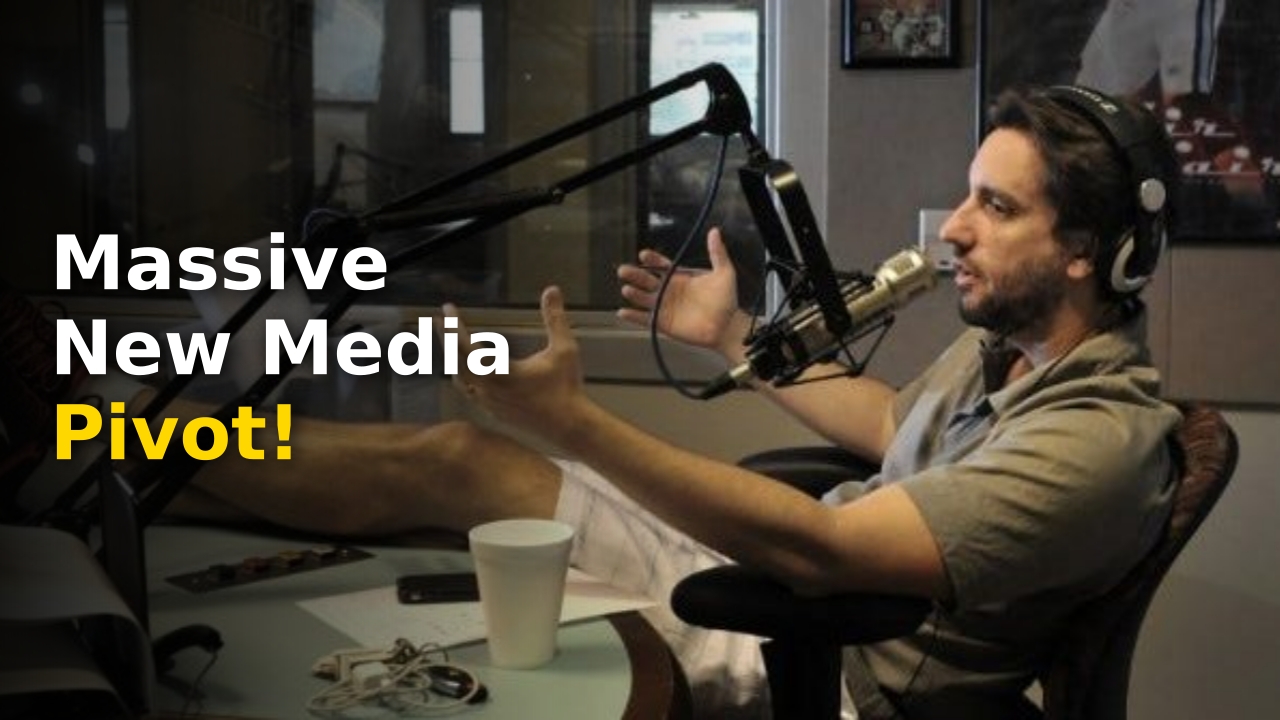
Sport & State has officially entered the digital landscape as the provocative new brainchild of media powerhouse Clay Travis. You are witnessing the birth of an unconventional business model that bypasses traditional advertising constraints to forge a direct, unfiltered connection between sports, politics, and consumer goods.
After departing OutKick earlier this summer, the veteran broadcaster is betting his legacy on a decentralized ecosystem that he claims will redefine the independent media landscape. Whether you are a fan of his high-octane commentary or a skeptic of his polarizing takes, the mechanics behind this launch command your attention.
The Sport & State Blueprint
Clay Travis is not merely launching a website; he is constructing a vertical, self-sustaining financial machine. Unlike legacy media organizations that wither under the weight of declining cable subscriptions and volatile digital ad markets, this venture functions as a “flywheel.” The philosophy here is simple yet aggressive: create high-engagement content to funnel traffic into a proprietary portfolio of businesses.
By owning the platform and the products, Clay Travis eliminates the middleman. You are seeing a shift where editorial content acts as the primary acquisition tool for diverse streams of revenue, ranging from mortgage services to lifestyle brands. This bold strategy suggests a lack of faith in the standard media growth models that have dominated the industry for decades.

The editorial mission remains laser-focused on a demographic that values raw, unapologetic discourse. Travis projects a content split of 70% sports, 15% pop culture, and 15% political intersection. He maintains that while the politics will primarily stem from his own desk, the remainder of the network is built to provide unfiltered sports entertainment for the common fan.
You might wonder how this fits into his ongoing commitments with Fox News and Fox Business. The answer lies in his unique contract structure, which permits continued external contributions alongside his primary ownership role. His appearances on Big Noon Kickoff this autumn further cement his role as a bridge between cable giants and independent digital outlets.
The business model also leans heavily into the synergy between sports wagering and media. The equity partnership with Hard Rock Bet serves as a anchor for the company’s revenue stability. This isn’t just about clicks; it is about building a ecosystem that thrives on the massive, growing market of US sports betting enthusiasts.
Defining the Future Strategy
- Building a brand that generates its own capital through diverse auxiliary businesses.
- Leveraging high-traffic media to lower the customer acquisition costs for internal startups.
- Maintaining a strong presence on traditional cable while dominating the digital space.
- Focusing on a ‘no-bad-blood’ transition from previous corporate owners.
The Programming Landscape
The daily lineup is designed to keep you glued to your screen from breakfast until the dinner hour. By utilizing regional talent hubs in Nashville and Birmingham, the network creates a localized feel that resonates with a specifically targeted American audience. You get a mix of traditional sports analysis and the rapid-fire, conversation-driving content that fans of Clay Travis have come to expect.
Chad Withrow and Jonathan Hutton are tasked with setting the tone during the morning hours. Their presence, followed by the Birmingham team of Lance Taylor, Ryan Brown, and Jim Dunaway, creates a robust foundation. This regional approach is a calculated move to capture heartland interest before the national heavy hitters take over the airwaves.
The core of the programming, of course, revolves around the host himself and his longtime collaborator Buck Sexton. Their show occupies the critical noon to 3 p.m. window, serving as the daily anchor for the site’s overall political and social commentary. You can see the influence of their established audience dynamic in the way this block is marketed.
As the day winds down, the network shifts gears. The transition from intense debate to the final hour hosted by Kelly Stewart, Ariel Epstein, and Joe Raineri signals a pivot toward betting intelligence. It is a smart play to capture the interest of the evening betting crowd as they prepare for the night’s big games.
To learn more about the broader celebrity media landscape, you might want to visit Bright Celebrity for exclusive insights into the business of fame. The industry is currently undergoing a massive transformation, and the lines between media personality and business owner are blurrier than ever before.
This structure proves that you don’t need a massive, bloated staff to command market share. By hiring specialized talent with pre-existing chemistry, the network saves on the traditional “growing pains” of media startups. The synergy on screen is not accidental; it is a fundamental component of the business plan.
Critical Financial Metrics
The following table breaks down the various revenue streams and strategic partnerships that define the current operations of the venture. This structure highlights how the organization differentiates itself from standard ad-supported media sites.
| Component | Strategic Focus |
|---|---|
| Mortgage Services | Targeting home-buying demographics. |
| Lifestyle & Coffee | Direct-to-consumer physical goods. |
| Athletic Apparel | Focusing on cultural identity politics. |
| Legal Services | Personal injury litigation marketing. |
| Hard Rock Bet | Core sports wagering partnership. |
The Evolution of Media
The history of media is littered with the corpses of websites that relied too heavily on fickle advertisers. You might recall the decline of sites like Reuters-covered industry staples that failed to pivot when the advertising model broke. Clay Travis learned this lesson the hard way during the 2011 shutdown of FanHouse. That experience clearly scarred him, but it also became the foundation for his current professional philosophy.
He explicitly stated his motivation: to never allow a third party to determine the financial fate of his family. This obsession with autonomy is the driving force behind the Sport & State business model. By diversifying, he creates a safety net that traditional media employees simply do not have access to.
This shift represents a broader trend of independent creators moving toward private equity and direct-to-consumer models. You are watching a real-time experiment in how to insulate media production from “cancel culture” and the whims of corporate advertisers. It is a high-stakes gamble, but for someone with the reach of Clay Travis, it might just be the most stable path forward.
The cultural impact of these brands cannot be ignored. Whether you agree with the leanings of his apparel line or his political commentary, the model forces the media to engage with commerce in a way that feels almost radical. It is the ultimate expression of the creator economy, where the audience is not just a reader, but a potential customer for every aspect of the business.
The Long Term Outlook
What does this mean for the sports media industry as a whole? You are going to see more personality-driven networks cropping up, following this exact template. The era of the general-interest sports blog is dying, replaced by specialized, personality-led platforms that have their own integrated storefronts.
If Sport & State succeeds, it will force others in the industry to re-evaluate their own monetization strategies. The reliance on digital ads is essentially a race to the bottom, and this new approach offers a higher floor for those with a loyal, cult-like following. It is the evolution from being a content creator to being a business conglomerate.
The integration of legal services and mortgage lending is particularly clever. It turns an audience into a source of lead generation for high-margin professional services. You won’t find this level of diversification in traditional journalism, but it is the future of media-driven commerce.
As you observe this unfolding, consider the power dynamic. The power is shifting from the corporation to the individual. Whether this leads to higher quality content or simply more efficient marketing is a question for the coming years, but one thing is certain: the old rules no longer apply.
Final Strategic Summary
In the final analysis, Sport & State serves as a masterclass in modern digital entrepreneurship. By combining a 70% sports focus with a robust, diversified revenue model, the team is insulating themselves against the volatility that plagues traditional media outlets. You have seen how Clay Travis turned a personal crisis in 2011 into a roadmap for long-term independence.
As this venture grows, keep an eye on how they scale these subsidiary businesses alongside their core content. The goal is clearly to create a self-sustaining “flywheel” that functions regardless of ad market trends. If you value direct, unapologetic media, this is a development that demands your continued attention.
More Like This
For more updates, check out our latest entertainment and sports news.