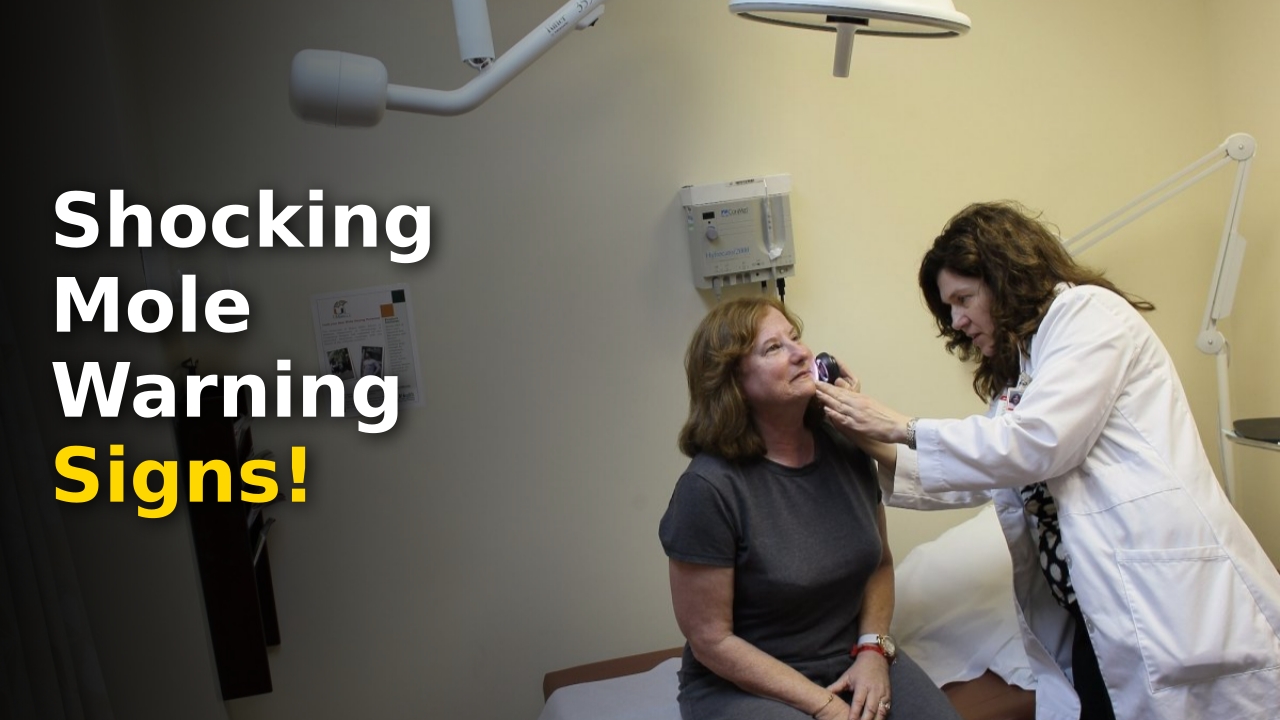
Did you know that a single, tiny spot on your skin could be a silent killer hiding in plain sight, making the early detection of a Melanoma Sign a matter of life and death? Finding a potential skin mutation on your body requires immediate, decisive action, yet millions of Americans ignore their skin daily. This dangerous neglect is currently fueling a massive rise in diagnoses across the country.
According to the latest oncology data, skin cancer remains the most frequently diagnosed cancer in the United States. Shockingly, roughly 9,500 people receive this life-altering diagnosis every single day. The statistics are incredibly sobering, reminding us that no one is completely immune to this disease.
While standard skin cancers are rarely fatal, melanoma is highly aggressive. It makes up only about 1 percent of skin cancer cases but causes the vast majority of skin cancer deaths annually. Fortunately, early detection can completely change your clinical prognosis and save your life in minutes.
spotting a deadly Melanoma Sign
Monitoring your skin is not just about vanity; it is a critical health habit that you must cultivate. A suspicious spot often starts as a benign-looking mark that slowly evolves over time. You must look past the surface and examine your entire body regularly to catch these silent threats.
Many people assume that dangerous spots only appear in sun-exposed areas like the face or arms. However, a hazardous Melanoma Sign can easily develop in hidden locations, including your scalp, under your fingernails, or even on the soles of your feet. This means a comprehensive, full-body inspection is the only true way to stay safe.
Dermatologists constantly emphasize that early detection translates directly to survival rates. When you find a questionable spot early, it is highly treatable with simple outpatient procedures. Waiting even a few weeks can allow the disease to spread deeper into your lymphatic system, complicating your treatment.
understanding your skin’s secrets
- Check areas that rarely see the sun, including your groin and between your toes.
- Ask a partner or friend to inspect your scalp and back thoroughly once a month.
- Take high-resolution photos of suspicious moles to track subtle physical changes over time.
Many modern lifestyle platforms like Bright Celebrity lifestyle guides recommend using your smartphone to map your skin quarterly. Keeping a consistent digital record allows you to compare moles side-by-side over several months. This proactive approach removes the dangerous guesswork from your monthly self-exams.
Medical experts warn that ignoring your skin’s warning signs can lead to devastating health consequences. Men are particularly vulnerable, accounting for the absolute majority of annual skin cancer deaths. Taking two minutes in front of your bathroom mirror is a tiny investment for your long-term health.
Remember that some dangerous growths do not look like traditional moles at all. They can appear as small pink bumps, dry scaly patches, or even stubborn sores that refuse to heal. Being aware of these diverse presentations keeps you one step ahead of the disease.
decoding the basic ABCDE rules
To simplify self-exams, the medical community created a straightforward five-letter guide. The ABCDE rule serves as your first line of defense against deadly skin mutations. Memorizing this simple tool allows you to evaluate any suspicious spot in seconds.
The letter A stands for asymmetry, which is a classic indicator of irregular cellular growth. If you draw an imaginary line down the center of a healthy mole, both halves should look identical. A dangerous Melanoma Sign is typically asymmetrical, meaning the two halves do not match in shape or size.
The letter B represents the border of the spot, which tells a story about its growth pattern. Healthy moles feature clean, smooth, and well-defined edges. In contrast, cancerous spots often exhibit jagged, notched, blurred, or irregular borders that fade into the surrounding skin.
breaking down the five rules
- Asymmetry: One half of the mole does not match the other half.
- Border: The edges are irregular, ragged, notched, or blurred.
- Color: The color is not uniform and may include different shades.
- Diameter: The spot is larger than 6 millimeters across.
- Evolving: The mole is actively changing in size, shape, or color.

The letter C focuses on color variation, which indicates chaotic cell activity. Safe moles are typically one solid shade of tan, brown, or black. If you notice a single spot containing multiple colors like red, white, blue, or varying shades of brown, consult a physician immediately.
The letter D alerts you to the diameter of the growth. Any spot larger than 6 millimeters—roughly the size of a standard pencil eraser—needs professional evaluation. However, remember that some dangerous spots can be smaller when they first develop, so size alone is not a guarantee of safety.
The letter E represents evolving, which is the single most critical warning sign to watch for. If you notice a mole changing its size, shape, color, or height, it requires urgent medical attention. New symptoms like itching, bleeding, or crusting also fall under this evolutionary warning category.
hidden dangers of ordinary moles
Not all hazardous skin growths look like the classic dark, asymmetrical spots described in medical textbooks. Some forms of cancer are absolute masters of disguise, mimicking harmless blemishes or common pimples. This makes a careful, meticulous examination absolutely essential for everyone.
Dermatologist Dr. Rachel Westbay from Marmur Medical in New York City warns of amelanotic melanoma. This specific variant lacks dark pigment, often presenting as a harmless pink or flesh-colored bump. Because it lacks dark pigment, patients frequently mistake it for a benign cyst or a bug bite.
Another renowned expert, Dr. Richard Shaffer from Bupa Cromwell Hospital, advises that regular monitoring is key to survival. Moles are generally harmless, but any sudden change in their physical characteristics is a major red flag. You must develop a keen eye for subtle mutations on your skin.
ugly duckling mole theory
- Look for the outlier spot that does not match your other moles.
- Pay attention to isolated growths that appear suddenly in adulthood.
- Never ignore a mole that behaves differently, such as itching or bleeding.

Medical professionals often rely on the famous “ugly duckling” principle during professional skin screenings. Most benign moles on your body will look relatively similar to one another. If you have one specific spot that looks completely different from the rest, it warrants immediate investigation.
This visual outlier might be darker, lighter, larger, or a different shape than its neighbors. Even if it does not strictly violate the ABCDE rules, its unique appearance is highly suspicious. Trust your instincts and let a professional take a closer look at the anomaly.
Additionally, pay close attention to sensory changes in your skin. A mole that suddenly feels painful, tender, or constantly itchy is sending you a clear warning. Do not wait for visual changes if you are already experiencing physical discomfort in a specific spot.
shocking skin cancer survival rates
Understanding the raw data behind skin cancer highlights the urgency of regular self-checks. The numbers reveal a stark contrast between early-stage detection and late-stage diagnoses. Your personal awareness directly dictates your clinical outcome and peace of mind.
The American Cancer Society estimates that roughly 112,000 new cases of Melanoma will be diagnosed this year. This staggering figure includes approximately 65,400 men and 46,600 women. Sadly, around 8,510 people are expected to lose their lives to this disease.
Let us look at the survival rates based on how early the cancer is detected. When caught in its localized stage before spreading, the survival rate is incredibly high. However, once it metastasizes to distant organs, the treatment becomes far more complex.
| Stage of Melanoma | 5-Year Relative Survival Rate | Typical Treatment Approach |
|---|---|---|
| Localized (No Spread) | 99% | Surgical Excision |
| Regional (Lymph Nodes) | 71% | Surgery and Immunotherapy |
| Distant (Metastasized) | 35% | Targeted Systemic Therapy |
The visual evidence in the table demonstrates why discovering a Melanoma Sign early is so critical. A 99 percent survival rate drops dramatically if the cancer is allowed to spread throughout the body. This is why a simple two-minute mirror check is so incredibly powerful.
Men are statistically more likely to die from melanoma than women. Experts believe this gap exists because men are less likely to perform regular skin checks or visit dermatologists. Overcoming this reluctance is a crucial step in lowering national mortality rates.
Protect yourself by scheduling an annual professional skin exam in addition to your monthly home checks. A board-certified dermatologist has specialized tools to spot micro-changes invisible to the naked eye. Combining home vigilance with professional expertise offers the ultimate protection.
defeating your next Melanoma Sign
Taking control of your skin health is a simple, life-saving habit that requires minimal effort. By incorporating the ABCDE rules into your monthly routine, you build a powerful shield against skin cancer. Do not let fear keep you from looking in the mirror.
If you identify any spot that triggers a “yes” to any of the ABCDE criteria, schedule a doctor’s visit immediately. Most biopsied moles turn out to be completely benign, but the peace of mind is worth the effort. It is always better to be safe than to face a delayed diagnosis.
Share this vital knowledge with your family, friends, and loved ones today. Encouraging someone else to perform a quick skin check could save a life. Stay vigilant, track your spots, and never ignore a suspicious Melanoma Sign.
More Like This
For more updates, check out our latest entertainment and sports news.