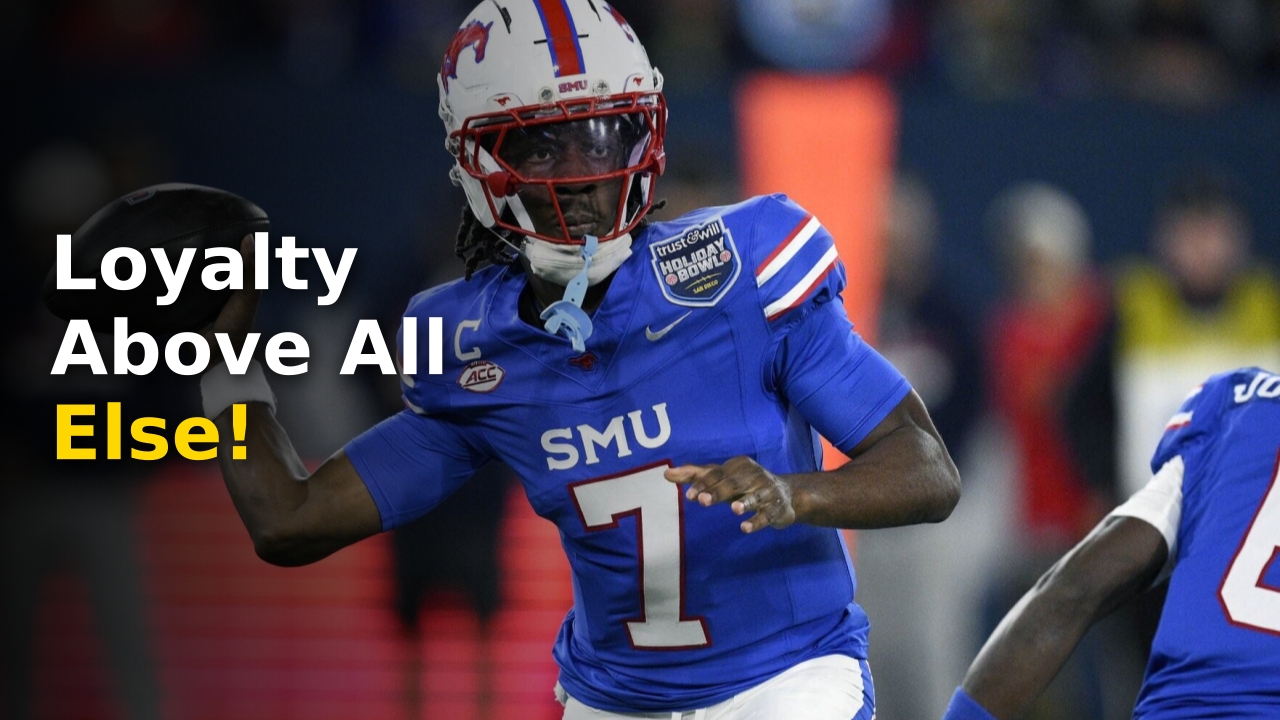
Kevin Jennings defines what it means to stay committed in an era where the transfer portal has become the primary destination for restless college athletes. You might wonder how a quarterback chooses to anchor his career at a single institution while his peers treat rosters like revolving doors, but the answer lies in the rare bond between a player, his coaching staff, and his university.
As the landscape of modern college football shifts beneath our feet, the SMU Mustangs have found their bedrock in a leader who values respect over immediate personal convenience. This article uncovers the true grit behind the decision-making process of a rising star in the American Athletic Conference, providing you with a front-row seat to the culture of loyalty that remains alive in University Park.
Kevin Jennings: Defining Unwavering Loyalty
When you look at the current state of the NCAA, the constant movement of high-level talent makes the story of Kevin Jennings stand out as an anomaly. Most athletes today view the transfer portal as a safety net or a way to chase better NIL packages, yet Jennings chose to build a legacy brick by brick at SMU. His commitment speaks to a deep-seated belief in the vision set by head coach Rhett Lashlee.
The pressure on young quarterbacks to perform under the bright lights of national television is immense, and for many, a string of bad games leads to a quick exit. However, Jennings embraced the grind, learning from the mentorship within the Mustangs program rather than looking for greener pastures. This type of dedication is rare, and it is exactly what star athletic profiles often lack in today’s fleeting media cycle.
Understanding this loyalty requires you to look at the historical context of Southern Methodist University football, which has fought hard to regain its national standing. By staying put, Jennings has become the face of a revitalized program that prioritized culture over quick fixes. He understands that genuine respect is earned through shared struggle, not by chasing the highest bidder in the portal.
The relationship between Rhett Lashlee and his quarterback serves as a testament to the power of open communication. In a world where coaches and players are often disconnected, their alignment has created a fortress of stability. You can see the trust manifest on the field, especially during high-pressure drives in the Holiday Bowl where poise dictates the outcome of the game.
Furthermore, the fans in Dallas have responded to this loyalty with a fervor that only comes when a team truly represents the identity of the city. When a player like Kevin Jennings decides that home is where he belongs, it creates a feedback loop of positive energy. This is a story about the intersection of individual integrity and team success in an environment that usually demands instant results.
Finally, we must acknowledge that his choice is a blueprint for the future of collegiate athletics. While others pivot, Jennings has secured his status as a legendary figure for the SMU faithful, proving that staying loyal can pay off in ways that a shiny new contract simply cannot match. His path is a reminder that you define your own narrative regardless of the prevailing trends surrounding you.

Factors Driving Player Decisions
- The influence of personal mentorship from coaches like Rhett Lashlee.
- The desire to build a lasting local legacy rather than jumping ship.
- Stability of the offensive scheme within the SMU system.
- The emotional connection with the local fanbase in Texas.
The Numbers Behind The Success
Data tells a compelling story about how stability contributes to on-field production. When a quarterback has years of experience in the same system, the efficiency metrics inevitably rise, as evidenced by the performance seen at Snapdragon Stadium in San Diego. Looking at the raw statistics provides a clear picture of why consistency is the ultimate separator in college football today.
| Metric | Impact of Loyalty | Transfer Portal Alternative |
|---|---|---|
| Scheme Mastery | Advanced/Intuitive | Beginner/Learning |
| Team Chemistry | High/Cohesive | Low/Fragmented |
| Fan Trust | Maximum | Variable/Low |
You can see that the benefits of staying in one program extend far beyond the box score. Players who plant their roots deep in the soil of their university are better equipped to handle adversity when things go wrong on the field. Coaches lean on these veterans to lead the locker room during times of crisis, an intangible quality that stats simply cannot measure.
The SMU football program has leveraged this stability to secure consistent recruiting wins. By showcasing players who are thriving, they signal to potential prospects that this is a place where you can grow. This creates a sustainable competitive advantage in the ACC and beyond, fueled by the example set by Kevin Jennings.
As you analyze the landscape of the 2026 season, look for more programs to emphasize this type of long-term commitment. The volatility of the portal is beginning to wear thin on coaching staffs who need reliable leadership. Players who provide that reliability, like our subject today, are becoming the most valuable assets on any roster.
While many pundits argue that players must seek higher NIL valuations, there is a hidden financial upside to becoming an icon in a major metropolitan market like Dallas. The potential for local endorsement deals and lifelong branding is significantly higher for a player who builds a multi-year legacy. For those interested in the broader economic trends, more information can be found at Reuters regarding the shifts in college sports funding.
Ultimately, the numbers demonstrate that patience is a strategic choice. In a game of inches, the comfort of knowing your teammates’ tendencies and your coaches’ play-calling habits provides the fraction of a second needed to make a winning play. That is the true value proposition of the Kevin Jennings approach to his college career.
The Psychology of Commitment
Why do some athletes choose to stay while others feel an immediate need to leave? The psychology of commitment in collegiate athletics is tied heavily to the concept of psychological safety. When a player feels that their coach is truly invested in their human development, not just their athletic output, they are far more likely to remain steadfast during turbulent times.
For Kevin Jennings, the connection with Rhett Lashlee appears to go beyond the whiteboard. You can observe in post-game press conferences that there is a genuine rapport, which fosters a sense of belonging. This sense of belonging is a powerful psychological trigger that keeps athletes anchored even when they face tough losses or intense public scrutiny.
Consider how the culture of SMU has been carefully curated to minimize the noise of the outside world. By focusing on the daily habits of excellence, the coaching staff allows players to channel their energy into progress. This prevents the type of burnout that often drives players into the portal, where they find themselves starting from square one in a new environment.
Furthermore, the concept of a shared mission provides a sense of purpose that is essential for young adults. When you are part of a program that is chasing a championship or looking to prove the doubters wrong, you are less likely to be distracted by personal statistics. This collectivist mindset is what separates programs that win consistently from those that rely on flashes of brilliance.
Another factor is the personal evolution that occurs during these formative years. By staying at SMU, Jennings has allowed himself to transform from a prospect into a leader. This evolution requires time and a forgiving environment that only a stable coaching tenure can provide. You are witnessing the maturation of a leader in real-time, which is a rare treat for college football fans.
Finally, we must consider the role of character. Staying, when leaving is easier, is a fundamental test of resolve. It shows a level of maturity that NFL scouts value immensely when evaluating future draft prospects. The resilience shown by Jennings during his tenure is arguably his most important statistic, serving as a resume for his professional future.

The Future Of SMU Athletics
Looking ahead, the momentum generated by players like Kevin Jennings is setting a new standard for the Mustangs. As the conference landscape continues to evolve, having a steady hand at the quarterback position will be the difference between winning and contending. The foundation of loyalty and respect that has been laid will pay dividends for years to come.
You can expect the recruiting profile of the school to shift as they continue to attract players who prioritize culture. The narrative of SMU is changing from a program on the rise to one that is solidified as a perennial contender. This transformation is driven by the internal culture that Jennings has helped to foster and protect throughout his time in University Park.
The ripple effect of this loyalty is already being felt in the locker room. Younger players look to Jennings to see how to handle the pressure and the responsibilities of the position. This creates a cycle of leadership that ensures the team’s identity remains intact even after current stars move on to the next level of their careers.
There is also the impact on the university brand. A successful and loyal team acts as a massive marketing tool, increasing interest from donors and alumni alike. This supports the overall health of the athletic department, allowing them to invest in better facilities and support staff, which further encourages players to stay.
As you watch the games in the upcoming seasons, pay attention to the intangibles. It is easy to spot the physical talent, but it is the culture—the loyalty and the respect—that will determine how the SMU Mustangs handle the biggest stages. This is a program that understands the value of the long game.
In the final analysis, the story of Kevin Jennings is about more than just football. It is about a young man choosing his own path in a system designed to encourage instability. By remaining committed, he has redefined what success looks like for the modern student-athlete, leaving an indelible mark on the program.
Final Thoughts on SMU Legacy
Kevin Jennings proves that loyalty is still the most valuable currency in college football. As we move forward, the lessons from his journey at SMU will continue to serve as a beacon for athletes who want to build something that lasts. You have seen how a single player’s character can influence an entire university’s trajectory, cementing a legacy built on trust and mutual respect.
The era of the transfer portal is not going anywhere, but neither is the desire for stability and home-grown excellence. Players who recognize the value of digging in and fighting for their teammates will always be the ones who leave the biggest impact. As for the Mustangs, they have found their quarterback, their leader, and their symbol of a new era.
More Like This
For more updates, check out our latest entertainment and sports news.