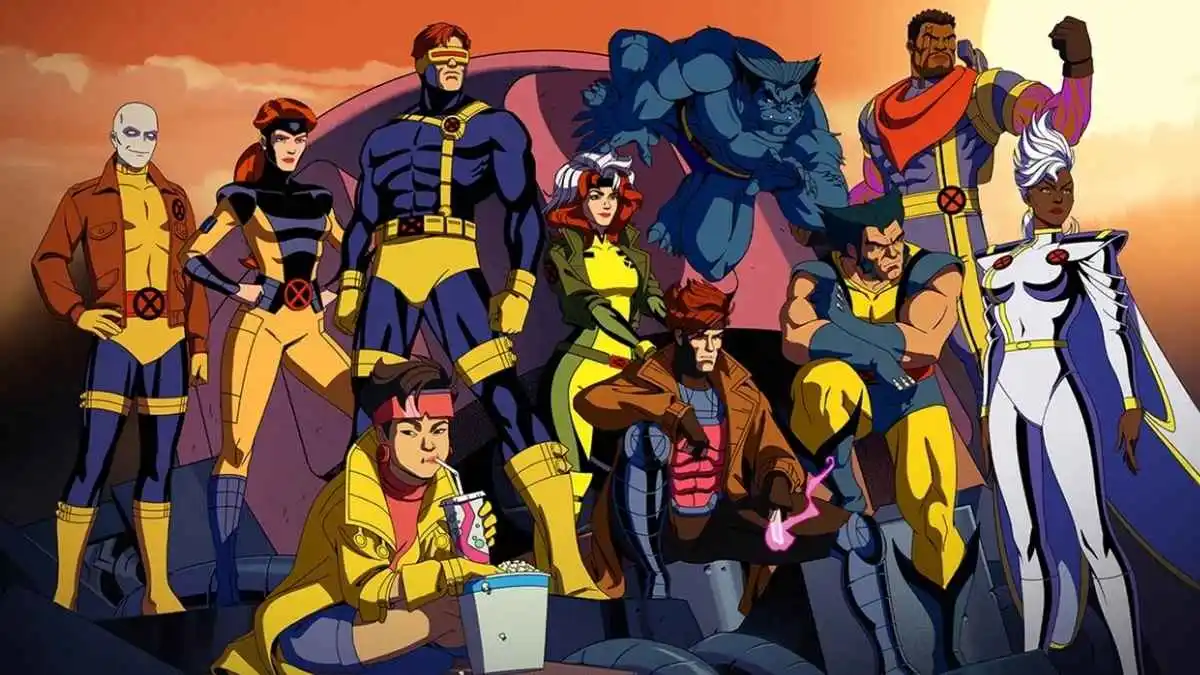
Gambit actor A.J. LoCascio has ignited a firestorm of speculation after expressing a blunt, public desire to leap from the recording booth into the high-stakes world of live-action Marvel projects. When you hear the voice behind the beloved Cajun mutant in X-Men ’97, you understand why fans are clamoring for his physical debut on the big screen, but the industry reality is far more complicated than a simple casting call.
The dream of seeing A.J. LoCascio bring his vocal charisma to a physical MCU role is currently clashing with a pre-determined corporate roadmap. While fans on social media have rallied behind the star, the studio has already set its sights on a different path, leaving many to wonder if talent and chemistry will ever outweigh pre-existing contracts.
The Gambit actor Reality Check
You might think that lending your voice to a character as iconic as Remy LeBeau in X-Men ’97 or the viral hit Marvel Rivals would grant you a golden ticket to the live-action franchise. However, Hollywood doesn’t always operate on meritocracy; it runs on established stars and bankable names. A.J. LoCascio recently took to X, formerly known as Twitter, to comment on a fan suggestion that he should play the character in real life, admitting he is “flattered” by the daily requests.
The core issue here is not just about acting ability—it is about the massive, lumbering machine that is the Marvel Cinematic Universe. When an actor like LoCascio signals his availability to casting directors by saying he is “feeling crazy,” he is playing a high-stakes game of public perception. Fans are notoriously protective of their favorite voice actors, often viewing them as the true custodians of the character’s soul.
Despite the fan support, the industry remains cold when it comes to replacing established stars. 
We have seen this dynamic before, where voice actors become the definitive versions of characters, only to be bypassed by a celebrity casting choice designed to move tickets. The transition from animation to live-action is a bridge rarely crossed by the original voice talent, as studios fear that audiences may struggle to separate the man in the booth from the man on the screen.
You must understand that Kevin Feige and his team are orchestrating a narrative that spans years, not just weeks. Every casting decision is scrutinized for its impact on marketing, global appeal, and potential for sequels. For the Gambit actor to break into this circle, he would need to overcome the massive gravitational pull of established industry A-listers.
If you are looking for more deep-dives into the inner workings of Hollywood’s casting choices, check out the latest celebrity news updates for more exclusives. The industry is changing, and the barrier between digital performance and physical presence is thinner than ever, even if the legal hurdles remain thick.
Why The Dream Faces Resistance
- Celebrity Star Power: The MCU relies on recognizable faces to anchor high-budget tentpole films.
- Contractual Obligations: Actors like Channing Tatum have existing deals that tie them to specific roles across multiple films.
- Project Timelines: With the schedule mapped out until 2028, there is little room for spontaneous casting changes.
- Corporate Vision: Studios often prioritize a specific “look” that matches their internal creative roadmap.
The Massive MCU Timeline Revealed
The roadmap for the future of the X-Men is already locked in, and the sheer scale of the upcoming releases is enough to make any fan dizzy. From the highly anticipated Avengers: Doomsday to the ultimate finale in Avengers: Secret Wars, the studio is moving at breakneck speed. The following table highlights the critical dates that dictate why new casting is so difficult to navigate at this late hour.
| Film Title | Release Date | Significance |
|---|---|---|
| Avengers: Doomsday | December 18, 2026 | Major MCU Expansion |
| Avengers: Secret Wars | December 17, 2027 | Multiverse Climax |
| X-Men Reboot | May 2028 | New Mutant Era |
You can see that the studio strategy leaves almost no room for mid-production pivots. When you look at these dates, you see a concrete plan that has been vetted by accountants, lawyers, and creative executives. The idea of slotting in a new actor for a major legacy role like Gambit requires years of pre-production planning that simply doesn’t exist for a last-minute swap.
Furthermore, the introduction of characters like Sadie Sink as Jean Grey and Kit Connor as Cyclops indicates a demographic shift in the franchise. The studio is looking to build long-term relationships with actors who can carry the franchise for the next decade. 
You must also consider the role of Channing Tatum, who recently made a splash as Gambit in Deadpool and Wolverine. His performance, while polarizing to some, has effectively “claimed” the live-action space for the character within the current iteration of the multiverse. The studio would need a massive catalyst to decide that this current iteration is no longer sufficient.
We are watching a shift in how legacy intellectual property is handled in the streaming era. Voice actors are becoming the bridge between the comic book source material and the modern fan, often serving as the emotional anchor for long-term viewers of X-Men ’97. If the studio continues to ignore this, they may find themselves at odds with their most dedicated fanbase.
The financial stakes are astronomical, often exceeding hundreds of millions of dollars in production and marketing budgets alone. Every decision made is designed to minimize risk and maximize the potential for billion-dollar box office returns. Replacing a star is a risk, but keeping a fan-favorite voice actor on the sidelines might be a risk of a different kind—an alienation of the core audience.
The Future of Mutant Casting
What does this mean for the future of your favorite characters? The current landscape is defined by the massive, highly publicized reboots planned for 2028 and beyond. We are entering an era where familiar faces will be tasked with carrying the weight of decades of comic book history on their shoulders.
You should expect the casting of the X-Men to be one of the most scrutinized events in entertainment history. Every choice—from Samara Weaving as Emma Frost to Adam Driver as Mister Sinister—is going to be picked apart by blogs, podcasts, and social media channels for years. This is the new reality of fandom.
The competition for roles is stiffer than ever, with top-tier talent from all corners of Hollywood vying for a spot in the MCU. Actors are no longer just auditioning for a movie; they are auditioning for a permanent spot in pop culture iconography. This intensity is why actors like A.J. LoCascio, while talented, face an uphill battle against the industry’s obsession with big-name star power.
Yet, the voice of the fans cannot be entirely ignored by the corporate giants in charge. When you and thousands of other viewers speak out on platforms like X or Reddit, it creates a ripple effect. Studios monitor these discussions closely, as they provide real-time data on audience sentiment and potential marketability for future casting decisions.
Perhaps the most compelling argument for the Gambit actor is the sheer continuity of his performance. By staying in the role across various media platforms like Marvel Rivals, he has already done the work of defining the character for a new generation. If the studio decides to pivot, he remains the most logical, organic choice for a transition.
As we move closer to the 2028 release date, keep a close eye on the social media interactions of these actors. In the age of digital transparency, the next big casting announcement might just be hinted at in a cheeky reply or a well-placed photo. The game is changing, and you are right in the middle of it.
Final Thoughts on Casting
Whether or not the Gambit actor gets his moment in the sun, his public advocacy highlights a fascinating tension in modern Hollywood between fan desires and corporate strategy. You have watched the MCU grow from a single experiment into a massive, unstoppable juggernaut that dictates the flow of global entertainment. Even with all the data and strategy, the human element—the passion of an actor, the outcry of a fan—still manages to disrupt the narrative from time to time.
While the path to live-action glory is obstructed by contracts and massive, multi-year plans, the conversation itself proves that the legacy of the X-Men is more vibrant than ever. Stay tuned, because in the Marvel universe, the only thing that is truly permanent is change. Your voice matters, and the future of your favorite heroes depends on the delicate balance of talent, timing, and pure, unadulterated luck.
More Like This
For more updates, check out our latest entertainment and sports news.