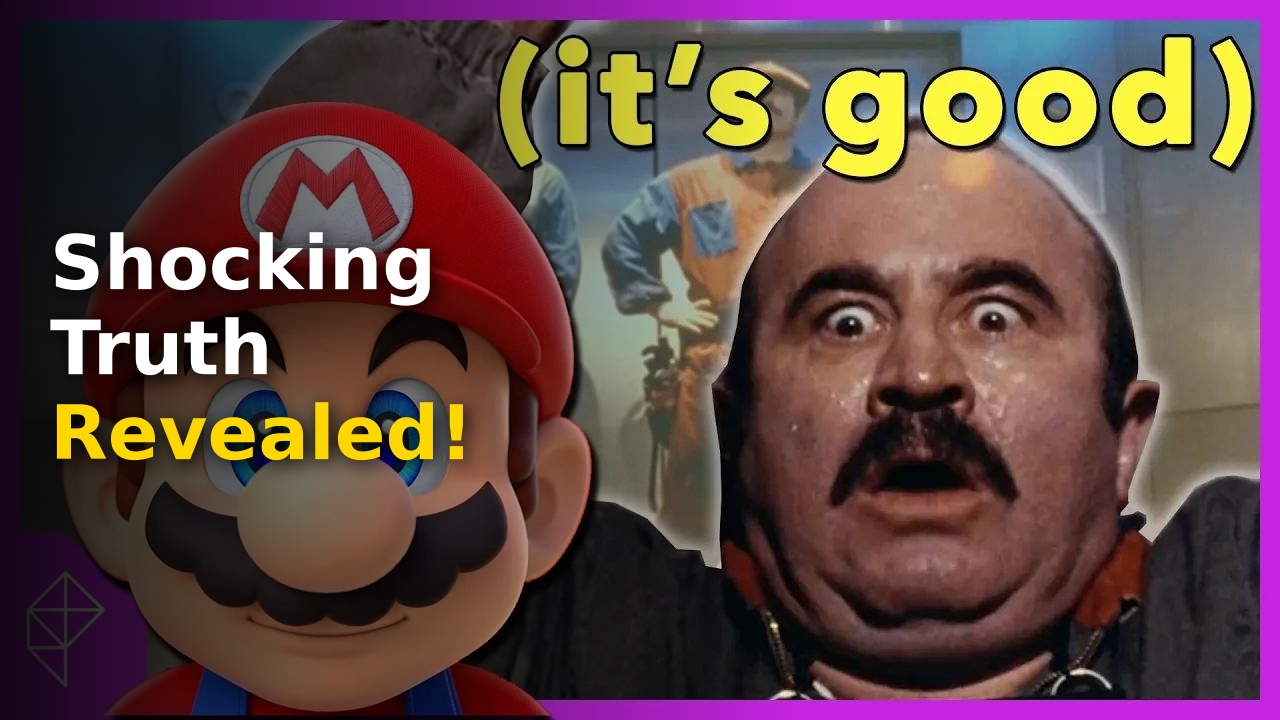
Mario movie history is defined by a singular, disastrous failure that haunts Hollywood executives to this day. You might remember the 1993 live-action adaptation as a fever dream of neon lights and lizard-people, but what if everything you were told about its legendary status was completely wrong?
For decades, pop culture critics have labeled this film as the ultimate cautionary tale for video game adaptations. However, beneath the layer of critical disdain lies a complex story of ambition, creative clashes, and a vision that was simply too far ahead of its time for Nintendo fans.
The Mario Movie Truth
When you look back at the 1993 production, you are looking at a chaotic intersection of gritty science fiction and surrealist comedy. Directed by Rocky Morton and Annabel Jankel, the film dared to ignore the source material entirely, opting instead for a dystopian vision of Dinohattan. While purists threw popcorn at the screen, the production design deserves a second look today for its sheer audacity and practical effects work.
You might be surprised to learn that Bob Hoskins, who played the titular plumber, initially had no idea he was acting in a game adaptation. The atmosphere on set was famously tense, with lead actors frequently clashing with the directors over the script’s dark, disjointed tone. This friction is exactly what gives the film its unique, unhinged energy that has cultivated a massive cult following over the last thirty years.
The film’s failure wasn’t just artistic; it was a systemic disconnect between an experimental European directing style and the rigid expectations of the Japanese gaming giant. You can see the struggle in every frame, as the film tries to balance the whimsy of Super Mario Bros with the nihilism of Blade Runner. This collision created a cinematic relic that feels unlike anything produced in the modern era of cookie-cutter superhero films.
Despite the negative reviews, the film employed cutting-edge technology that remains impressive when viewed through a modern lens. The creature designs for the Goombas, while terrifyingly distinct from their game counterparts, showcase a level of practical artistry rarely seen in contemporary CGI-heavy productions. When you examine the technical achievements, it becomes clear that this wasn’t a lazy project, but a misdirected one.
It is worth noting that for those looking for a deep dive into the business side of Hollywood disasters, you can find more analysis on pop culture breakdowns that challenge the standard narratives regarding box office bombs. These perspectives often reveal that a ‘bad’ movie can often be more influential than a ‘good’ one because it forces the industry to recalibrate. The Mario movie did exactly that, setting the stage for decades of cautious development at Nintendo.

If you choose to watch it now, you need to abandon your nostalgia for the NES pixel art. Treat it as an independent sci-fi project from the early 90s, and you will find a strange, compelling rhythm to the madness. The performances, particularly by Dennis Hopper as King Koopa, are over-the-top, chewing the scenery with a manic joy that keeps you glued to the screen.
Production Chaos Stats
The numbers behind this project tell a story of immense financial gamble and inevitable fallout. The budget ballooned as the production hit multiple delays in North Carolina, leading to a final bill that far exceeded original projections. When compared to the massive success of the 2023 animated feature, the contrast in strategy becomes incredibly sharp.
| Category | 1993 Original | 2023 Remake |
|---|---|---|
| Budget (Millions) | $48 Million | $100 Million |
| Box Office | $38 Million | $1.3 Billion |
| Critical Reception | Very Poor | Mixed/Positive |
You can see how the failure of the 1993 attempt directly influenced Shigeru Miyamoto to take a much stricter, hands-on approach for the next three decades. The fear instilled by that specific box office loss kept Mario off the big screen for thirty years. This gap in time actually added a layer of mythos to the original film that arguably helped it gain a status as a must-see piece of bad cinema.
Analyzing the performance metrics, it is evident that the target demographic was confused. The original audience was children who wanted a faithful representation of their games, but the filmmakers delivered an adult-skewing, gritty cyberpunk aesthetic. It was a mismatch of marketing that doomed the project from the pre-production phase.
If you examine the inflation-adjusted figures, the loss was even more substantial than the headline numbers suggest. The studio expected a massive franchise starter, similar to the Batman films of that era, but received a cautionary note instead. This is a common pattern in the entertainment industry where ambition outstrips the technical and creative capacity to deliver on a concept.
Investors and stakeholders in the 90s were desperate to replicate comic book success in gaming, yet they lacked the proprietary control Nintendo now demands. This film serves as a perfect case study for why intellectual property management is the most important element of modern filmmaking. Without a firm hand on the vision, you end up with a project that pleases no one.
Ultimately, the figures prove that Nintendo learned the hard way. They spent years shielding their assets, ensuring that when they finally returned to the medium, it would be under their absolute authority. The 1993 disaster was the catalyst that changed the history of film adaptation forever.
Reevaluating The Cult Classic
Today, the Mario movie serves as a strange monument to a bygone era of wild, unchecked experimentation in Hollywood. Critics who once buried the film are now hosting retrospective screenings, noting that the sheer weirdness provides more entertainment value than the sanitized products of the modern day. You may find yourself laughing at the absurdity rather than cringing at the failures.
The costume design, which features boots with heels for Mario, is a perfect example of the strange decisions that permeated the film. These choices were bold, if misplaced, and they give the movie a visual identity that is impossible to replicate. It is a film that demands you pay attention, even when it is actively offending your sensibilities.
There is also the music, composed by Alan Silvestri, which remains a surprisingly strong highlight amidst the chaos. It manages to weave a sense of adventure that fits the themes of the original games, even if the on-screen visuals are fighting against it. If you close your eyes and listen, you get a sense of what the film could have been.
The script, though often criticized for its plot holes, contains moments of genuine wit and physical comedy that show the potential of the actors involved. John Leguizamo and Bob Hoskins had a chemistry that could have worked in a different genre, proving that the casting director’s instinct was not entirely off-base. You can see the flashes of greatness that were buried under the weight of the production design.
As you explore the film further, look into the Super Mario Bros fan-led preservation efforts that have restored deleted footage. These dedicated fans are the ones keeping the legacy alive, treating it with the care that the studio originally ignored. They remind us that even ‘failed’ art has value when people choose to look for it.

The legacy of the film is no longer a wound, but a badge of honor for those who appreciate the bizarre. It is a cautionary tale that has evolved into a fascinating piece of cinema history that deserves a spot in your watchlist. You might just find that your opinion changes after a second look through a more cynical, modern lens.
Shifting Industry Narratives
When you look at how video game adaptations have shifted, the original Mario movie is the anchor point for the ‘before’ phase. Hollywood finally realized that they could not simply license a name and slap it onto a generic script. It taught the industry that the ‘soul’ of the game—the core mechanics and the emotional core—must be preserved.
The development cycle for such projects has slowed down considerably to ensure quality, a direct consequence of the 1993 fiasco. Now, producers meet with developers daily, ensuring that the visual language aligns perfectly with the source. This collaboration is the industry standard today, thanks to the lessons learned from decades of failure.
Furthermore, the democratization of media critique via social platforms has allowed films like the Mario movie to undergo a reappraisal. Instead of relying on a handful of gatekeepers, you can now hear the voices of millions who share their nostalgic appreciation for these projects. This shift has given second lives to movies that were once dead on arrival.
Studios are now more willing to take risks on quirky, auteur-led projects again, provided they have the backing of established franchises. You can see the influence of this shift in the way studios handle their intellectual property library today. They are no longer content to sell off rights; they want to build kingdoms.
This evolution also highlights the importance of the director’s vision in balancing studio expectations. You need someone at the helm who can communicate effectively with the original creators while keeping the film commercially viable. It is a tightrope walk that only a few masters can successfully navigate.
Perhaps the most vital takeaway is that audience tastes evolve rapidly. What was considered a ‘massive failure’ in 1993 is now viewed as an eccentric cult gem. You are the final judge of whether a film works, and your changing standards are the primary driver of Hollywood innovation.
Final Thoughts
Deciding whether the Mario movie is truly a failure or a misunderstood classic is a journey you must take for yourself. While it certainly derailed the initial plans for a grand series, it left behind a unique artifact that tells the story of an industry in transition. This Mario movie experience reminds us that failure is often just the beginning of a much more interesting conversation about art and expectation. Next time you see those red overalls on screen, remember the bizarre, neon-soaked chaos that paved the way.
More Like This
For more updates, check out our latest entertainment and sports news.