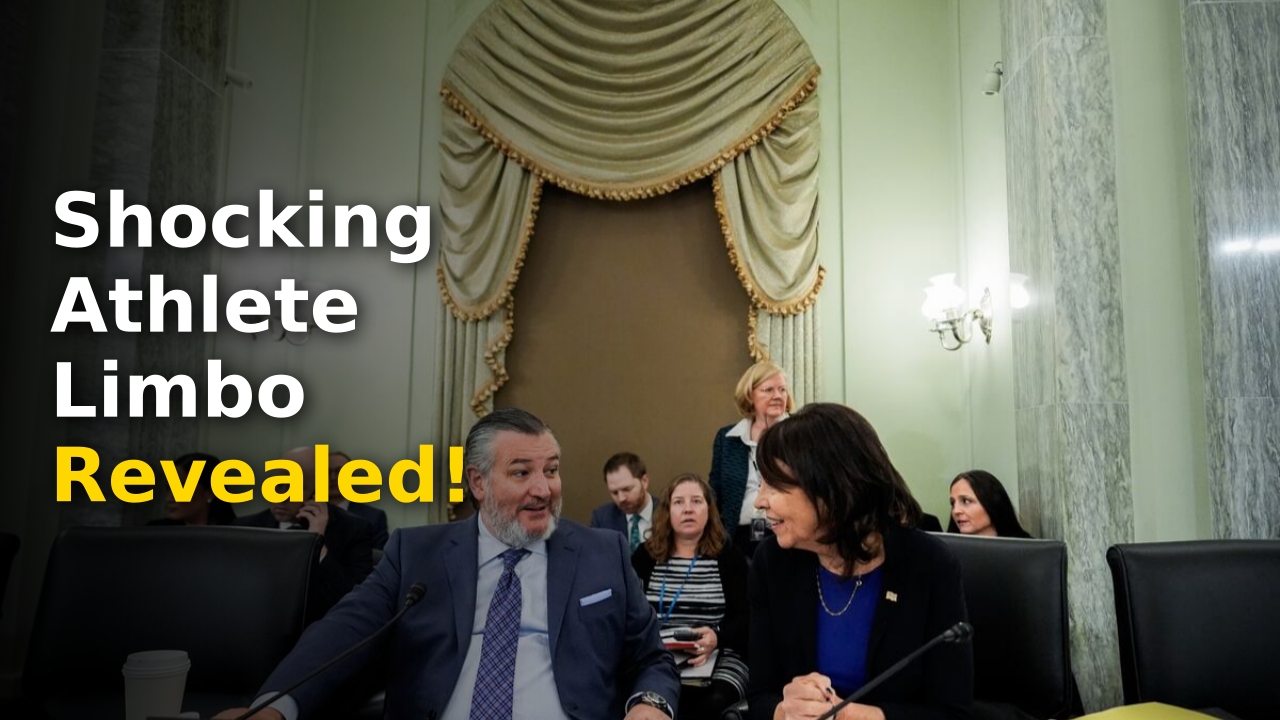
Athlete Limbo is the nightmare reality for thousands of students returning to campus this fall as a critical sports bill remains stalled in the Senate. You might think college sports are just about the glory on the field, but for many, the dream is being dismantled by shifting legal landscapes and legislative gridlock. Imagine training your entire life for a spot on a college team only to find out your program has been deleted to pay for a star quarterback’s salary.
As you watch students pack their cars and head back to university, a dark cloud of uncertainty hangs over the non-revenue programs. Schools across the nation are making brutal choices that prioritize the highest-earning sports while leaving others in the dust. This isn’t just a minor policy change; it is a fundamental shift in how higher education views the student-athlete experience.
The transition from amateurism to a salary-capped entertainment business is happening faster than anyone predicted. You are witnessing the birth of a new era where the NCAA is no longer the sole arbiter of rules. With the Senate recessed until mid-September, the future of thousands of young people remains a secondary concern to political maneuvering.
The Reality of Athlete Limbo
Athlete Limbo has become the defining characteristic of the 2026-2027 academic year for swimmers, divers, and track stars. You can see the devastation at the University of Virginia, where the diving team is no more, or at California Polytechnic State University, which cut its swimming program entirely. These aren’t just statistics; they are shattered aspirations for athletes who were promised a four-year home.
Schools are effectively making trade-offs to compensate previously unpaid athletes on high-profile teams. To fund the $21.3 million annual revenue-sharing cap, mid-tier and Olympic sports are being sacrificed. Gannon Flynn, a rising junior and swimmer at Boston University, knows this pain better than anyone after being cut from the University of Utah due to roster constraints.
Flynn is just one of many athletes who have had to transfer to keep their dreams alive. He now finds himself in the middle of a political fight he never asked for, advocating for a bill that could save his sport. The shift toward a professionalized model means that if your sport doesn’t generate a massive profit, your spot on the roster is never truly safe.
The unintended consequences of recent court decisions are now coming home to roost. While the stars of the SEC and Big Ten are looking at massive paydays, the rank-and-file athlete is wondering if their locker will still be there next semester. You have to wonder if the “student-athlete” moniker still holds any meaning in this hyper-commercialized environment.
Athletes are no longer just competitors; they are becoming lobbyists and political activists. They are forced to learn the inner workings of Washington D.C. just to ensure their programs survive. It is a heavy burden for someone who should be focused on their midterms and their next personal best.
This situation is a direct result of decades of the NCAA resisting change until the courts forced their hand. Now, the vacuum left by a lack of clear federal guidance is being filled by confusion and anxiety. You are seeing a system in total freefall, waiting for a legislative parachute that may never open.

The High Cost of Progress
- Over 40 Olympic sports programs in NCAA Division I have been eliminated in the last two years.
- Football, baseball, and women’s soccer are projected to cut over 1,000 athletes combined.
- The new roster limits replace the traditional scholarship-based system, forcing coaches to make impossible cuts.
- Boston University is among the latest schools to opt into the revenue-sharing model despite the costs.
Billions at Stake in 2026
The financial landscape of college athletics was permanently altered in June 2021 when the Supreme Court ruled against the NCAA regarding antitrust laws. This opened the floodgates for NIL (Name, Image, and Likeness) compensation, allowing athletes to finally profit from their own identities. However, the legal battles were only just beginning for the governing body of college sports.
In June 2025, the massive House v. NCAA settlement was reached, involving lead plaintiff Grant House from Arizona State University. The NCAA agreed to pay a staggering $2.8 billion in back damages to former athletes. This settlement also paved the way for schools to share up to 22 percent of their average revenue with current players.
For the 2026-27 season, that translates to roughly $21.3 million per school in the major conferences. You can imagine the pressure this puts on athletic directors to find that money somewhere. For most, the easiest solution is to cut the programs that don’t bring in television revenue or ticket sales.
This is where the Athlete Limbo becomes a financial trap for smaller programs. While the ACC, Big Ten, Big 12, SEC, and Pac-12 have the resources to adapt, others are struggling. Even schools outside these power conferences are trying to opt-in to stay competitive in the recruiting wars.
Duke University professor Ezra Kucharz warns that this spending will only widen the gap between the elite schools and the rest. He suggests that college athletics is becoming a salary-capped entertainment business rather than an educational pursuit. Every dollar given to a star wide receiver is a dollar taken away from a fencing or rowing team.
The move toward a professional model is also sparking a debate about employment status. If athletes are receiving a share of the revenue, are they still students, or are they employees? Organizations like Athletes.org are pushing for collective bargaining rights to give players a seat at the table.
NCAA Settlement Impact Data
| Category | Impact Detail | Financial Figure |
|---|---|---|
| Back Damages | Payment to former athletes for lost NIL earnings | $2.8 Billion |
| Revenue Share | Annual cap for Power 5 conference schools | $21.3 Million |
| Retention Bonus | Proposed spending on multi-year athletes | $22.5 Million |
| Olympic Support | Mandated spending for non-revenue sports | $5 Million |
The Olympic Pipeline Crisis
You might be surprised to learn how much the United States relies on college sports for international glory. At the 2024 Olympics in Paris, a whopping 75 percent of Team USA Olympians came from the collegiate system. If the Athlete Limbo continues, the American dominance on the world stage could be in serious jeopardy.
Gracelyn Laudermilch, a track athlete at Liberty University, is fighting to ensure the pipeline remains open. Her team saw its roster drop from 32 women to just 17 following the recent settlements. This isn’t just about losing a spot; it’s about losing the coaching and facilities necessary to reach the Olympic level.
Laudermilch has taken her fight to the US Court of Appeals for the Ninth Circuit. She argues that the roster limits are a direct threat to the development of world-class athletes in non-revenue sports. Without the NCAA, many of these athletes have nowhere else to train at a high level.
The Protect College Sports Act seeks to address this by mandating that schools maintain certain roster sizes. However, the bill’s mandates are temporary, lasting only nine years for large schools and four years for others. This “sunset clause” has many advocacy groups worried about the long-term stability of the system.
You have to consider what happens to the sports like rowing, fencing, and gymnastics that don’t have professional leagues. For these athletes, college is the pinnacle of their competitive careers and the only path to the Games. If the NCAA becomes nothing more than a minor league for the NFL and NBA, something precious will be lost.
The US Olympic and Paralympic Committee has officially supported the bill, citing the critical role of college sports. They understand that the current Athlete Limbo is a national security issue for the country’s sporting pride. The question remains whether Congress will value gold medals over political bickering.

Politicians and Power Plays
The battle for the future of college sports has moved from the locker room to the Senate floor. Republican Senator Ted Cruz and Democratic Senator Maria Cantwell have teamed up on the Protect College Sports Act. It is a rare moment of bipartisan cooperation in a deeply divided Washington.
Despite this support, the bill failed to reach a vote before the August recess. Even last-minute endorsements from the SEC and Big Ten weren’t enough to push it over the finish line. This legislative failure is what has left so many young people in a state of Athlete Limbo as they head back to class.
Representative Lori Trahan, a former Georgetown University volleyball player, is one of the bill’s most vocal critics. She argues that the legislation gives the NCAA too much protection and fails to safeguard female athletes. Trahan believes the bill codifies a settlement that is still being appealed in court.
For Trahan, college sports changed the trajectory of her life, and she doesn’t want to see those opportunities vanish for others. She is pushing for a more comprehensive approach that doesn’t just protect the status quo for the big-money programs. Her opposition highlights the complexity of creating a one-size-fits-all rule for thousands of diverse institutions.
NCAA President Charlie Baker has been making the rounds on media outlets like CBS News to advocate for the bill. He argues that college sports need a national set of rules to prevent a patchwork of state laws from creating chaos. Blake James, the athletic director at Boston College, agrees that coaches and administrators are desperate for structure.
The bill would also implement rules to prevent head coaches from switching teams mid-season and limit student transfers. These changes are designed to bring some sanity back to the “wild west” of the current portal system. To read more about how major changes affect the world of fame and sports, visit brightcelebrity.com for deep dives into athlete lifestyles.
Solving the Athlete Limbo
To truly end the Athlete Limbo, a permanent solution must be found that balances revenue with opportunity. The current model of cutting small programs to pay for big ones is unsustainable and shortsighted. You cannot have a thriving sports culture if you only value two or three disciplines.
Athletes like Jackson Pruitt of Temple University are calling for a fair conversation where their voices are actually heard. He believes that playing college football at a high level is a job and should be treated as such. By educating his peers and speaking out, he hopes to change the narrative from “grateful student” to “valued partner.”
The legal history of these changes is extensive and can be explored further on Wikipedia. It shows a long history of the NCAA fighting to keep every cent of revenue while keeping athletes on the sidelines of financial growth. Now that the dam has broken, the rush of money is threatening to drown the very programs that make college sports unique.
As the Senate prepares to return in mid-September, all eyes will be on the Protect College Sports Act. Will lawmakers prioritize the Olympic pipeline and the dreams of thousands, or will they let the clock run out again? For the students currently in Athlete Limbo, the answer will determine the rest of their lives.
You have a front-row seat to the most significant transformation in the history of American sports. It is a story of greed, justice, and the resilience of young athletes who just want to compete. Stay tuned as this high-stakes drama continues to unfold on campuses across the nation.
Ultimately, the Athlete Limbo is a reflection of a society struggling to define the value of sport beyond the bottom line. Whether the final buzzer sounds on a fair deal or a lopsided victory for the power brokers remains to be seen. One thing is certain: college sports will never be the same again.
More Like This
For more updates, check out our latest entertainment and sports news.