
Energy Twin mechanics are suddenly the talk of the town after the premiere of HBO’s massive new series, Lanterns, shocked long-time comic book fans. You might be wondering why a seemingly silly concept from the 1960s is taking center stage in a show that prides itself on being grounded and gritty. The premiere episode introduces us to John Stewart, played by the talented Aaron Pierre, as he navigates the high-pressure world of the Green Lantern Corps under the cynical gaze of Hal Jordan.
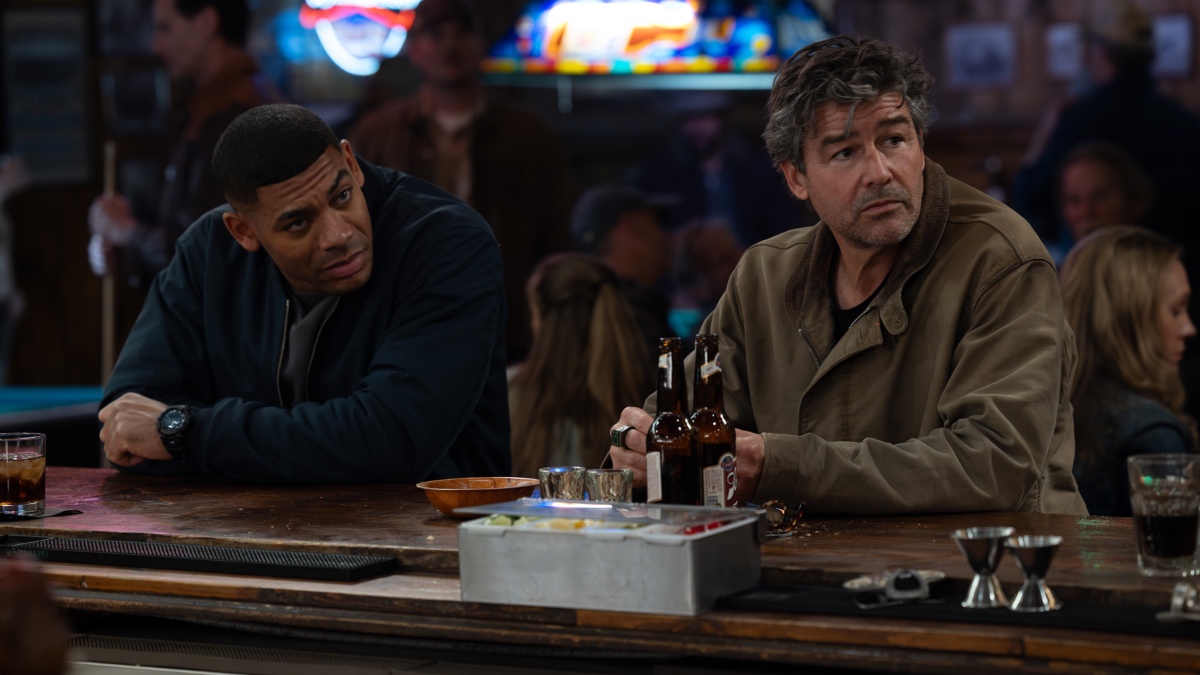
The tension between the mentor and the trainee reaches a boiling point early on. Hal Jordan, portrayed by Kyle Chandler, spends his time belittling John Stewart, even leaving him stranded or forcing him to find his own way to Rushville, Nebraska. However, the dynamic shifts when John Stewart identifies a backup construct as a “Hal-o-Gram.” This clever nod to a classic power proves that the new series isn’t afraid to dive deep into the archives of DC Comics history.
Energy Twin Origins Revealed
The Energy Twin power isn’t just a gimmick; it is a fundamental part of the Silver Age lore that defined the 1960s. First appearing in Green Lantern #6 back in 1961, the concept was introduced by the legendary creative team of John Broome and Gil Kane. In that specific issue, the story established that Hal Jordan could create a perfect duplicate of himself to be in two places at once.
This was particularly useful for maintaining his secret identity as a test pilot. While Hal Jordan was in a cockpit, his duplicate could be off fighting intergalactic threats. The comic initially claimed that the Energy Twin was only possible because of the unique magnetic fields on the planet Aku. Over time, writers realized how versatile this power was and made it a standard ability for the entire Corps.
You have to remember that Silver Age storytelling was wild. This was an era where Superman had super-ventriloquism and Batman kept shark repellent in his belt. Creating a sentient light-double was actually one of the more logical powers compared to some of the other madness found in the panels of DC Comics. The ability to split one’s consciousness into a hard-light construct opened up endless narrative possibilities for the Guardians of the Universe.

The Magnetic Fields of Aku
In the original 1961 tale, the Energy Twin was described as a backup personality. This duplicate possessed all of Hal’s memories but lacked the true willpower of the original ring-bearer. It was essentially an automated drone that looked and acted exactly like the hero. This allowed the story to explore themes of identity and the heavy burden of being a cosmic peacekeeper.
As the years progressed, the limitations of the planet Aku were quietly ignored. Fans loved the idea of a hero being able to attend a board meeting and a space battle simultaneously. It represents the ultimate wish fulfillment for anyone who has ever felt overwhelmed by their daily responsibilities. This is why the revival of the Energy Twin in the HBO series feels so nostalgic yet fresh.
Silver Age Power Mechanics
An Energy Twin functions differently than a standard hard-light construct like a giant boxing glove or a emerald shield. While most constructs require constant mental focus, the twin acts as a semi-autonomous extension of the user. It can speak, interact with objects, and even use a limited version of the ring’s power. This makes it an incredibly sophisticated tool for reconnaissance and diplomacy.
The transition from the Golden Age to the Silver Age changed how these powers were perceived. Alan Scott, the original Green Lantern created by Martin Nodell and Bill Finger, used a magical ring. His powers were essentially limited only by his imagination and the color yellow. When the character was rebooted as the sci-fi hero Hal Jordan in 1959, the ring became a piece of advanced alien technology from Oa.
Even with the shift to science, the Energy Twin felt like magic. It pushed the boundaries of what alien technology could achieve. The ring wasn’t just a weapon; it was a computer, a communicator, and a biological interface. You can see how this evolution of powers is being utilized in brightcelebrity.com news updates about the expanding DC cinematic universe. The show Lanterns is bridging the gap between these high-concept sci-fi tropes and a modern police procedural vibe.
| Era Name | Green Lantern Concept | Primary Function |
|---|---|---|
| Golden Age | Magic Wishing Ring | Intangibility and Flight |
| Silver Age | Energy Twin Creation | Identity Protection |
| Bronze Age | Remote Reporting | Interstellar Diplomacy |
| Modern Age | Memory Downloads | Digital Interfacing |
Evolution of Ring Mechanics
Throughout the 1980s, the Energy Twin became a staple of the Green Lantern Corps title. Writers Steve Englehart and Joe Staton moved several Lanterns to Earth, which required them to stay in contact with the Guardians of the Universe on Oa. Sending a physical body across the galaxy takes time, but an Energy Twin could travel at the speed of thought. This allowed characters like Katma Tui to stay active on two fronts at once.
A famous example occurred in 1985 during Green Lantern #194. Katma Tui sent her Energy Twin to Oa to report on the catastrophic events of the Crisis on Infinite Earths. When the Anti-Monitor attacked the home of the Guardians, the duplicate was nearly destroyed. This added a layer of danger to the power; if the twin suffered trauma, the original host felt the psychic backlash.
You might think this makes the Lanterns too powerful. However, the mental strain of maintaining a duplicate is immense. The show creators, Damon Lindelof and Tom King, likely saw this as a way to explore the psychological toll of being a hero. Managing an Energy Twin requires a level of willpower that few mortals possess, which sets John Stewart and Hal Jordan apart from ordinary humans.
The Parallax Disappearance
After Hal Jordan succumbed to the Parallax entity and decimated the Corps, the Energy Twin technique was largely forgotten. Kyle Rayner, the lone Green Lantern for years, never had a reason to use it because there was no Corps to report back to. The art of the light-duplicate became a lost relic of a bygone era, known only to the most dedicated historians of the emerald light.
It wasn’t until 2023 that writer Morgan Hampton reintroduced the concept in Green Lantern Corps #11. This revival in the comics perfectly paved the way for the HBO series. It shows a concerted effort by DC Studios to unify their comic book narratives with their high-budget television projects. The return of the Energy Twin signifies a return to the cosmic grandeur that fans have missed.
Lanterns HBO Series Impact
The decision to include an Energy Twin in Lanterns is a bold move by the showrunners. Chris Mundy, known for his work on Ozark, brings a sense of realism that usually clashes with comic book silliness. Yet, by calling it a “Hal-o-Gram,” the show acknowledges the absurdity while making it feel like a functional tool. It’s a brilliant piece of writing that respects the source material without being bogged down by it.
This power allows the show to tackle the vastness of space while keeping the budget focused on character-driven scenes on Earth. An Energy Twin can represent the cosmic side of the job, while the physical actor stays grounded in the central mystery. It solves the “Green Lantern problem” of how to make a space-faring hero work in a detective story format. You are seeing a masterclass in adaptation here.
Furthermore, the Energy Twin serves as a bridge for the audience. Not everyone knows the intricate details of Oan technology. By introducing the concept through a joke and then showing its utility, the show makes it accessible. This is the kind of smart storytelling that will likely lead to high viewer retention and critical acclaim for the DC Universe project.
Bridging Two Worlds
The dynamic between John Stewart and Hal Jordan is the heart of the series. Using the Energy Twin as a point of contention—where Hal is dismissive and John is impressed—highlights their generational gap. Hal Jordan treats his god-like powers with a casual arrogance, while John Stewart views everything with the meticulous eye of an architect. This contrast is what makes their partnership so compelling to watch.
As the series progresses, we can expect the Energy Twin to play a larger role in the investigation. Perhaps the Lanterns will use duplicates to bait a trap for a cosmic killer. Or maybe an Energy Twin will be the only thing left of a hero after a brutal encounter. The possibilities are endless, and it’s all thanks to a “silly” idea from a comic book published over sixty years ago.
Legacy of Energy Twins
In the grand scheme of the DCU, the Energy Twin represents the boundless creativity of the Silver Age. It’s a reminder that even the most outlandish ideas can be reinvented for a modern audience if the emotional core is strong. The Energy Twin isn’t just about being in two places at once; it’s about the desire to do more, be more, and save more people than humanly possible.
Fans are already theorizing how this power will affect future films. With James Gunn leading the charge, we can expect more deep-cut comic references like this. The Energy Twin could very well show up in a future Justice League crossover, allowing Green Lantern to be a strategist and a front-line fighter simultaneously. It’s a tactical advantage that no other hero can match.
You should keep a close eye on how the show handles the technical limitations of the duplicate. Does it have a time limit? Can it be hacked by enemy technology? These are the questions that keep the fandom engaged. The Energy Twin has officially transitioned from a forgotten footnote to a major plot point in the most exciting superhero show of the year.
Modern Comic Context
The recent return of the power in Green Lantern Corps #11 proved that there is still a hunger for classic tropes. Morgan Hampton managed to make the duplicate feel essential to a modern team dynamic. In the comics, the Energy Twin is now used more for mental health checks among Corps members, allowing them to vent to a construct that knows them perfectly. This adds a psychological depth that was absent in the 1960s.
The HBO show seems to be following this path. By making the Energy Twin a point of character development between Hal and John, they are grounding the power in human emotion. It’s not just a cool effect; it’s a window into the souls of these cosmic defenders. The legacy of the Energy Twin is safer than ever in the hands of this creative team.
Future of DC Canon
Looking ahead, the Energy Twin will likely become a signature move for John Stewart. While the concept started with Hal Jordan, Stewart’s disciplined mind is perfect for managing a complex construct. This fits his character perfectly, as he is known for creating the most detailed and structurally sound constructs in the entire Green Lantern Corps. The student may very well surpass the master in this specific discipline.
The success of Lanterns on HBO and Max will determine the future of these classic concepts. If audiences embrace the Energy Twin, expect to see more Silver Age weirdness making its way into the mainstream. From Ch’p the space squirrel to the sentient planet Mogo, nothing is off the table anymore. We are living in a golden age of comic book television where no concept is too “silly” for a high-quality drama.
As you watch John Stewart and Hal Jordan investigate the darkness at the edge of the universe, remember that their greatest weapon is their imagination. The Energy Twin is a manifestation of that power, a glowing emerald beacon of what is possible when willpower meets creativity. Make sure to tune in every Sunday at 9 p.m. to see how this incredible power evolves next.
The revival of the Energy Twin is a victory for fans who love the deep lore of DC Comics. It proves that the history of the Green Lantern Corps is a treasure trove of inspiration for modern storytellers. Whether you call it a Hal-o-Gram or a sentient duplicate, the Energy Twin is here to stay, and it’s making the DC Universe a much more interesting place to visit.
More Like This
For more updates, check out our latest entertainment and sports news.