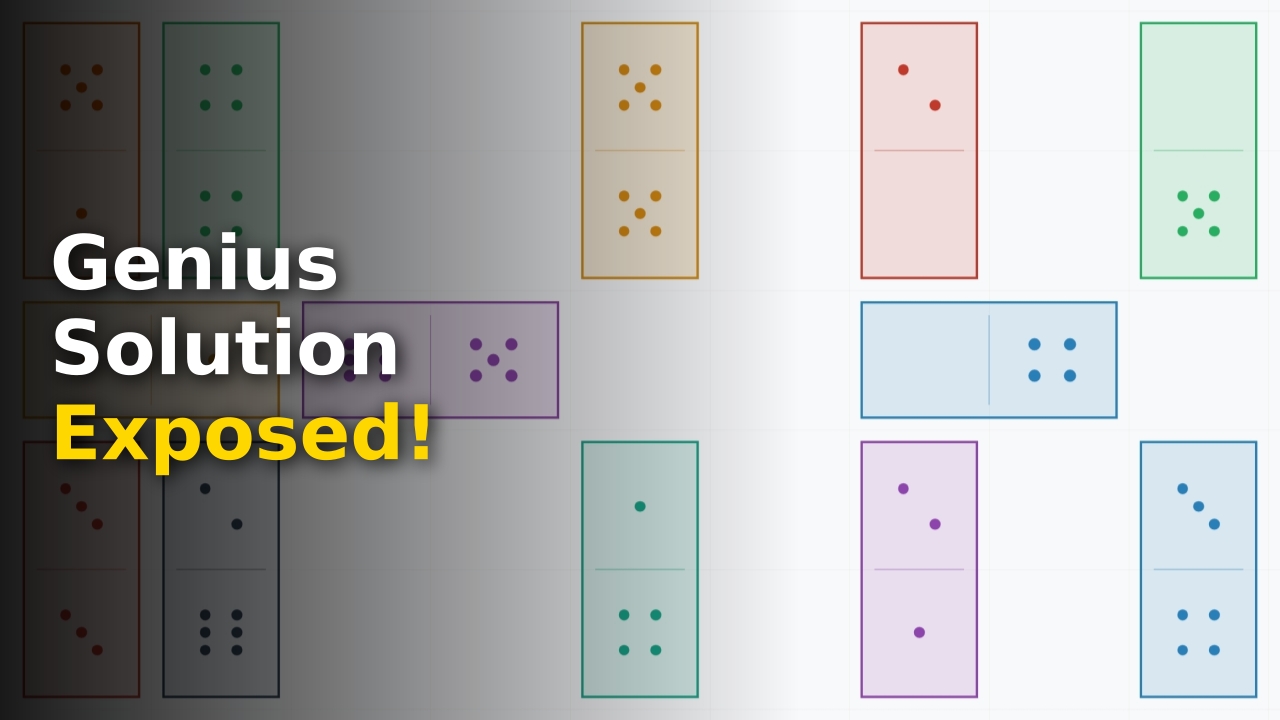
Are you struggling to solve today’s brain-melting puzzle grid? The daily **NYT Pips** challenge for **16-August-2026** is here to test your limits with dominoes, math logic, and spatial reasoning. You will find that today’s Easy, Medium, and Hard boards require a mix of rapid calculation and clever layout planning to solve before your daily streak ends. In this deep-dive guide, we break down every hint, rule, and absolute answer to make sure you keep your winning streak alive.
Keeping a daily puzzle streak alive is not just about bragging rights; it is about keeping your mind sharp in an increasingly distracted world. Today’s boards present a highly unique arrangement of dominoes that might feel completely counterintuitive at first glance. If you are feeling stuck on today’s grid, do not worry because we have compiled the perfect strategy guide to get you through the bottleneck.
Mastering NYT Pips Today
Today’s layout introduces a series of tight regions that can easily lead to frustrating dead ends if you place tiles carelessly. The digital board is built around standard domino blocks, which forces you to think about how placing one half of a tile affects adjacent zones. Solving this puzzle is all about visual deduction and keeping a sharp eye on how numbers interact across color-coded boundaries.
The daily boards present distinct logic trials that test even the most experienced visual thinkers. If you feel stuck, remember that you are not alone in trying to decode these complex math structures today. Let us walk through some foundational methods to unlock the grid before exploring the actual answers.
The **New York Times** has a legendary history of puzzle curation, dating back to the launch of their iconic Crossword during **World War II** in **New York City**. Today, the platform has expanded into a massive digital hub featuring modern classics like Wordle, which was acquired for over **$1 million**, as well as Connections and Strands. The introduction of **NYT Pips** represents their latest push into spatial-mathematical challenges, combining the tactile joy of traditional dominoes with clean, responsive digital mechanics.
Quick Strategy Tips
To gain an immediate advantage, always look for the most restrictive zones first. Regions with high sums like twelve or ten have far fewer tile combinations than flexible zones like those requiring less than five. By locking these strict mathematical spaces down first, you automatically reduce the remaining possibilities for the rest of the board.
Another fantastic technique is to work backward from the edges of the board. The outer boundaries limit your placement options, which naturally guides your tile choices toward the center. This strategy keeps your workspace organized and prevents chaotic guesswork.
Lastly, do not hesitate to clear the board and start fresh if you hit a mental wall. Sometimes, a single misplaced tile early in the game can throw off the entire grid. Resetting allows your brain to spot patterns you might have missed during your first attempt.
Logic Behind the Grid
Every daily board relies on a complex system of spatial rules that dictate where tiles can sit. The grid uses color-coding to group spaces into distinct zones, each with its own strict mathematical demand. Understanding these visual cues is the absolute key to mastering the game over time.
Each board is populated with virtual classic domino tiles, meaning you must think about both halves of the tile. A tile placed to satisfy a sum on the left might completely break an inequality rule on the right. This dual nature of the tiles is what makes the game incredibly challenging yet satisfying.
Many digital puzzle games overlook the balance between visual design and mechanics. However, this game excels by using intuitive interfaces that let you drag, drop, and rotate tiles effortlessly. This seamless control scheme ensures you can focus entirely on solving the logic puzzle itself.
Decoding Color Zones
The colored zones act as visual containers for your mathematical operations. Red zones typically demand exact addition totals, while blue zones might require absolute equality across all contained half-tiles. Paying close attention to these colors helps you instantly categorize the challenges on your screen.
Green and yellow regions are often dedicated to inequalities, which offer a bit more flexibility. These zones are perfect for dumping tiles with extreme values once your main zones are settled. Learning to balance these strict and flexible zones is the hallmark of an elite player.
Additionally, the orientation of your tiles plays a massive role in spatial management. A horizontal placement might block a crucial pathway, while a vertical placement leaves room for adjacent moves. Always visualize both orientations before committing to a final position.
Comprehensive Game Rules Explained
To truly master this daily phenomenon, you must have an intimate understanding of the core rule types. The system utilizes four main types of constraints: sums, equalities, less than, and greater than. Each of these requires a slightly different mental approach to solve efficiently.
Sum zones, labeled as “Number (X)”, require all the pips in that specific region to add up to exactly X. This is where your basic arithmetic skills come in handy under pressure. You must calculate all potential combinations that equal the target number while respecting the available tiles.
Equal zones require every single half-tile placed within that boundary to display the exact same number of pips. This rule is highly restrictive but offers a great way to lock down double tiles. Spotting these zones early can instantly simplify your path to victory.

Let’s examine how these rules play out in today’s boards. On the **16-August-2026** layout of **NYT Pips**, you will encounter multiple Equal zones that demand precise placement of high-value matching tiles. Balancing these with the adjacent Greater Than regions is what makes today’s puzzle a true test of grit.
Inequality Parameters
The “Less Than (X)” rule means that every half-tile in that region must contain a value strictly lower than X. For instance, a “Less Than (3)” zone can only hold numbers like zero, one, or two. These zones are highly forgiving and serve as great recovery zones for low-value tiles.
Conversely, the “Greater Than (X)” rule requires all half-tiles in the designated space to be strictly higher than X. If you have a “Greater Than (4)” region, you must focus on placing fives and sixes. This rule helps you filter out high-value tiles that would otherwise clog up your sum zones.
By combining these rule sets, the puzzle creators build a dense grid of interlocking logic. Every single tile you place has a ripple effect across the entire board. Training your brain to see these connections is the ultimate key to becoming a master solver.
Daily Answers and Breakdown
If you are struggling to maintain your perfect streak on **NYT Pips** today, we have you covered. Below is the complete, verified list of answers for today’s complex grid layouts. Use this data to analyze your own attempts and see where your logic might have veered off course.
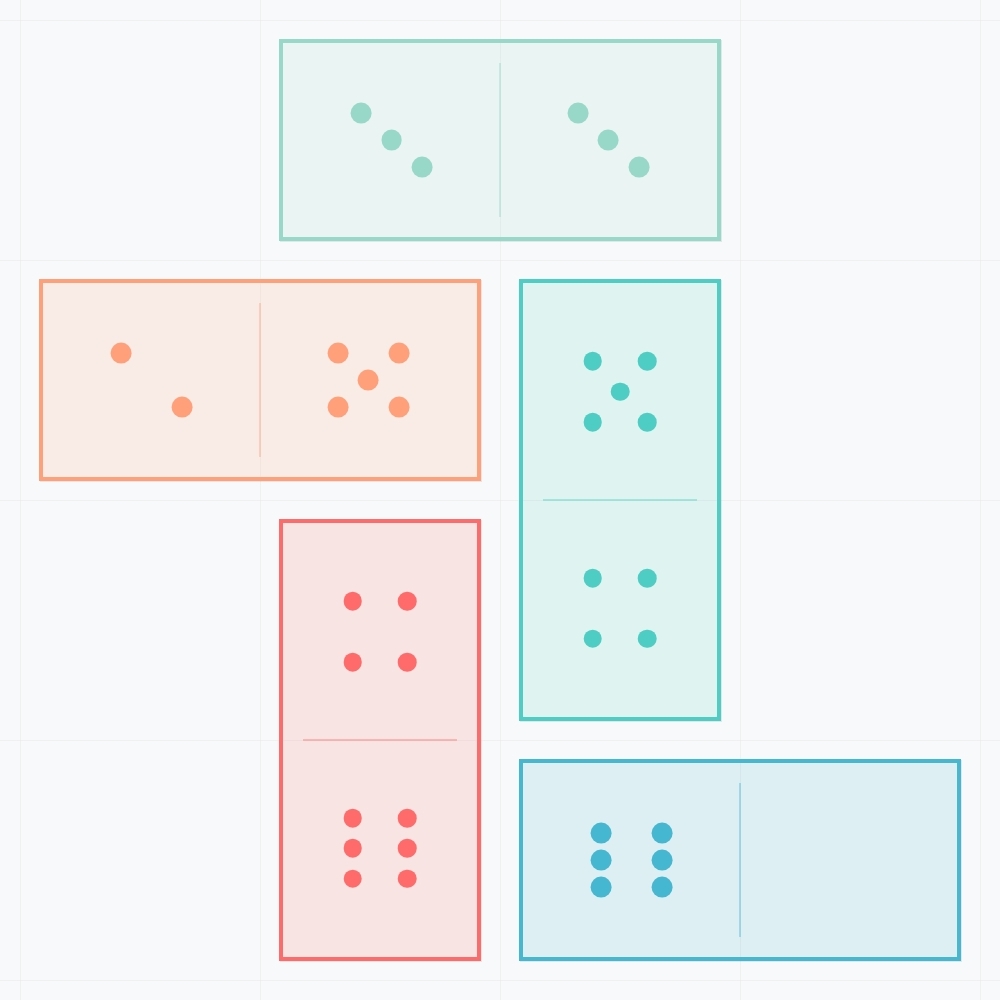
| Region Rule | Tile Placement | Orientation |
|---|---|---|
| Number (6) | 3-3 | Horizontal |
| Number (2) | 5-2 | Horizontal |
| Number (10) | 4-5 & 5-2 | Vertical / Horizontal |
| Number (8) | 6-4 & 4-5 | Vertical / Vertical |
| Number (12) | 6-4 & 0-6 | Vertical / Horizontal |
| Equal Zone | 5-0, 5-5, 5-1 | Horizontal |
| Number (7) | 5-1, 4-3, 3-0 | Horizontal |
| Less Than (3) | 2-0 | Horizontal |
| Greater Than (3) | 4-3 | Horizontal |
As you can see from the table, today’s puzzle requires highly specific vertical and horizontal orientations. For example, resolving the complex Number (10) zone requires placing the 4-5 tile vertically and the 5-2 tile horizontally. This precise combination ensures that both adjacent zones satisfy their respective mathematical rules.
Additionally, the Equal zone features a unique arrangement of the 5-0, 5-5, and 5-1 tiles. By placing these horizontally, you create a cohesive block that satisfies the strict uniformity requirements of the space. This is a perfect example of how the game’s spatial constraints guide your decision-making.
While you train your brain on these numerical grids, take a break to discover celebrity lifestyle updates and exclusive celebrity lifestyle insights. Taking occasional cognitive breaks actually improves your problem-solving abilities when you return to the board. Let us move on to some advanced tactics that will help you solve future puzzles even faster.
Advanced Tactics for Solvers
To transition from a casual player of **NYT Pips** to an elite solver, you must adopt a macro-level view of the entire board. Instead of viewing each region as an isolated puzzle, analyze how they intersect and influence one another. This holistic approach will immediately shave minutes off your daily solve times.
One advanced tactic is the “Process of Elimination” method, which involves tracking which dominoes have already been used. Since the puzzle utilizes a standard set of domino tiles, you can deduce what tiles remain in your virtual pool. If you know you have already placed the 3-3 and 5-5 tiles, you can rule them out for any remaining Equal zones.
Developing a mental map of the tile inventory is what separates speed solvers from casual players. Since there are only a set number of domino combinations available in each game mode, you can calculate the statistical probability of needing a specific half-tile later. This mathematical approach takes the guesswork out of difficult choices.
Mastering Tile Intersections
Paying close attention to the intersection points between different color zones is another crucial skill. The tiles that sit on these borders act as bridges, satisfying two distinct rules simultaneously. For instance, a single 4-5 tile can contribute to a sum of 9 in one zone while meeting a “Greater Than” requirement in an adjacent zone.
Identifying these high-impact bridge tiles early in your solve process can instantly unlock complex sections of the grid. If you place these key pieces correctly, the remaining tiles will often fall into place naturally. It turns a frustrating trial-and-error process into a smooth, satisfying flow.
Additionally, do not be afraid to leave flexible zones like “Less Than” or “Greater Than” entirely blank until the very end. These regions have a wide variety of valid solutions, making them the perfect place to dump whatever leftover tiles you have. This “flex-space” strategy is a favorite among top-tier speedrunners.
Why NYT Pips Captivates Solvers
The incredible rise of **NYT Pips** highlights a growing global appetite for elegant, daily mental exercises. Much like Wordle and Spelling Bee, this game offers a quick, satisfying burst of cognitive challenge that fits perfectly into a daily routine. It is a fantastic way to wake up your brain in the morning or wind down after a long day of work.
The magic of the game lies in its simple components yet incredibly deep emergent complexity. By using standard dominoes and basic mathematical concepts, the designers have created an accessible puzzle that anyone can learn in minutes. Yet, the daily variations ensure that mastering the game remains a lifelong pursuit.
Many psychological studies show that daily puzzle solving helps build cognitive resilience and improves working memory. Engaging your brain with spatial logic puzzles keeps neural pathways active and reduces daily stress levels. It acts as a form of digital meditation, grounding your focus on a clear, solvable challenge.
The Future of Digital Puzzles
As the puzzle community continues to grow, games like this are proving that players crave substantive, intellectually stimulating entertainment. The combination of visual design, spatial logic, and clean interface mechanics sets a new standard for modern web games. It is no surprise that millions of players log in daily to test their skills.
Sharing your completed grids on social media has also created a vibrant community of passionate solvers. Comparing your daily solve times and sharing layout strategies with friends adds a wonderful social layer to what was once a solitary activity. It fosters a sense of shared triumph when a particularly difficult board is finally solved.
Ultimately, keeping your mind active with daily challenges is one of the best habits you can build for long-term cognitive health. So, embrace the challenge of today’s grid, apply these expert strategies, and conquer the daily **NYT Pips** boards with confidence. Your brain will thank you for the workout!
More Like This
For more updates, check out our latest entertainment and sports news.