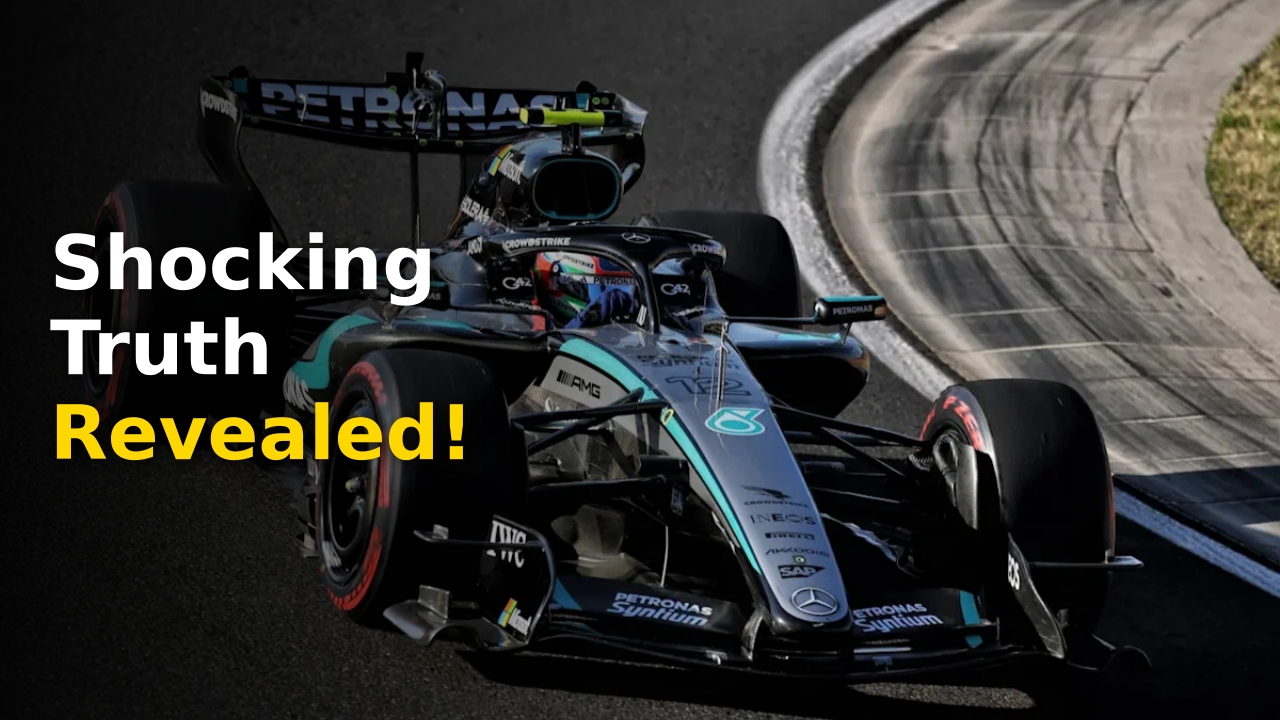
F1 dilemma is the quiet phantom haunting every garage in the pit lane, threatening to derail even the most dominant championship campaigns. You might assume that once a team reaches the pinnacle of engineering excellence, the path to victory becomes a straight line, but the reality is far more volatile. As the 2026 Formula 1 season reaches its mid-point, the pressure mounting on the Brackley headquarters has never been higher, forcing leadership to make choices that could define the next decade of racing history.
Technical director James Allison recently shed light on the brutal trade-off that keeps team principals awake at night. It is a balancing act between optimizing the current challenger and diverting essential capital into the future. If you push too hard for the 2026 title, you risk starting 2027 on the back foot. Fail to support your current driver, and you watch a championship trophy slip through your fingers in real-time.
The F1 Dilemma Of Engineering Evolution
The pursuit of perfection is a dangerous game. When your car is fast, you naturally want to make it faster, but at what cost? James Allison notes that the development rate this year is relentless, meaning that any pause in upgrading your machinery can lead to a disastrous slide down the order. You are essentially racing against a calendar that demands your attention in two distinct directions simultaneously.
Consider the logistical nightmare of shifting focus. Design teams need months of lead time to conceptualize, wind-tunnel test, and manufacture components. If you pull your best engineers off the current Mercedes car to focus on next year’s iteration, your immediate pace will plateau. Meanwhile, a hungry rival like McLaren might be betting everything on a final, aggressive upgrade package for their current car, catching you off guard during the final three races of the season.

This is where the psychological toll hits the factory floor. You have to convince your staff that they are not abandoning the current mission while pivoting to future prototypes. It is a delicate culture management exercise that requires total transparency and a clear vision. The cost of failure is astronomical, often leading to millions of dollars in wasted research and development budgets that could have been spent elsewhere.
Performance is rarely linear in Formula 1. You might find a magic aerodynamic solution that gains you three-tenths of a second in the wind tunnel, but translating that to the track is a different challenge entirely. Mercedes has seen great success under the current regulations, but they have also been plagued by reliability gremlins that have frustrated Kimi Antonelli and George Russell. These mechanical failures are often the result of pushing performance boundaries too far, too fast.
To maintain a winning culture, you have to reconcile these high-stakes engineering decisions with the daily reality of race weekend performance. Every point matters. Every DNF is a scar on the championship campaign. When you look at the latest celebrity lifestyle trends, you realize that the pressure on these athletes to perform amidst organizational flux is immense and constant.
Critical Factors In Resource Allocation
- Total wind tunnel hours remaining for the current season.
- Budget cap constraints limiting simultaneous development paths.
- Driver feedback regarding car handling versus aerodynamic gains.
- Supplier lead times for major structural components.
- The proximity of rivals in the constructors’ standings.
Data Trends And Seasonal Performance
When you analyze the raw numbers, the margin for error effectively vanishes. The difference between finishing on the podium and being stuck in the midfield is often less than a tenth of a second per lap. You can find detailed historical data on team performance via Reuters Sports to see how previous giants have navigated these exact transition phases.
The table below highlights the performance variance observed during the first 11 rounds of the 2026 championship, underscoring why the F1 dilemma is so critical to managing the second half of the year.
| Team | Race Wins | Reliability Rating | Development Priority |
|---|---|---|---|
| Mercedes | 8 | High | Split Strategy |
| McLaren | 2 | Medium | Aggressive Current |
| Ferrari | 1 | High | Long-term Focus |
As you can see, Mercedes is currently leading the pack in victories, yet their reliability rating suggests they are pushing the engine and chassis to the absolute limit. This high-wire act is intentional, yet risky. If they drop the ball, they open the door for Lando Norris and the McLaren team to snatch the lead before the final chequered flag in Abu Dhabi.
The McLaren Factor And Competitive Pressure
Johnny Herbert, a man who knows the heat of the cockpit better than most, warns that we should not count out the team from Woking. Their recent surge in form is not a coincidence; it is the result of a calculated risk taken months ago. They decided to dump resources into their car while others were distracted by internal politics or budgetary constraints. This serves as a stark reminder that in Formula 1, fortune favors the bold.
For Kimi Antonelli, the pressure is about to hit a new level. He has handled the championship lead with maturity, but facing a resurgent McLaren in the final sprints requires a different set of mental tools. You have to be perfect, both on the track and in the debrief room. There is simply no room for the ‘self-inflicted wounds’ that James Allison alluded to earlier in the season.

Beyond the driver, the team is under immense scrutiny to deliver clean weekends. No more pit stop blunders, no more setup miscalculations, and definitely no more reliability issues. The 2026 title will be won by the team that cleans up its house the fastest. It is about consistency as much as it is about raw speed, and that is where championships are truly secured or lost.
If Lando Norris continues his trajectory, the pressure on Mercedes will skyrocket, forcing them to reconsider their development switch-off date. This creates a feedback loop of stress where every decision is questioned by media, fans, and shareholders. Can they manage the noise, or will the weight of expectation prove too much for the Brackley outfit?
Engineering The Future Beyond 2026
Looking further down the road, the transition into 2027 regulations is looming like a giant iceberg. Every hour spent working on the current Mercedes car is an hour stolen from next year’s project. This is the ultimate, inescapable trap of the sport. You have to win now to secure the sponsors, but you have to win tomorrow to stay relevant.
The teams that master the art of the ‘split project’ usually find themselves at the top of the standings consistently. It requires a level of management finesse that few possess. You need to identify the exact moment when the return on investment for the current car drops below the projected gains for next year’s machine. It is a mathematical model built on gut feeling and historical performance metrics.
Ultimately, the F1 dilemma is what makes this sport the pinnacle of human endeavor. It is not just about driving fast; it is about managing resources, time, and human intellect under the most extreme pressure imaginable. Whether Mercedes survives this internal struggle will be the story of the second half of the year.
Lessons For Success
- Maintain clear lines of communication between departments.
- Avoid knee-jerk reactions to rival upgrade packages.
- Focus on reliability as a primary performance gain.
- Keep the driver’s confidence high during development lulls.
- Ensure the budget cap is tracked with laser precision.
The Final Verdict
In the final analysis, the battle for the championship will come down to which team handles the inevitable crisis with the most poise. Mercedes has the pedigree and the resources, but the F1 dilemma shows no favorites. Whether they maintain their lead or surrender it to the rising tide of McLaren, one thing is certain: the fans are the real winners. We are witnessing one of the most tactical seasons in recent memory, where a single decision in the boardroom is just as important as a bold overtake on the track.
More Like This
For more updates, check out our latest entertainment and sports news.