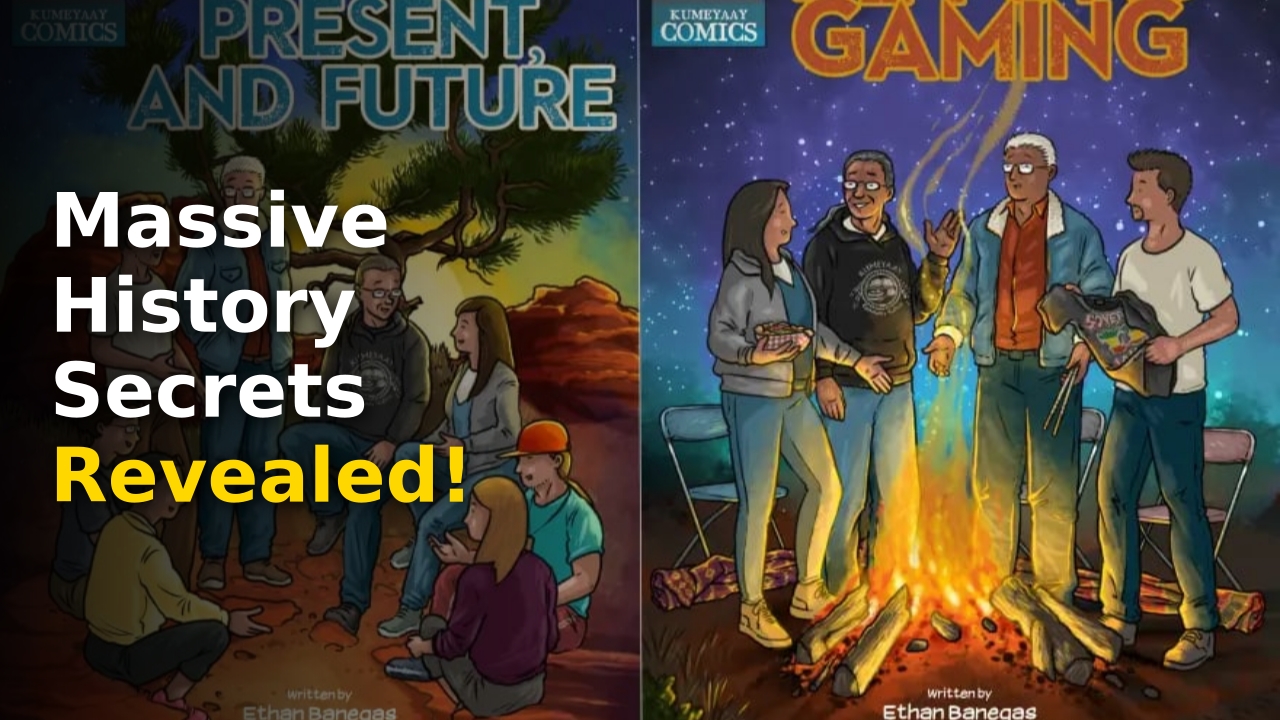
Kumeyaay History is finally getting the raw, unfiltered spotlight it deserves in a move that’s shaking up the San Diego cultural scene. You might think you know the story of California’s first peoples, but the Museum of Us is about to prove you wrong with a visual masterclass. This September, the institution is ditching dusty textbooks for a high-octane graphic novel experience that puts indigenous voices in the driver’s seat.
You are invited to witness a historic shift in how narratives are built and shared with the public. This isn’t just an art show; it’s a reclamation of identity through the lens of the Kumeyaay Visual Storytelling Project. By blending rigorous academic research with the vibrant energy of comic art, the museum is breaking down the walls between the past and the present.
Kumeyaay History: Reclaiming The Narrative
Kumeyaay History takes center stage this fall as the museum unveils a groundbreaking collection of graphic novels designed to challenge every colonial myth you’ve ever heard. The exhibition, opening Saturday, September 12, features works created with direct input from tribal elders and historians. This ensures every panel and word bubble resonates with the authentic soul of the Nation Kumeyaay.
The museum staff has made it clear that they acknowledge their location on the unceded ancestral territory of the Kumeyaay people. This Balboa Park landmark is no longer just observing history; it is actively participating in a healing process. You will see how thousands of years of connection to the land are translated into a medium that speaks to younger generations and seasoned history buffs alike.
By centering the lived experiences of the community, the project avoids the clinical, outsider perspective often found in traditional museums. This shift is a response to a long-standing demand for accurate representation in the modern media landscape where indigenous voices have often been sidelined. You’ll feel the weight of this history in every brushstroke and dialogue choice.
Voice Of The People
- Ethan Banegas: A leading scholar providing historical grounding.
- Michael Connolly Miskwish: Historian and curator with deep cultural roots.
- Lorraine Orosco: Community leader ensuring tribal accuracy.
- Stanley Rodriguez: Educator and guardian of traditional knowledge.
The collaboration with John Swogger, the lead illustrator, brings these complex stories to life with a kinetic energy that text alone cannot capture. Swogger’s ability to translate oral histories into sequential art provides a bridge for visitors who might find standard history books inaccessible. It’s a bold experiment in education that is already drawing national attention.
The curators didn’t just sit in an office and guess what the Kumeyaay wanted to say. They spent months in the community, listening to stories that have been passed down for centuries. This level of dedication ensures that the exhibition is more than a display; it is a living document of survival and triumph.

Unveiling Graphic Novel Secrets
The core of the new exhibition revolves around two massive graphic novels that redefine Kumeyaay History for the 21st century. The first, titled “Our Past, Present, and Future,” uses sprawling two-page compositions to guide you through pivotal moments in tribal memory. It’s an immersive deep dive into the trials and victories that shaped the region long before the first Spanish ships appeared on the horizon.
The second title, “Beyond Gaming,” takes a more intimate approach by recreating a community meeting with tribal historians. It’s a meta-narrative that shows you how history is actually preserved and debated within the tribe today. You get a front-row seat to the internal conversations that maintain the Nation Kumeyaay’s cultural integrity in a rapidly changing world.
These comics are not just for kids; they contain sophisticated themes of sovereignty, land rights, and cultural persistence. The visual style is designed to grab your attention and hold it, using color and composition to evoke the emotional landscape of the stories. You’ll find yourself lost in the intricate details of the traditional clothing and landscapes depicted in every chapter.
Chapter Highlights
- Pre-contact society and the sophisticated management of natural resources.
- The impact of the mission system on indigenous family structures.
- The modern-day fight for recognition and environmental justice.
- The role of tradition in a digital, globalized society.
This approach to history is part of a larger trend in museums worldwide to decolonize their collections. By allowing the Kumeyaay to tell their own story, the Museum of Us is setting a new standard for ethical curation. You’re not just looking at artifacts; you’re engaging with a living, breathing culture that refuses to be relegated to the past.
The impact of seeing one’s own history depicted with such care cannot be overstated for indigenous youth. It provides a sense of pride and visibility that is often missing from mainstream education. For the general public, it offers a necessary correction to the romanticized or tragic tropes often associated with Native American history.
The Community Engagement Revolution
The secret sauce behind this exhibition is a methodology known as Community Engaged Comics. This isn’t your typical corporate branding exercise; it’s a rigorous framework where the community has final say over the content. Every sketch and every line of dialogue was reviewed by Kumeyaay members to ensure it met their standards of accuracy and respect.
You’ll notice a level of nuance in these stories that is rarely found in commercial media. The project creators understood that Kumeyaay History is not a monolith; it’s a collection of diverse voices and experiences. This methodology allows for those contradictions and complexities to exist on the page, creating a much richer experience for the reader.
The Museum of Us is essentially acting as a megaphone for the community rather than a filter. This shift in power dynamics is a massive leap forward for institutional transparency. You are seeing the results of years of trust-building between the museum and the Nation Kumeyaay, a relationship that hasn’t always been easy but is now bearing incredible fruit.
Engagement Milestones
- Over 50 community feedback sessions held during the drawing phase.
- Direct collaboration with the Kumeyaay Community College.
- Workshops for tribal youth to learn the art of visual storytelling.
- Integration of native languages into the comic dialogue panels.
By using this model, the museum ensures that the exhibition has a life beyond the gallery walls. The comics are designed to be used in classrooms and community centers, providing a permanent resource for the tribe. It’s a sustainable way of preserving Kumeyaay History that goes far beyond a temporary display.
The success of this project could serve as a blueprint for other museums located on indigenous lands. It proves that when you give up control and listen to the experts—the people who lived the history—the result is far more powerful and engaging. You’ll see this reflected in the intense reactions and high retention rates of visitors once the doors open in September.

Secrets Of The Ancient Skies
While the comics are the new stars, the museum is also keeping the legendary “Kumeyaay Cosmology” exhibition in the rotation. Originally opened in 2015, this section explores a side of Kumeyaay History that most people never consider: their advanced knowledge of astronomy. You’ll discover how these ancient people studied the stars to navigate, farm, and organize their spiritual lives.
The Mat’taam, or the annual calendar, is a sophisticated system that aligns with the lunar and solar cycles. It’s a testament to the scientific rigor of the Kumeyaay ancestors who observed the heavens for generations. You’ll learn about My Uuyow, the specific knowledge of the sky that allowed the tribe to thrive in the diverse climates of Southern California and Northern Mexico.
The exhibition features a stunning map of constellations that are unique to the Kumeyaay worldview. These aren’t the Greek myths you learned in school; these are stories of the Coyote, the Mountain Lion, and the Great Spirit written in the stars. It’s a humbling reminder that the sky has always been a canvas for human imagination and scientific inquiry.
Cosmological Wonders
- Mat’taam: The 12-month calendar based on ecological shifts.
- Constellation Mapping: Identifying the stars that guided seasonal migrations.
- Emuu: The three stars representing the mountain sheep.
- Solstice Markers: How ancient sites were used to track the sun’s path.
This knowledge was almost lost due to the pressures of colonization, but scholars like Michael Connolly Miskwish have worked tirelessly to revitalize it. By pairing the cosmology exhibition with the new comics, the museum provides a holistic view of the Kumeyaay world. You see them as both masters of the earth and observers of the heavens.
According to authoritative historical records, the Kumeyaay have inhabited the San Diego region for over 12,000 years. Their astronomical systems are among the oldest in the Americas, and seeing them presented with such high-tech clarity is a breathtaking experience. It’s a masterclass in ancient science that you simply can’t miss.
Vital Exhibition Data Points
To help you plan your visit and understand the massive scale of this project, we’ve compiled the essential facts. This table highlights the key players and the logistical details of the Kumeyaay History showcase at Balboa Park.
| Category | Detail |
|---|---|
| Exhibition Title | Kumeyaay Comics by the Visual Storytelling Project |
| Opening Date | Saturday, September 12, 2026 |
| Key Historians | Banegas, Miskwish, Orosco, Rodriguez |
| Lead Illustrator | John Swogger |
| Featured Works | “Our Past, Present, and Future” & “Beyond Gaming” |
| Location | Museum of Us, Balboa Park, San Diego |
| Operating Hours | Daily, 10 a.m. to 5 p.m. |
The museum’s dedication to this project reflects a massive investment in cultural equity. The exhibition is designed to be a permanent fixture in the hearts of visitors, reminding everyone that San Diego’s history didn’t start with a map; it started with a people. You’ll want to allow at least two hours to fully absorb both the comics and the cosmology sections.
As you walk through the galleries, the silence of the museum is replaced by the visual noise of the comics, creating a sensory experience that is both modern and ancient. This juxtaposition is intentional, aiming to show that the Kumeyaay are not a people of the past, but a thriving part of the modern fabric of California. Every detail, from the lighting to the flow of the rooms, has been optimized for your engagement.
Preserving The Kumeyaay History Legacy
The ultimate goal of this new look at Kumeyaay History is to spark a conversation that continues long after you leave Balboa Park. By using accessible media like graphic novels, the museum is ensuring that these stories reach the widest possible audience. It’s an invitation to unlearn what you thought you knew and listen to the people who have lived this history for thousands of years.
This exhibition marks a turning point for the Museum of Us, cementing its reputation as a leader in community-led storytelling. You can see the passion in every aspect of the project, from the scholarly research to the artistic execution. It’s a reminder that history is not just about what happened; it’s about who gets to tell the story and how those stories shape our collective future.
As you head out into the sunny streets of San Diego, you’ll carry a new perspective on the land beneath your feet. The Kumeyaay History is a story of resilience, innovation, and an unbreakable bond with the natural world. Don’t miss your chance to be a part of this historic moment in September—it’s an experience that will change the way you see the world forever.
More Like This
For more updates, check out our latest entertainment and sports news.