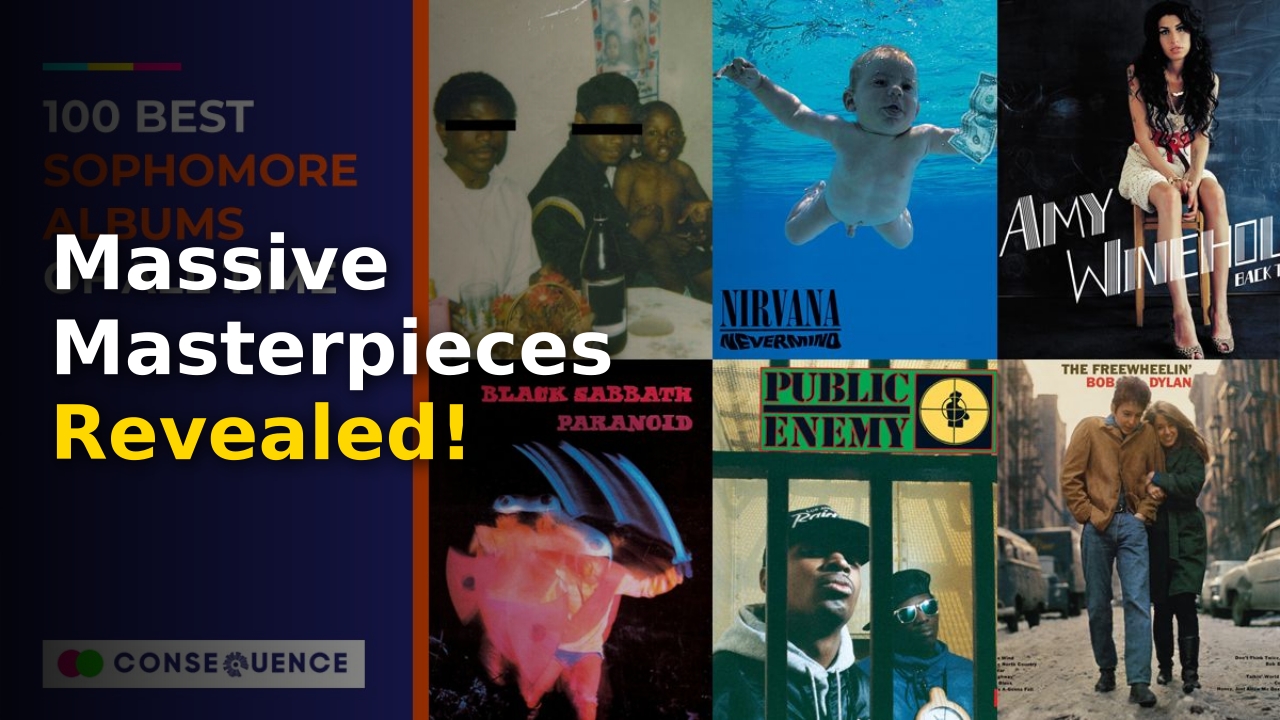
Sophomore albums represent the ultimate make-or-break crucible for recording artists navigating the ruthless modern music industry. You spend your entire life writing your first record, but you are given barely eighteen months to deliver the follow-up while touring the world. When artists conquer that crushing pressure, they create historic art that shatters the dreaded sophomore slump and reshapes pop culture forever.
The shift from an untested debut to a highly anticipated second LP forces musicians into a high-stakes psychological battlefield. Some groups panic and churn out uninspired clones of their breakthrough hits, while true visionaries expand their sonic architecture and assert undeniable creative independence. When you look back at music history, second records often reveal the exact moment raw talent transforms into timeless genius.
From grunge revolutions in Seattle to game-changing hip-hop epics in New York and Compton, conquering that second album requires uncompromising grit. Exploring these monumental releases provides an unmatched masterclass in artistic growth, commercial dominance, and fearless songwriting under extreme industry scrutiny.
Legendary Sophomore Albums Beat Expectations
The notorious sophomore jinx has destroyed countless careers across rock, hip-hop, and pop music over the past six decades. Debut records usually materialize in peaceful isolation without deadlines, commercial expectations, or intrusive record label executive interference. By contrast, follow-up projects arrive amid relentless media hype, grueling tour schedules, and massive financial stakes.
Musicians who survive this trial often emerge with a sharper artistic identity and vastly superior studio command. Legendary acts discover how to channel their sudden fame, burnout, and internal friction into groundbreaking sonic experimentation. When artists embrace vulnerability and sonic evolution, they produce career-defining records that eclipse their original breakthroughs.
Industry analysts at music and pop culture insights frequently note how second records permanently alter an artist’s long-term commercial value. Rather than playing it safe, visionary creators double down on daring artistic choices that alienate casual observers while building devoted cult followings. Surviving this crucial transition separates fleeting one-hit wonders from iconic generational legends.
Understanding this pivotal career turning point reveals why music historians hold second releases in such high esteem. These records capture brilliant artists working at the absolute peak of their hunger while wielding major studio resources for the very first time. The resulting albums often become the cornerstone masterpieces that define entire musical eras.

Crucial Sophomore Breakthrough Records
- Nirvana – Nevermind (1991): Propelled alternative rock into global dominance with explosive, raw punk dynamics.
- Amy Winehouse – Back to Black (2006): Revitalized classic Motown soul with modern heartbreak and unapologetic swagger.
- Kendrick Lamar – good kid, m.A.A.d city (2012): Established a cinematic storytelling benchmark for modern West Coast hip-hop.
- Daft Punk – Discovery (2001): Blended filtered French house with shimmering disco nostalgia to reshape electronic dance music.
- Radiohead – The Bends (1995): Abandoned derivative grunge angst in favor of soaring, atmospheric art-rock grandeur.
- Black Sabbath – Paranoid (1970): Forged the foundational blueprint of heavy metal with thunderous riffs and dark themes.
Rock Reinventions and Grunge Explosions
In September 1991, Nirvana unleashed their landmark grunge record, annihilating the hair-metal dominance of the 1980s overnight. Produced by Butch Vig, Nevermind paired the visceral distortion of punk rock with undeniable Beatles-level pop sensibilities. Frontman Kurt Cobain penned anthems like “Smells Like Teen Spirit” and “Come as You Are” that captured global youthful disillusionment.
Across the alternative landscape, The Smashing Pumpkins faced immense internal turmoil while recording their 1993 masterpiece Siamese Dream. Bandleader Billy Corgan took over primary guitar and bass duties, layering dozens of fuzz-heavy tracks into a massive orchestral wall of sound. Songs like “Cherub Rock” and “Today” proved that obsessive perfectionism could yield monumental commercial and critical triumphs.
Meanwhile, Pearl Jam avoided the sophomore curse in October 1993 by releasing Vs., a ferocious counterpunch to their polished debut. Vocalist Eddie Vedder tackled systemic injustice, child abuse, and gun culture on aggressive cuts like “Go” and “Animal.” The album shattered first-week sales records by moving more than 950,000 copies in just five days, cementing their arena-level staying power.
New York garage rockers The Strokes faced impossible expectations following their world-conquering debut when they dropped Room on Fire in October 2003. Frontman Julian Casablancas resisted the temptation to hire pop producers, instead tightening the band’s signature interlocking guitar riffs and clipped rhythms. Tracks like “Reptilia” and “12:51” proved that doubling down on a core aesthetic could produce timeless guitar records.
Punk icon Courtney Love channeled immense personal anguish into Hole‘s 1994 triumph Live Through This. Arriving just days after Cobain’s tragic death, the album delivered blistering feminist fury on tracks like “Violet” and “Doll Parts.” The project remains an essential alternative rock masterwork defined by visceral catharsis and unflinching vulnerability.
Few sophomore albums endured a more dramatic critical turnaround than Weezer‘s raw 1996 release Pinkerton. Dismayed by the glossy success of their debut, Rivers Cuomo penned brutally honest songs about loneliness, isolation, and sexual frustration. While initially labeled a commercial flop, the abrasive cult favorite eventually birthed the entire late-1990s emo-rock movement.
Hip Hop Milestones and Evolution
In September 1991, A Tribe Called Quest revolutionized hip-hop production with the release of The Low End Theory. Producer and emcee Q-Tip stripped away noisy bombast in favor of warm, minimalist upright jazz basslines paired with crisp drum breaks. Iconic tracks like “Check the Rhime” and the legendary posse cut “Scenario” permanently elevated alternative hip-hop into high art.
Southern hip-hop innovators OutKast refused to repeat their debut formula when releasing ATLiens in August 1996. André 3000 and Big Boi embraced spaced-out, futuristic synthesizer arrangements and deeply introspective lyricism. By rejecting conventional East and West Coast tropes, the Atlanta duo charted an eccentric sonic path that redefined Southern rap dominance.
In November 1999, super-producer Dr. Dre returned to dominate the charts with his cinematic masterpiece 2001. The West Coast titan recruited top-tier lyricists, crafting razor-sharp street epics like “Still D.R.E.” and “Forgot About Dre” alongside a hungry young Eminem. Dre proved his sonic wizardry remained peerless, delivering crisp keyboard loops and thunderous percussion that defined early-2000s rap production.
Brooklyn icon The Notorious B.I.G. showcased breathtaking versatility on his monumental 1997 double album Life After Death. Biggie effortlessly balanced chart-topping pop crossover smashes like “Hypnotize” and “Mo Money Mo Problems” with menacing street narratives like “Kick in the Door.” Released posthumously, the ambitious project solidified his status as one of the greatest emcees to ever grace a microphone.
When Kendrick Lamar released good kid, m.A.A.d city in October 2012, he created an immersive audio documentary detailing his youth in Compton, California. Interweaving voicemail skits with complex multi-syllabic rhyme schemes on tracks like “Sing About Me, I’m Dying of Thirst,” Lamar redefined modern conceptual songwriting. The album remains one of the longest-charting hip-hop records in Billboard history.
Refusing to stay confined to safe territory, Beastie Boys dropped Paul’s Boutique in July 1989, constructing a staggering patchwork of crate-digging samples alongside the Dust Brothers. Though initially misunderstood by pop fans expecting frat-party anthems, the record is now revered as a sampling masterclass that rewrote the possibilities of modern music production.

Pop Royalty and Modern Transformations
When British powerhouse Adele suffered devastating heartbreak, she transformed her pain into the diamond-certified pop juggernaut 21 in January 2011. Working alongside veteran producer Rick Rubin and pop architect Paul Epworth, she delivered timeless, gospel-tinged anthems like “Rolling in the Deep” and “Someone Like You.” The album sold over 31 million copies worldwide, earning six Grammy Awards and defining an entire generation of vocal pop.
R&B sensation SZA faced immense pressure following her celebrated debut before delivering the record-breaking blockbuster SOS in December 2022. Spanning twenty-three tracks across alternative R&B, grunge, pop, and hip-hop, SZA bared her deepest insecurities on chart-toppers like “Kill Bill” and “Snooze.” Her unflinching honesty and inventive melodic phrasing cemented her position as a dominant modern superstar.
New Zealand prodigy Lorde partnered with producer Jack Antonoff in June 2017 to create the vibrant, nocturnal art-pop concept record Melodrama. Chronicling the dizzying emotional extremes of a single house party, the album delivered euphoric production peaks on “Green Light” and heartbreaking intimacy on “Liability.” The project demonstrated how young songwriters can successfully evolve their artistic voice without losing their raw emotional core.
Country-pop trailblazer Taylor Swift became a global sensation at age 18 with the release of Fearless in November 2008. Featuring irresistible crossover smashes like “Love Story” and “You Belong With Me,” the album showcased Swift’s extraordinary gift for writing universal, emotionally resonant storytelling hooks. The record earned her first Album of the Year Grammy and laid the foundation for her historic career dominance.
Legendary songwriter Carole King set the gold standard for singer-songwriters in February 1971 with her landmark LP Tapestry. Featuring warm, deeply personal classics such as “It’s Too Late” and “You’ve Got a Friend,” the album stayed on the Billboard charts for over 300 weeks. King showed future generations that sincere, piano-driven vulnerability could achieve unmatched commercial and critical resonance.
In June 1998, R&B icon Brandy joined forces with hitmaker Rodney “Darkchild” Jerkins to deliver Never Say Never. Anchored by the historic duet “The Boy Is Mine” with Monica, the album showcased intricate vocal layering and forward-thinking rhythmic production. The release solidified Brandy’s reputation as “The Vocal Bible” and inspired decades of modern R&B phrasing.
Iconic Sophomore Records Comparison
Analyzing the greatest second records reveals how visionary artists combine bold sonic risks with extraordinary commercial execution. Below is a comprehensive breakdown of history’s most impactful follow-up releases, highlighting their release years, core genres, standout tracks, and lasting industry legacies.
| Artist & Album | Year | Genre | Standout Track | Cultural Legacy |
|---|---|---|---|---|
| Nirvana – Nevermind | 1991 | Grunge / Alt-Rock | “Smells Like Teen Spirit” | Ended 1980s hair metal; made alternative rock mainstream. |
| Amy Winehouse – Back to Black | 2006 | Soul / R&B | “Rehab” | Sparked global 21st-century retro-soul vocal movement. |
| Kendrick Lamar – good kid, m.A.A.d city | 2012 | Hip-Hop | “Swimming Pools (Drank)” | Set a new gold standard for conceptual rap narratives. |
| Adele – 21 | 2011 | Pop / Soul | “Rolling in the Deep” | Sold 31M+ units, reviving massive physical album sales. |
| Black Sabbath – Paranoid | 1970 | Heavy Metal | “War Pigs” | Invented modern heavy metal and doom rock riff structures. |
| A Tribe Called Quest – The Low End Theory | 1991 | Jazz-Rap | “Scenario” | Merged acoustic jazz aesthetics with East Coast boom-bap. |
These historic figures highlight the profound impact of artistic reinvention. Rather than resting on initial success, these pioneering artists treated their second studio sessions as an open laboratory for transformative creative leaps. Their courage under intense spotlight pressure established the timeless benchmark for everything that followed in modern music history.
The Enduring Legacy of Sophomore Albums
Great second records do far more than simply generate radio hits; they fundamentally rewrite an artist’s relationship with their audience. When musicians embrace fearless experimentation over safe commercial repetition, they construct enduring legacies that survive changing industry trends. These landmark projects prove that raw creative conviction will always triumph over formulaic corporate expectations.
Whether crafted amidst intense interpersonal conflict, sudden tragedy, or crushing media scrutiny, extraordinary sophomore albums capture musicians transforming raw momentum into undeniable artistic greatness. The enduring brilliance of these landmark releases continues to inspire new generations of aspiring songwriters across the globe.
More Like This
For more updates, check out our latest entertainment and sports news.