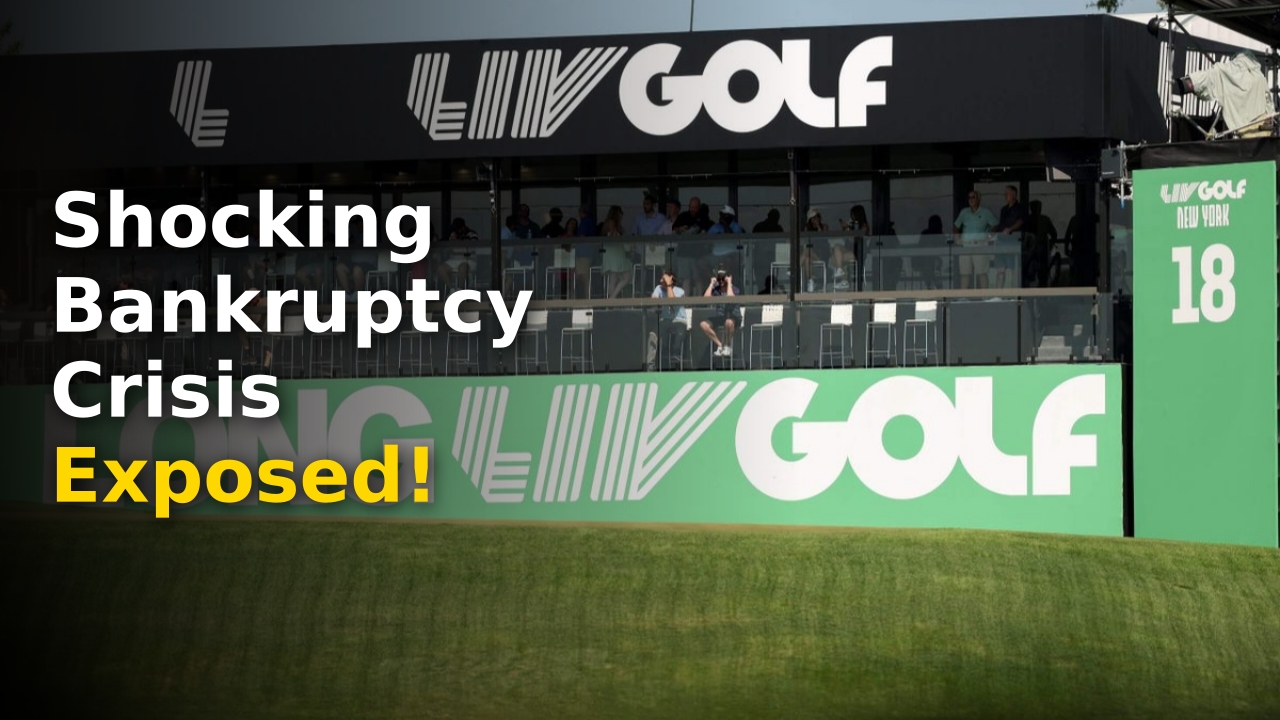
LIV Golf is on the brink of an unprecedented financial collapse that could completely reshape elite sports forever. If you thought the breakaway golf league was backed by an endless pit of sovereign wealth, think again.
Behind closed doors, the flashy tour faces a devastating financial reckoning, mounting player contract liabilities, and a potential Chapter 11 bankruptcy filing in the United States. While league executives project confidence, the reality on the ground tells a radically different story of high-stakes survival.
The Staggering Financial Collapse
The trouble started when the Public Investment Fund of Saudi Arabia (PIF) quietly pulled all future funding for the enterprise in April 2026. After burning through billions of dollars over four whirlwind years, the sovereign fund decided that the spending spree had to stop immediately.
Without unlimited oil money footing the bill, CEO Scott O’Neil was left holding massive balance sheet deficits and unpaid player commitments. The league had been burning more than $100 million per month just to keep operations afloat across the globe.
According to leaked financial filings, the league’s United Kingdom-based arm alone lost a staggering $590.1 million in 2024. Those figures do not even include the massive overhead generated by United States operations.
How Billions Evaporated Rapidly
- Lavish signing bonuses worth between $100 million and $300 million given to marquee stars.
- Tournament purses aggressively inflated to $30 million per event to lure top-tier competition.
- Massive live festival production expenses, global jet travel, and luxury hospitality setups.
- The heavy financial burden of purchasing television airtime and independent broadcast infrastructure.
Before the funding plug was pulled, leadership openly admitted that the tour would not achieve profitability for at least five to ten years. Now, that timeline has completely collapsed, leaving management scrambling for immediate external lifelines.

Chapter 11 And Restructuring Reality
To avoid immediate liquidation, the league recruited legendary corporate turnaround specialist Gene Davis to its board of directors. Davis has steered over 300 troubled corporations through severe distress, including high-profile cases like Spirit Airlines and Weight Watchers.
Restructuring insiders note that bringing in Davis and corporate advisory firm Ducera Partners signals one clear path: a structured Chapter 11 filing. A pre-packaged bankruptcy allows an organization to wipe out unserviceable debt while remaining operational.
Under U.S. bankruptcy law, filing gives management the extraordinary power to terminate burdensome contracts. This legal shield offers the tour an aggressive tool to escape agreements that no longer fit its survival budget.
Inside The Gene Davis Playbook
Private investment giant BC Partners, led by credit chief Ted Goldthorpe, has stepped in with a tentative term sheet. However, reports from Bloomberg indicate that the firm is offering a high-interest loan rather than an equity purchase.
This financing would likely take the form of a Debtor in Possession (DIP) loan, which carries strict lender protections and priority repayment terms. In exchange, lenders are eyeing the tour’s accumulated Net Operating Losses (NOLs), which reach billions of dollars and offer immense tax write-offs for profitable conglomerates.
If the reorganization falters in court, those valuable tax benefits could face severe dilution under federal tax laws. The margin for error is razor-thin, and every single stakeholder is fighting for leverage.
Star Player Contracts In Jeopardy
The biggest dilemma facing the tour involves its roster of world-class superstars. Heavyweights like Jon Rahm, Bryson DeChambeau, and Cameron Smith are still owed staggering nine-figure sums on their original guarantees.
Under Chapter 11 proceedings, LIV Golf can systematically review each superstar deal and decide whether to honor or reject it. If management rejects an agreement, that golfer instantly becomes an unsecured creditor fighting for pennies on the dollar.
Unless the Saudi PIF personally guaranteed those individual player deals, stars would have little legal recourse to collect their full guarantees. That dynamic has created immense tension between athletes and league brass as executives pitch a transition toward LIV 2.0.
The Looming Contract Dilemma
- Bryson DeChambeau remains publicly supportive of the tour’s long-term vision despite his contract status.
- Jon Rahm has remained conspicuously guarded about his future plans and negotiation stances.
- Unsecured creditor claims in bankruptcy court routinely recover only a minor fraction of face value.
- Star players hold massive leverage because broadcast partners and sponsors refuse to back an empty roster.
For those tracking celebrity financial shifts, you can discover deeper breakdowns of celebrity sports finance updates at Bright Celebrity to see how elite athletes manage high-risk contracts. The coming weeks will force every top player to make a career-defining choice.
LIV Golf Financial Breakdown Stats
The numbers behind this high-stakes sports venture reveal just how volatile the business model has become. The following breakdown illustrates the staggering financial metrics driving the reorganization effort.
| Financial Metric | Estimated Value / Status | Impact On Tour Survival |
|---|---|---|
| Monthly Burn Rate | Over $100 Million | Forced immediate capital search |
| 2024 UK Entity Loss | $590.1 Million | Exposed unsustainable structure |
| Tournament Purses | $30 Million Each | Targeted for severe reduction |
| PIF Direct Funding | Halted in April 2026 | Triggered restructuring crisis |
| Net Operating Losses | Multiple Billions | Used as main investor tax bait |
| Potential Investor Loan | BC Partners Credit Term Sheet | Requires deep structural cuts |
These figures highlight why an out-of-court settlement or formal bankruptcy filing is no longer optional. Without radical downsizing, the business cannot service its ongoing obligations.

The High Stakes Pivot Ahead
The blueprint for the proposed second generation of the tour involves shifting risk directly onto the golfers. Rather than paying hundreds of millions in upfront guaranteed cash, the new model offers players equity stakes in the reorganized entity.
For golfers who traded their reputations and tour memberships for guaranteed fortunes, swapping certainty for speculative equity is a tough pill to swallow. If the new enterprise succeeds, those equity units could be lucrative, but if it fails, they will be left with worthless paper.
At the same time, tournament schedules are expected to shrink drastically. Fewer events mean lower operational costs, reduced travel expenses, and a concentrated marketing push designed to attract mainstream corporate sponsorships.
Key Steps For Tour Survival
Negotiations between Scott O’Neil and player agents are happening around the clock. Middle-tier players who do not drive television ratings face the highest risk of having their agreements terminated outright without replacement compensation.
Only top-tier icons like Bryson DeChambeau command the market power needed to dictate terms. The emerging reality is a leaner, far less lavish version of the rebel circuit that disrupted global golf just four years ago.
If lenders demand deeper sacrifices before closing their loan agreements, additional high-profile cuts will follow. The era of limitless spending in sports disruption has officially met the harsh reality of corporate balance sheets.
What Lies Ahead For Professional Golf
The impending restructuring of LIV Golf represents a massive turning point for the entire sports landscape. When sovereign funds step back and traditional credit funds step in, fiscal discipline always replaces reckless expansion.
Whether the league successfully emerges as a streamlined enterprise or dissolves into a flurry of courtroom battles will depend on player cooperation. Fans and industry analysts alike are watching closely as the September deadline for finalizing outside financing approaches.
One thing is certain: the disruption of professional golf has entered its most volatile chapter yet. You can expect dramatic headlines, legal fireworks, and major roster shakeups as the battle for the future of the game unfolds.
More Like This
For more updates, check out our latest entertainment and sports news.