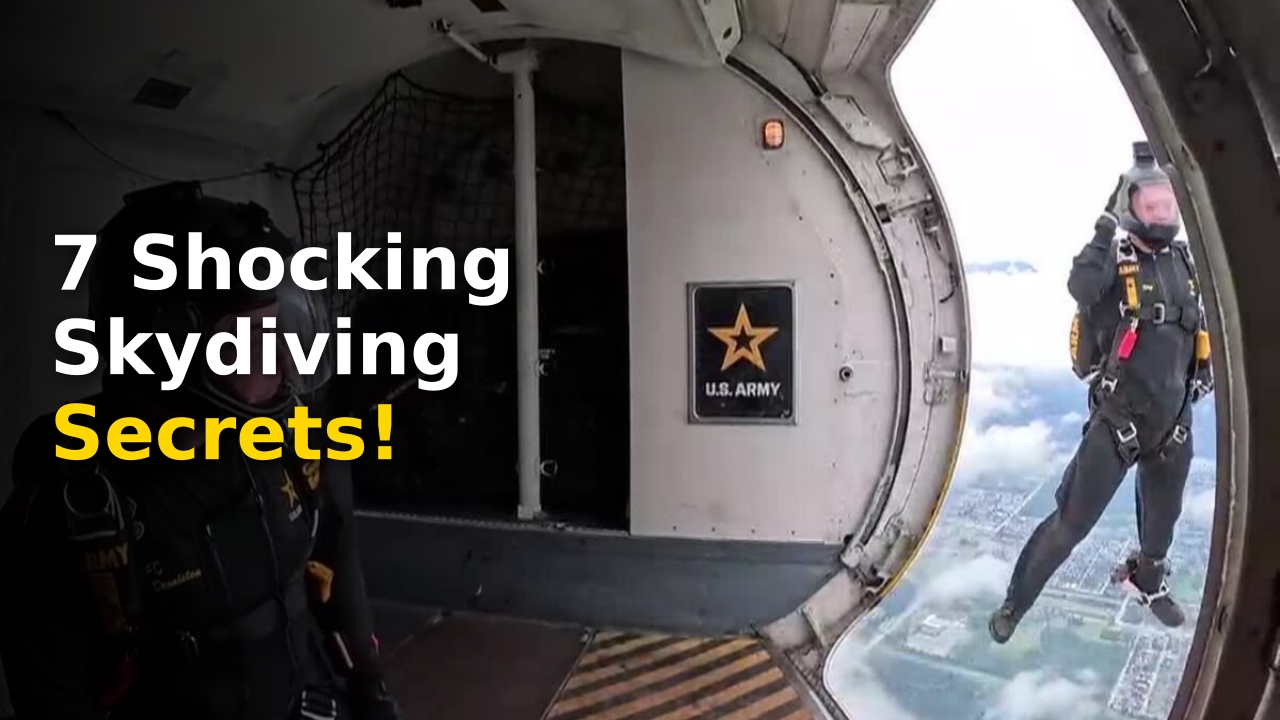
Golden Knights performers recently transformed the Alaskan sky into a theater of high-altitude precision, leaving thousands of spectators at Joint Base Elmendorf-Richardson in absolute awe. You might think jumping from a plane is just about gravity, but for these elite soldiers, it is a calculated dance with the elements at 120 miles per hour. The Arctic Thunder Open House served as the perfect backdrop for this display of aerial mastery, proving once again why this team is the gold standard of military demonstrations.
You are witnessing more than just a stunt when these jumpers exit the aircraft; you are seeing years of rigorous training compressed into a few minutes of adrenaline-soaked execution. The 2026 performance in Anchorage brought a unique set of challenges, from unpredictable northern winds to the rugged terrain of the Last Frontier. Every second in the air is managed with the kind of focus that only the world’s most elite paratroopers can maintain under pressure.
The Golden Knights Mission Profile
The history of the Golden Knights dates back to 1959 when the 101st Airborne Division formed the strategic unit to compete in the sport of skydiving. You can learn more about their storied legacy by visiting the official United States Army Parachute Team records. Today, the team serves as the ultimate ambassadors for the U.S. Army, showcasing technical proficiency that mirrors the readiness of ground forces. Their arrival in Alaska for the 2026 season was a highly anticipated event for both military families and local civilians.
Sgt. 1st Class Erik Dolores, a veteran jumper, noted that the visual experience of Alaska from two miles up is unlike anything else in the world. He described the state’s terrain as “beautiful” and “renowned,” emphasizing how the height allows for a perspective that few humans ever achieve. When you look down from 12,500 feet, the scale of the Chugach Mountains and the Cook Inlet puts the entire mission into a breathtaking context. This emotional connection to the landscape is part of what makes the Golden Knights performances so special for the team members themselves.
The Science of Freefall
- The team typically exits the aircraft at an altitude of 12,500 feet to maximize freefall time.
- Jumpers reach terminal velocity, which is approximately 120 miles per hour, within seconds of exiting.
- Precision maneuvering is achieved through body positioning, using limbs as rudders to steer through the air.
- The “smoke” you see in the sky is generated by M18 canisters attached to the jumpers’ boots.
On Friday during the rehearsal, the team had to adapt to local conditions, jumping from a lower altitude of 4,000 feet. This adjustment requires split-second timing and even tighter coordination among the 12 participants involved in the jump. You can imagine the intensity of a Golden Knights rehearsal when the margin for error is reduced by over 8,000 feet of vertical space. It is this adaptability that defines the professional standards of the U.S. Army parachute units.
Choreography in the Alaskan Clouds
Before any Golden Knights member ever steps foot on a plane, they engage in a process known as “dirt diving.” This involves walking through their entire aerial formation on the ground, replicating every turn and grip they will execute in the sky. You would see them moving in synchronized patterns on the tarmac, a dry run that ensures muscle memory takes over once the doors open at altitude. This ground rehearsal is where the “timed exit” and “simultaneous openings” mentioned by Staff Sgt. George Horn are perfected.
The coordination required for a 12-person jump is staggering, especially when you consider the atmospheric variables at JBER. The team uses wind drift indicators—essentially long strips of crepe paper—to test the direction and speed of the air currents before they jump. This data allows the Golden Knights to adjust their exit point so they land exactly in front of the cheering crowd. It is a mix of old-school physics and modern meteorological data that ensures every performance is a success.
Aerial Maneuvers Explained
- The “Diamond Formation” requires four jumpers to fly in close proximity, often only inches apart.
- Smoke canisters are ignited to create visual trails, allowing the audience to track the jumpers’ paths.
- The “Bomb Burst” maneuver involves jumpers breaking away from a central formation in different directions.
- Landing accuracy is the final goal, with jumpers aiming for a target often no larger than a silver dollar.
Staff Sgt. George Horn emphasized that once the mission begins, he relies entirely on his training. The Golden Knights have performed thousands of jumps, yet the focus remains as sharp as it was on day one. You can feel the intensity of their mission as they check the airspace for clarity, ensuring the safety of both the team and the spectators below. The reaction from the Anchorage crowd is the ultimate reward, fueling the team’s drive to return to the skies year after year.
Technical Specifications and Data
| Metric | Standard Performance | Arctic Thunder Adjustments |
|---|---|---|
| Exit Altitude | 12,500 Feet | 4,000 Feet |
| Freefall Speed | 120 MPH | N/A (Shortened) |
| Number of Jumpers | Varies | 12 Participants |
| Smoke Duration | 60-90 Seconds | Synchronized Opening |
While the statistics are impressive, the human element is what truly defines the Golden Knights. The team members are selected from the finest soldiers in the U.S. Army, often undergoing a grueling six-week assessment and selection process. You are watching individuals who have dedicated their lives to mastery, representing the bridge between elite military performances and civilian inspiration. Their presence at Arctic Thunder is a testament to the enduring relationship between the military and the Alaska community.
The Psychological Edge of Jumpers
How do you stay calm when the door of a C-31A Troopship opens at 12,000 feet? For the Golden Knights, it comes down to a psychological state of flow where training overrides the natural fear of heights. You would find that these paratroopers don’t just ignore the danger; they respect it and use it to sharpen their focus. This mental resilience is a core component of their training at Fort Liberty, where the team is based when they aren’t touring the globe.
Sgt. George Horn mentioned that the excitement in the eyes of the crowd is a primary motivator. When you see the team landing with pinpoint accuracy, you are witnessing the end result of thousands of hours of mental preparation. The Golden Knights use visualization techniques to “see” the jump before it happens, ensuring that their movements are fluid and instinctive. This level of psychological conditioning is what allows them to perform in the high-pressure environment of a massive air show like Arctic Thunder.
Recruitment and Public Impact
- The team serves as a vital recruitment tool, inspiring the next generation of U.S. Army soldiers.
- Public interactions after the jump allow civilians to meet the paratroopers and ask questions about military life.
- The Arctic Thunder event brings significant economic activity to the Anchorage area.
- The show of force and precision reinforces the strategic importance of JBER in the Pacific theater.
The Golden Knights are not just performers; they are active-duty soldiers who carry the values of the Army into every interaction. When you meet them on the ground after a jump, you’ll find professionals who are humble and eager to share their experiences. This accessibility is a key part of their mission, turning a high-flying spectacle into a personal connection with the American public. The 2026 show at JBER was a masterclass in how to combine military discipline with world-class entertainment.
Future of Arctic Thunder Performances
As the Golden Knights wrap up their time in the Last Frontier, the legacy of their performance will linger in the minds of the Anchorage residents. You can expect the team to continue pushing the boundaries of what is possible in aerial demonstrations, incorporating new technology and even more complex formations. The Arctic Thunder event remains a cornerstone of the Alaskan summer, a time when the community comes together to celebrate the skill and bravery of our armed forces.
Looking ahead to the next season, the Golden Knights will likely return with even more innovative routines. Whether they are jumping from 12,500 feet or adapting to a 4,000-foot ceiling, their commitment to excellence remains unshakable. You should keep an eye on the JBER schedule for 2027, as the return of the team is always a highlight of the year. The bond between the paratroopers and the people of Alaska is a powerful reminder of the respect and admiration the nation holds for its elite defenders.
In summary, the Golden Knights provided a breathtaking display of skill and courage during the 2026 Arctic Thunder Open House. From the technical challenges of the Alaskan weather to the emotional connection with the crowd, the team proved why they are world-renowned. As you reflect on the sight of red smoke trails against the Anchorage skyline, remember the dedication it takes to be one of the few who call the sky their office. The Golden Knights continue to represent the very best of the United States Army, one jump at a time.
More Like This
For more updates, check out our latest entertainment and sports news.