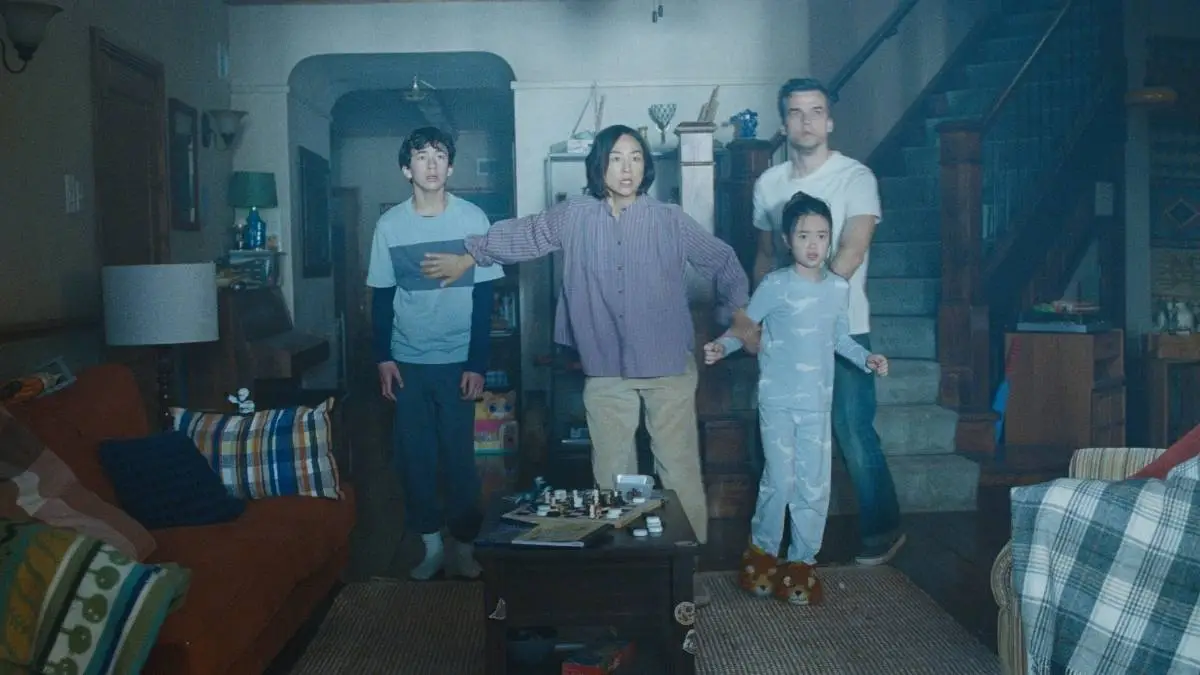
Have you ever looked at a downpour and felt like something was staring back at you from the depths of the storm? Rain creatures have officially taken over the conversation following the release of the hit streaming thriller, The Last House.
As audiences across the globe scramble to decode the film’s terrifying antagonist, director Louis Leterrier has finally pulled back the curtain on these mysterious beings. Understanding the origins of these monsters fundamentally changes how you perceive the entire movie, transforming a simple survival tale into a haunting commentary on planetary collapse.
Understanding The Rain creatures Origins
The terror of The Last House is rooted in a reality that feels uncomfortably close to home. According to Louis Leterrier, these beings were not born from space or some supernatural dimension, but from the very waters that cover our planet.
They are described as ancient, primordial inhabitants of Earth’s oceans. Think of them as the original landlords of this world, existing long before human life even had a chance to blink into existence. When the director states, “We are living on their planet,” he is highlighting the arrogance of humanity’s expansion.
The narrative arc hinges on the idea that humans have pushed the oceans to a breaking point. By “boiling the oceans” through industrialization and pollution, humanity effectively sent an invitation to these creatures to reclaim their territory. It is a brilliant, albeit terrifying, reflection of modern environmental anxiety.
These beings emerged from the deep because their habitat was no longer livable, and the home where the film’s characters are trapped becomes a microcosm for humanity’s final stand. You are watching a battle for survival against an enemy that views our entire civilization as a temporary infestation. 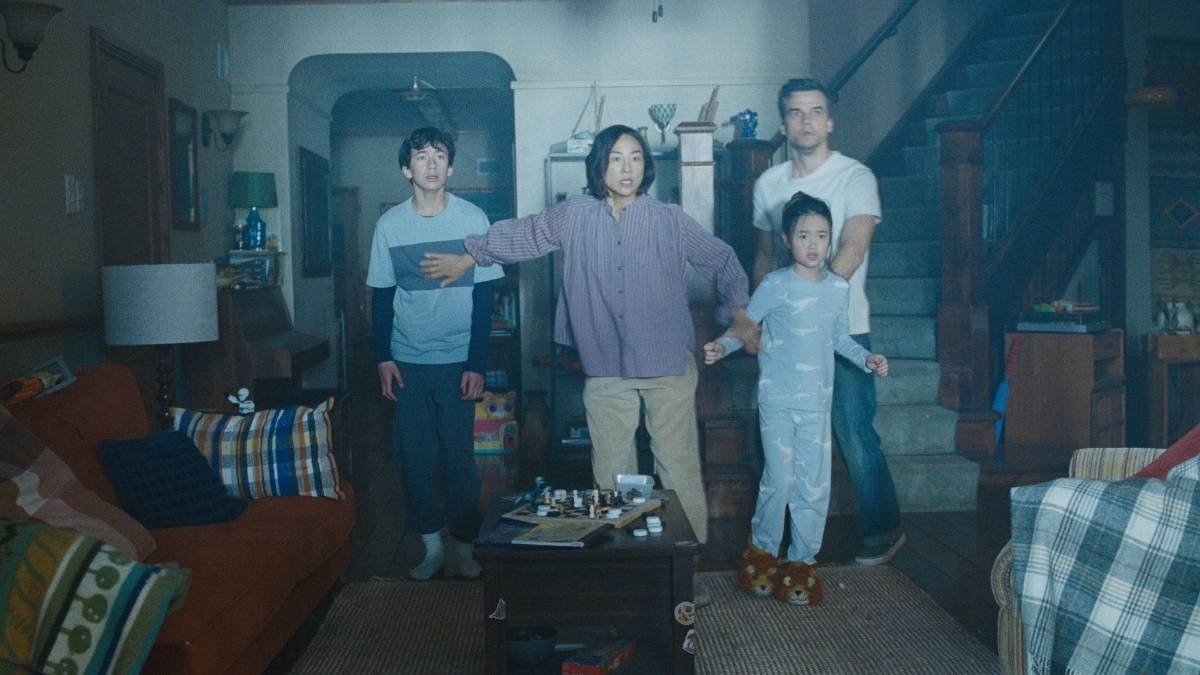
The design philosophy behind the creatures was meant to avoid any recognizable biological classification. Kevin Jenkins, the brilliant production designer behind the project, worked tirelessly to ensure that your brain couldn’t map these monsters to any known aquatic lifeform. The goal was to evoke a visceral, primal reaction of discomfort.
The Design Philosophy
- Intentional biological ambiguity to unsettle the audience.
- Tentacle-driven locomotion designed to mimic distorted human leg movement.
- A specific dance-like quality to their predatory nature.
- Creation process finalized in just two or three iterations.
The Production Secrets Revealed
When you look behind the scenes, the creation of the rain creatures feels almost like a moment of divine inspiration. Kevin Jenkins revealed that the final design was not the result of months of deliberation, but rather a sudden, accidental breakthrough during the second illustration attempt.
In the world of high-stakes filmmaking, this level of spontaneity is rare. You can spend millions on CGI and concept art, but sometimes the most frightening designs are the ones that simply “happen” during the creative flow. This chaotic origin story mirrors the unpredictable nature of the creatures within the film.
The collaboration between Louis Leterrier and Matthew Robinson created a vacuum of information that drove social media speculation to fever pitch. By keeping the audience in the dark until the official explanation, the production team successfully turned a standard horror film into a viral discussion piece.
If you want to read more about the stars behind the screen, check out the latest updates over at Bright Celebrity for exclusive insights. The connection between the film’s success and its mysterious monsters has solidified it as a staple of 2026 cinema.
The movement of these creatures is what truly sets them apart from the standard movie monster trope. They don’t just lunge or bite; they dance in a way that feels inherently wrong to the human eye. This uncanny movement style forces you to pay closer attention to their anatomy, making every scene they appear in a masterclass in tension.
The Environmental Message
Beneath the horror lies a sharp critique of how we manage our world. The film suggests that nature doesn’t just suffer in silence; it eventually fights back with forces we cannot comprehend. The rain creatures function as a physical manifestation of climate reality.
By treating the ocean as a resource to be exploited, humanity in The Last House inadvertently triggered its own extinction event. This is a recurring theme in modern media, but Louis Leterrier packages it in a way that feels immediate and inescapable. You are trapped in that house with them, watching the consequences of generations of waste.
This isn’t just about a monster movie; it’s about the ticking clock of environmental collapse. The monsters serve as a mirror, showing us the ugliness of our own consumption habits. It is a sobering thought to realize that the most dangerous thing in the ocean might just be the result of our own arrogance.
Critics have noted that the film avoids the usual tropes of the genre. Instead of a standard invasion, we are witnessing an eviction. The Earth is cleaning house, and the occupants—the family trapped inside—are simply in the way of a force that has been here for eons.
The pacing of the film allows the audience to gradually understand the scope of the threat. We start with the fear of the unknown, and we end with the existential dread of being obsolete. It is a masterclass in building a narrative that stays with you long after the screen goes dark.

Statistical Breakdown of Production
To give you a better idea of how this film compares to other industry giants, let’s look at the production data and reach metrics that define this phenomenon.
| Category | Metric / Detail |
|---|---|
| Release Date | August 7, 2026 |
| Lead Director | Louis Leterrier |
| Concept Designer | Kevin Jenkins |
| Creature Origin | Ancient Deep Ocean |
| Streaming Reach | Global Top 5 |
These numbers highlight the massive scale of the film’s impact. With millions of viewers across the Reuters-verified global streaming markets, the conversation is only just beginning. The success of the film also points to a growing audience appetite for high-concept, environmentally conscious horror.
When you analyze these stats, it becomes clear that the marketing team leaned into the mystery of the rain creatures. By not revealing their full appearance in early trailers, they drove massive engagement. People love to solve puzzles, and the enigma of these monsters provided the perfect hook for online theorists.
The data suggests that viewership spiked significantly after social media influencers began breaking down the “creature reveal” moments. This creates a feedback loop of engagement that keeps the film trending well beyond its initial launch weekend.
We can expect more of these types of projects in the coming years. High-concept, visually distinct, and intellectually challenging movies are currently outperforming traditional sequels and reboots. If you want a hit in 2026, you need a story that forces the audience to ask questions.
Ultimately, the numbers confirm what many viewers felt: this was the cultural moment of the late summer. The combination of strong direction, a unique script, and a terrifyingly grounded monster design proved to be the winning formula. It has effectively set a new standard for creature features.
The Legacy of The Last House
Looking back at the impact of this film, it is clear that it has redefined the “creature feature” genre. Louis Leterrier did not just make a movie; he tapped into a collective anxiety about the natural world that resonates across all generations.
The rain creatures will likely remain a pop culture icon for years to come. Their unique movement and aquatic origin story provide a template for future writers to follow. We are already seeing spin-off discussions and fan art flooding the internet, proving the longevity of the concept.
What makes this film special is its ability to make the familiar—the rain, the ocean, the house—feel inherently hostile. You might find yourself checking your own windows during the next storm, wondering if there is something lurking out there, waiting for the climate to shift just enough for it to come home.
This is the power of great horror. It doesn’t just rely on jump scares; it builds a world where the fear is rooted in logic and history. By grounding the monsters in the prehistoric past of Earth, the story feels like a warning rather than a fantasy.
As we move toward the end of the year, it is clear that this film will be a staple in top-ten lists everywhere. Whether you enjoyed it for the thrill or analyzed it for its deeper meaning, there is no denying the mark it has left on the industry.
For those who missed the initial release, now is the time to dive in. Just be sure to watch it during a storm to get the full, unsettling experience. It is a rare gem that manages to be both intellectually stimulating and visually terrifying, marking a highlight in 2026’s cinematic landscape.
More Like This
For more updates, check out our latest entertainment and sports news.