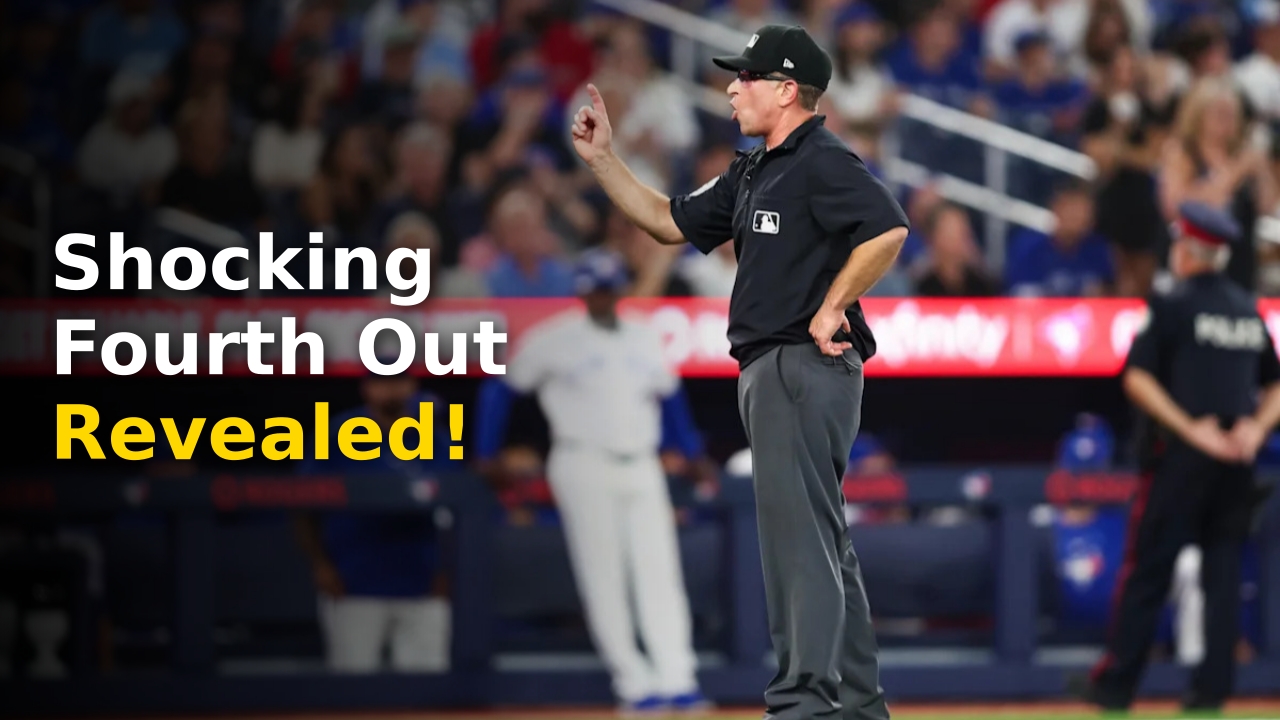
Fourth out logic caused total chaos during Monday’s Red Sox-Blue Jays game, leaving fans and players alike scrambling for the rulebook. You probably watched the replay three times and still felt your brain melt, because seeing a professional umpire navigate a situation that essentially invents a phantom out is not something you see every day.
If you think you have mastered the rules of baseball, this bizarre sequence proves that even the most seasoned observers have blind spots. It is time to peel back the layers of this technical nightmare that nearly altered the outcome of the entire game.
Understanding the Fourth out Chaos
The entire incident began when Ceddanne Rafaela hit a deep fly ball to center field. At that moment, both Anthony Siegler and Nick Sogard seemed to have lost track of the total number of outs on the scoreboard, which incorrectly displayed two outs. This confusion is the exact type of mental lapse that drives managers absolutely insane in the dugout.
When the Blue Jays defense turned what looked like a double play, the Red Sox were left trying to salvage a run. The rule in question here is MLB Rule 5.09(c)(4), a technicality that allows a defense to effectively trade a recorded out for a more advantageous one. It sounds like a cheat code, but it is actually buried deep within the official rulebook.
The concept hinges on the defense appealing a play that resulted in an out after the inning was already technically over. If successful, the defense forces the umpire to reset the third out to prevent a runner from scoring. It is a rare, tactical maneuver that usually goes unnoticed because it is so infrequently applied in major league games.

Many spectators have never heard of this rule because the circumstances required to trigger it are incredibly specific. You need a base-running error, a confusing scoreboard, and a defense sharp enough to recognize the opportunity mid-play. Most teams are too busy celebrating the third out to even consider the legalities of the fourth out.
This situation serves as a stark reminder that baseball is a game of fine margins. Whether you are a casual fan or a die-hard analytical nerd, keeping up with the latest sports drama is part of the experience. Watching the umpires gather to discuss this felt like witnessing a high-stakes meeting in a boardroom rather than a game at the SkyDome.
If you find this topic fascinating, you are definitely not alone. The fourth out protocol requires the defense to stay on the field in fair territory to make their appeal, a mistake the Blue Jays nearly made by retreating to the dugout too quickly. Their lack of awareness nearly negated their ability to challenge the play entirely.
Why Strategy Matters Most
- Base coaches must remain vocal about out counts at all times.
- The scoreboard is a guide, but the players are the ultimate source of truth.
- Managers need to know the rulebook better than the umpires.
- Appeals must be handled within the strict boundaries of fair territory.
- Communication failures lead to costly defensive and offensive lapses.
The Technical Breakdown of Data
Understanding the impact of these decisions requires looking at the raw mechanics of the ruling. The table below outlines how this specific situation compared to standard double-play protocols.
| Category | Standard Play | Fourth Out Scenario |
|---|---|---|
| Appeal Required | No | Yes |
| Run Scoring | Depends on timing | Prevented by appeal |
| Field Requirement | Not Applicable | Must stay on field |
As you can see, the complexity of this play is significantly higher than a standard force out. The Blue Jays narrowly escaped a situation where they could have lost the run by simply staying engaged. Even with the win, this highlights the fragility of game management at the professional level.
Every manager in the league is likely reviewing this tape today. They are asking how their own squads would react under the same pressure. You can bet that there will be a lot of extra time spent on ‘out-counting’ drills during practice this week.
The ruling confirms that while the Red Sox were awarded a run, the Blue Jays maintained the integrity of the double play. It was a bizarre outcome that left both sides feeling like they had participated in a historic, if slightly confusing, moment. Chad Tracy and the coaching staff surely earned their keep by navigating these murky waters.

This is the essence of professional baseball. One moment you are playing a standard fly-out, and the next you are knee-deep in obscure arbitration. It is what makes the game both brilliant and frustratingly complex.
Whether you agree with the rule or think it should be scrapped, the reality is that it remains part of the game. Professional players are expected to know these nuances, and when they fail, the scoreboard reflects that reality instantly.
Looking Ahead for Both Teams
Moving forward, the Red Sox will look to bounce back from this frustrating loss while the Blue Jays take the win and move on. These types of games often leave a lingering impact on team morale, especially when they center on such strange, mechanical rulings.
We can expect more focus on scoreboard accuracy and base-runner accountability. If players cannot trust the infrastructure of the stadium, they must rely on their own internal tracking. It is a lesson in self-reliance that will echo through the rest of the season.
Fans will continue to debate this at bars and on social media for weeks. There is nothing quite like a controversial ruling to spark a passionate debate. Do you think the rules are too complicated? Are you frustrated by the lack of clarity provided by stadium officials?
These are the questions that define our passion for the sport. Baseball remains the most analyzed game in history, and instances like this are exactly why. Every rule, every out, and every call has a story behind it.
In the final assessment, the game is what it is—a flawed, beautiful, and sometimes absurd spectacle. We come back for the drama, the stakes, and the chance to see something we have never seen before. The fourth out saga was exactly that.
Even if the game didn’t go the way the Boston faithful wanted, they still got a glimpse of baseball history. It is a memory that will be talked about every time a similar situation occurs in the future. And you can be sure that the next time it happens, everybody will be paying closer attention to the infield and the umpire’s signal.
Thanks for diving into this with us. If you enjoyed this breakdown, keep your eyes peeled for more deep dives into the weirdest, most interesting moments in the league. It is always a pleasure to dissect the fine details of the game we all love. Keep watching, keep arguing, and above all, keep enjoying the beautiful game.
More Like This
For more updates, check out our latest entertainment and sports news.