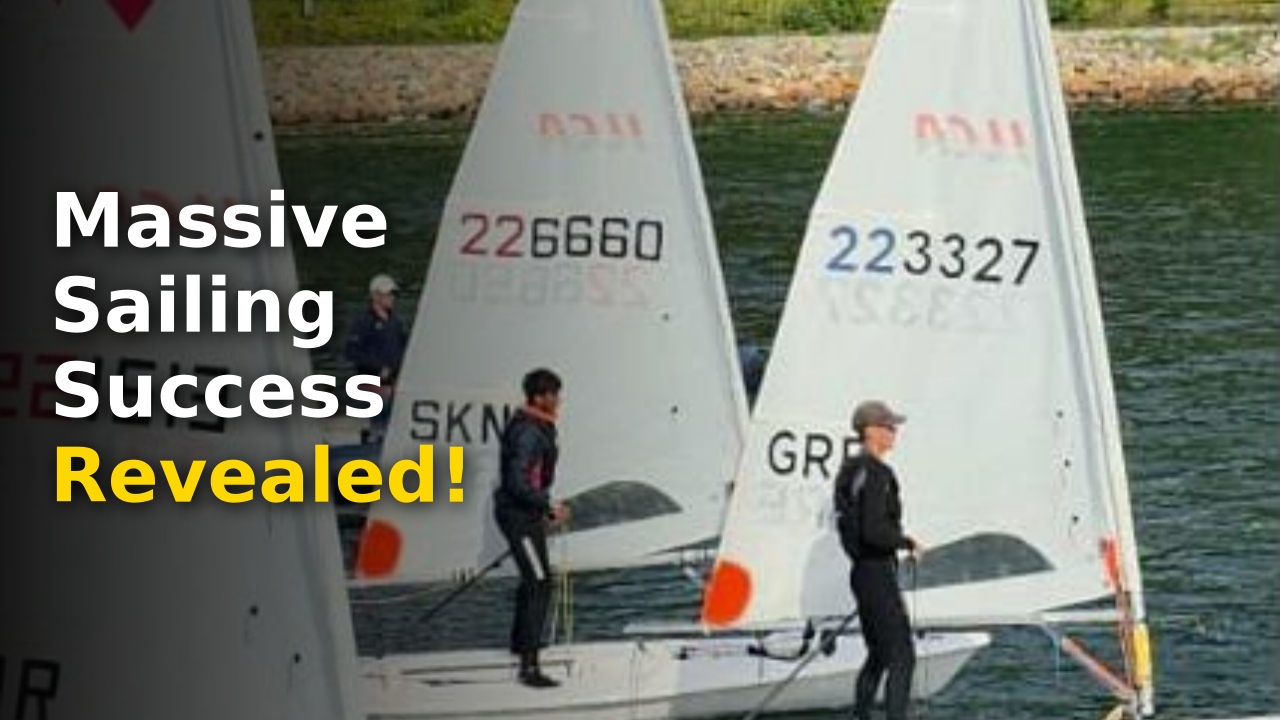
Youth Sailing is currently the talk of the global sporting community after a historic finish at the ILCA 4 Youth Worlds 2026. Have you ever wondered what it takes for a small island nation to dominate on the world stage against global superpowers? You are witnessing a tectonic shift in the maritime sports world as Abhijith Srinivasan puts St. Kitts and Nevis on the map.
This achievement is not just a win for the athlete but a definitive statement for the Caribbean. You can feel the energy radiating from the Nevis Aquatic and Sailing Centre as they celebrate this monumental milestone. The sheer grit required to compete against 448 elite sailors is something most people cannot even fathom.
Representing the St. Kitts and Nevis Sailing Association (SKNSA), Srinivasan proved that talent knows no boundaries. He faced 51 nations in the chilly, unpredictable waters of Aarhus, Denmark. This journey from the warm Caribbean Sea to the North Sea is a masterclass in adaptation and raw athletic skill.
Youth Sailing Global Impact
The world of Youth Sailing has evolved into a high-stakes arena where technology meets human endurance. When you look at the ILCA 4 class, you are looking at the foundational tier for future Olympic champions. It requires a specific set of skills that combine physics, meteorology, and intense physical stamina.
Aarhus, known as the “City of Sails,” provided a brutal testing ground for every participant. The venue is famous for its complex wind shifts and demanding currents that can ruin a race in seconds. For a sailor used to the steady trade winds of Nevis, this was a completely different beast to tame.
The competition featured a massive fleet of 448 sailors, making it one of the largest youth regattas in history. Standing in the middle of such a crowd requires immense mental clarity. You have to navigate not just the water, but the psychological pressure of hundreds of white sails surrounding you at the start line.
Every nation brings its own unique strategy and secret training methods to these championships. Countries like Italy, Spain, and Denmark have multi-million dollar budgets for their maritime programs. Yet, the presence of St. Kitts and Nevis proves that passion often outweighs pure financial backing in competitive sports.
The ILCA 4 boat itself is a disciplined craft with a 4.7 square meter sail area. It is designed to bridge the gap for younger, lighter sailors before they transition to the more demanding ILCA 6 or 7 rigs. Mastering this boat means understanding how to hike out over the side for hours to keep the hull flat.
Srinivasan’s performance in Denmark has sparked a new interest in maritime activities across the Leeward Islands. You can expect to see a surge in enrollment for local sailing schools in the coming months. This event serves as a beacon of hope for every young athlete dreaming of international recognition.

Technical Mastery Required
- Precision sail trimming to capture micro-bursts of wind in Aarhus.
- Aggressive hiking techniques to maintain boat speed in heavy chop.
- Advanced tactical positioning to defend lanes against 50+ boats per fleet.
- Rapid recovery from technical errors during high-speed downwind legs.
- Maintaining focus during six-hour days on the water in cold conditions.
Overcoming Regional Limitations
You must understand that the path to the ILCA 4 Youth Worlds is significantly harder for athletes from the Caribbean. Limited access to high-performance resources and specialized infrastructure often creates a massive gap. Most elite sailors in Europe have access to state-of-the-art simulators and constant coaching cycles.
In Nevis, the Youth Sailing community relies heavily on community support and volunteer expertise. The lack of a dedicated high-performance center means athletes must work twice as hard to stay competitive. Srinivasan’s journey is a testament to the power of human will over material lack.
Specialized training support is often hard to find when you are isolated on a small island. You have to travel thousands of miles just to get a taste of international-level competition. This makes the 271st place finish overall even more impressive when you consider the starting point.
The 28th-place finish in one of the final races was the real “shocker” of the event. It proved that when the conditions were right, Youth Sailing in the Caribbean could compete with the top 10% of the world. That single race served as a warning to the established sailing powers that a new contender has arrived.
Adapting to the cold climate of Denmark was another hurdle that many take for granted. Moving from 30°C water to the frigid North Sea affects muscle performance and reaction times. You have to wear specialized drysuits and layers that change the way you move in the cockpit.
The Nevis Aquatic and Sailing Centre has played a pivotal role in bridging this resource gap. By fostering a culture of excellence, they have created a pathway for kids to dream beyond the reef. Their dedication to the sport is the reason why Srinivasan was able to stand tall on that global stage.
Resource Gap Challenges
- Lack of local access to high-speed coach boats and electronic tracking.
- High costs of shipping competitive hulls and sails across the Atlantic.
- Difficulty in securing consistent sponsorship for international travel.
- Limited opportunities for fleet racing with more than 10 boats locally.
- Dependence on external expertise for high-level tactical workshops.
Regatta Performance Data
Analyzing the numbers from the Aarhus event reveals the true scale of this achievement. When you look at the statistics, you see a story of constant improvement and tactical evolution. It is not just about the final ranking, but the progression through the qualifying and final series.
The event utilized a complex scoring system where sailors are divided into color-coded fleets. To move up the ranks, you must consistently finish in the top half of your assigned group. Srinivasan showed a remarkable ability to learn from his mistakes in the early rounds to peak at the right time.
Tactical refinement was the key to his late-stage success in Denmark. You can see how his positioning improved as he spent more time observing the world’s best. He wasn’t just sailing; he was conducting a masterclass in real-time sports analysis and execution.
| Category | Statistic | Global Significance |
|---|---|---|
| Total Nations | 51 | Extreme Global Competition |
| Total Participants | 448 | Elite Tier Saturation |
| Best Race Finish | 28th | Top 6% Performance |
| Overall Rank | 271st | Solid Mid-Fleet Global Debut |

Coaching And Olympic Mentorship
No athlete reaches this level alone, and the coaching staff for St. Kitts and Nevis was world-class. Coaches Nicholas Dupre and Nickhail Rogers provided the foundational vision that got Srinivasan to the starting line. Their ability to translate Caribbean sailing styles into a competitive international framework was essential.
During the regatta, the delegation was supported by three legendary Olympians. Andrew Lewis, Bruno Fontes, and Eduardo Marques offered tactical guidance that you simply cannot find in a textbook. Having mentors who have felt the pressure of the Olympic Games is a game-changer for any young sailor.
These experts helped Srinivasan break down the nuances of the Aarhus racecourse. They focused on “starts”—the most chaotic part of any Youth Sailing race. If you lose your position in the first 30 seconds, it is nearly impossible to claw back through the dirty air of 50 other boats.
The inclusion of Coaches Niels and Kristoff added even more depth to the training insights. This collaborative approach shows that the SKNSA is serious about building a sustainable high-performance culture. They are not just looking for a one-time success; they are building a legacy for the entire federation.
Mentorship at this level involves more than just technical boat handling. It involves teaching the athlete how to manage their diet, sleep, and mental health during a grueling 10-day event. You have to stay sharp from the first morning briefing until the final boat wash at sunset.
The guidance provided by the Olympians allowed Srinivasan to transform his mistakes into masterclasses. Instead of getting frustrated by a poor finish, he analyzed the data and adjusted his strategy for the next heat. This emotional intelligence is what separates the great from the good in the sailing world.
Mentorship Impact Factors
- Psychological resilience training to handle high-pressure starts.
- Real-time weather analysis and route planning based on North Sea trends.
- Physical conditioning adjustments to combat cold-water fatigue.
- Strategic drafting and lane management techniques in large fleets.
- Confidence building through direct interaction with world champions.
The Future Of Youth Sailing
What happens next for the federation and its rising stars? The success in Aarhus has opened doors that were previously bolted shut for Caribbean athletes. You can see a future where St. Kitts and Nevis is a regular fixture in the top 100 rankings of Youth Sailing events worldwide.
The St. Kitts and Nevis Sailing Association is already planning its next series of pathway programs. These initiatives are designed to find the next Srinivasan and provide them with the tools they need earlier in their careers. The goal is to move from “participating” to “podium hunting” in the next four-year cycle.
Community support remains the lifeblood of this movement. Every sponsor and family member who contributed to this trip is a part of the success story. It takes a village to raise a sailor, especially when that sailor has to cross an ocean to compete.
If you want to keep up with the rising stars of the Caribbean and other global icons, check out Bright Celebrity news for more inspiring stories. The world loves an underdog story, and there is no better example than the Kittitian and Nevisian presence in Denmark. Their journey is far from over, and the lessons learned in the North Sea will fuel their fire for years to come.
As the ILCA 4 class continues to grow, the competition will only get tougher. However, the blueprint for success has now been established. You can expect to see more specialized training camps and perhaps even international regattas being hosted right in the waters of Nevis.
According to the official International Laser Class Association guidelines, the sport is constantly evolving its equipment and rules. Staying ahead of these changes requires a dedicated administrative team. Thankfully, the SKNSA and NASC have shown they are more than capable of navigating these administrative waters.
The Final Verdict
Ultimately, the performance of Abhijith Srinivasan is a triumph of spirit over geography. You have seen how a dedicated teenager can take on the world and hold his own. The 2026 ILCA 4 Youth Worlds in Aarhus will be remembered as the moment the Caribbean truly arrived in modern Youth Sailing.
The resilience shown by the entire delegation provides a roadmap for other small nations. It proves that with the right mentorship, community backing, and personal drive, the global stage is accessible to everyone. This is not just about boats; it is about the limitless potential of the human heart when it catches the right wind.
As you reflect on this incredible finish, remember the names of the coaches and supporters who made it happen. Their vision has created a legacy that will inspire the next generation of Kittitians and Nevisians to set sail. Youth Sailing has a bright, bold future, and it is painted in the colors of St. Kitts and Nevis.
More Like This
For more updates, check out our latest entertainment and sports news.