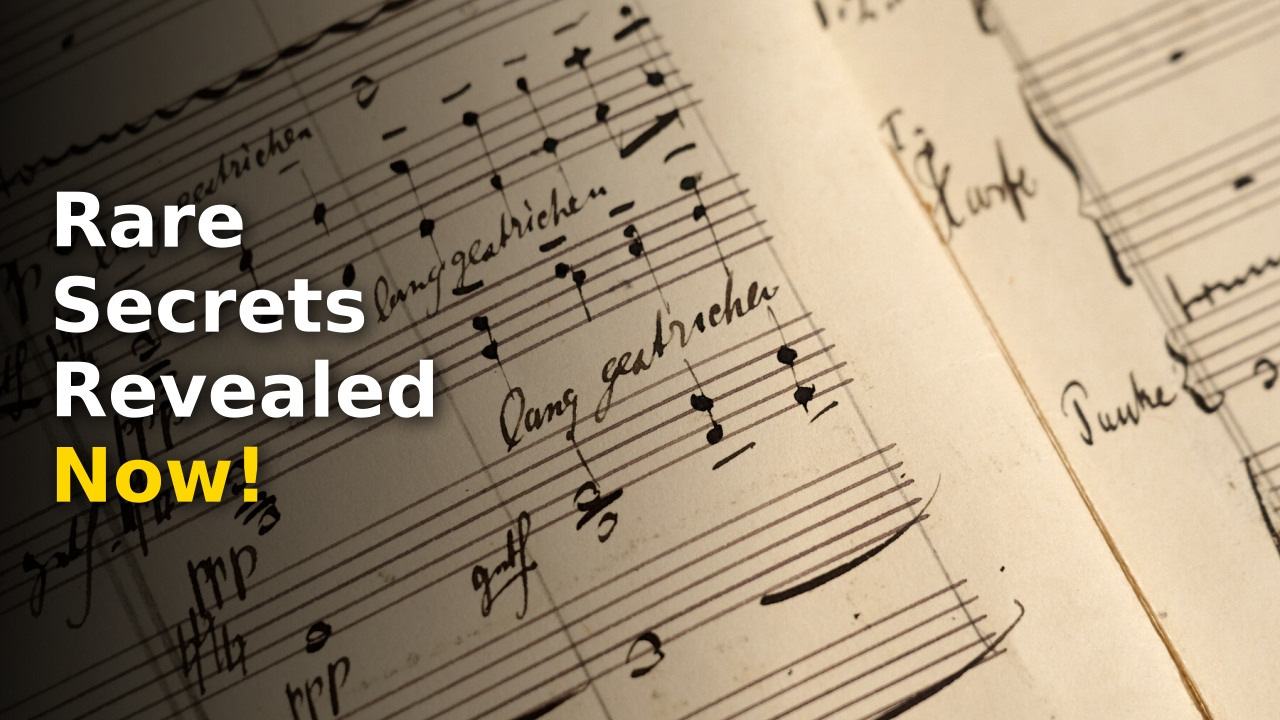
Mahler Manuscript details offer a breathtaking window into the fiery mind of historical composer Gustav Mahler. Have you ever wondered what it feels like to stand mere inches away from handwritten classical music history? Celebrated conductor Franz Welser-Möst recently guided music lovers through a private tour of this raw artistic treasure in Cleveland, Ohio.
The incredible document captures the precise moment Gustav Mahler poured his soul into his epic Symphony No. 2, widely known as the ‘Resurrection’ Symphony. Seeing these original ink markings changes how audiences experience orchestral performances in 2026. Every smudge, aggressive deletion, and hasty note reveals an artist fighting for perfection.
This iconic artifact is far more than dusty historical paper stored in a quiet vault. It represents a living, breathing emotional blueprint that still guides modern symphony orchestras across the globe today. Enthusiasts of high culture and historical artifacts can explore more insightful performance coverage on Bright Celebrity arts coverage.
Mahler Manuscript Secrets Revealed Firsthand
Stepping into the study of a visionary composer gives you chills down your spine. The landmark Mahler Manuscript features aggressive ink strikes and dramatic restatements that display his perfectionist nature. When Franz Welser-Möst turns each fragile page, you witness the raw birth of musical genius.
During his tenure as music director of the Cleveland Orchestra, Welser-Möst has dissected dozens of historic scores. However, he insists that this particular draft holds unmatched kinetic energy. The scribbled dynamic markings demonstrate how intensely the composer labored over every measure.
The score originated during an intense creative period between 1888 and 1894. During these pivotal years, the Austrian master questioned life, death, and spiritual rebirth. Every line drawn on the stave reflects those heavy philosophical struggles.
Scholars note that handwritten autographs reveal crucial interpretive hints missing from modern printed editions. Standard modern prints often clean up original quirks, removing human emotion. Studying the authentic quill strokes brings conductors closer to the creator’s true intentions.
Audiences often forget that classical compositions were once physical, exhausting manual tasks. Ink splashed across pages when inspirations struck late at night under dim candlelight. You can almost hear the frantic scratch of the pen on thick paper.
Handwritten Musical Details
- Violent ink crossings showing sudden revisions to the orchestral brass fanfares.
- Faint pencil annotations written during early rehearsal sessions in Leipzig.
- Extremely detailed dynamic notations commanding full orchestral volume drops.
- Personal marginal notes reflecting emotional turmoil during composition years.
Cleveland Orchestra Master Class Walkthrough
The Cleveland Orchestra has long held a global reputation for unmatched precision and tonal beauty. Under the baton of maestro Franz Welser-Möst, the ensemble regularly tackles giant symphonic works. Their deep dive into romantic scores draws international praise from critics worldwide.
In this exclusive musical walkthrough, the renowned conductor explains how original notation dictates modern acoustics. Small accents drawn heavily in black ink demand specific bowing techniques from string players. These subtle physical movements create the iconic signature sound heard in concert halls today.
Visiting major cultural institutions allows fans to connect with art on an intimate level. Viewing historical documents in person provides a tactile connection that digital screens simply cannot replicate. It transforms abstract melodies into tangible human experiences.
Musicians who perform from clean digital tablets still study physical autographs for emotional inspiration. Experiencing the original draft instills a deep sense of reverence for the performing artist. It serves as an anchor connecting past centuries with modern stages.
Historical records show that the complete handwritten score remained in private collections for decades. Its public display provides classical enthusiasts an unprecedented peek into private creative struggles. The archival preservation process ensures these pages survive for centuries more.
To fully understand the historical background of this masterpiece, explore Mahler’s monumental Symphony No. 2 archive. Discovering the complete timeline reveals how revolutionary this piece was during its premier performance in Berlin.

Record Financial Sales for Symphonies
Historic musical documents have evolved into prized financial assets among global collectors. Rare classical autographs frequently command millions at top auction houses like Sotheby’s in London. Bidders recognize the immense historical cultural value attached to landmark symphonic drafts.
In 2016, the complete handwritten autograph score of the Second Symphony shattered historical market records. The landmark sale demonstrated that high art investments remain remarkably resilient across changing economic landscapes. Wealthy patrons treat these rare scores like masterwork paintings by Rembrandt or Monet.
Financial analysts note that original manuscripts from master composers rarely enter the open market. When private estates release these treasures, bidding wars erupt instantly between international foundations. Ownership represents the ultimate status symbol within elite fine art circles.
The historical monetary valuation highlights the enduring global legacy of late 19th-century orchestral composition. Beyond dollars and cents, the preservation costs required for archival parchment remain substantial. Specialized climate-controlled vaults protect the delicate iron gall ink from environmental decay.
Institutions holding these artifacts must balance public access with strict conservation protocols. Displaying light-sensitive paper requires specialized low-UV LED showcases and customized humidity chambers. These high-tech measures guarantee future generations can admire the physical notes.
| Historical Artifact | Composer | Auction Price | Sale Year |
|---|---|---|---|
| Resurrection Symphony Score | Gustav Mahler | $5.6 Million | 2016 |
| Ninth Symphony Draft | Ludwig van Beethoven | $3.4 Million | 2003 |
| Mozart Fantasia Score | Wolfgang Amadeus Mozart | $4.3 Million | 1990 |
| Handel Messiah Autograph | George Frideric Handel | $2.8 Million | 1998 |
Decoding Intimate Notes and Dynamic Marks
Analyzing handwritten pages reveals striking secrets regarding tempo flexibility and orchestral balance. Mahler famous musical directions were extraordinarily precise, often written in colloquial German phrases. He instructed musicians to play without tone color or with overpowering fury.
When you examine the woodwind passages in the original draft, delicate nuances emerge immediately. The composer frequently scratched out entire measures in red ink before re-writing complex counterpoint. These dramatic changes show how his creative instincts evolved during intense composition sessions.
Conductors like Franz Welser-Möst spend decades studying these tiny ink variations to unlock emotional clarity. A line drawn slightly longer than usual suggests a prolonged musical pause. Capturing these tiny details separates ordinary performances from unforgettable orchestral events.
The sheer scale of the score requires extraordinary physical effort from the composer just to write down. Featuring massive brass chorales, double choirs, and expanded percussion, the instrumentation was revolutionary for 1894. Organizing those musical forces on paper demanded structural genius.
Key Notation Highlights
- Frequent use of thick red crayon to mark essential thematic entrances clearly.
- Explicit written instructions directing off-stage brass bands during the finale.
- Expressive German annotations commanding strings to play with passionate intensity.
- Carefully erased rhythm lines showing early experiments with symphonic meter.
Preserving Historical Classical Music Treasures
Preserving fragile nineteenth-century paper requires cutting-edge archival science in modern museum facilities. Exposure to ambient oxygen and fluctuating humidity levels causes ancient inks to corrode paper fibers over time. Conservation experts work tirelessly using non-invasive chemical stabilization techniques.
High-resolution digital scanning allows researchers to study high-definition facsimiles without handling delicate originals. Scholars worldwide can now zoom in on individual pen strokes without risking physical degradation. Digital archives democratize access to rare cultural treasures for students across the globe.
Despite digital advancements, physical contact with historical relics creates an irreplaceable visceral connection. Standing before the actual pages written by an artistic giant evokes deep human empathy. It reminds us that masterworks were created by real people facing immense life challenges.
Museums in Vienna, New York, and Cleveland partner regularly to share rare manuscript holdings. These collaborative exhibitions bring classical music heritage to diverse modern audiences in fresh formats. Interactive digital displays accompany the original papers to explain musical structures clearly.
Educational outreach programs use these original documents to inspire young emerging composers. Seeing that even legendary figures made mistakes and crossed out lines humanizes the creative journey. It teaches student musicians that artistic brilliance requires patience and relentless revision.
The modern classical music world owes immense gratitude to private benefactors who safeguard these treasures. Without dedicated philanthropy, many priceless drafts would have been lost during past wartime conflicts. Their efforts preserve human culture for centuries ahead.
Mahler Manuscript Legacy Resonates Today
In our fast-paced modern digital era, taking time to appreciate handwritten history offers profound emotional grounding. The intimate journey through this score shows that true art transcends temporal boundaries effortlessly. Genius captured on paper continues to move hearts across centuries.
Maestro Franz Welser-Möst and the world-renowned Cleveland Orchestra continue setting gold standards in classical performance. Their deep commitment to historical authenticity brings fresh vitality to timeless symphonic masterworks. Audiences leaving concert halls carry the emotional power of these handwritten notes with them.
Exploring the historic Mahler Manuscript reminds us why live orchestral music remains deeply transporting today. The intimate connection between composer, conductor, and listener remains unbroken through time. Step into concert halls and experience this immortal sound for yourself.
More Like This
For more updates, check out our latest entertainment and sports news.