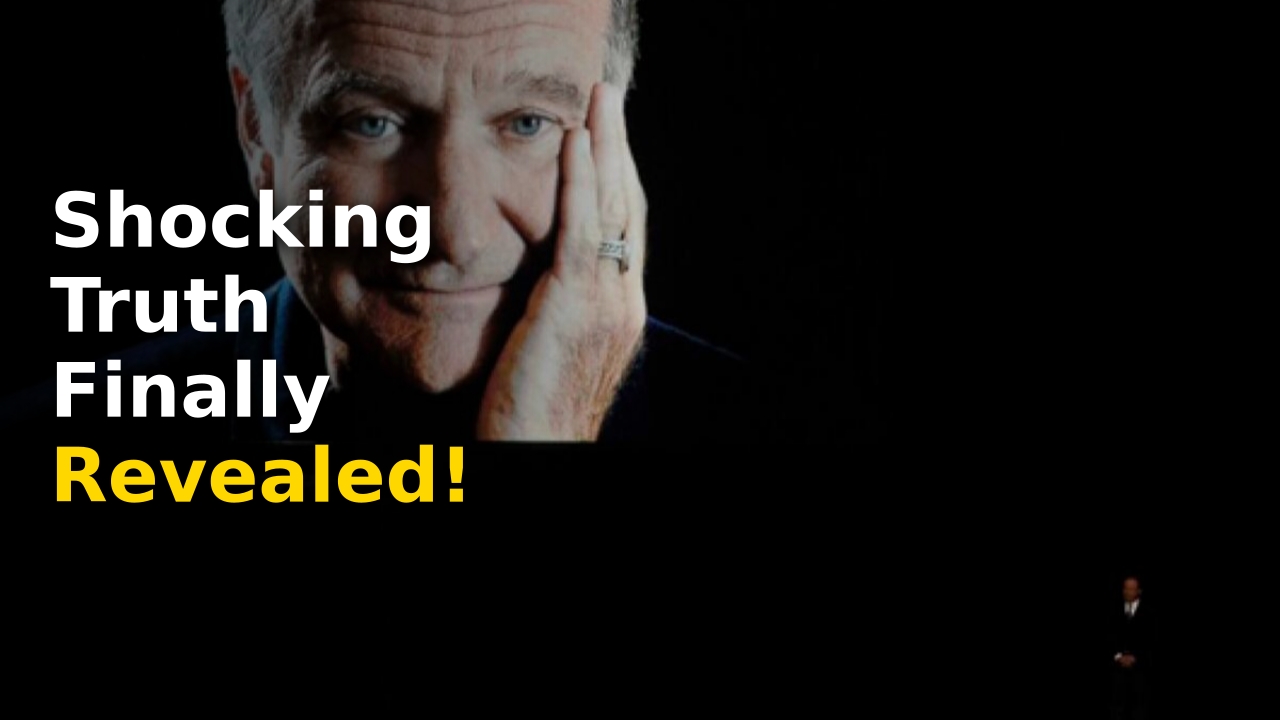
Have you ever wondered what dark struggles can hide behind the world’s most infectious smile? Robin Williams captivated millions with his lightning-fast wit and boundless energy, yet his life ended in an unimaginable heartbeat. On August 11, 2014, a heartbreaking call to emergency services in Tiburon, California confirmed that the world had lost its ultimate comic genius at age 63.
While early news reports pointed solely to depression and addiction struggles, the tragic reality behind his final months proved far more complex. Medical discoveries made after his passing reshaped everything the public thought they knew about his final days. To understand his legacy, check out our coverage of exclusive celebrity updates and news for deeper insights into Hollywood icons.
Behind the laughter was a human being facing an invisible war against his own brain. Here is the full story of his astounding life, his legendary career, and the devastating illness that stole a global icon.
Robin Williams Tragic Final Days
The sudden announcement sent shockwaves across the entire world in late summer of 2014. Emergency medical personnel arrived at his home shortly before noon after a desperate 911 call. They pronounced the legendary star dead at the scene, ending a career that spanned more than four decades.
His devoted wife, Susan Schneider, released an emotional public message shortly after the news broke. She pleaded with fans across the globe not to focus on his painful departure. Instead, she urged everyone to remember the countless moments of pure joy he gave to millions.
Despite her heartfelt request, details surrounding his death quickly filled international headlines. Official reports from the Marin County Sheriff’s Office confirmed the distressing circumstances of his suicide. Only days prior to his death, he had confessed his overwhelming exhaustion to his wife.
A Heartbreaking Final Confession
He looked at his wife in total despair and admitted his deep confusion. ‘I don’t know what’s happening to me, but I’m not me anymore,’ he confessed during his final days. It was a terrifying realization for a man whose mind had always been his greatest gift.
Initial public reports blamed his past battles with substance abuse and severe depression. For decades, fans knew he had struggled with alcohol and chemical dependency during his early stand-up years. Yet toxicological tests conducted after his passing found zero illegal drugs or alcohol in his system.
Months later, exhaustive medical examinations revealed the shocking truth behind his decline. Autopsy findings showed he was suffering from an aggressive neurodegenerative condition known as Lewy body dementia. The disease had silently devastated critical regions of his brain long before anyone understood what was happening.
This severe neurological disorder triggered extreme anxiety, paranoia, physical rigidity, and severe memory disruptions. His brilliant capacity for rapid-fire improvisation was slowly choked off by abnormal protein deposits. The tragic diagnosis finally explained why the beloved comic felt his identity slipping away.
Genius Behind The Comedy
Born on July 21, 1951, in Chicago, Illinois, he grew up as an intensely shy child in a wealthy household. Everything changed in 1967 when his family relocated to Northern California during his teenage years. Stepping onto a school theater stage offered him an incredible escape from his childhood introversion.
He initially enrolled at the College of Marin to study political science before abandoning academia for drama. In 1973, at just 22 years old, he earned a coveted spot at the prestigious Juilliard School in New York. There, he formed a deep, lifelong friendship with fellow acting titan Christopher Reeve.
His professors at Juilliard quickly realized his talent defied traditional instruction. His extraordinary ability to change voices, create wild characters instantly, and command the stage set him apart. He soon returned to San Francisco and Los Angeles to refine his stand-up routines in packed comedy clubs.

The TV Breakthrough That Changed Everything
His massive career breakthrough arrived in 1978 when he appeared as the alien Mork on the hit television series Happy Days. His frenetic comedic energy was so staggering that producers immediately created a spinoff series tailored entirely to him. Mork & Mindy debuted that same year and skyrocketed the 27-year-old comic straight to international superstardom.
His alien character’s signature catchphrase ‘nanu nanu’ became a massive pop culture phenomenon overnight. He delivered dialogue at a blistering pace that dazzled audiences and stunned fellow actors. Stand-up comedy special offers and major Hollywood feature scripts flooded his agent’s office almost immediately.
However, early stardom brought intense pressure and dangerous lifestyle hazards. During the early 1980s, he fell heavily into the wild drug culture of Hollywood. The tragic overdose death of his close friend John Belushi in 1982 served as a dramatic wake-up call that forced him to get clean.
He maintained long stretches of sobriety before checking into a rehabilitation facility in 2006 for alcohol addiction. He was always remarkably open with his fans regarding his recurring battles with dependency. He frequently joked that addiction was a lingering shadow that constantly looked for a way back inside.
Dramatic Roles That Defined History
While audiences loved his wild comedic persona, his jump to dramatic cinema surprised critics worldwide. His starring role in The World According to Garp in 1982 showcased impressive emotional depth. He followed that success with Moscow on the Hudson in 1983, playing a vulnerable Soviet defector.
His definitive leap into cinematic history happened in 1987 with Good Morning, Vietnam. Playing military radio DJ Adrian Cronauer, he improvised vast portions of his legendary radio broadcasts on set. The extraordinary performance earned him his very first Academy Award nomination for Best Actor.
Two years later, in 1989, he delivered an iconic performance in Dead Poets Society as English teacher John Keating. He inspired young students to embrace poetry and live passionately under the immortal mantra ‘carpe diem.’ The moving performance secured his second Academy Award nomination and solidified his dramatic brilliance.
Unforgettable Cinematic Masterpieces
In 1990, he starred alongside Robert De Niro in the acclaimed medical drama Awakenings. Playing a quiet neurologist treating catatonic patients, he revealed a tender, restrained acting style. That same era brought magical blockbusters like Hook in 1991, where he played an adult Peter Pan directed by Steven Spielberg.
In 1992, his vocal genius brought the Genie to life in Disney’s animated classic Aladdin. Animators rewritten scenes to match his spontaneous off-script voice sessions and impressionistic humor. The film smashed box office records worldwide and revolutionized how Hollywood utilized celebrity voice talents in animation.
The hit Mrs. Doubtfire arrived in 1993, showcasing his unbelievable range between physical slapstick and genuine family heartbreak. He played a devoted father disguising himself as an elderly British housekeeper just to stay close to his children. The film remains one of the highest-grossing comedy movies of all time.
His crowning artistic achievement came in 1997 with his brilliant role in Good Will Hunting. Playing widowed therapist Sean Maguire, he shared unforgettable, emotional scenes opposite a young Matt Damon. His masterful performance finally won him the Oscar for Best Supporting Actor at the 70th Academy Awards in 1998.
Generosity Away From The Spotlight
Beyond his staggering entertainment accomplishments, his private generosity impacted countless lives worldwide. Alongside comedic legends Billy Crystal and Whoopi Goldberg, he co-hosted the annual Comic Relief charity broadcasts. Together, they raised over $80 million to assist individuals experiencing homelessness and poverty across the United States.
He also dedicated tremendous personal time to visiting pediatric cancer patients at St. Jude Children’s Research Hospital. Staff members frequently recalled how he would arrive without news cameras to quietly entertain sick children for hours. He consistently refused publicity for these personal charitable visits.
His loyalty to friends was equally legendary throughout his decades in the spotlight. Following the tragic horse-riding accident that paralyzed his Juilliard classmate Christopher Reeve in 1995, he burst into the hospital room disguised as a Russian doctor. Reeve later admitted that laughing at his friend’s antics was the exact moment he realized he wanted to keep living.

Heartwarming Personal Connections
In 2000, he famously visited the Gorilla Foundation in Northern California to meet Koko, the famous sign-language gorilla. The gentle animal instantly bonded with the comedian, playing games and tickling him like a lifelong companion. When handlers informed Koko of his death years later in 2014, the gorilla visibly grieved and made sign language symbols for sadness.
His daughter, Zelda Williams, later revealed another incredible detail about his movie contracts. He secretly required film studios to hire a specific number of homeless individuals as crew members on his production sets. This unique contract clause provided steady wages and valuable job experience to hundreds of down-on-their-luck workers.
He also performed tirelessly for military personnel stationed overseas with the USO. He traveled to remote combat zones in Iraq and Afghanistan to perform stand-up routines for thousands of deployed troops. Service members adored his unbridled energy and willingness to perform in dangerous, challenging conditions.
Robin Williams Career Milestones
His professional trajectory represents one of the most versatile and successful artistic careers in entertainment history. From humble comedy club stages to the peak of Oscar glory, his impact on modern culture remains unmatched. The table below highlights key milestones across his iconic journey.
| Year | Project Title | Role / Character | Major Industry Impact |
|---|---|---|---|
| 1978 | Mork & Mindy | Mork from Ork | Breakout TV success; instant stardom |
| 1987 | Good Morning, Vietnam | Adrian Cronauer | First Best Actor Oscar nomination |
| 1989 | Dead Poets Society | John Keating | Nominated for Best Actor Oscar |
| 1992 | Aladdin | The Genie (Voice) | Revolutionized voice acting in cinema |
| 1993 | Mrs. Doubtfire | Daniel Hillard / Euphegenia Doubtfire | Global box office comedy phenomenon |
| 1997 | Good Will Hunting | Dr. Sean Maguire | Won Academy Award for Best Supporting Actor |
| 2002 | Insomnia | Walter Finch | Critically praised dark thriller role |
Even as he turned 50, he continued seeking challenging artistic risks. In 2002, he stunned audiences by playing terrifying villains in Christopher Nolan’s Insomnia and the psychological thriller One Hour Photo. Directors praised his rare ability to strip away his warm celebrity image to portray chilling psychological obsession.
Later in his career, he embraced family audiences again by playing President Teddy Roosevelt in the popular Night at the Museum franchise. He logged over 80 feature films and earned 15 major international acting awards. Yet despite his incredible fame, he remained universally loved for his humbleness and kindness.
Unmasking The Invisible Monster
In early 2014, at age 62, his health began to decline rapidly under confusing circumstances. He suffered severe insomnia, sudden panic attacks, loss of motor skills, and extreme fluctuations in cognitive awareness. Medical doctors initially misdiagnosed him with Parkinson’s disease in May 2014.
He desperately tried to manage his terrifying symptoms while filming final movie projects like Night at the Museum: Secret of the Tomb. Crew members noted that he struggled to remember simple lines, a heartbreaking setback for a man famed for lightning-fast memory recall. He knew his brilliant mind was failing, but nobody understood why.
Only after his death did doctors reveal that Lewy body dementia was the true culprit behind his suffering. Pathologists described his case as one of the most severe biological brain deteriorations they had ever examined. The disease had utterly destroyed his neurological baseline, leaving him helpless against hallucinations and profound terror.
A Legacy That Will Live Forever
For his widow Susan, learning the post-mortem diagnostic results brought a bittersweet sense of peace. ‘Robin and I had gone through this nightmare together, constantly hunted by an invisible monster,’ she later shared in emotional interviews. ‘It gave us a name for the horror we were living through.’
Understanding his tragic medical battle allows fans to honor his memory with even deeper compassion. The battle he fought wasn’t simply a loss of hope, but a brave fight against a devastating, silent illness. His bravery during his final months proved just how resilient his spirit truly was.
The extraordinary story of Robin Williams reminds us that even those who bring the greatest light into the world can harbor unseen pain. His timeless movies, incredible generosity, and unbelievable comedic genius ensure that his legacy will continue making future generations laugh, weep, and cherish every single moment of life.
More Like This
For more updates, check out our latest entertainment and sports news.