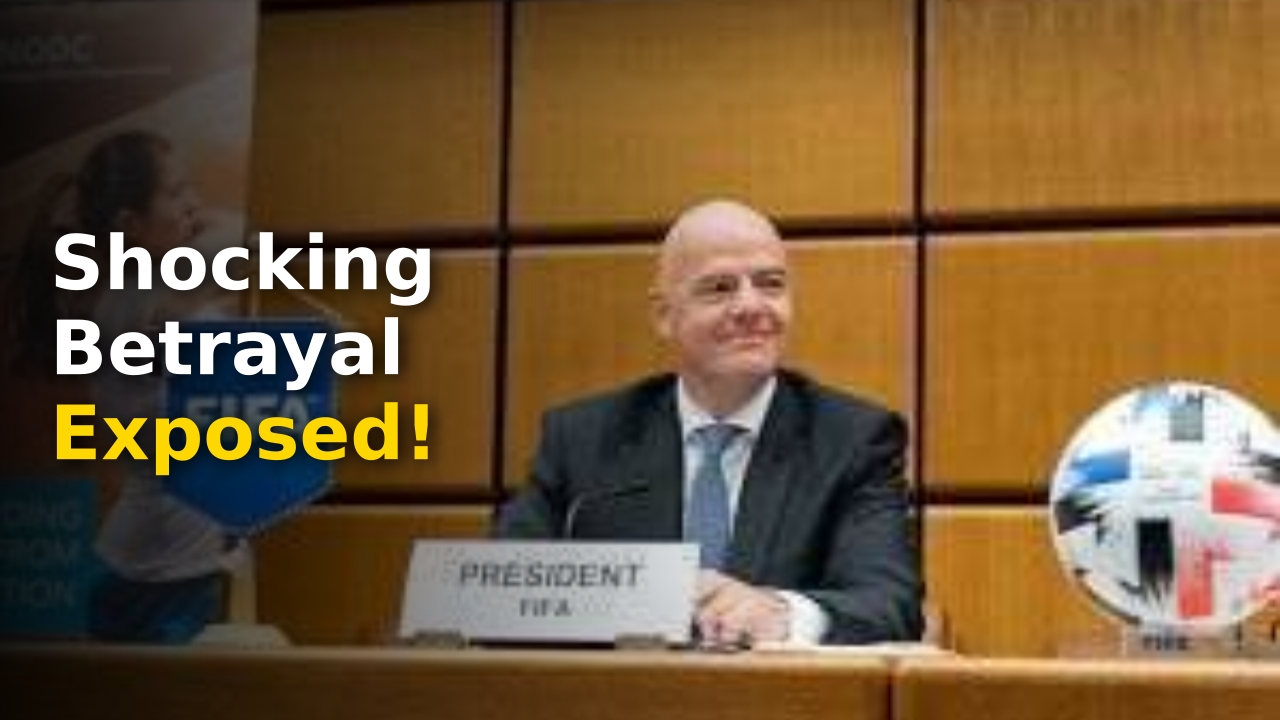
Did you know that the global game of football is currently facing an unprecedented civil war due to a brewing FIFA scandal? You might think the World Cup is a sacred, untouchable tradition, but behind closed doors, a massive financial battle is threatening to tear the sport apart. The beautiful game is no stranger to dramatic backroom deals, but this sudden clash marks a dangerous new chapter that could change how you watch soccer forever.
Three of the world’s most powerful football confederations have united to deliver a devastating blow to FIFA President Gianni Infantino. They are accusing the global governing body of outright deception and a fundamental breach of trust. This united front represents an astonishing shift in sports politics, bringing together long-term rivals to fight a common enemy.
By exposing a clandestine plan to sell off portions of the world’s favorite tournament, these regional giants are drawing a line in the sand. You are about to witness the most significant administrative showdown in modern sports history, as billions of dollars and the very soul of football hang in the balance.
Football Giants Revolt
The landscape of global sports administration was rocked to its core on August 11, 2024. In an unprecedented joint statement, European, Asian, and North American football leaders publicly declared war on their own governing body. This is not just a minor disagreement over scheduling or rules; it is a full-blown rebellion against central authority, sparking an unprecedented FIFA scandal.
You are witnessing an existential battle for the very soul of the world’s most popular sport. The signees of this explosive open letter include Aleksander Čeferin of UEFA, Victor Montagliani of CONCACAF, and Salman Bin Ibrahim Al Khalifa of the AFC. Together, these three powerful organizations represent the vast majority of football’s global audience, revenue, and active players.
Their open letter, addressed directly to the “football family,” exposes deep fractures that have been growing quietly for years. They argue passionately that football belongs to the fans, players, and clubs, not to any single ambitious executive. This collective statement sends a clear message that the days of unchecked unilateral decisions in Zurich are officially over.
Historically, these massive regional confederations have rarely found themselves in complete, public alignment on such sensitive political matters. They often compete fiercely for resources, broadcasting slots, and international influence. This sudden, unified front shows just how dangerous they believe the current path of FIFA leadership has become.
By taking this public stance, these regional leaders are risking their own political standing within FIFA’s official governing structure. Yet, they insist that their duty to protect the integrity of the game outweighs any personal political risk or potential retaliation. They are framing this battle as a moral obligation to the millions of fans who support the sport.
The timing of this rebellion is particularly damaging for the global governing body. With preparations for massive multi-nation tournaments already underway, any administrative paralysis could cost sponsors and local organizers millions. You can expect this public friction to dominate sports headlines for months to come.

Shocking FIFA scandal Exposed
The core of this explosive FIFA scandal revolves around a highly secretive plan to sell off a direct financial stake in the lucrative FIFA World Cup. Leaders of the regional confederations claim this plan represents an unforgivable abuse of authority and trust. They argue that selling off parts of our collective heritage for quick cash is a betrayal of everyone who loves the game.
You must realize that the World Cup is the single most valuable asset in all of professional sports. Selling even a minor share to private equity investors could forever alter how the tournament is run and managed. Decisions on ticketing, venues, and media rights would slide from sporting officials to profit-driven corporate boards.
The joint letter reveals that the executive committee attempted to push this transaction through under extreme time constraints. Member associations were given almost no time to analyze the complex legal and financial terms of the deal. This deliberate lack of transparency has fueled suspicions of a massive cover-up at the highest levels.
This rushed process was not a simple administrative error or a minor slip-up uncovered during the FIFA scandal investigation. Instead, the confederations call it a calculated, deliberate plan designed to limit oversight and bypass democratic voting procedures. It was an attempt to present a finished deal before any real opposition could organize.
Many observers believe this secret negotiation was an attempt to centralize absolute financial power within Zurich. By sidestepping traditional checks and balances, the current leadership has alienated its most important regional partners. The trust required to run a global sport has been thoroughly compromised by these actions.
The fallout from this revelation has sent shockwaves through regional offices from London to Tokyo. It raises fundamental questions about who actually controls the billions of dollars flowing through international sports tournaments. This crisis reveals the deep systemic issues at the heart of the latest FIFA scandal.
The Secret Morocco Meeting
- Only a single elected official was present at this crucial Morocco strategy meeting, leaving representation lopsided.
- No members of the official FIFA Council or regional member associations were invited to participate.
- The gathering was populated almost entirely by hired administrative staff loyal directly to the executive office.
- Traditional communication channels were bypassed in favor of quick, closed-door agreements away from Zurich.
Independent Investigation Demands
- The confederations demand that a completely independent third party conduct a full review of these events.
- They insist that current FIFA staff and internal lawyers play absolutely no role in this investigation.
- All relevant communications and digital records must be permanently preserved under strict guidelines.
- A clear framework must be established to prevent future unilateral financial decisions without general approval.
Global Football Power Shift
The ongoing struggle highlights a massive shift in how global sports politics are conducted. For decades, the central authority in Zurich held absolute sway over regional football associations, distributing funds and dictating terms. That dynamic is shifting rapidly as regional leaders demand a seat at the table.
Now, the regional giants are fighting back with unprecedented coordination and leverage. They are refusing to accept a secondary role in decisions that affect their local leagues, clubs, and players. The sudden unity of UEFA, CONCACAF, and the AFC has created an alliance that simply cannot be ignored, intensifying this growing FIFA scandal.
You should note that this rebellion could completely change future tournaments, including the highly anticipated 2030 World Cup and the 2034 World Cup. These massive events rely heavily on the infrastructure and cooperation of these three regional bodies. Without their full support, hosting a successful global tournament becomes an administrative nightmare.
If these major bodies decide to withhold their cooperation, the global game could face a devastating split. We could see regional boycotts or the creation of rival international tournaments that bypass Zurich entirely. Such a scenario would throw the entire professional sports world into chaotic, uncharted territory amidst the growing noise of this FIFA scandal.
This power struggle is also attracting intense scrutiny from major corporate sponsors and global broadcasting partners. Companies that spend billions on sponsorship deals hate political instability and public legal battles. They want their brands associated with joy and competition, not backroom deception and administrative warfare.
For those tracking these dramatic institutional shifts, staying updated with the latest entertainment and sports news lifestyle is essential to understanding the cultural impact of this war. This clash will shape sports media, fan engagement, and corporate sponsorships for the next decade. As the line between sports and entertainment continues to blur, this political drama has become the ultimate spectator sport.
Corporate Takeover Fears
- Private equity firms have long sought a piece of the world’s most lucrative sporting events to maximize profits.
- Fans fear that commercializing the World Cup stake will lead to higher ticket prices and exclusive streaming contracts.
- Players are already facing extreme physical exhaustion due to an ever-expanding match calendar driven by commercial interests.
- Institutional integrity is at stake when profit-driven private investors gain voting rights in sports regulatory bodies.
Critical Clash Financial Breakdown
To truly grasp the scale of this conflict, you must look closely at the staggering financial numbers involved. The current reserves held by the central governing body have reached historic levels, yet the push for more capital continues. This relentless pursuit of commercial revenue lies at the absolute center of the dispute.
Regional leaders argue that these vast financial reserves should be distributed directly to grassroots development and youth leagues. Instead, they see a leadership focused on creating complex investment structures with external corporations. This divergence in financial philosophy is a key talking point of the FIFA scandal debate.
Below is a detailed breakdown of the key financial differences and structural disputes currently dividing the global football landscape. It highlights why the regional bodies decided that enough was enough.
| Dispute Area | FIFA Proposed Strategy | Confederation Position | Potential Impact |
|---|---|---|---|
| World Cup Stake | Sell minority share to private equity | Maintain 100% public, collective ownership | Loss of control over scheduling & ticketing |
| Financial Reserves | Accumulate in Zurich for new investments | Distribute to member associations immediately | Starvation of grassroots soccer development |
| Decision Making | Rushed votes with limited consultation | Full democratic consensus & transparency | Deep institutional distrust and potential boycotts |
This data shows that the disagreement is not merely about administrative policy or procedural steps. It is a fundamental philosophical divide regarding the purpose of sports revenue. The current model threatens to turn a public passion into a private commodity, directly linked to the FIFA scandal fallout.
UEFA and its allies believe that money generated by football should be reinvested immediately into local communities, training facilities, and youth academies. They oppose any plan that treats the game as a speculative corporate asset for offshore investors. For them, the integrity of the sport must always come before financial speculation.
As the financial stakes continue to rise, the pressure on the executive committee to open its books will only intensify. Transparency has become the primary battle cry for those demanding sweeping reforms in sports governance. Without clear, open communication, this crisis will only continue to deepen.

Future of World Cup
What does this civil war mean for you as a passionate fan of the beautiful game? The immediate future of the World Cup remains highly uncertain as long as this deadlock continues. If the regional bodies refuse to cooperate, the logistical execution of upcoming tournaments could fall apart completely.
The ambitious plans for multi-nation tournaments in 2030 and 2034 require flawless coordination across multiple continents. A complete breakdown in communication makes these complex logistics nearly impossible to execute safely and efficiently. You could see delayed stadium constructions, messy travel plans, and unresolved broadcasting conflicts.
Some experts suggest that we might see a formal restructuring of how the international match calendar is decided. Regional bodies are demanding a binding veto power over any major changes to tournament formats or commercial deals. This would prevent the central office from pushing through radical changes without broad consensus, which could further complicate the ongoing FIFA scandal.
Furthermore, the legal ramifications of this dispute could drag on in international sports courts for several years. The Swiss courts, which have jurisdiction over many global sports bodies, may ultimately have to intervene. A long, drawn-out legal battle would drain valuable resources away from actual football development.
Fans around the world are already expressing their deep frustration with the constant focus on corporate greed. They want to see match-winning goals, brilliant tactics, and fair play, not courtroom battles and executive letters. The growing disconnect between wealthy executives and ordinary match-going fans has never been more obvious.
Despite the heavy political clouds, the sheer cultural power of football remains completely unmatched. The game will survive because of the passion of billions of fans worldwide. However, the institutions running it may look completely different by the time the next world champion is crowned.
Ultimate FIFA scandal Verdict
Ultimately, this historic FIFA scandal has permanently shattered the illusion of unity within the upper echelons of global sports governance. The open rebellion by UEFA, CONCACAF, and the AFC proves that unilateral decision-making will no longer be tolerated. It is a clear warning that those who lead must serve the collective, not just themselves.
If the current leadership wishes to survive this crisis, they must immediately abandon secretive corporate negotiations and rebuild trust. True leadership requires serving the collective football family, not commanding it from a position of absolute, isolated power. Collaborative governance is the only viable path forward for the sport.
As this high-stakes political drama continues to unfold, the global football community will keep a very close eye on Zurich. You can be certain that the beautiful game has reached a critical turning point. Understanding this struggle is the central lesson of the FIFA scandal, proving that some things in sports are simply not for sale.
More Like This
For more updates, check out our latest entertainment and sports news.