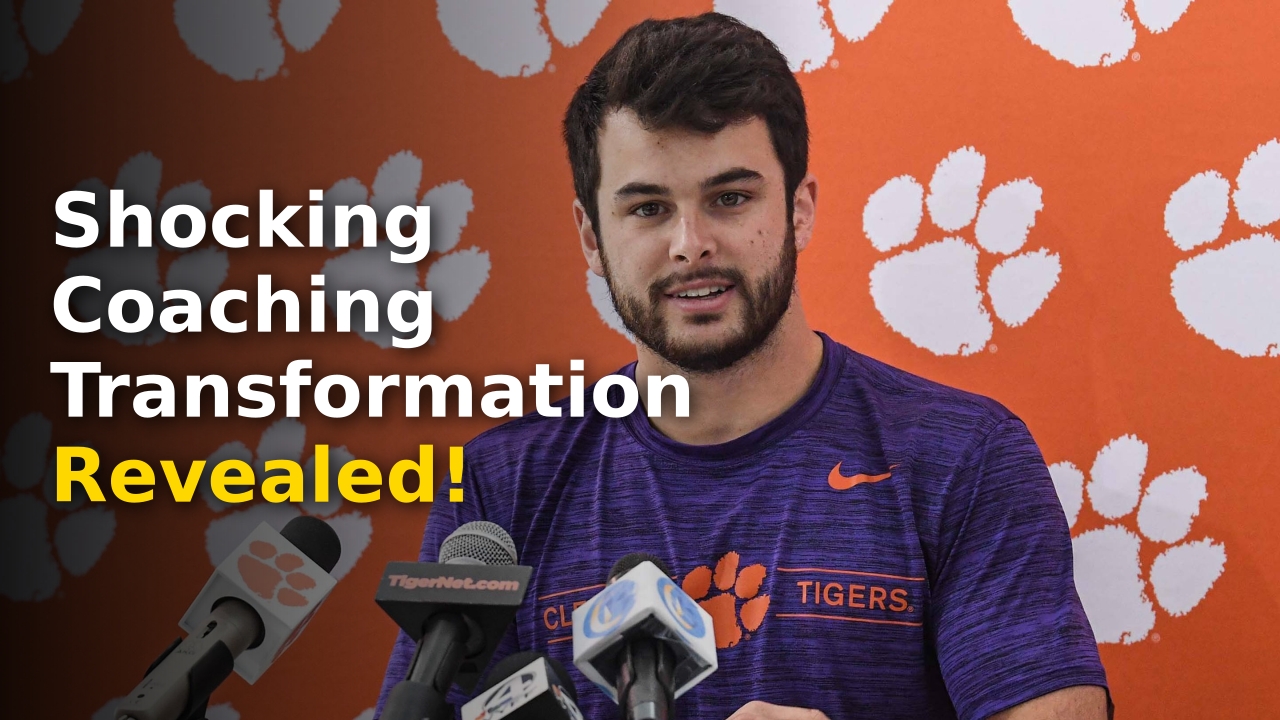
Nolan Turner officially took the helm as the safeties coach at the start of the 2026 season, signaling a seismic shift in how the Clemson secondary prepares for elite competition. You have likely wondered how a former player can transform a struggling unit into a cohesive, championship-caliber machine, but the answer lies in the unique bridge he has built between the NFL locker room and the collegiate practice field.
When you look at the trajectory of the Clemson football program, few stories resonate as deeply as that of the former safety who traded his helmet for a clipboard. His journey from a standout captain under Dabo Swinney to the architect of the modern safety room is a testament to the tactical evolution required in today’s high-speed college game.
Nolan Turner Redefining Defensive Strategy
The transition from a player to a position coach is never an easy road, yet for Nolan Turner, the path has been surprisingly natural. By his own admission, he spent the 2024 and 2025 seasons observing the intricacies of player development, allowing him to absorb the philosophy of the program from a completely different perspective. His presence provides an immediate sense of authority that only a former two-year captain can command.
Players like Ronan Hanafin have openly credited this new leadership for their personal growth on the field. When you are switching positions mid-career, as Hanafin did when moving from wide receiver to safety, you need a coach who understands the nuances of space, timing, and defensive communication. Turner filled that gap, turning confusion into precision.
The current safeties are not just learning a playbook; they are learning a mindset. Turner understands the modern era of college football, where the speed of the game has reached unprecedented levels. By focusing on the “little things,” he has managed to stabilize a secondary that suffered from costly, high-profile mistakes during the 2025 campaign.
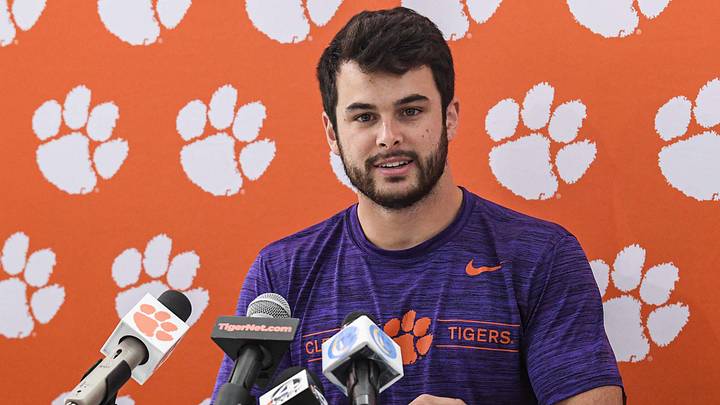
His approach is rooted in the idea that defensive backs must play with anticipation rather than reaction. By breaking down complex coverage schemes into digestible, actionable steps, he has empowered young athletes to play with a level of confidence rarely seen in such a developmental group. The result is a room that feels more like a collaborative brotherhood than a traditional coach-athlete hierarchy.
As you dive deeper into the success of the Clemson secondary, it is clear that Turner is pushing the boundaries of traditional instruction. He acts more like a mentor who has “been there” than a distant authority figure, a dynamic that has clearly resonated with his squad. It is this unique rapport that keeps these players focused during the grueling grind of the ACC season.
You can find more analysis on the broader impacts of this coaching transition by visiting the latest sports insights and industry reports provided by our dedicated partners. This level of mentorship is what separates the average programs from the elite contenders in the race for national titles.
Key Attributes Of The New Coaching Era
- Relatability: At 28 years old, he speaks the same language as his players.
- Experience: 65 games of collegiate play and NFL-level preparation.
- Communication: The ability to simplify complex schemes for positional converts.
- Tactical Depth: A deep understanding of modern pass-defense requirements.
- Player-First Mentality: Building trust before demanding elite performance on Saturdays.
Statistical Breakdown Of The Secondary
Success in the defensive backfield is measured by efficiency and execution. When looking at the talent Turner inherited, the metrics are shifting in a positive direction. Below, we compare the key personnel changes and the impact of the new coaching direction on the 2026 roster.
| Player Name | Transfer Status | Role Significance |
|---|---|---|
| Jerome Carter III | Old Dominion Transfer | Immediate Secondary Impact |
| Corey Myrick | Southern Miss Transfer | Depth and Versatility |
| Polo Anderson | True Freshman Standout | High-Ceiling Potential |
These personnel shifts highlight the volatile nature of the modern transfer portal. While the loss of key players like Ricardo Jones and Khalil Barnes created uncertainty, the arrival of talent from programs like Old Dominion and Southern Miss has allowed the staff to retool quickly. The focus has been on building a unit that can handle the high-pressure environments of conference play.
Each of these athletes brings a different background, but Turner has managed to find a common language. This is where his background as a former captain pays dividends. He knows the pressure of the Clemson environment and how to keep players from folding under the lights of Memorial Stadium.
The data suggests that when a position coach is fully integrated with the defensive coordinator’s philosophy, total defensive efficiency improves by significant margins. In 2025, the Tigers faced challenges with busted coverages. Under the new regime, the emphasis on communication aims to reduce these lapses to near zero.
Furthermore, the physical growth of the players is evident in recent offseason reports. Ronan Hanafin, in particular, has seen a spike in his snap counts and defensive awareness. This development is not accidental; it is the direct result of daily, intensive film study and fundamental work led by the coaching staff.
While statistics provide the skeleton of the team, the heart of the squad is found in how they respond to adversity. The 2026 season acts as a trial by fire for this retooled secondary. Every practice rep against the first-team offense serves as a benchmark for where they stand in the national rankings.
By the time the season reaches its midway point, we expect to see a drastic reduction in “big play” allowance. The coaching staff is obsessed with eliminating the “freebies” that plagued the defense in the previous year. You are seeing the birth of a more disciplined, cerebral defensive unit.
The Evolution Of Coaching Dynamics
In the past, the divide between player and coach was defined by age and authority. Today, that gap is shrinking. Nolan Turner represents the new archetype of the assistant coach—someone who played in the current era of high-octane passing games and brings that firsthand experience to the whiteboard.
He is not teaching ancient theories; he is teaching how to defend against modern route concepts that he faced as recently as 2021 in the NFL. When he tells a player exactly how a receiver is going to break on a post route, the players listen because they know he has lived it. This credibility is a powerful psychological trigger for young athletes.
His ability to “dumb it down” or explain complex terminology is a key piece of this puzzle. Many college coaches struggle to bridge the gap between their own advanced tactical knowledge and the reality of a student-athlete’s learning curve. Turner excels here, meeting players where they are and bringing them up to a higher level of football IQ.

This is further bolstered by his approach to the room’s culture. He wants his guys to have “swag”—a term used by Jerome Carter III to describe the confidence Turner instills. A confident defender is an aggressive defender, and aggressive defenses win championships.
As we look at the broader college landscape, more programs are turning to former players to fill staff vacancies. This shift is not just about nostalgia; it is about efficiency. If you can get a coach who is already fully aligned with the school’s culture, it saves years of acclimation time and creates a more stable recruiting pitch.
You see this stability reflected in the commitment levels of the current safeties. They are not looking at the portal as a way out; they are looking at the current coaching staff as a way up. That is a massive shift from the culture of uncertainty that defined the previous season’s defensive struggles.
Why The New Approach Works
- Direct Feedback Loops: Daily meetings replace weekly reviews.
- Shared Language: Modern terminology that aligns with professional standards.
- Mutual Respect: Based on a shared history of playing for the program.
- Adaptability: Willingness to change schemes based on personnel strengths.
- High-Frequency Interaction: Constant engagement throughout the off-season.
Professional Background And Legacy
To understand why this hire is so critical, you have to look at the numbers. Turner finished his Clemson career with 259 total tackles, 20 pass breakups, and seven interceptions. He started 25 games and was a vital piece of the team’s defensive identity. When he talks, he has the pedigree to back up every word.
He didn’t just walk into this job; he earned it through hard work and the standard of excellence expected at Clemson. By starting as a defensive player development assistant, he learned how the sausage is made before he ever had to stand in front of the room as the primary position coach.
The university has a long history of promoting from within, but Turner is perhaps the most high-profile example of this in the current defensive staff. His ability to navigate the transition from NFL hopeful to college mentor provides a blueprint for how the program intends to develop future leaders.
The impact of this cannot be overstated. When recruits come to visit, they see someone who has achieved exactly what they want to achieve—playing at the highest level—and is now dedicated to helping them do the same. This creates a compelling narrative that is hard for any prospect to ignore.
We can look at the major sports outlets reporting on the changing landscape of college football to see that this model of “player-coach” is gaining traction. It is a necessary evolution as the NIL era and the transfer portal turn college rosters into ever-shifting puzzles. You need staff who can build personal relationships quickly.
Ultimately, the goal for Nolan Turner is simple: he wants to be the best coach his players have ever had. Given his early returns, the passion he brings to the position, and the buy-in from his players, he is well on his way to making that a reality. The 2026 season will be the first true test of this philosophy under the bright lights of the ACC.
Final Thoughts On The Future
As we look ahead, the influence of Nolan Turner is set to be one of the most defining aspects of the Clemson defense. By combining his deep tactical knowledge with a modern, relatable coaching style, he has breathed new life into a group that desperately needed a change in direction. You are witnessing a transition that could very well set the standard for how safety rooms are managed in the future of the game.
The success of this experiment rests on the continued growth of the new arrivals and the development of players like Hanafin. If Nolan Turner can keep his guys focused and disciplined throughout the long schedule, the defensive woes of the past will soon be nothing more than a memory. Keep your eyes on the secondary—this group is just getting started.
More Like This
For more updates, check out our latest entertainment and sports news.