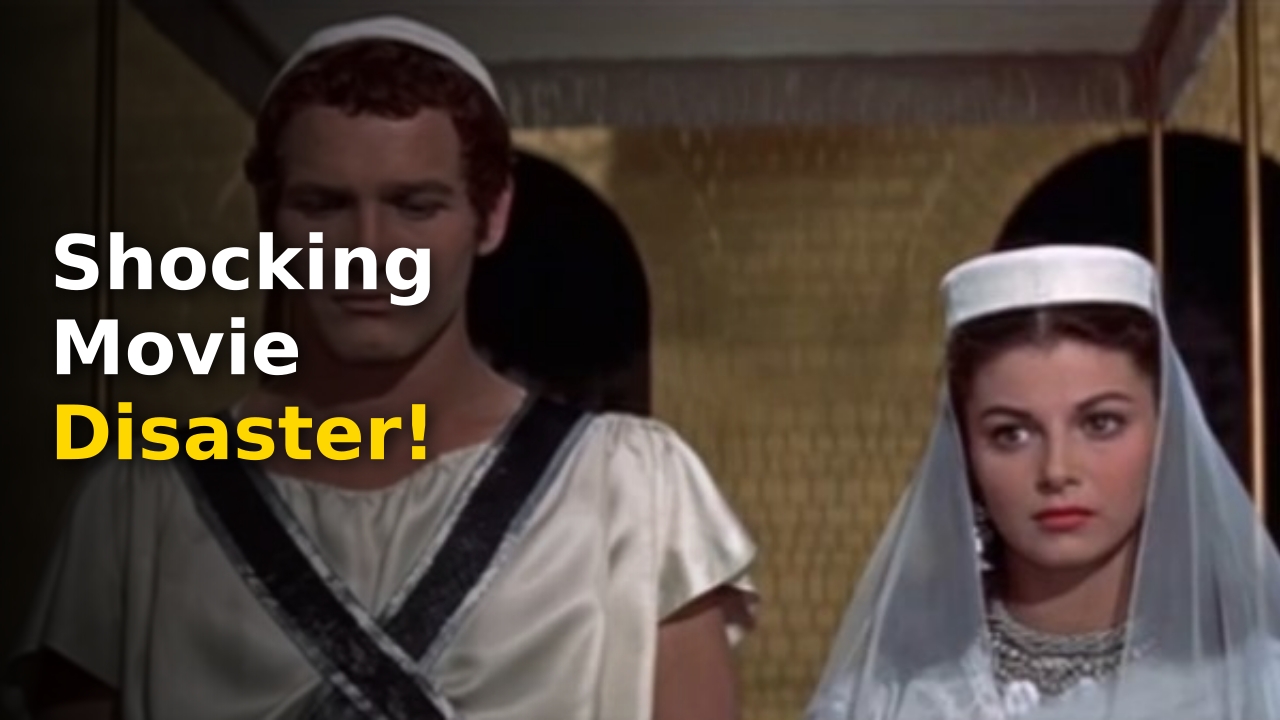
Have you ever wondered which film made legends like Paul Newman regret their entire career choices? Imagine stepping onto a massive Hollywood set for your very first leading role, only to realize you are starring in a certified cinematic disaster. That is exactly what happened to the blue-eyed icon in 1954 when he made his feature film debut.
You might think an actor of his caliber only produced timeless masterpieces, but his early career tells a different story. The legendary Paul Newman spent decades trying to erase this specific historic blunder from public memory. Let’s pull back the curtain on this bizarre chapter of Hollywood history to see why he fought so hard to bury it.
Paul Newman Debut Disaster
In the early 1950s, a young and ambitious Paul Newman signed a contract with Warner Bros. hoping to secure his big break. Fresh from his success on Broadway, the handsome actor was eager to make a lasting impression on the silver screen. Unfortunately, his first assignment was a biblical epic that would quickly become his worst nightmare.
The movie in question was *The Silver Chalice*, an extravagant production directed by Victor Saville. The film attempted to capitalize on the massive popularity of historical and religious epics that dominated the box office at the time. Instead of launching him into immediate superstardom, it threatened to ruin his reputation before it even started.
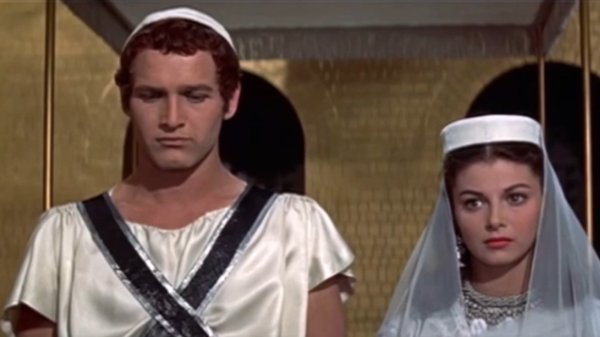
Playing the role of Basil, a Greek artisan tasked with designing a silver casing for the Holy Grail, the actor felt entirely out of his depth. The grandiose dialogue and theatrical staging made him feel stiff and unnatural. He later admitted that he felt like a total fraud throughout the entire production.
Horrible Hollywood Origins
- The script was based on a popular 1952 novel by Thomas B. Costain that failed to translate well to film.
- Studio executives insisted on an abstract, minimalist set design that confused both the cast and the audiences.
- Costumes designed for the actors were notoriously uncomfortable, looking more like ancient drapes than heroic attire.
You can easily see the discomfort on his face in almost every single scene of the movie. The stark, modernist backdrops made the ancient Roman setting look incredibly cheap and disjointed. It was a stylistic gamble that failed spectacularly on every artistic level.
Despite his obvious talent, the material gave him absolutely nothing of substance to work with. The young star found himself trapped in a production that valued spectacle over genuine dramatic depth. It was a painful lesson in the realities of the old studio system.
To make matters worse, the studio heavily promoted the film as a massive artistic achievement. This promotional blitz only served to heighten the disappointment of audiences who flocked to theaters. For a rising actor, this level of exposure for a bad performance was incredibly dangerous.
Surviving The Silver Chalice
The critical reception of *The Silver Chalice* was swift and utterly merciless. Critics from major publications slammed the film for its slow pacing, bizarre set designs, and wooden performances. It quickly gained a reputation as one of the most bloated disasters of the decade.
If you want to dive deeper into the history of this fascinating era, you can explore more classic cinema details on bright celebrity stories. Understanding the context of the studio system helps explain how such a massive misfire got greenlit.
For the lead actor, the embarrassment of the film was not something that simply faded away with time. The early career of Paul Newman was almost derailed entirely by the sheer volume of negative press. The film became a running joke among his closest friends in the industry.
Celluloid Embarrassment Revealed
- The actor famously described the film as the worst movie produced during the entire decade of the 1950s.
- He often compared his costume in the film to a giant, unflattering diaper that ruined his on-screen presence.
- The visual style was so widely mocked that it became a cautionary tale for future Hollywood art directors.
Years later, when the movie was scheduled to make its television broadcast debut in 1963, the actor took extreme measures. He actually paid $1,200 for a full-page advertisement in Variety apologizing for his performance. He urged television viewers to turn off their sets and watch something else instead.
This bold and highly unusual publicity stunt actually backfired in the most hilarious way possible. The apology ad generated massive public curiosity, causing ratings for the television broadcast to skyrocket. Millions of curious viewers tuned in specifically to see how bad his performance really was.
Despite the unexpected ratings boost, his public rejection of the film showed his commitment to high artistic standards. He refused to let Hollywood dictate his worth based on one early career mistake. This integrity would eventually define his legendary status in the industry.
Brutal Box Office Backlash
The financial failure of the movie was a massive blow to the studio, which had invested millions into its production. Audiences quickly realized that the film lacked the emotional core of other biblical epics of the era. Ticket sales plummeted within weeks of the initial release.
The film struggled to recoup its estimated production budget of over $4 million, which was an enormous sum at the time. Theater owners complained that the avant-garde set designs drove traditional moviegoers away in droves. It was a costly experiment that left a sour taste in everyone’s mouth.
Film historians often point to this project as a turning point in the career of the legendary Paul Newman. It forced him to become much more selective about the scripts he accepted. He realized that relying solely on studio contracts could easily ruin his long-term prospects.
Devastating Critical Reviews
- The New York Times described the movie as a tedious exercise in historical reenactment without any soul.
- Industry insiders lamented that the talented cast was completely wasted on such a mediocre script.
- Audiences complained that the film felt incredibly long, dry, and lacking in genuine dramatic tension.
You can learn more about the detailed production history of The Silver Chalice to see how the project fell apart. The behind-the-scenes struggles were just as dramatic as the events on the screen.
The failure of the film also marked the end of director Victor Saville’s long and otherwise successful Hollywood career. The director was unable to recover from the critical drubbing and retired from directing shortly after. It was a tragic end to an era for many involved.
Fortunately, the young lead actor possessed the resilience needed to survive such a public disaster. He returned to New York to hone his craft at the prestigious Actors Studio under the guidance of Lee Strasberg. This dedication to continuous learning saved his career from permanent ruin.
Hollywood Legacy Reclaimed
Armed with new acting techniques and a fierce determination, the star quickly bounced back. His next major role in the 1956 film *Somebody Up There Likes Me* proved to be a massive critical and commercial success. He portrayed the real-life boxer Rocky Graziano with a raw, electric energy that captivated audiences worldwide.
This breakthrough performance immediately erased the lingering stench of his debut disaster. Critics who had previously dismissed him as a pretty face now hailed him as the next great American actor. The transformation was nothing short of miraculous.
Over the next several decades, he would go on to star in some of the most iconic films in cinematic history. From *The Hustler* to *Cool Hand Luke*, his name became synonymous with cool, charismatic, and deeply complex characters. He became a true giant of the industry.
Rising From The Ashes
- He received his first Academy Award nomination for Best Actor for his role in *Cat on a Hot Tin Roof* in 1958.
- His partnership with director Martin Ritt produced several gritty, realistic dramas that defined the late 1950s.
- He successfully transitioned from a young romantic lead to a mature, character-driven actor over the decades.
If you study his long career, you will see a man who was never afraid to take risks. He constantly challenged himself by taking on unconventional roles that subverted his handsome movie star image. This willingness to fail was ultimately the secret to his incredible longevity.
He also used his immense wealth and fame to support numerous charitable causes. His philanthropic efforts, particularly through his organic food company, raised hundreds of millions of dollars for children’s charities worldwide. He proved that his heart was just as big as his on-screen talent.
The memory of his disastrous debut eventually became a source of amusement rather than shame. The young Paul Newman turned a massive embarrassment into a lighthearted joke later in life. He would often host screenings of the film at his home, handing out earplugs to his guests as a joke.
Paul Newman Career Stats
To truly appreciate the incredible comeback of Paul Newman, you have to look at the sheer scale of his later achievements. He managed to build one of the most decorated and respected careers in the history of global cinema. His initial failure became nothing more than a tiny footnote in a legendary life.
Below, we have compiled a detailed breakdown of his career highlights, award wins, and notable box office milestones. This data illustrates how a single bad start does not define your entire professional journey. Take a look at the impressive numbers that cemented his place in Hollywood history.
Let’s examine how his career evolved from that disastrous 1954 debut to his ultimate triumph at the Academy Awards decades later.
| Milestone Year | Significant Project | Key Achievement / Award |
|---|---|---|
| 1954 | The Silver Chalice | Disastrous Feature Film Debut |
| 1958 | Cat on a Hot Tin Roof | First Academy Award Nomination |
| 1967 | Cool Hand Luke | Iconic Status Cemented Globally |
| 1986 | The Color of Money | Academy Award for Best Actor |
The transition from a criticized newcomer to an Oscar-winning icon is one of the most inspiring narratives in film history. It demonstrates that perseverance and artistic growth can overcome the worst possible beginnings. His journey remains a masterclass in career management and personal determination.
This statistical overview highlights the sheer volume of high-quality work he produced after his initial setback. It is a testament to his work ethic and his refusal to let early negative reviews define his entire life’s work. His legacy continues to influence actors to this day.
As you review these numbers, it becomes clear that his early disaster was merely a stepping stone. It provided him with the motivation needed to strive for perfection in every subsequent project. The results speak for themselves, solidifying his status as an absolute legend.
Final Career Lessons
The inspiring story of how Paul Newman overcame his worst movie ever offers valuable lessons for all of us. It shows that even the most talented individuals can experience massive failures early in their careers. What matters most is how you choose to respond to those setbacks.
Instead of allowing the disastrous debut to crush his spirit, he used it as fuel to improve his craft. He took control of his career, refused to settle for mediocre material, and worked tirelessly to refine his skills. This resilience is what separates true legends from temporary sensations.
If you are facing a difficult challenge or a professional setback, remember the story of the silver chalice. A single bad moment does not define your worth or your potential for future greatness. With hard work, dedication, and a bit of humor, you can overcome almost any obstacle.
Today, the film remains a fascinating curiosity for fans of classic Hollywood cinema. It serves as a comforting reminder that even the greatest artists had to start somewhere, even if that start was a certified disaster. It adds a touch of human vulnerability to an otherwise perfect legacy.
So the next time you watch one of his iconic masterpieces, take a moment to appreciate the journey he took to get there. The path to greatness is rarely a straight line, and sometimes it requires surviving a few embarrassing missteps along the way.
Ultimately, Paul Newman proved that true greatness is built on resilience, integrity, and the courage to admit when you have made a mistake. His legacy continues to inspire generations of actors and movie lovers around the world.
More Like This
For more updates, check out our latest entertainment and sports news.