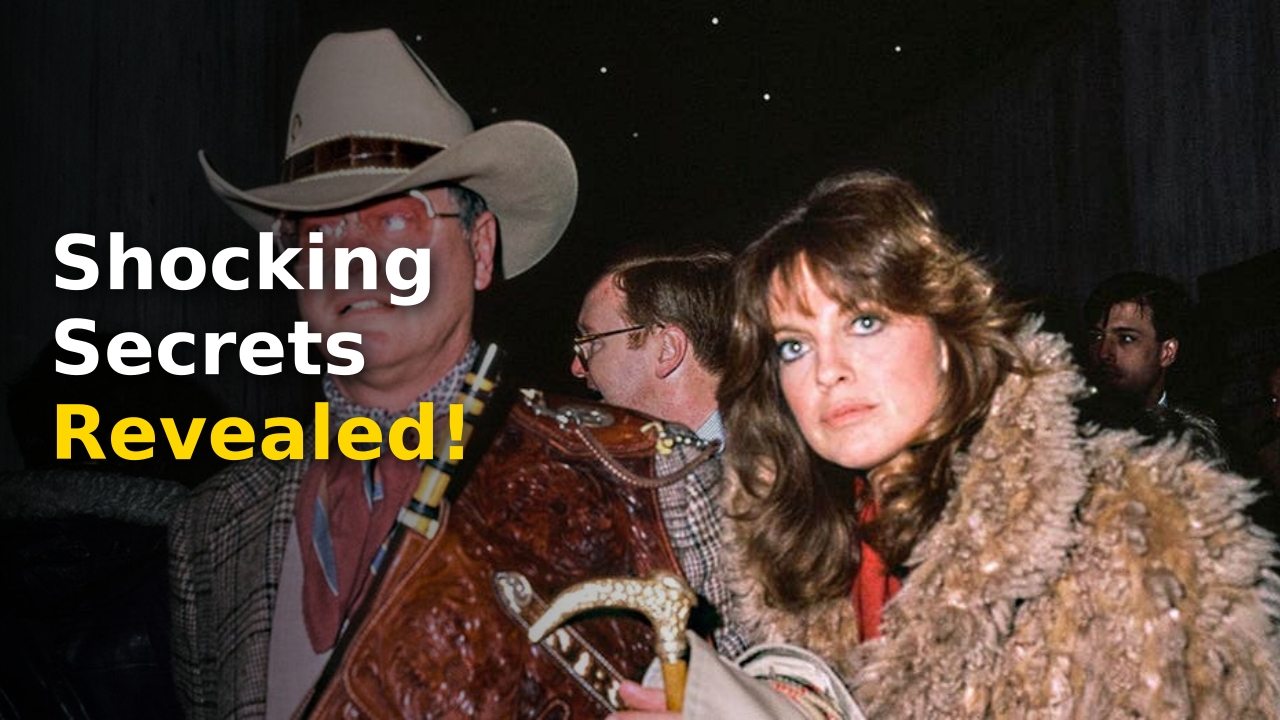
Larry Hagman truly knew how to turn professional awkwardness into a legendary Hollywood prank that kept his co-stars guessing for decades. If you have ever wondered what went on behind the glitz and glamour of the 1980s television landscape, you are about to discover the stomach-turning reality of one of the most iconic shows in history. Linda Gray, the screen legend who played Sue Ellen Ewing, has finally pulled back the curtain on why their on-screen romance was far from the fairy tale fans witnessed on CBS.
You might imagine that filming a love scene with a massive superstar would be the highlight of a career, but for Gray, it was often a battle against, quite literally, a jar of condiments. This revelation offers a glimpse into the unfiltered, often chaotic, and endlessly hilarious world of the Dallas set where practical jokes were the standard currency of the day. As we dive into the history of this legendary series, you will see exactly how these actors navigated the pressure of international fame.
Larry Hagman: A Legacy of Practical Jokes
The man behind the villainous J.R. Ewing was not just a master of the craft; he was a self-appointed ringleader of on-set mischief. For him, a romantic scene wasn’t an invitation for passion—it was an invitation to sabotage his co-star with anything he could find in his kitchen or a catering tent. You have to admire the commitment to the bit, even if your stomach turns just thinking about it.
When Hagman realized that the physical proximity required by the camera was making him uncomfortable, he didn’t call his agent or complain to the producers. Instead, he reached for the peanut butter. He transformed the intimate space between actors into a comedy routine that allowed him to distance himself from the anxiety of being a sex symbol on national television.
You can see how this psychological defense mechanism actually helped the cast bond. By forcing a reaction—whether it was laughter, shock, or disgust—he dismantled the tension that usually builds up before a romantic take. This unique approach, while bizarre, became a staple of the show’s behind-the-scenes culture, proving that the cast of Dallas were closer than most audiences ever suspected.
The impact of these antics on the show’s longevity cannot be overstated. When you look at the Julien’s Auctions event happening in 2026, you realize that items like original scripts and director’s chairs are more than just props. They are physical evidence of a time when television was pure, unadulterated, and occasionally, very messy.

The show was a massive cultural phenomenon, and for many, it serves as a portal to a bygone era of entertainment. If you are a fan of classic television, you should check out exclusive insights on celebrity memorabilia to see how these legendary figures continue to influence modern pop culture. The history of this show is vast, spanning over a decade of high-stakes drama that fundamentally changed the way networks produced content.
The Peanut Butter Strategy
- The first incident involved a thick, sticky layer of peanut butter applied just before a kiss.
- Hagman followed this with raw onions, keeping the scent lingering for hours.
- These acts were not malicious; they were his specific way of processing performance anxiety.
- Linda Gray noted that she often had to maintain her character while fighting the urge to stop the scene.
- The camera crew was largely oblivious to the antics, capturing perfect takes despite the chaos.
- These moments proved that the chemistry between the two actors was resilient enough to survive even the weirdest pranks.
Data and Memorabilia Facts
The upcoming auction represents a rare opportunity for collectors to own a piece of television royalty. When you review the following list of items, consider the historical significance of the documents and artifacts being preserved.
| Item Description | Estimated Market Value |
|---|---|
| Original Dallas Episode Scripts | $300 – $500 |
| Signed 1986 Megaphone | $600 – $800 |
| Linda Gray Director’s Chair | $800 – $1,200 |
| Tony Bennett Original Drawing | $300 – $500 |
Every item tells a story, and for those who grew up watching the Ewing family navigate the treacherous waters of the oil business, these items are priceless. You aren’t just buying paper and wood; you are buying the legacy of Larry Hagman, whose career defined a generation. It is a chance to reconnect with the 1980s, a decade where the hair was big, the shoulder pads were wider, and the stakes were always life or death.

As you analyze the influence of the show, it is worth looking at official production records that outline how the show transitioned from a simple soap opera to a global phenomenon. The logistical scale of filming in Texas—a location that, as Linda Gray discovered, had its own unique social norms and gun-toting habits—was unprecedented for the era. The production value set the bar for the modern streaming series we enjoy today.
The Texas Lifestyle Experience
Linda Gray’s transition to Texas was more than just a job move; it was a cultural awakening. Imagine arriving from California only to find that your fellow lunch partners kept firearms in their designer bags next to their lipsticks. These anecdotes provide a colorful background to the main drama and highlight the genuine shock that actors felt when immersing themselves in the local culture.
The concept of the ‘fluff and fold’—not as a laundry service but as a rigorous daily grooming regimen—demonstrates the societal expectations of 1980s Texas high society. These details are what make the story of the show so enduringly fascinating. It wasn’t just about the plot; it was about the environment in which these larger-than-life characters lived.
You see, the reality of the set mirrored the complexity of the screen characters. Just as Sue Ellen dealt with J.R.’s antics, the actors dealt with the reality of filming in a place that required a total shift in perspective. Whether it was the pranks on set or the cultural lessons learned in Neiman Marcus, the experience was transformative for everyone involved.
The infamous ‘Who Shot J.R.?’ storyline remains a case study in effective marketing and audience engagement. When you realize the writers had to keep the secret under wraps for months, the tension of the era becomes palpable. It was a time before social media spoilers, where a mystery could actually hold a country hostage for nearly a year.
Final Thoughts on the Legacy
Looking back at the career of Linda Gray and her colleagues, we see that the true magic was in their humanity. They were not just icons; they were people who laughed until they cried, played pranks that would make a toddler blush, and navigated the intense pressures of being the faces of a worldwide hit.
As the auction approaches, we invite you to remember not just the characters, but the people who made them real. The bizarre habits and the peanut-butter-filled kisses were just one layer of a complex professional relationship that lasted a lifetime. It is a reminder that even the most glamorous people on television have their quirks and their own ways of coping with the spotlight.
We hope this deep dive into Larry Hagman and the chaotic, brilliant set of the Ewing family has given you a fresh perspective on a classic. Whether you are a long-time collector or a new fan just discovering the magic of the decade, the legacy of Dallas will undoubtedly continue to inspire. Keep these memories alive, and perhaps, look for a piece of history to call your own.
More Like This
For more updates, check out our latest entertainment and sports news.