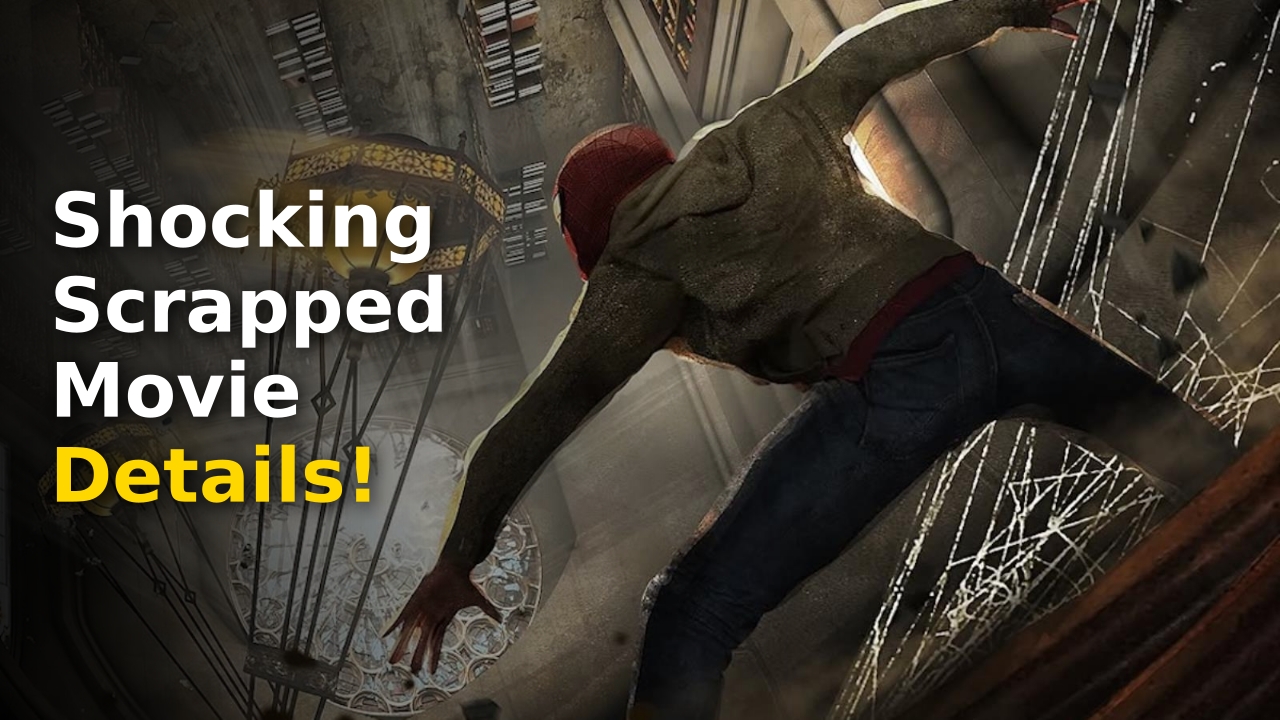
The **Sinister Six** movie remains one of the most intriguing ‘what-if’ scenarios in superhero cinema history, especially after recent leaks revealed stunning concept art. Have you ever wondered how Andrew Garfield would have fared against a team of his deadliest foes without the help of the Avengers? The recently surfaced images from artist Victor Martinez show a gritty, high-octane confrontation that would have redefined the wall-crawler’s cinematic legacy.
You might remember the post-credits tease in The Amazing Spider-Man 2, where the gentleman in the shadows walked past a series of high-tech wings and mechanical arms. That moment was supposed to launch a massive shared universe for Sony Pictures. However, the infamous studio hack changed everything, leaving fans with only imagination and these rare glimpses into a lost era of Marvel filmmaking.
This scrapped project wasn’t just a simple spin-off; it was a bold attempt to tell a story from the villains’ perspective. Director Drew Goddard, known for his work on The Cabin in the Woods, was set to bring a unique, dark humor to the franchise. Let’s explore the deep layers of this canceled epic and what these new images reveal about the direction of the Spider-Verse before it was rebooted for the MCU.
The Scrapped Sinister Six Vision
The core concept of the **Sinister Six** film was to flip the script on traditional superhero narratives. Instead of a heroic journey, the audience would follow a group of outcasts and criminals. Drew Goddard envisioned a film that felt like a heist movie mixed with a monster flick. The script reportedly focused on the internal dynamics of the team, showcasing their friction and fragile alliances.
One of the most striking elements revealed in the new concept art is the shift in tone from the main Amazing Spider-Man films. The artwork depicts a darker, more industrial aesthetic that leans into the ‘Ultimate’ comic book line. This wasn’t going to be a bright, colorful adventure; it was a battle for survival in environments that felt lived-in and dangerous. The vision was to ground these fantastical characters in a world of high-stakes corporate espionage and scientific accidents.
According to Spider-Man in film history, this movie was the cornerstone of Sony’s expansion plans. They wanted to create a world where **Spider-Man** was a constant presence but not always the primary focus. This particular film would have seen the web-slinger acting as a persistent thorn in the side of the villains, almost like a horror movie antagonist from their perspective. The psychological weight of being hunted by a masked vigilante was a key theme Goddard wanted to explore.
The creative team was also looking to expand the lore beyond New York City. The mention of the Savage Land in the concept art suggests a global or even extra-dimensional scope. This would have introduced dinosaurs and prehistoric threats into the Amazing Spider-Man universe, something never before seen on the big screen. It was a massive gamble that could have either saved the franchise or complicated it beyond repair.
Ultimately, the project fell apart during the 2014 Sony Pictures hack. The chaos within the studio led to a complete restructuring of their Marvel properties. While we eventually got a different version of the multiverse in No Way Home, the raw, unfiltered vision of Goddard’s film remains a fascinating artifact. You can find more entertainment news updates regarding scrapped Marvel projects on our dedicated portal.
The concept art shows **Andrew Garfield** in a state of desperation, fighting without his full suit. This suggests the villains were taking the fight to Peter Parker’s doorstep. The intimacy of the violence in the artwork points to a movie that wasn’t afraid to get its hands dirty. It was a stark departure from the family-friendly tone that Disney later brought to the character.

Andrew Garfield’s Savage Battle
The most talked-about piece of concept art features **Andrew Garfield** battling a massive, terrifying version of Doctor Octopus. This isn’t the sympathetic Otto Octavius we saw in the Sam Raimi films. Instead, this version looks like a biological and mechanical nightmare, drawing inspiration from the Ultimate Spider-Man comics where the arms are fused more brutally to the host’s body.
The battle takes place on the roof of a library, but the world is literally turned upside down. This gravity-defying sequence would have showcased the agility of Garfield’s Spider-Man in ways the previous films only hinted at. You can see the intensity in Spidey’s posture—he is wearing civilian clothes and a mask, implying a surprise attack. This level of vulnerability makes the stakes feel incredibly high for the young hero.
Wait until you hear about the Savage Land connection. Another piece of art shows Peter Parker being dropped into a jungle filled with prehistoric creatures. This suggests the **Sinister Six** were utilizing exotic locations to trap the hero. The Savage Land is a staple of Marvel Comics, often associated with the X-Men, and its inclusion here indicates Sony was willing to push the boundaries of their licensing agreements.
Victor Martinez, the artist behind these reveals, has a history of creating epic, cinematic world-building. His work on Superman and Masters of the Universe prepared him for this level of detail. The textures of the library roof, the way the light hits the mechanical tentacles, and the fraying of Peter’s ordinary clothes all contribute to a sense of realism. It’s a tragic reminder of the visual feast we missed out on.
Fans of **Andrew Garfield** have long championed his version of the character for its emotional depth and comic-accurate wit. This movie would have pushed his Peter Parker to the breaking point. Seeing him struggle against overwhelming odds in a non-traditional setting would have solidified his place as a truly ‘Amazing’ Spider-Man. The loss of this film is felt deeply by those who appreciated the edge he brought to the role.
The fight sequences were designed to be kinetic and messy. Unlike the choreographed dances of modern superhero films, these concepts suggest a brawl. Spidey is seen using his environment, throwing books and utilizing the architecture of the library to survive. It highlights Peter’s genius-level intellect under pressure, a trait that often gets sidelined for more flashy power displays.
The Ultimate Doctor Octopus
In this scrapped version, **Doctor Octopus** was reimagined as a terrifying force of nature. Rather than the gentleman scientist played by **Alfred Molina**, this iteration was rumors to be much more menacing. The concept art shows him with a bulky, armored frame and tentacles that look like they could crush a tank. This version of Otto Octavius was likely the mastermind behind the entire team’s formation.
The design leans heavily into the Ultimate Universe aesthetic, where Otto has a more telepathic connection with his arms. This allows for more fluid and unpredictable movements during combat. In the art, he is positioned like a predator, looming over a grounded Spider-Man. The sheer scale of the character compared to Peter Parker emphasizes the ‘David vs. Goliath’ dynamic of the fight.
Reports suggest that **Sean Penn** and **Woody Harrelson** were both in the mix for this role. Imagine the intensity Penn could have brought to a broken, vengeful Otto Octavius. Or the chaotic energy Harrelson would have infused into the character. Either choice would have resulted in a villain far removed from the more theatrical portrayals we’ve seen in the past.
The role of Doc Ock in this film was also rumored to be shifting. Some leaks suggest he would eventually replace the Green Goblin as the primary antagonist of the entire Sony Spider-Verse. This would have moved the franchise away from the Osborn family drama and toward a more science-fiction-oriented conflict. The focus on technology and its corruption was a primary driver for the plot.
Interestingly, some drafts of the script suggested the **Sinister Six** would actually team up with Spider-Man to take down an even more corrupted version of Doc Ock. This ‘Pandora’s Box’ plot point would have forced Peter to work with his enemies. It’s a classic comic book trope that works perfectly for a character-driven movie. The tension of Peter having to trust people like Sandman or Vulture would have been electric.
The visual representation of the mechanical arms is also worth noting. They look more like industrial tools than sleek gadgets. There are visible sparks, hydraulic fluids, and heavy plating. This ‘lo-fi’ sci-fi approach would have given the movie a unique visual identity compared to the high-tech, nanotech suits of the current MCU era. It felt more like a construction accident gone wrong than a billionaire’s hobby.
Star-Studded Villains Cast
The casting wishlist for this movie was absolutely legendary. Sony was aiming for A-list talent to fill out the roster of the **Sinister Six**. For the role of Sandman, the studio was looking at actors like **Tom Hardy**, **Danny McBride**, and **Jonah Hill**. Each of these actors would have brought a completely different flavor to Flint Marko, ranging from a hulking brute to a more comedic, reluctant criminal.
For the female lead of Scorpia, names like **Emily Blunt**, **Emilia Clarke**, and **Rose Byrne** were being thrown around. This version of the character would have likely been a high-tech mercenary rather than a mutated monster. Having an actress of Emily Blunt’s caliber would have added a level of prestige to the film that few superhero projects possessed at the time.
The Vulture was also a major player, with **Colin Firth** being a top contender for the role. This would have been a very different take from Michael Keaton’s blue-collar worker version. Firth would have likely played Adrian Toomes as a more sophisticated, corporate villain. The diversity of the cast suggests a movie that was trying to appeal to a very broad audience while maintaining its dark edge.
Other massive names considered for undisclosed roles included **Denzel Washington**, **George Clooney**, and **Daniel Craig**. It’s clear that Sony wanted to turn this into an event film of massive proportions. Even if only half of these stars signed on, it would have been one of the most star-studded ensembles in cinematic history. The sheer ambition of the project is staggering to look back on today.
The focus on building a team of villains was a direct response to the success of the Avengers. However, instead of heroes coming together for the greater good, these were ego-driven criminals coming together for profit and survival. This dynamic would have allowed for much more complex character arcs. You would have seen them betray each other, bond over their shared hatred of Spidey, and eventually fall apart.
Drew Goddard’s ability to handle ensemble casts was a major reason he was chosen. His experience on shows like Lost and movies like Bad Times at the El Royale showed he could balance multiple competing personalities. The script reportedly gave each member of the **Sinister Six** a distinct motivation, ensuring they weren’t just faceless goons for Spider-Man to punch. They were the stars of their own tragedy.

Sinister Six Production Data
When looking at the internal data and leaked emails from Sony, the scale of the **Sinister Six** production becomes even clearer. The studio was prepared to invest hundreds of millions into this franchise. The following table highlights some of the key developmental details that have surfaced through various reports and the 2014 hack.
| Category | Details |
|---|---|
| Primary Director | Drew Goddard |
| Confirmed Lead | Andrew Garfield |
| Rumored Villain Team | Doc Ock, Vulture, Sandman, Scorpia, Mysterio, Kraven |
| Key Locations | New York City, The Savage Land |
| Original Release Year | 2016 |
| Post-Hack Status | Indefinitely Scrapped |
The production was moving at a lightning-fast pace before the FBI had to get involved due to the hacking incident. Goddard even described seeing helicopters fly over the studio as the investigation began. It was a surreal end to a project that had so much momentum. The sheer volume of pre-production work, from concept art to script drafts, shows that this was far more than just a vague idea.
One of the most interesting pieces of data is the intended 2016 release window. This would have placed the movie right in the middle of a very crowded superhero landscape. It would have competed directly with Batman v Superman and Captain America: Civil War. This suggests Sony was confident they had a product that could stand toe-to-toe with the biggest names in the industry.
The focus on the Savage Land is another fascinating data point. Integrating a prehistoric jungle into a modern-day superhero movie requires massive set construction and CGI budgets. This wasn’t going to be a small-scale movie. It was intended to be a visual spectacle that expanded the boundaries of what a Spider-Man film could be. The ambition was truly unmatched for its time.
What Could Have Been
Reflecting on the **Sinister Six** project today feels like looking into a parallel dimension. If this movie had succeeded, the landscape of superhero cinema might look very different. We might have had a long-running Andrew Garfield series that explored the darker corners of the Marvel Universe. Instead, the character was folded into the MCU, which brought its own set of triumphs and challenges.
The concept art by Victor Martinez serves as a haunting reminder of the creativity that was poured into this scrapped film. Seeing **Andrew Garfield** squaring off against an Ultimate-style Doc Ock on a library roof is an image that will stay with fans for a long time. It captures a sense of urgency and danger that is sometimes missing from more polished, modern blockbusters.
Drew Goddard eventually moved on to other projects, but he has frequently spoken about his sadness regarding the film’s cancellation. He truly believed in the script and the unique perspective it offered. For the fans, the release of this art is a bittersweet moment. It provides closure on what the movie would have looked like while simultaneously making us wish we could have seen it on the big screen.
As we look forward to the future of the Spider-Verse, it’s important to remember these lost chapters. They represent the risks studios are sometimes willing to take to innovate. While the **Sinister Six** never made it to theaters in its original form, its influence can be felt in movies like Suicide Squad and even No Way Home. The idea of a villain-led ensemble is now a proven concept, even if this specific version never got its day in the sun.
Whether we ever see Andrew Garfield return for a full-length feature as the Amazing Spider-Man remains to be seen. However, these leaks keep the conversation alive. They remind us that there is always more to the story than what makes it to the final cut. For now, we can only look at the art, read the leaked emails, and dream of the savage, sinister battle that almost was.
More Like This
For more updates, check out our latest entertainment and sports news.