Key Takeaways
| Tactical Realism | Logan Marshall-Green stays in his heavy tactical web gear and communication headsets all day on set to build muscle memory. |
| Elite Advisors | The CBS production employs an active Green Beret on staff and a Navy SEAL in the writers’ room for flawless military precision. |
| The Silhouette Concept | Marshall-Green focuses on maintaining a calm, desensitized physical presence during intense firefights to match SEAL behavior. |
| Administrative Grounding | To reflect real-world federal law enforcement leadership, Cal is almost always seen with his mobile phone handling paperwork. |
If you are seeking raw, unyielding tactical authenticity on modern television, the performance of the Logan Marshall-Green Marshals character Cal in the hit CBS action-drama series will completely captivate you. The highly anticipated return of the series has pushed physical boundaries, dropping audiences directly back into the heart-stopping cliffhanger of the previous season. For the veteran actor, stepping back into the line of fire was a seamless transition, largely due to the rapid production schedule that left almost no downtime between filming cycles.
Playing an elite warrior requires more than just memorizing lines; it demands an absolute transformation of physical habits and subconscious reactions. To keep up with these demanding expectations, Marshall-Green leaned heavily on his dedicated castmates and a premium production crew that operates like a finely tuned machine. By maintaining an unchanging, core creative team, the production avoids the typical hurdles that plague sophomore seasons of major network dramas.
The premium action series, which broadcasts weekly on CBS and streams on Paramount+, continues to chronicle the dangerous lives of U.S. Marshals navigating the rugged terrain of Montana. Working alongside co-star Luke Grimes, who portrays the formidable Kayce Dutton, Marshall-Green delivers a masterclass in tactical screen presence. Together with an ensemble cast featuring Arielle Kebbel as Belle, Ash Santos as Cruz, and Tatanka Means as Miles, the team delivers a gritty representation of federal law enforcement.
Logan Marshall-Green Marshals Character Evolution
To fully comprehend the nuance that the 49-year-old actor brings to the screen, one must look closely at how he defines the physical presence of his character, Cal. Cal is not merely a federal officer; he is a former Navy SEAL who transitioned into the U.S. Marshals Service, bringing a distinct set of combat-honed skills with him. This dual background creates a complex internal conflict, as the character must constantly balance the aggressive instincts of a tier-one operator with the structured legal parameters of federal law enforcement. This progression of character is a focal point of discussion among industry insiders who track entertainment news updates.
Marshall-Green has been vocal about his dedication to mastering what he refers to as the physical silhouette of a veteran operator. This silhouette is defined by how a person carries themselves, holds their weapon, and moves through a hostile environment without displaying hesitation. Inexperienced actors often give away their lack of training through small, nervous movements, but Marshall-Green works tirelessly to ensure his body language communicates absolute, calm authority under pressure. You can see this dedication reflected in his extensive filmography, which can be explored in detail on Logan Marshall-Green on IMDb.

One of the most fascinating details of Cal’s daily routine is his constant reliance on his mobile phone, a prop that Marshall-Green insists on keeping visible at all times. While casual viewers might view this as a minor detail, it actually represents a profound truth about modern federal law enforcement leadership. Team leaders in the Marshals Service are heavily burdened with administrative duties, endless emails, and bureaucratic coordination, making the phone a literal lifeline to their home office. By highlighting this element, the show grounds its high-octane action in the mundane realities of government work, creating a deeply relatable layer of realism.
The creative team behind the series is dedicated to ensuring that characters are never allowed to escape the consequences of their actions on screen. Marshall-Green believes that a television show must earn its narrative trajectory by forcing its protagonists to deal with the psychological and emotional fallout of extreme violence. This philosophy ensures that the stakes remain incredibly high, both in the characters’ dangerous professional assignments and in their fragile personal lives, where the boundaries of the job constantly threaten to tear relationships apart.
The Complexity of Tactical Transition
Transitioning from a military battlefield to a domestic law enforcement landscape presents a unique psychological challenge that Cal must navigate daily. A Navy SEAL is trained to locate and neutralize enemy threats with decisive, lethal force, whereas a U.S. Marshal is tasked with the apprehension of fugitives under strict constitutional guidelines. This fundamental difference in operational mandates creates a rich subtext for Marshall-Green to explore in his performance, giving the audience a rare glimpse into the mind of a modern warrior.
To maintain this delicate balance, the actor constantly questions how Cal would react to a crisis, choosing professional restraint over military aggression when the situation demands it. This internal struggle is what elevates the series from a standard police procedural into a prestigious character study. By examining these details, the show honors the complex reality of real-life veterans who continue their service to the nation in civilian clothing.
Tactical Authenticity and Navy SEAL Training
Achieving this level of unparalleled realism requires more than just individual effort; it demands a comprehensive structural support system on the production set. Fortunately, the cast has access to premier military consultants, including an active Green Beret on the production staff and a former Navy SEAL working directly inside the writers’ room. These highly decorated experts provide continuous feedback on everything from tactical movement patterns to the specific phrasing used during radio communications. This level of detail is a major reason why fans search for celebrity profile breakdowns of the cast.
For Marshall-Green, the presence of these consultants is a resource that he exploits to the absolute maximum during filming. He frequently requests adjustments to his movements, ensuring that his weapon transitions, room clearances, and tactical reloads are performed with the fluid speed of a real-world operative. The goal is to make these highly complex actions look completely natural, as if the actor has been performing them his entire life.
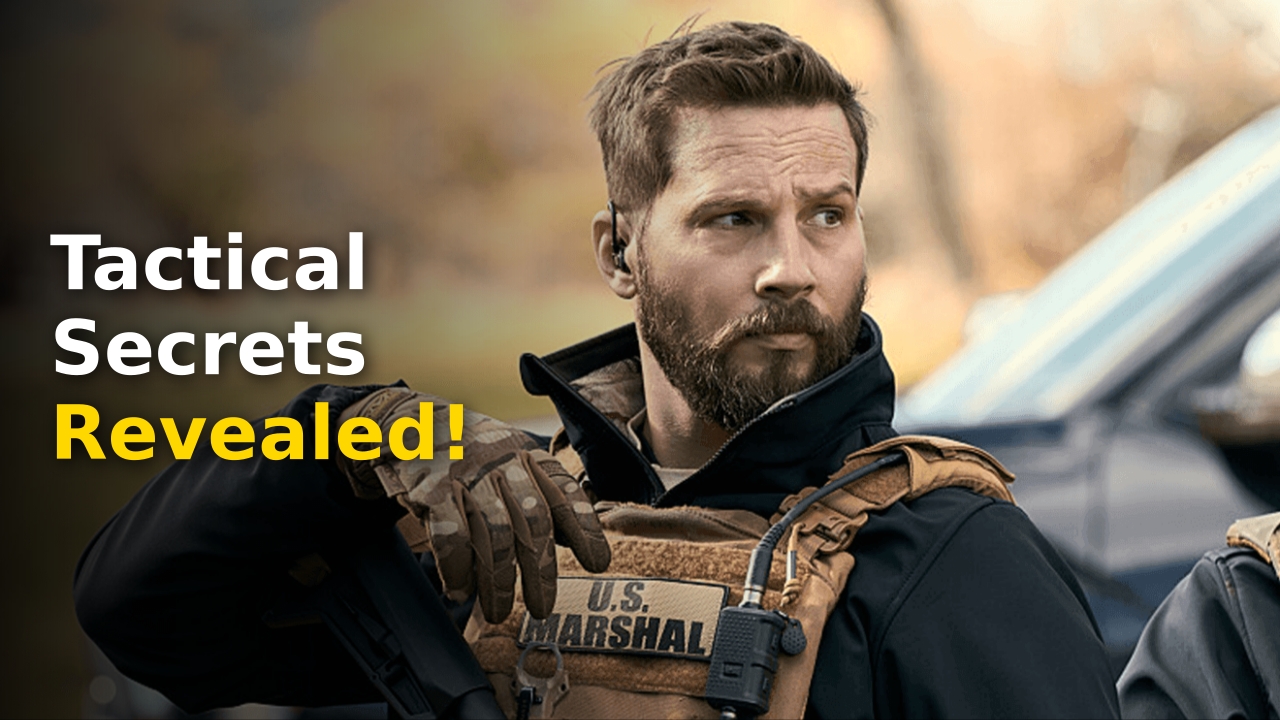
To make the heavy tactical gear feel like a natural extension of his own body, Marshall-Green utilizes a unique method: he refuses to take his equipment off during the long production days. Whether he is actively filming a scene, waiting in his trailer, or eating lunch with the crew, he remains strapped into his full web gear and tactical communications headset. This disciplined approach ensures that the weight of the plates, the positioning of the pouches, and the constant hum of the earpiece become second nature to his physical consciousness.
This dedication also has a direct physical impact on his performance, creating a natural layer of exhaustion and sweat that cannot be replicated by makeup departments. The physical toll of carrying dozens of pounds of equipment through the hot Montana sun adds an undeniable layer of grit and strain to Cal’s on-screen presence. Marshall-Green views this physical discomfort as a small but vital way to pay tribute to the actual servicemen and women who endure these harsh conditions daily without complaint.
The Role of Technical Consultants
The integration of technical advisors on set completely revolutionizes the way action sequences are choreographed and executed. Rather than relying on stylized, Hollywood-style gunfights, the directors work hand-in-hand with military consultants to design realistic tactical encounters. This collaborative process ensures that every firefight is depicted with an emphasis on cover, concealment, and fire discipline, reflecting real combat tactics.
The actors are trained to understand the mechanical operation of their firearms, the trajectory of different calibers, and the vital importance of team communication during a chaotic engagement. This rigorous preparation builds a deep sense of trust among the cast members, allowing them to move dynamically through complex practical sets with live-firing blank weapons safely. The result is a visceral, immersive viewing experience that sets a new standard for modern action dramas on network television.
Marshals Season 2 Cast and Production Metrics
The logistical undertaking of producing a high-end action drama like this series requires significant financial investment, extensive training hours, and a highly coordinated production schedule. The show’s commitment to physical realism is reflected in the massive preparation times required for each episode, with the main cast undergoing continuous physical conditioning and firearms training. Below is a detailed breakdown of the production and character metrics that define this ambitious television project.
| Actor Name | Character Role | Tactical Specialty | Training Hours (Est.) | Key Tactical Gear Used |
|---|---|---|---|---|
| Logan Marshall-Green | Cal (Team Leader) | Navy SEAL Tactics & Comms | 180+ Hours | Plate Carrier, Comms, Rifle |
| Luke Grimes | Kayce Dutton | Tracking & Wilderness Combat | 150+ Hours | Tactical Holster, Carbine |
| Arielle Kebbel | Belle | Precision Marksman | 120+ Hours | Scouted Sniper System |
| Ash Santos | Cruz | Close Quarters Battle (CQB) | 110+ Hours | Submachine Gun, Sidearm |
| Tatanka Means | Miles | Heavy Weapons & Breaching | 130+ Hours | Breaching Shotgun, Armor |
Behind these impressive numbers lies a production schedule designed to keep the actors in peak physical condition throughout the grueling shoot. The transition between filming locations in urban production offices and the unforgiving wilderness of Montana requires constant adaptation. This relentless schedule ensures that the cast remains deeply immersed in their roles, preventing the onset of performance rust during long hiatuses.
By investing heavily in tactical preparation, the network has created a series that appeals directly to military veterans, tactical enthusiasts, and fans of high-quality drama alike. The meticulous attention to detail has earned the praise of real-world operators who appreciate the show’s departure from typical, over-the-top Hollywood tropes. This dedication to authentic storytelling has positioned the show as a flagship program in the network’s Sunday night lineup.
By The Numbers Analysis
Industry analysts have noted that the intense preparation undergone by the cast directly correlates with the show’s exceptional viewer retention rates. According to demographic data, action dramas that feature verified technical authenticity see a significant increase in audience engagement among active-duty military and law enforcement households. This loyal viewer base provides a stable foundation for the show’s ratings, ensuring its long-term viability in a highly competitive television landscape.
Furthermore, the physical training program designed for the actors focuses not just on aesthetics, but on functional endurance and injury prevention. Filming high-speed tactical maneuvers over uneven mountain terrain poses a constant threat of ankle sprains, muscle tears, and physical exhaustion. By conditioning the actors like tactical athletes, the production team minimizes downtime caused by injuries, keeping the complex filming schedule on track and within its allocated budget.
The Montana Setting and Creative Narrative Stakes
The vast, beautiful, and often dangerous landscape of Montana serves as more than just a background for the show; it functions as a central character in the unfolding narrative. The state’s massive expanses of wilderness and isolated communities provide the perfect environment for fugitives looking to disappear from federal authority. This challenging terrain forces the U.S. Marshals to rely on traditional tracking skills alongside their cutting-edge modern tactical technology. Readers who appreciate high-end television analysis frequently visit exclusive Hollywood features to learn more about the creative choices behind these majestic filming locations.
Operating in such an unforgiving environment means that every mistake is magnified, and the environmental threats can be just as deadly as the armed suspects the team is tracking. From sudden snowstorms to steep mountain cliffs, the setting constant tests the physical limits of the characters and the production crew alike. This focus on the harsh realities of the wilderness adds a layer of tension that is missing from typical urban police dramas.

The unique setting also influences the tactical choices made by the characters, forcing them to adapt their standard operational procedures to suit the wilderness. For Cal, this means modifying his Navy SEAL maritime and urban combat techniques to fit the vast forest environments of the Pacific Northwest. This continuous adaptation is a key theme of the second season, as the characters must constantly evolve to survive.
Ultimately, the combination of a stellar cast, rigorous tactical authenticity, and a breathtaking setting makes the show a standout achievement in modern television. By refusing to take shortcuts, Logan Marshall-Green and the entire creative team have crafted an immersive, high-stakes drama that honors the brave individuals who serve in federal law enforcement. To read more about the real-world history of these law enforcement agencies, you can explore the official U.S. Marshals Service historical archives.
Character Dynamics and Leadership Style
At the core of the show’s narrative success is the complex professional dynamic between Cal and Kayce Dutton. As team leaders with distinct background experiences, they often approach tactical situations from differing strategic viewpoints. Cal’s structured, military-focused planning occasionally clashes with Kayce’s more intuitive, wilderness-honed instincts, creating a compelling creative tension that drives the plot forward.
Despite these tactical disagreements, the mutual respect between the two characters remains unshakable, forged in the fires of shared combat experiences. This brotherhood is reflected in how they protect their fellow deputies, Belle, Cruz, and Miles, during high-risk arrest operations. By exploring these intricate interpersonal relationships, the series highlights the profound psychological bonds that form among those who put their lives on the line for public safety.
People Also Ask
What happened with Logan Marshall-Green Marshals character today?
In the latest episode, Logan Marshall-Green’s character Cal found himself under intense fire immediately following the dramatic resolution of the previous season’s cliffhanger. Cal utilized his advanced Navy SEAL tactical training to lead his team of U.S. Marshals safely through a hostile wilderness confrontation in Montana.
Why is Logan Marshall-Green trending right now?
Logan Marshall-Green is trending due to his highly praised performance in Season 2 of the CBS action drama, where his intense commitment to physical realism and military tactical authenticity has captivated viewers. Fans are especially impressed by his dedication to staying in full tactical gear all day on set to ensure his movements look authentic.
How does military training affect the Logan Marshall-Green Marshals performance?
The actor relies heavily on an active Green Beret consultant and a former Navy SEAL writer to shape Cal’s movement patterns, weapon handling, and calm demeanor during high-stress firefights. This training ensures that the character’s physical silhouette matches that of a real-world tier-one special operations veteran.
Where can you watch Logan Marshall-Green Marshals episodes online?
You can watch the episodes live on CBS on Sunday nights, or stream them on-demand through the Paramount+ streaming library, which hosts both the current and previous seasons of the hit action-drama series.
The Legacy of Logan Marshall-Green Marshals Role
As the series continues to push the boundaries of network television, the impact of the Logan Marshall-Green Marshals performance will undoubtedly be felt across the entire entertainment industry. By setting a new benchmark for physical commitment and tactical realism, the actor has challenged his peers to elevate their own preparations for action-intensive roles. The days of casual weapon handling and unrealistic action sequences are rapidly coming to an end, replaced by a new era of gritty, uncompromising authenticity.
For Marshall-Green, the true reward of this experience lies in the positive reactions he receives from actual veterans and law enforcement officers who watch the show. Knowing that his portrayal of Cal honors their real-world sacrifices is what motivates him to endure the long, physically exhausting days on the Montana set. As the second season unfolds, viewers can look forward to even more intense, authentic, and emotionally charged performances from this incredibly talented actor.
Ultimately, the success of the series serves as a powerful reminder that audiences crave smart, deeply researched, and physically demanding storytelling. By investing the time and resources necessary to get the details right, the production team has created a modern masterpiece of action television. If you want to keep up with the latest developments on this series, make sure to follow the weekly broadcasts on CBS and keep streaming on Paramount+.
More Like This
For more updates, check out our latest entertainment and sports news.