Key Takeaways
| The Core Dispute: High-profile parenting choices clash with progressive public integration ideals. |
| The Shift: Nikole Hannah-Jones transitioned her daughter from P.S. 307 to a selective, majority-white high school. |
| The Criticism: Conservative commentators labeled the original decision dangerous “virtue signaling.” |
| The Deep Reality: The controversy highlights the systemic collapse of racial and socio-economic school integration in America. |
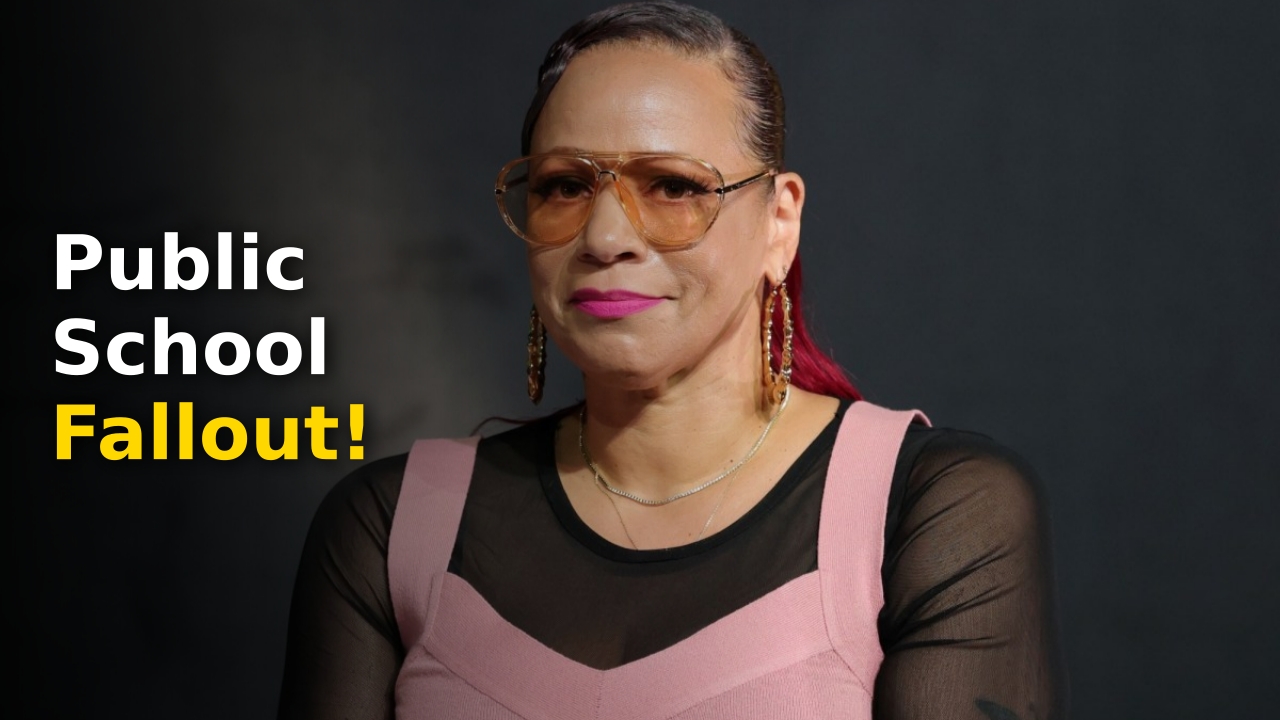
You might believe that your personal parenting choices are entirely private, but the explosive Nikole Hannah-Jones school debate proves that educational decisions are now the ultimate ideological battleground. When the Pulitzer Prize-winning journalist bared her soul about enrolling her daughter in a low-income, majority-Black Brooklyn public school, she sparked a national firestorm. Her honest reflection in The New York Times Magazine exposed deep-seated anxieties about race, class, and the painful sacrifices of personal ideals.
This choice was not merely a personal milestone but a deliberate act of political solidarity. For years, she argued that wealthy, middle-class parents who bypass local, underfunded schools actively perpetuate educational apartheid. By placing her own child in P.S. 307 in Brooklyn, she attempted to walk the walk of her own progressive doctrine.
However, when she eventually shifted course and enrolled her daughter in a highly selective, majority-white high school, the reaction was swift and unforgiving. Conservative critics wasted no time in pointing out what they viewed as a stark, hypocritical gap between ideology and reality. Pundits from across the political spectrum turned her personal parenting evolution into a proxy war over the state of American public education.
Analyzing the Nikole Hannah-Jones School Debate

The public reaction to this educational saga reveals a deeply fractured nation. Conservative commentators eagerly seized upon the transition as proof that progressive ideals are fundamentally incompatible with real-world parenting. Writers from prominent outlets argued that sacrificing a child’s academic development on the altar of progressive egalitarianism is both careless and destructive.
Conversely, progressive defenders point out the extreme hypocrisy embedded within these conservative critiques. Many of the same voices calling for absolute parental freedom routinely oppose basic safeguards, such as child protection laws in homeschooling or bans on physical abuse in classrooms. This double standard illustrates how school selection has been weaponized to serve broader political agendas.
At Bright Celebrity news updates, we frequently observe how private family choices of high-profile figures become public property. In this instance, the stakes are incredibly high, touching upon the structural failures of urban schooling, the limits of individual sacrifice, and the enduring legacy of racial segregation. The intense scrutiny shows that parenting is no longer just about raising children, but about signaling political allegiance.
Ultimately, this situation highlights a classic game-theory dilemma in modern American parenting. While collective action is necessary to save public institutions, individual parents face massive penalties if they act alone. The educational setback that Hannah-Jones experienced demonstrates that even the most well-intentioned families cannot single-handedly fix a broken systemic structure without broader institutional support.
The Ideological Split on Parental Responsibility
To many conservatives, your primary and exclusive obligation as a parent is to your own children. They argue that the state should play a minimal role in education, and parents must pursue the best opportunities available, regardless of collective societal needs. From this perspective, choosing an underperforming school for ideological reasons is an unacceptable failure of parental duty.
Progressives, however, view the public education system as a collective responsibility. They argue that when affluent and middle-class parents flee public schools, they strip those institutions of vital resources, advocacy, and social capital. This tension between individual family advancement and collective societal improvement remains one of the most agonizing dilemmas of modern life.
The Educational Divide in Brooklyn Public Schools
To truly understand the gravity of this situation, one must look closely at the stark realities of Brooklyn’s public school infrastructure. For decades, neighborhoods like DUMBO and Vinegar Hill have experienced rapid gentrification, bringing wealthy residents next door to public housing complexes. Yet, the local elementary school, P.S. 307, remained overwhelmingly populated by low-income Black and Hispanic students from the nearby Farragut Houses.
This spatial segregation created a jarring disparity in resources, test scores, and parental funding. When city officials proposed rezoning to integrate wealthier families into P.S. 307, it triggered intense tribal warfare. Wealthy parents, many of whom identified as progressive, fought fiercely to keep their children in more exclusive, well-funded institutions.
This is the exact sociological backdrop that motivated Hannah-Jones to take a stand. She sought to prove that middle-class, highly educated parents could inject vital social capital into under-resourced schools. By doing so, she hoped to inspire a wave of collective action that would naturally balance the educational playing field.
Unfortunately, the collective wave never arrived, leaving her daughter to navigate a subpar primary educational environment. As noted by Wikipedia’s entry on Nikole Hannah-Jones, her intellectual work has always focused heavily on the institutional structures of American racism. However, translating those macro-level academic theories into micro-level parenting decisions proved to be an agonizingly complex endeavor.
The Limits of School gentrification
- Gentrification rarely leads to genuine classroom integration.
- Wealthier parents often establish private fundraising loops that bypass the broader school district.
- Socioeconomic divides persist even within the same school building.
- Academic tracking programs often separate students along racial and economic lines.
By the Numbers: US Educational Inequality Metrics
The systemic disparities driving this controversy are not unique to Brooklyn; they are deeply embedded across the entire United States. Decades after the historic Brown v. Board of Education ruling, American classrooms remain deeply divided by race and class. In fact, research shows that school segregation has actually worsened in many major metropolitan areas over the last twenty years.
Funding mechanisms further exacerbate these divides, as public schools are heavily reliant on local property taxes. This structural setup ensures that wealthy suburbs enjoy lavishly funded campuses with state-of-the-art technology and high-paying teaching positions. Meanwhile, nearby urban and rural schools are left struggling with crumbling infrastructure, outdated textbooks, and high teacher turnover.
Let us examine the stark contrasts in school funding and demographic distribution across various American educational archetypes. The table below illustrates the dramatic differences in per-pupil spending, teacher retention, and advanced coursework availability that define our two-tier educational system.
| School Category | Per-Pupil Funding | Teacher Retention Rate | AP Courses Offered |
|---|---|---|---|
| Low-Income Urban Public | $11,500 | 45% (Over 3 Years) | 2 – 4 Courses |
| High-Income Suburban Public | $24,000 | 85% (Over 3 Years) | 18 – 25 Courses |
| Elite Selective Public / Private | $45,000+ | 92% (Over 3 Years) | Unlimited / IB Program |
These numbers paint a sobering picture of a nation that has largely abandoned the promise of equal educational opportunity. Without aggressive policy interventions, local schools will continue to reflect and multiply the economic inequalities of their surrounding neighborhoods. This makes the heroic efforts of individual parents like Hannah-Jones feel like drop-offs in a vast, dry desert.
Ideological Clashes and the Politics of School Choice

The fallout from this situation quickly transformed into a high-stakes ideological battlefield. For conservative commentators, the journalist’s ultimate retreat was a moment of supreme validation. Figures like Thomas Chatterton Williams of The Atlantic and conservative pundit Niall Ferguson argued that using one’s child as an ideological guinea pig is a fundamental failure of parental duty.
They asserted that a parent’s primary, non-negotiable obligation is to secure the absolute best possible future for their own child. From this perspective, sacrificing a child’s academic development on the altar of progressive egalitarianism is both careless and destructive. They view the growth of school choice, charter schools, and voucher programs as the only logical escape hatch for families trapped in failing systems.
Conversely, progressive defenders point out the extreme hypocrisy embedded within these conservative critiques. Many of the same voices calling for absolute parental freedom routinely oppose basic safeguards, such as child protection laws in homeschooling or bans on physical abuse in classrooms. Furthermore, the systematic efforts to dismantle the Department of Education threaten the very survival of public schooling for millions of disadvantaged kids.
At Bright Celebrity feature articles, we dissect these culture wars to show how systemic political dynamics shape daily life. While elite commentators debate the philosophy of education, the reality remains that affluent families will always have a safety net. As columnist Elwood Watson rightly notes, Najya Hannah-Jones has access to extensive elite networks and resources that will easily buffer her from any temporary academic setbacks.
The true victims of this structural failure are the millions of low-income children who do not have wealthy, Pulitzer Prize-winning parents to rescue them when local schools fail. For these families, there is no competitive private academy or elite public high school waiting at the end of a difficult middle school journey. They remain trapped in a cycle of institutional neglect that no amount of individual virtue signaling can resolve.
The Structural Reality of Urban and Rural Schools
The problems facing America’s public schools are lengthy but addressable. A lack of financial resources, indifferent administrators, high teacher turnover, low salaries, and a lack of effective counseling are among the main culprits. These issues are not insurmountable, but they require a sustained, systemic investment that goes far beyond individual choices.
As long as educational funding remains tied to local property wealth, public education will continue to reproduce inequality. No amount of personal sacrifice by progressive parents can compensate for a systemic refusal to fund schools equitably. This fundamental reality is the real tragedy underlying the entire public debate.
People Also Ask
Why is the Nikole Hannah-Jones school debate trending right now?
The debate is trending due to a sobering column by Elwood Watson analyzing her agonizing decision to send her daughter to a low-income, predominantly Black public school, and her subsequent decision to transfer her to an elite high school.
What is the main controversy surrounding the Nikole Hannah-Jones school debate?
The core controversy centers on the tension between a parent’s duty to their child versus their commitment to systemic public school integration. Critics accused her of using her daughter for political virtue signaling, while supporters highlighted the systemic inequalities of American education.
How does this educational debate affect low-income students in America?
While affluent families have the resources and social capital to recover from underperforming schools, low-income students remain trapped in failing systems without safety nets. This disparity perpetuates deep generational wealth and educational gaps.
What role does property tax play in US school funding inequalities?
Because US public schools rely heavily on local property taxes, wealthy districts generate significantly more funding per student than low-income areas. This structural imbalance leads to massive disparities in facilities, teacher pay, and educational resources.
What was columnist Elwood Watson’s perspective on this situation?
Elwood Watson argued that while Hannah-Jones made a naive misstep by trusting collective action, the conservative attacks on her are hypocritical. He emphasized that the real tragedy is America’s broader abandonment of racial integration and class equality.
The Legacy of the Nikole Hannah-Jones School Debate
Ultimately, the Nikole Hannah-Jones school debate serves as a stark warning about the limits of individual idealism in the face of massive, entrenched institutions. One family, no matter how influential or dedicated, cannot bridge the Grand Canyon of American educational inequality. Real, lasting change requires a collective national will, substantial policy overhaul, and a renewed commitment to public integration.
As we look to the future of public education, the lessons of this controversy must not be forgotten. We must move past the superficial culture wars and address the concrete issues: school funding, administrative accountability, and racial equity. You can read more about how cultural figures navigate complex social systems at Bright Celebrity editorial profiles.
Only when we treat the education of every child as a shared societal obligation will we truly fulfill the promise of a fair and equal America. Until then, parents will continue to face agonizing choices, and the battle over our classrooms will rage on.
More Like This
For more updates, check out our latest entertainment and sports news.