Key Takeaways
| London NFL games shift home-field economics from high-margin gate revenue to league-centralized stipends. |
| Commanders owner Josh Harris views international expansion as a long-term strategic investment for the league. |
| The NFL leverages international slots to capture prime morning time slots in the US media market. |
| Jacksonville Jaguars maintain a unique two-game annual hosting agreement, unlike other franchises. |
London NFL games revenue 2026 metrics are forcing a major shift in how team owners evaluate the profitability of overseas expansion versus traditional home-field dominance. When the Washington Commanders took the field against the Indianapolis Colts at Tottenham Hotspur Stadium, the move effectively sacrificed a lucrative home gate at Northwest Stadium in exchange for global brand equity.
You might wonder why a franchise owner would willingly trade seven-figure ticket revenue for an international logistical headache. For billionaires like Josh Harris, the calculation isn’t strictly about the bottom line of a single game; it’s about cementing the franchise as a global fixture. As the league continues its push into new markets, the economic trade-offs become a necessary cost of doing business in a $23.5 billion industry.
The Strategic Economics of Global Expansion
The transition to an international series requires teams to operate under a centralized NFL model. In a standard regular season home game, teams capture roughly 66% of ticket sales while retaining almost all revenue from premium seating, concessions, and parking. Moving that production to London forces teams to trade that autonomy for a fixed stipend provided by the league office.
This arrangement serves a dual purpose. It allows the NFL to subsidize the high costs of trans-Atlantic logistics while maintaining total control over the international brand experience. For teams, the immediate revenue dip is significant, but the long-term potential for international merchandise sales and global fandom creates a new growth funnel that domestic fans simply cannot replicate.

Team president Mark Clouse framed the situation as an investment in the future of the league. While the immediate balance sheet might look red for the ‘home’ team, the broader exposure helps build a global NFL fan base that is becoming increasingly lucrative for teams with high-tier valuations. Growth in London, Berlin, and Mexico City remains a critical priority for ownership groups.
Financial Performance and League Dynamics
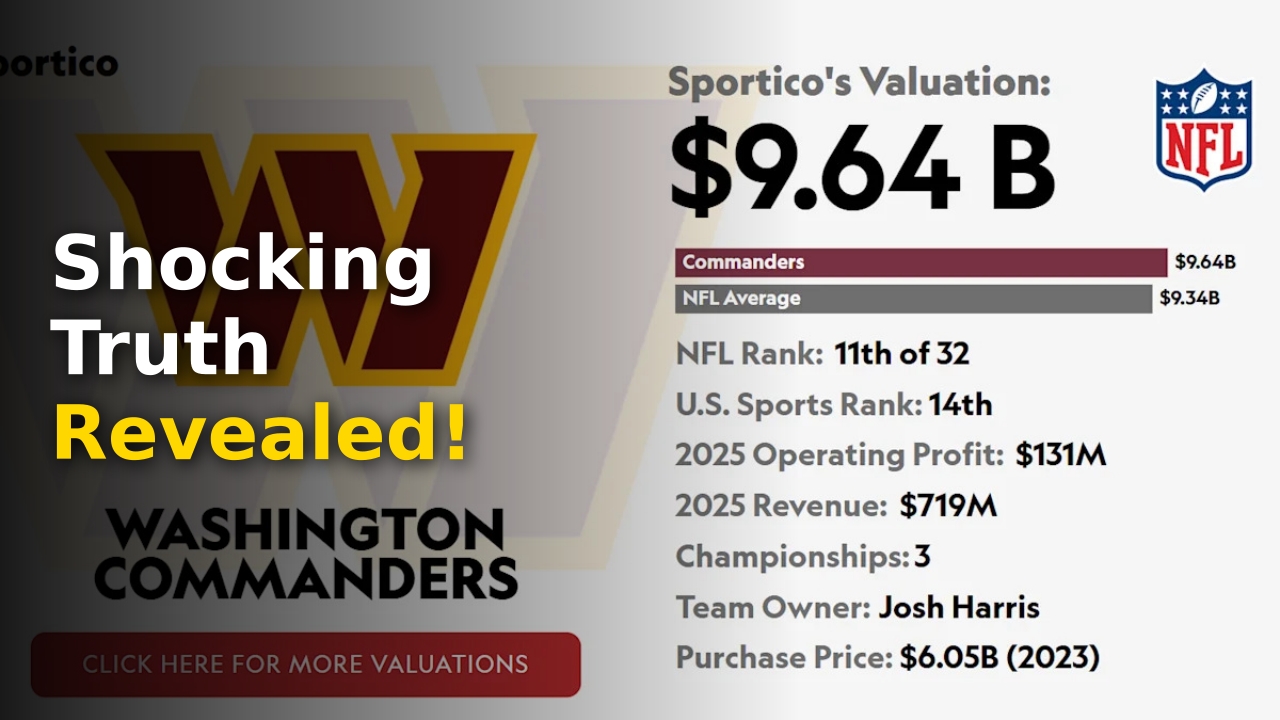
Understanding why owners accept these lower returns requires a deep look at the league’s overall valuation models. With the Commanders valued at roughly $9.64 billion, the ‘loss’ from one international home game is a rounding error compared to the projected future growth in global media rights. Owners are playing the long game, betting that international viewership will drive the next massive spike in broadcast revenue.
| Revenue Stream | Domestic Home Game | International Home Game |
|---|---|---|
| Ticket Revenue % | 66% Retained | Centralized Stipend |
| Concessions/Parking | Team Retained | League Controlled |
| Merchandise Profit | High | High (Export Potential) |
By The Numbers: The International Trade-Off
In 2015, the NFL hosted only three games in London. Today, that number has surged to a record nine games across four different continents. This rapid expansion creates a new media inventory for the league to sell—specifically the 9:30 AM ET kickoff slots that dominate the morning hours in the United States. This prevents the league from yielding the early-day viewership to other sports, keeping the NFL at the center of the weekly calendar.
For owners, this creates a ‘forced’ participation model. As Josh Harris noted, the league identifies which teams are the most exciting and have the broadest market appeal, effectively demanding they go international. This isn’t just about charity; it’s about maximizing the NFL’s status as the world’s richest sports league by capturing time-zone superiority.
Background and Context of NFL Global Growth
The Jacksonville Jaguars remain the outliers in this model. Their specific agreement to host two home games annually in London distinguishes them from the rest of the pack, allowing them to build a uniquely deep root system in the UK. This strategy has proven effective, as evidenced by the intense turnout for events leading up to their appearances.
For other teams, the logistics of setting up temporary headquarters in London act as a bridge to fans who previously only engaged through official league coverage on ESPN. The Commanders’ sell-out of merchandise during their week in London underscores the massive, untapped appetite for physical goods in these foreign markets, providing a secondary revenue stream that partially offsets the lost ticket gate.
People Also Ask
Why do NFL teams play home games in London?
Teams play in London to support the NFL’s global growth, capture new international fan bases, and secure valuable morning media time slots in the US market.
Do NFL teams lose money by playing in London?
While teams sacrifice typical home game gate revenue, they receive a league-provided stipend and see significant long-term growth in merchandise sales and brand equity.
How many international games does the NFL host annually?
As of the 2026 season, the NFL has expanded to a record-breaking nine international games played across seven countries and four continents.
Why is the Jacksonville Jaguars’ international schedule different?
The Jacksonville Jaguars have a special, long-standing agreement with the NFL that allows them to host two home games in London per season to deepen their UK market footprint.
Future Outlook and Strategic Conclusions
Looking ahead, the commitment from owners suggests this trend will only accelerate. The league acts as a unified front, sharing the burden of growth to ensure every participating team eventually benefits from a larger, more engaged global audience. While some owners may lament the loss of a traditional home stadium experience, the rising valuations of NFL franchises prove that international expansion is yielding high returns on investment.
The London NFL games revenue 2026 landscape highlights a league-wide pivot toward total market dominance. Owners accept the short-term economic friction as an entry fee to the massive, untapped potential of the global sports entertainment market. As the calendar moves toward 2027 and beyond, the expectation is that these games will evolve from special events into a core, year-round pillar of the league’s financial engine.
More Like This
For more updates, check out our latest entertainment and sports news.