Key Takeaways
| The Blockbuster Formula: The 1980s solidified the high-concept franchise model, creating properties that still dominate global pop culture. |
| The Indie Explosion: The 1990s turned independent film into a highly lucrative, cultural force led by trailblazers like Quentin Tarantino. |
| Casting Historic Auditions: Harrison Ford was not the first choice for Indiana Jones; George Lucas initially favored Tom Selleck. |
| Animation Reborn: The Disney Renaissance elevated animated cinema into a critically acclaimed, billion-dollar box office engine. |
| The TV Shift: The era closed in 1999 as prestige television dramas began to challenge the absolute cultural dominance of theatrical releases. |
You might think today’s franchise-saturated multiplexes are the ultimate peak of cinematic influence, but the revolutionary era in film that unfolded between 1980 and 2000 holds the true blueprint for modern Hollywood. This twenty-year window represents the most productive and disruptive era in movie history, completely rewriting how theatrical projects were financed, produced, distributed, and consumed. It was a time when the high-concept blockbusters of Steven Spielberg coexisted with raw, rule-breaking independent masterpieces, long before digital streaming algorithms began dictating audience tastes.
By exploring this transformative timeline, film enthusiasts can trace the exact roots of modern franchise culture, the democratization of independent cinema, and the rise of visionary directors who still command the medium. This historical deep dive explores how a unique alignment of economic shifts, artistic rebellion, and creative genius formed a golden age of theatrical storytelling. Let us examine the seismic changes that defined this unforgettable period of narrative innovation.
Understanding the Revolutionary Era in Film
The transition into the 1980s marked a dramatic shift away from the director-driven, gritty auteur cinema of the 1970s. Hollywood studios, newly acquired by massive corporate conglomerates, sought predictable, highly marketable intellectual property that could generate massive merchandise sales and global appeal. This corporate restructuring gave rise to the high-concept blockbuster, a film with a premise so simple and engaging that it could be described in a single, tantalizing sentence. This strategy permanently altered how major studios evaluated scripts and greenlit creative projects.
Yet, the revolutionary era in film was far from a sterile, corporate-dominated landscape. As major studios poured hundreds of millions into mass-market escapism, a counter-cultural movement was quietly gathering strength. Filmmakers who felt alienated by the mainstream studio system found alternative avenues to finance and distribute their highly personal stories. This parallel track created a vibrant cinematic ecosystem where populist spectacles and avant-garde art films could both thrive in the global marketplace.
The Rise of the Modern Blockbuster
Following the massive cultural footprints of Star Wars and Jaws in the late 1970s, the early 1980s became a playground for high-concept franchise cultivation. Major studios realized that audiences were eager to return to familiar worlds, leading to a decade dominated by sequels, prequels, and merchandise-driven spectacles. This era established the foundational business models that modern media companies still rely on, showing that a successful movie could spawn a lucrative ecosystem of toys, video games, theme park attractions, and soundtracks.
This reliance on intellectual property did not immediately stifle original storytelling. Instead, it forced screenwriters and directors to elevate their creative output, blending eye-popping special effects with deeply resonant, universal human emotions. The results were highly imaginative adventures that captured the global public consciousness. To truly understand these shifting industry dynamics, readers can explore exclusive entertainment retrospectives that analyze how these classic theatrical structures continue to influence modern television and streaming platforms.
The Sundance Revolution and Indie Voices
As mainstream Hollywood became increasingly risk-averse, the margins of the industry began to crackle with raw, creative energy. By the late 1980s, the Wikipedia’s history of the Sundance Film Festival had evolved from a modest regional gathering into the ultimate launchpad for bold, up-and-coming filmmakers. Sundance offered a highly visible platform for marginalized voices, gritty realism, and experimental narrative structures that major studios refused to touch.
This institutional support allowed independent cinema to mount a serious challenge to mainstream studio output. Audiences, growing weary of formulaic action sequels, eagerly flocked to art-house theaters to experience low-budget projects that tackled complex themes with uncompromising honesty. This cultural shift proved that compelling storytelling and raw emotional truth could attract dedicated audiences without the assistance of massive studio marketing budgets.

By the Numbers: Cinema’s Two Decades of Transformation
To fully grasp how quickly the film industry evolved during this period, it is helpful to look at the shifting economic and creative indicators. The table below illustrates how the structural foundations of Hollywood transformed between the high-concept 1980s and the fiercely creative, indie-led 1990s.
| Cinematic Metric | The 1980s Era | The 1990s Era |
|---|---|---|
| Primary Studio Strategy | High-concept action, toy merchandising, and multi-film franchises | Auteur acquisition, mid-budget prestige dramas, and indie subsidiaries |
| Indie Film Status | Underfunded cult projects with highly localized theater distribution | Cool, highly profitable cultural touchstones with major studio backing |
| Animation Industry Standing | Sinking theatrical interest, largely relegated to Saturday morning TV | Billion-dollar Disney Renaissance and critical Academy Award recognition |
| Major Cultural Competitor | Home VHS rental market, video game consoles, and cable television | The dawn of prestige cable television networks near the end of 1999 |
As the data indicates, the entertainment landscape was incredibly dynamic. The industry shifted from a top-down, studio-controlled hierarchy into a complex, multi-tiered marketplace. In this new environment, artistic prestige and massive commercial success were no longer mutually exclusive achievements. This fertile creative climate allowed unique, highly personal projects to find massive global audiences.
Masterpieces of the Revolutionary Era in Film
While hundreds of films helped shape this transformative period, a select few stand out as truly transcendent works of art. These productions did not merely entertain audiences; they redefined the aesthetic, narrative, and technical boundaries of the medium. By analyzing these landmark achievements, we can gain a deeper appreciation for the creative energy that defined this revolutionary era in film.
These masterpieces continue to serve as vital reference points for modern screenwriters, directors, and cinematographers. They prove that when visionary artists are given the resources and creative freedom to execute their unique visions, the results can be culturally seismic. Let us look closely at two iconic films that perfectly embody the creative heights of this remarkable period.
The Genesis of Indiana Jones: Raiders of the Lost Ark
The year 1981 witnessed a historic collaboration between two of cinema’s most influential figures: George Lucas and Steven Spielberg. While vacationing in Hawaii before the massive opening weekend of Star Wars, Spielberg expressed a long-held desire to direct a glamorous James Bond film. However, because he was not British, he had faced rejection from franchise producers. Lucas famously told Spielberg that he had an idea that was far superior to Bond, one that paid loving tribute to the classic adventure serials they had both adored during their childhoods.
This vacation brainstorm resulted in Raiders of the Lost Ark, a globetrotting adventure spectacle that masterfully combined historic mythology with breathless action choreography. Under IMDb’s Steven Spielberg profile, the film is widely regarded as a masterclass in visual storytelling and pacing. Lucas’s meticulous historical research gave the narrative a grounded, authentic weight, while Spielberg’s unparalleled eye for kinetic action sequences ensured the film moved at a thrilling, breakneck pace.
Crucially, the production’s enduring success rests heavily on the brilliant casting of Harrison Ford. Lucas was initially hesitant to cast Ford, fearing the actor would be permanently associated with the iconic Han Solo, and strongly favored television star Tom Selleck for the role. Fortunately, a contract dispute with Selleck’s television series opened the door for Ford, who brought a perfect blend of intellectual wit, physical vulnerability, and charming sarcasm to the legendary archaeologist. For more insights on how these historic casting decisions shook up the entertainment industry, check out our iconic celebrity profiles.
The Psychological Depth of Amadeus
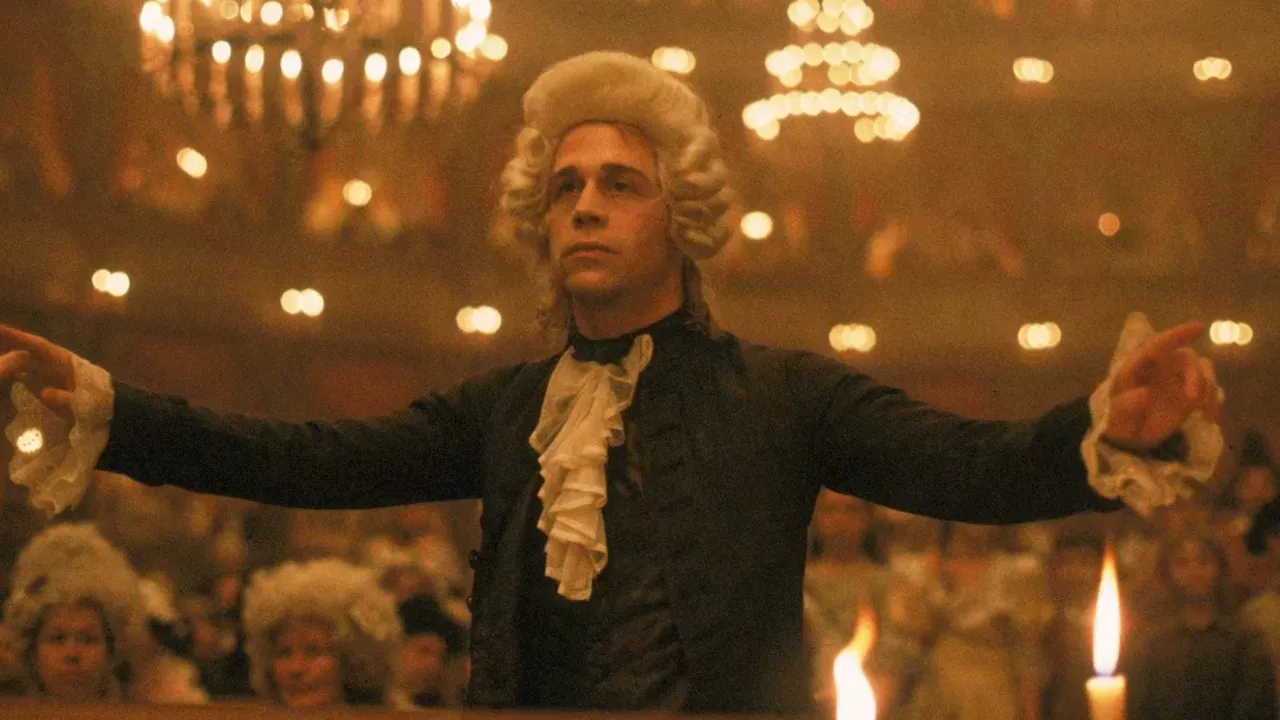
Released in 1984, director Milos Forman’s Amadeus is not only a triumphant musical biopic but also a devastatingly sharp exploration of artistic jealousy, professional mediocrity, and the heavy burden of genius. Set in the opulent theaters and courts of 18th-century Vienna, the film brilliantly dissects the toxic rivalry between court composer Antonio Salieri and the effortlessly brilliant Wolfgang Amadeus Mozart. Forman’s immaculate production design captured the historical setting with breathtaking accuracy, but the film’s core psychological themes remain incredibly modern.
The film’s emotional weight is anchored by a legendary performance from F. Murray Abraham as Salieri, a deeply devout composer who is driven mad by the realization that God has bestowed transcendent musical genius upon the childish, foul-mouthed Mozart, played with manic energy by Tom Hulce. This brilliant dual dynamic led to a historic Oscar narrative, marking the last time two lead actors from the same film were nominated for Best Actor at The Academy of Motion Picture Arts and Sciences official database. Ultimately, Abraham took home the gold for his unforgettable portrayal of Salieri’s quiet, consuming madness.
The true genius of the screenplay lies in its deeply human nuance. Mozart harbor zero malice toward Salieri; he is simply an open conduit for divine musical inspiration, creating flawless masterpieces without the exhausting, agonizing labor that Salieri must endure. Salieri’s profound anxiety is deeply relatable, capturing the quiet heartbreak of a dedicated craftsman who realizes that his lifetime of hard work cannot compete with raw, unearned genetic genius. This brilliant exploration of human insecurity elevated the film from a standard historical drama into an enduring masterpiece.
The Dual Rise of Indies and Animation
As the film industry marched through the late 1980s and into the 1990s, the boundaries of what could constitute a commercial success expanded dramatically. The era witnessed the sudden diversification of cinematic voices, proving that audiences were eager to engage with complex social themes, diverse cultural perspectives, and innovative aesthetic styles. This period of rapid creative expansion forever altered the demographic makeup of both filmmakers and film audiences.
This democratization of the medium occurred on multiple fronts simultaneously. While independent directors challenged the political status quo, a revitalization of traditional hand-drawn animation captured the hearts of multiple generations. These parallel movements proved that theatrical distribution could support a massive variety of artistic expressions, as long as the stories being told were executed with passion and technical excellence.
Diversification and Political Cinema
In 1989, director Spike Lee delivered a seismic jolt to the cinematic landscape with the release of Do the Right Thing. This vibrant, visually stunning, and politically charged masterpiece explored bubbling racial tensions on a single hot summer day in Brooklyn. The film served as a major breakthrough for representation in cinema, demonstrating that commercial films could tackle urgent social issues without sacrificing entertainment value or aesthetic ambition.
Lee’s bold visual style, kinetic editing, and refusal to offer easy moral resolutions challenged audiences and critics alike, sparking intense national conversations. The success of the film paved the way for a new generation of minority filmmakers, proving to risk-averse studio executives that diverse stories could perform exceptionally well at the box office. To explore more about how these groundbreaking directors permanently reshaped modern media representation, you can read our modern pop culture analysis.
The Disney Renaissance and the Animation Boom
Simultaneously, the late 1980s witnessed the dawn of the Disney Renaissance, an extraordinary creative streak that restored traditional hand-drawn animation to the pinnacle of commercial and critical success. Following years of artistic stagnation, films like The Little Mermaid (1989), Beauty and the Beast (1991), Aladdin (1992), and The Lion King (1994) revolutionized the animated musical format by incorporating Broadway-caliber songwriting, sophisticated character development, and pioneering computer-assisted animation techniques.
This creative resurgence culminated in Beauty and the Beast becoming the first animated film in history to receive an Academy Award nomination for Best Picture. No longer viewed as cheap, disposable entertainment designed solely for young children, animated cinema was finally embraced by adult audiences and serious film critics as a highly prestigious, emotionally resonant art form. This newfound respect laid the groundwork for the modern animation boom, paving the way for the rise of pioneering digital studios like Pixar.
The 1990s Indie Explosion
The 1990s took the independent spirit of the previous decade and injected it with a massive dose of attitude and commercial viability. The sudden, explosive success of Quentin Tarantino’s Pulp Fiction (1994) and Kevin Smith’s Clerks (1994) transformed independent cinema into a highly fashionable, youth-oriented lifestyle movement. Suddenly, indie films were no longer confined to small, academic art houses; they were playing in major suburban multiplexes and dominating mainstream pop culture conversations.
This shift was largely driven by a new wave of dialogue-centric, genre-bending storytelling that rejected traditional narrative structures. Screenplays became self-referential, pop-culture-obsessed, and highly stylized, appealing directly to a new generation of media-literate viewers. This creative energy proved that a highly specific, personal artistic vision could be translated into massive global profitability, forever changing how major studios approached talent acquisition.
Expert Take: The Mid-Budget Miracle
In today’s highly fragmented media landscape, it is easy to forget that during the 1990s, ambitious, adult-oriented dramas like Forrest Gump (1994) and Schindler’s List (1993) were not just critical darlings—they were massive global box office phenomena. This unique market dynamic existed because studios still prioritized theatrical distribution as the absolute center of the cultural universe. Without the constant, immediate competition of high-definition home streaming services or social media platforms, audiences were highly eager to spend their weekends in a darkened theater, engaging with challenging, long-form human stories.

People Also Ask
Why is the period between 1980 and 2000 considered a revolutionary era in film?
This period is considered a revolutionary era in film because it established the modern blockbuster franchise model while simultaneously sparking a massive boom in independent, auteur-driven cinema. The co-existence of these two commercial forces allowed both high-concept spectacles and low-budget artistic triumphs to capture massive global audiences before the rise of digital streaming.
How did independent cinema change during the 1990s?
During the 1990s, independent cinema transitioned from a niche, underfunded art-house movement into a highly fashionable and highly profitable mainstream cultural force. The explosive commercial success of dialogue-driven, genre-bending films like Pulp Fiction and Clerks proved that low-budget, highly stylized projects could successfully compete with major studio blockbusters.
Why was Raiders of the Lost Ark a turning point for action movies?
Raiders of the Lost Ark was a critical turning point because it elevated the classic, fast-paced adventure serial format with sophisticated historical mythology, exceptional pacing, and a vulnerable, witty protagonist. Harrison Ford’s charming, flawed portrayal of Indiana Jones set a new standard for action heroes, moving away from the stoic, invincible anti-heroes of the previous decade.
How did prestige television affect the dominance of cinema in 1999?
In 1999, the debuts of groundbreaking television dramas like The Sopranos and The West Wing began to challenge cinema’s absolute monopoly on sophisticated, adult-oriented storytelling. These shows proved that the small screen could offer mature, complex, character-driven narratives that were previously only found in theatrical mid-budget dramas.
The Legacy of this Cinematic Revolution
As the year 2000 approached, the cinematic landscape stood on the precipice of yet another massive technological and structural shift. The dominance of traditional film projection was soon to be challenged by high-definition digital cameras and computerized distribution networks. Meanwhile, the long-standing cultural supremacy of theatrical films was gradually siphoned away by the golden age of prestige television, which began in earnest with the celebrated debuts of groundbreaking dramas in 1999.
Additionally, the late 1990s quietly sowed the seeds for the dominant cinematic trend of the next two decades: the comic book adaptation. While early superhero attempts had struggled for consistency, the gritty success of Blade in 1998, followed immediately by X-Men in 2000 and Spider-Man in 2002, proved that comic book intellectual property could be treated with serious artistic ambition and deliver massive box office returns. This shift permanently redirected studio attention toward massive, interconnected cinematic universes.
Ultimately, the revolutionary era in film between 1980 and 2000 represents a historic peak where physical film stock, theatrical exhibition, and human-centric storytelling reigned supreme. The bold experiments, legendary rivalries, and structural innovations of these two decades continue to serve as the foundation for the entire modern entertainment landscape. As we look ahead to the future of the medium, the masterworks of this golden era remain a shining testament to the enduring power of collaborative human creativity.
More Like This
For more updates, check out our latest entertainment and sports news.