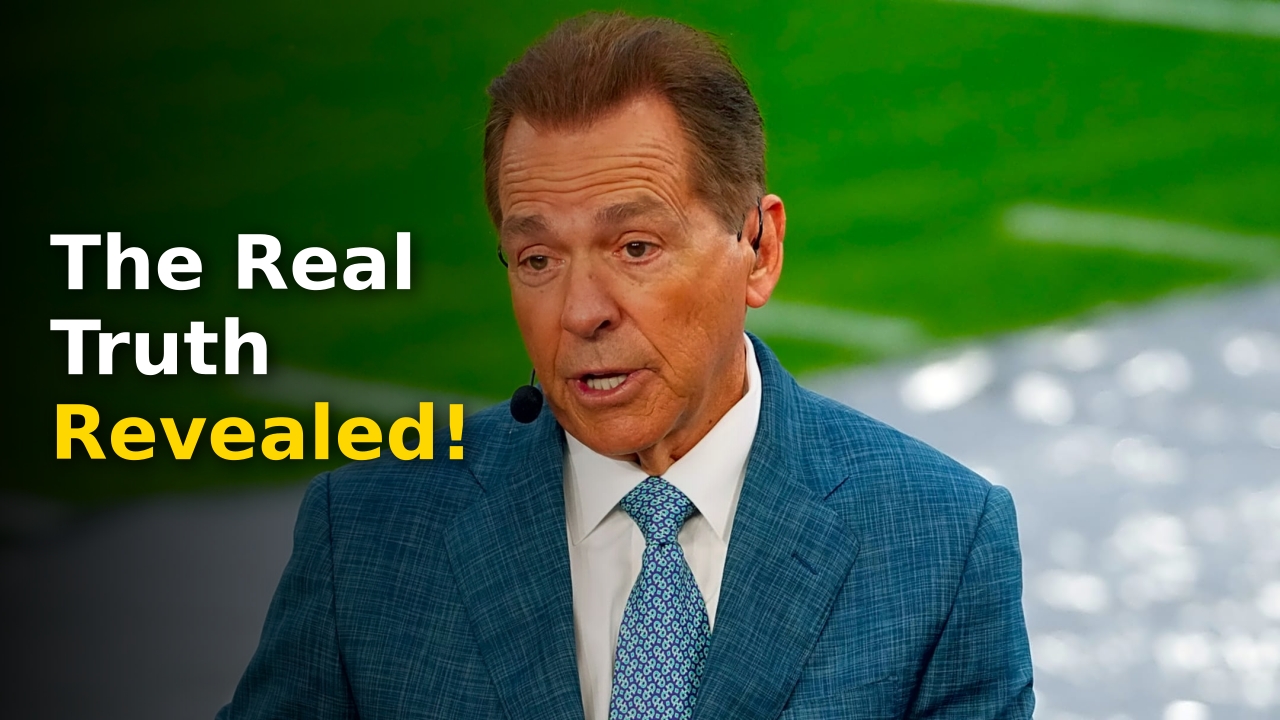
Key Takeaways
| Nick Saban explicitly denied that NIL was the primary reason for his departure from coaching. |
| The legendary coach cited his age and the need for a lifestyle change after 50 years of stress. |
| Saban noted that managing NIL and the transfer portal was similar to handling a professional NFL salary cap. |
| He remains active in sports media and continues to support the Alabama football program under Kalen DeBoer. |
You might believe that Nick Saban retirement was fueled by the chaotic landscape of Name, Image, and Likeness (NIL) deals, but the truth is far more personal and grounded. For years, pundits and fans alike speculated that the legendary Alabama head coach stepped away because he could no longer stand the changing tides of modern college football. However, Saban himself has debunked these narratives, clarifying that his decision was a matter of timing and personal preference rather than a protest against new athlete compensation models.
The shift from the gridiron to the broadcast booth represents a massive transformation for one of the greatest coaches in sports history. As the college football world continues to navigate complex regulatory challenges, understanding the genuine factors behind this exit is vital for fans and analysts. You deserve to know exactly what motivated the seven-time national champion to hang up his headset after a historic run in Tuscaloosa.
The Truth About Nick Saban Retirement
The prevailing narrative suggests that the sport simply evolved past a point that the former Crimson Tide tactician found manageable. Saban, appearing on ESPN’s Get Up, dismantled the theory that NIL or the transfer portal forced his exit. Having spent significant time as an NFL head coach with the Miami Dolphins and as a defensive coordinator for the Cleveland Browns, Saban was already well-versed in the complexities of managing personnel budgets and salary cap constraints. He viewed the financial elements of modern college sports not as an insurmountable hurdle, but as a professional reality he was already prepared to navigate.
Instead of blaming outside pressures, Saban focused on the unsustainable demands of a high-pressure collegiate coaching career. Coaching, he emphasized, is not a typical job; it is a total, all-consuming way of life. After dedicating five decades to the sport, he reached a stage where the physical and mental stress levels were no longer compatible with his long-term goals for his life and family.  By choosing to transition to television, he secured a platform that allows him to remain connected to the game he loves without the crushing weight of program leadership.
The Legacy of Championship Standards
Building a dynasty requires a standard of excellence that is nearly impossible to maintain over multiple decades. Saban was not just coaching games; he was architecting a culture that demanded perfection every single day of the year. This relentless pursuit of excellence is a major factor in why successors, including Kalen DeBoer, find the transition to leading Alabama a monumental task. The infrastructure Saban built at Alabama is world-class, but the human cost of sustaining such a peak for over 15 years is profound.
Life Beyond the Sidelines
It is worth noting that he did not disappear from public life. His role as a media analyst keeps him in the mix, providing unique insights that only someone with his depth of experience could offer. He has gained the freedom to prioritize his family, something that the rigorous schedule of a head coach often makes difficult. For more updates on his transition, visit Bright Celebrity.
A Historical Look at Saban’s Career
Saban’s path to becoming the greatest college coach of all time began long before he arrived in Alabama. His resume reads like a map of significant college and professional programs. Whether he was at Toledo, Michigan State, LSU, or the Dolphins, he consistently elevated the competitive baseline. Understanding his career trajectory offers context into why he decided that 2023 was the right time to stop.
| Era/Team | Key Milestones |
|---|---|
| Toledo (1990) | Began his journey as a head coach. |
| NFL Era (1991-1994, 2005-2006) | Learned salary cap management. |
| LSU (2000-2004) | First national title in 2003. |
| Alabama (2007-2023) | Six championships, legendary dynasty. |
Throughout these decades, Saban proved himself to be an adaptive leader. His ability to evolve with the times is precisely why the NIL explanation never quite fit his profile. If he could manage the shift from analog football to the modern, data-driven era, he was certainly capable of handling the current climate. His departure, therefore, remains a purely personal decision based on his own desire for a change of pace.

Expert Analysis of Career Transitions
Sports psychologists and industry insiders often discuss the ‘burnout threshold’ for coaches in elite power-five programs. Managing an SEC program is arguably one of the most taxing positions in American sports. Beyond the game-day pressure, there is the 24/7 cycle of recruiting, donor relations, and internal administration. By the time he hit his 70s, Saban was effectively operating at a level of intensity that would exhaust individuals half his age. This context is frequently missed by those looking for a singular ‘reason’ for his retirement, like rule changes or portal issues.
People Also Ask
What was the primary reason for the Nick Saban retirement?
Saban stated that his retirement was due to his age and a desire to move away from the high-stress, all-consuming lifestyle of being a head coach for 50 years.
Did NIL influence Nick Saban leaving Alabama?
No, Saban explicitly clarified that NIL was not the reason he retired, noting that he was comfortable managing the financial aspects of the game due to his previous NFL experience.
Is Nick Saban retired from all football activity?
While he has retired from coaching, Saban remains very active in the sports world as a television analyst and continues to support the Alabama program.
How does his replacement feel about the pressure?
Kalen DeBoer has openly acknowledged the massive challenge of maintaining the championship standard established during the Saban era at Alabama.
Final Thoughts
The legacy left by the Nick Saban retirement is one of unparalleled success and professionalism. While fans may continue to debate the state of the sport and the impact of evolving rules, the reality is that one of the greatest minds in college football simply chose to start a new, less stressful chapter in his life. Whether he is analyzing the game from the studio or offering guidance to the next generation in Tuscaloosa, his impact remains indelible. For more in-depth coverage of sports figures, check out Bright Celebrity.
More Like This
For more updates, check out our latest entertainment and sports news.