Key Takeaways
| Historical Record | The Ravens-Cowboys game in Rio averaged 24.9 million viewers, the most in NFL international history. |
| Peak Audience | Broadcasting peaks surpassed 30 million viewers during the dramatic fourth-quarter finish. |
| Streaming Comparison | The CBS broadcast outperformed recent NFL games on Netflix and YouTube by over 6 million viewers. |
| Market Power | The 4:25 p.m. ET window remains the most lucrative and high-traffic slot in American sports television. |
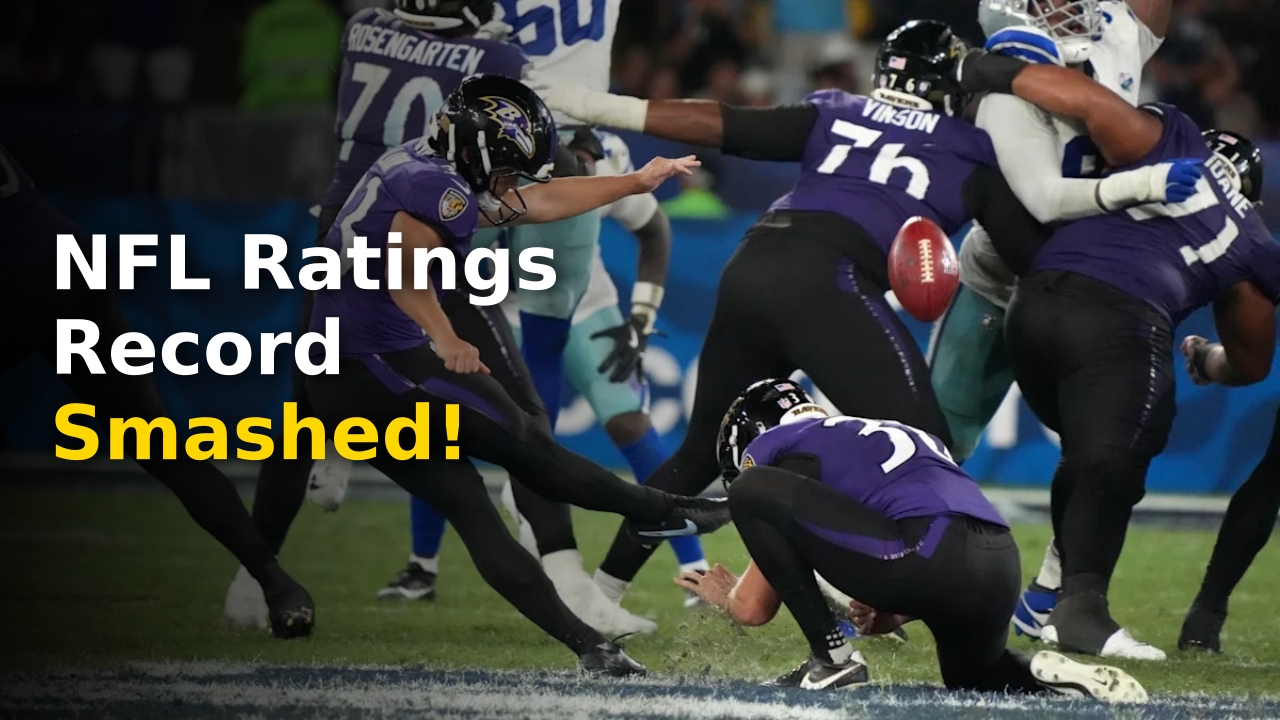
You probably expected the NFL’s venture into South America to be a success, but the official NFL Rio Viewership numbers have shattered all previous international broadcasting benchmarks. On a Sunday that felt like a localized Super Bowl, the Baltimore Ravens and Dallas Cowboys delivered a performance that captivated 24.9 million average viewers on CBS.
This massive figure cements the contest as the most-watched NFL International Series game in the history of the league, proving that the American audience will follow the shield across the equator. Despite being played thousands of miles away in the Southern Hemisphere, the game maintained the intensity and viewership gravity of a domestic rivalry, peaking at over 30 million viewers during its final moments.
The success of the NFL Rio Viewership serves as a massive validation for the league’s global expansion strategy and its partnership with traditional broadcast giants like CBS. As the league explores new frontiers, the data from this Rio de Janeiro thriller provides a roadmap for future scheduling and network allocation, even as it faces stiff competition from emerging streaming platforms.
Analyzing the Massive NFL Rio Viewership Record
The 24.9 million viewers recorded for the Ravens vs. Cowboys matchup in Rio is a landmark achievement that reshapes our understanding of global sports media. To put this into perspective, this Week 3 contest was the most-watched game in its specific time slot on CBS since 2014, surpassing previous high-water marks by significant margins. The internal growth is evident when comparing it to Fox’s Week 3 game from last year featuring the Cowboys and the Chicago Bears, which the Rio game outperformed by a solid five percent.
The sheer scale of this NFL Rio Viewership suggests that the “International Series” label is no longer a deterrent for the casual domestic fan. While early morning games from London often suffer from time-zone fatigue, the Rio game was strategically placed in the traditional 4:25 p.m. ET national window. This scheduling allowed CBS to leverage the maximum possible audience, proving that the location of the stadium is secondary to the accessibility of the time slot on American television screens.
However, it is worth noting that while the numbers are record-breaking for international games, they did not entirely eclipse the dominance of domestic matchups. For example, Fox’s Week 2 game between the Cowboys and the Washington Commanders pulled in 27.2 million viewers, nearly 2.3 million more than the Rio showcase. This disparity suggests that while fans are willing to watch games abroad, there may still be a slight “home soil” premium that drives the absolute highest ratings in the NFL ecosystem.

Expert Take: The Power of the 4:25 PM Window
Media analysts suggest that the primary driver for this record-breaking NFL Rio Viewership was the preservation of the 4:25 p.m. ET “America’s Game of the Week” window. Unlike the London games that often air at 9:30 a.m. ET, the Rio game occupied the most valuable real estate in sports broadcasting. By placing a high-stakes matchup between two marquee franchises—the Ravens and Cowboys—in this slot, the NFL and CBS essentially guaranteed a massive floor for their ratings, regardless of the geographic location of the kickoff.
Furthermore, the dramatic nature of the game itself played a pivotal role in maintaining dwell time. When Lamar Jackson and Dak Prescott are trading blows in a back-and-forth thriller, viewers are less likely to channel surf. The game ended on a spectacular seven-second drive orchestrated by Jackson and finished by kicker Tyler Loop, ensuring that the “peaking” audience stayed tuned until the very last whistle, which is a key metric for advertisers and network executives alike.
Comparative Data: NFL Rio Viewership vs Streaming Platforms
The 2024 season has been a laboratory for the NFL’s broadcasting experiments, pitting traditional network television against the rising tide of streaming services. The NFL Rio Viewership data provides a stark contrast to the performance of games hosted on digital platforms. Earlier this year, a high-profile matchup between the 49ers and Rams in Australia aired on Netflix, drawing 18.5 million viewers. While impressive for a Thursday night streaming exclusive, it fell nearly 6.4 million viewers short of the CBS broadcast from Rio.
Similarly, the NFL’s 2025 venture into Brazil featuring the Kansas City Chiefs and the Los Angeles Chargers aired on a Friday night via YouTube, also garnering 18.5 million viewers. The consistency of these streaming numbers suggests a plateau for digital-only broadcasts that traditional network television has yet to hit. CBS’s ability to reach 24.9 million people highlights the continued reach of linear broadcast TV in an increasingly fragmented media landscape.
| Game Matchup | Location | Network/Platform | Avg Viewers (M) |
|---|---|---|---|
| Ravens vs. Cowboys | Rio de Janeiro | CBS | 24.9 |
| Cowboys vs. Commanders | Domestic (US) | Fox | 27.2 |
| 49ers vs. Rams | Australia | Netflix | 18.5 |
| Chiefs vs. Chargers | Brazil | YouTube | 18.5 |
Despite the win for CBS, some analysts argue the 24.9 million figure was slightly below the internal expectations for a Cowboys game in the late-afternoon window. Last year, CBS averaged 25.83 million viewers for that specific national slot. The slight dip could be attributed to several factors, including the novelty of the Rio location or perhaps a broader shift in how Nielsen measures out-of-home viewing. Nevertheless, being the king of the international ratings mountain is a title CBS will wear with pride.
The Logistics of Rio and Media Competition
Running a high-profile NFL game in Rio de Janeiro involves more than just flying teams across the world; it requires a massive technical undertaking by CBS Sports. The production quality of the Rio broadcast was indistinguishable from a domestic game, which helped maintain the NFL Rio Viewership. Fans at home were treated to the “Brazilian flair” of the event, with local cultural elements integrated into the broadcast, creating a unique atmosphere that felt both exotic and familiar.
Competition during the game was also fierce. On ABC, the WNBA playoffs were in full swing with a highly anticipated matchup between the Indiana Fever (led by Caitlin Clark) and the Las Vegas Aces. Simultaneously, NBC was airing the final day of the Presidents Cup. The fact that the NFL managed to pull nearly 25 million viewers while competing against a surging WNBA and a legacy golf tournament speaks volumes about the league’s unbreakable grip on the American sports psyche.
Industry insiders are also keeping a close eye on the NFL’s expanding international footprint. As the league looks toward 2025 and beyond, the success in Rio will likely encourage more games in the Latin American and South American markets. The time zone alignment with the U.S. East Coast makes cities like Rio and São Paulo much more attractive for television networks than European cities, which require unconventional and often less-watched morning windows.

By The Numbers: The Cowboys Effect
It is impossible to discuss NFL Rio Viewership without acknowledging the “America’s Team” factor. The Dallas Cowboys consistently drive the highest ratings in the league, a phenomenon often referred to as the “Cowboys Bump.” Whether fans are tuning in to cheer for a Dallas victory or hoping for a spectacular collapse, the viewership numbers always spike when the star is on the field. In this instance, the Cowboys’ late-game surge provided the perfect narrative arc for casual viewers to stay engaged through the fourth quarter.
For the Baltimore Ravens, this game was a global introduction for Lamar Jackson on a scale rarely seen. While Jackson is a two-time MVP, his reach among international audiences is still growing. The visibility afforded by a 24.9 million audience on a marquee broadcast is a massive win for the Ravens’ brand and the NFL’s effort to market its individual superstars globally. You can find more details on sports broadcasting news and how it affects athlete marketability on our main hub.
The Future of NFL International Ratings
As we look forward, the NFL Rio Viewership record sets a high bar for future international endeavors. Commissioner Roger Goodell has been vocal about his desire to play up to eight international games per season. With the data now showing that a 4:25 p.m. ET window in South America can rival domestic ratings, the league may shift its focus away from the difficult 9:30 a.m. ET slots in London and Munich in favor of more Western Hemisphere locations.
The economic implications are massive. High viewership leads to higher ad rates, which in turn leads to more lucrative television contracts. If the NFL can prove that international games are not just “novelties” but “ratings powerhouses,” the value of the next round of media rights will skyrocket even further. This is particularly relevant as the league continues to navigate its relationship with tech giants like Amazon and Netflix, who are hungry for the kind of live audience numbers that the Rio game just delivered.
Moreover, the integration of advanced metrics and Nielsen‘s evolving data collection methods will play a role in how these numbers are interpreted. There is a growing conversation within the industry about whether current ratings fully capture the “second-screen” experience and social media engagement that a game in Rio generates. Regardless of the technicalities, the raw data shows that the NFL is a global juggernaut that shows no signs of slowing down. For more on the intersection of fame and sports, check out our analysis of celebrity athlete earnings and their impact on media deals.
People Also Ask
What is the most-watched NFL international game in history?
The most-watched NFL international game in history is the 2024 matchup between the Baltimore Ravens and the Dallas Cowboys in Rio de Janeiro, which averaged 24.9 million viewers on CBS.
Why did the NFL play a game in Rio de Janeiro?
The NFL played in Rio as part of its ongoing International Series expansion to grow the game’s global fanbase and tap into the massive sports market in Brazil and South America.
How many viewers did the Ravens vs Cowboys Rio game peak at?
According to CBS, the viewership for the Ravens-Cowboys game in Rio peaked at more than 30 million viewers during the exciting final minutes of the fourth quarter.
How do the Rio NFL ratings compare to Netflix or YouTube games?
The Rio game on CBS (24.9 million) significantly outperformed recent international games on streaming platforms like Netflix and YouTube, which both averaged approximately 18.5 million viewers.
Will the NFL play more games in Brazil in the future?
Given the record-breaking success of the NFL Rio Viewership, the league is highly likely to schedule more games in Brazil and other South American cities that align with US time zones.
Conclusion: A New Era for Global Football
The record-breaking NFL Rio Viewership marks the beginning of a new chapter in the league’s history. It has successfully moved past the era where international games were seen as logistical headaches or low-rated morning novelties. By delivering 24.9 million viewers, the Ravens and Cowboys have proven that the NFL’s brand of excitement is a universal language that translates perfectly to the global stage.
As the league continues to refine its strategy, the balance between broadcast tradition and streaming innovation will remain a central theme. However, for at least one Sunday in 2024, the old-school power of a network broadcast on CBS proved to be the ultimate winner. The Rio game wasn’t just a win for the Ravens on the field; it was a historic victory for the NFL’s vision of a truly global league. Stay updated on all trending entertainment stories and sports media breakthroughs right here.
More Like This
For more updates, check out our latest entertainment and sports news.