Key Takeaways
| Permanent Shutdown: Six Flags Magic Mountain has officially retired the X2 roller coaster as of September 2026. |
| Safety Concerns: The decision follows two decades of reported brain injuries, hemorrhages, and at least two confirmed fatalities. |
| Legal Fallout: A major lawsuit involving the 2022 death of Christopher Hawley was settled just weeks before the closure announcement. |
| Design Flaws: The 4D coaster technology was plagued by mechanical issues and high G-force impacts since its 2002 debut. |
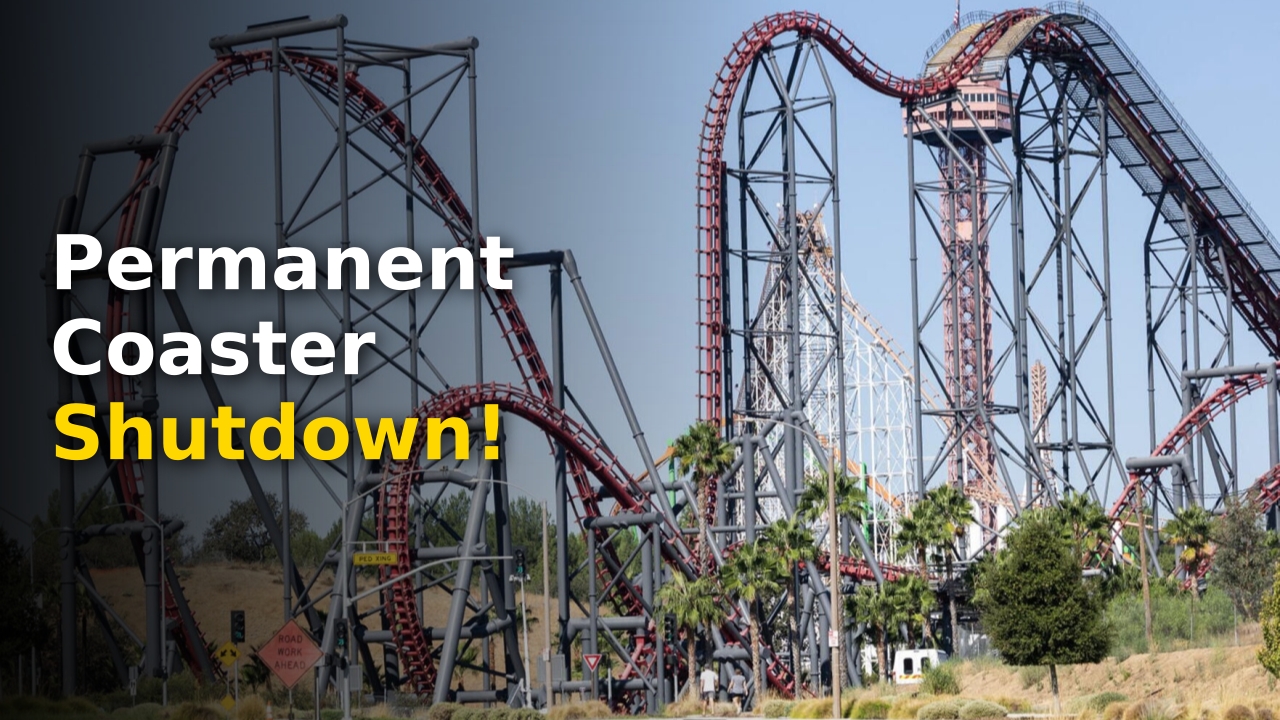
You may never experience the 360-degree chaos of Valencia’s most polarizing ride again because the Six Flags X2 Closure has officially been confirmed as permanent. Following a summer of intense scrutiny and a tragic history of medical emergencies, park officials have decided to dismantle the iconic 4D coaster once and for all.
The announcement arrived on Tuesday after a series of high-profile lawsuits and reports of traumatic brain injuries finally tipped the scales against the ride’s operation. While thrill-seekers once hailed the attraction as a masterpiece of engineering, the human cost has become too great for the Six Flags Magic Mountain brand to ignore.
For over two decades, X2 stood as the crown jewel of the “Thrill Capital of the World,” but its legacy is now inextricably linked to the pain of families who lost loved ones to its mechanical ferocity. As the park pivots toward a new era of guest safety, the removal of this steel giant signals a massive shift in how the theme park industry shifts prioritize extreme thrills versus biological limits.
Six Flags X2 Closure and Official Safety Statement
The Six Flags X2 Closure was not a decision made overnight, but rather the culmination of a mounting crisis regarding guest confidence and mechanical reliability. Magic Mountain President Brian Oerding released a sobering statement explaining that while the ride technically met state safety benchmarks, the erosion of public trust was an insurmountable hurdle.
“While X2 consistently passed a multitude of safety tests, we have decided to close the ride because we believe it’s the right thing to do,” Oerding stated during the press conference. He emphasized that ride safety is the cornerstone of their business model and that the park takes every report of guest injury with the utmost seriousness.
The ride had already been sitting dormant since July 2026, following a cluster of back-to-back brain injury reports that sent several guests to local hospitals. This temporary pause was initially seen as a maintenance window, but internal audits revealed that the 4D rotation mechanism was placing stress on riders that could not be consistently mitigated through seat padding or restraint adjustments.
For the management team at Valencia, California, the decision also carries a financial weight, as maintaining a ride with such a high litigation profile became a liability. Industry analysts suggest that the cost of insurance premiums and legal settlements for X2 had begun to eclipse the revenue generated by its popularity among enthusiasts.

Expert Take: The Engineering of High-Risk Thrills
From an engineering perspective, X2 was a “prototype” that never quite shed its experimental status. Designed by the now-defunct Arrow Dynamics and later refined by S&S Worldwide, the ride utilized a unique four-rail system to control the 360-degree rotation of the seats independent of the track’s movement.
According to structural engineers, this design created “unpredictable rotational inertia,” where the speed of the seat’s flip could vary based on the weight distribution of the passengers. This variability is often cited as a primary factor in the “brain rattling” sensation reported by many riders who suffered subsequent hemorrhages or concussions.
Timeline of Fatalities and Major Lawsuits
The history of the Six Flags X2 Closure is haunted by the names of those who never recovered from their final ride. Perhaps the most poignant case is that of Christopher Hawley, a 22-year-old who lost consciousness shortly after disembarking in 2022 and died soon after; his family’s recent legal settlement in August 2026 is believed to have been a catalyst for the permanent shutdown.
Hawley’s mother, Anne Hawley, has spent the last four years campaigning for the ride’s removal, appearing emotional on Tuesday as she finally saw the park take action. “We have tried for four years to do the best we can to spread awareness,” she told reporters, adding that she felt the park had finally listened to the warnings of grieving families.
The Hawley case was far from an isolated incident, as court records reveal a disturbing pattern of neurological damage dating back to the ride’s early years. Hilda Farias, age 28, suffered a fatal brain bleed after riding X2 in 2010, a tragedy that led to early questions about the ride’s 4D seat technology and its impact on the human skull during high-velocity inversions.
More recent litigation includes claims from Sheila Katerelos and Lucy Alvarez, both of whom alleged they sustained traumatic brain injuries (TBI) in 2020 and 2021, respectively. These lawsuits painted a picture of “great physical, mental, and nervous pain,” suggesting that the ride’s extreme G-forces were causing internal damage even in healthy, young adults.
X2 Safety Statistics and Incident Data
| Year | Incident Description | Outcome / Status |
|---|---|---|
| 2002 | Major design flaws in prototype rail system | Temporary closure for repairs |
| 2008 | Rebranding from X to X2 with lighter trains | Capacity and smoothness update |
| 2010 | Hilda Farias suffers fatal brain bleed | Wrongful death lawsuit filed |
| 2022 | Christopher Hawley loses consciousness and dies | Case settled August 2026 |
| 2026 | Back-to-back surgical brain hemorrhages reported | Permanent Closure Confirmed |
As documented by CNN investigative report on coaster safety, X2 has been linked to more than a dozen reports of serious hospitalizations over the last two decades. The frequency of these events significantly outpaced other high-thrill attractions at Magic Mountain, such as Tatsu or Full Throttle.
Technical Failure and the 4D Coaster Mechanics
The technical sophistication of X2 was always its greatest draw and its fatal flaw. Unlike traditional coasters where the car is fixed to the track, X2 featured a 20-foot wide wing-style train where the seats dangled off the sides. This allowed for the “4th Dimension”—the ability for riders to rotate head-over-heels while the train traversed the 3,600-foot track.
When it first opened as “X” in 2002, the ride was so complex that the original manufacturer, Arrow Dynamics, actually went bankrupt trying to finish it. The weight of the original trains was so immense that it caused premature wear on the steel supports, leading to a massive overhaul in 2007 to replace them with lighter, more aerodynamic versions from S&S Worldwide.
Despite these upgrades, the physics of the ride remained punishing. Riders were taken up a 175-foot lift hill facing backward, then dropped 215 feet at an 88-degree angle while their seats spun forward to face the ground. This specific maneuver, combined with the rapid whipping of the head and neck, is what medical experts believe contributed to the high rate of traumatic brain injuries.
In the world of entertainment safety standards, X2 became a case study in how mechanical complexity can sometimes override biological safety margins. While many fans enjoyed the “aggressive” nature of the ride, the unpredictability of the seat rotations meant that two different riders on the same train could have vastly different physical experiences.

By The Numbers: The G-Force Impact
Medical data suggests that X2 subjected riders to sustained forces exceeding 4Gs while simultaneously inducing rotational shear on the brain. For some individuals, particularly those with undiagnosed vascular vulnerabilities, this combination was a recipe for disaster. The 2026 medical reports indicated that the surgical intervention required for recent victims was due to arterial tearing—an injury more commonly associated with high-speed motor vehicle accidents than amusement park rides.
People Also Ask
What happened with the Six Flags X2 closure today?
Six Flags Magic Mountain announced the permanent closure of the X2 roller coaster following a history of traumatic brain injuries and fatal incidents. The ride had been closed temporarily since July 2026 but will now be dismantled to prioritize guest safety.
Why is Six Flags Magic Mountain trending right now?
The park is trending due to the controversial shutdown of X2, one of its most famous and extreme attractions. The decision has sparked a national conversation about the safety of 4D roller coasters and the legal settlements involving the deaths of riders like Christopher Hawley.
How does the X2 closure affect Magic Mountain’s lineup?
The closure removes a significant capacity-eater and thrill-seeker favorite from the park’s roster of 20 coasters. While it leaves a gap in the extreme thrill category, it allows the park to invest in more modern, safe, and reliable ride technologies for future seasons.
When will the X2 coaster be removed from the park?
Demolition of the X2 structure is expected to begin in late 2026 or early 2027. The park has not yet announced what attraction will replace the massive footprint left by the coaster in the Valencia theme park landscape.
The Future of Magic Mountain After X2
The Six Flags X2 Closure represents a turning point for the amusement industry, particularly for parks that have built their reputation on being the “biggest and baddest.” As Los Angeles Times coverage of the closure suggests, the move is being seen as a proactive effort to rebrand Six Flags as a destination that values family safety as much as adrenaline.
For the thousands of fans who traveled from across the globe to experience X2, the news is bittersweet. There is no denying the ride was a marvel of sensory overload, incorporating fire effects, heavy metal soundtracks, and a view of the California sky that few other coasters could match. However, the shadow of the fatalities has made it impossible for the ride to continue in a world that is increasingly sensitive to corporate negligence.
What comes next for the plot of land currently occupied by X2 remains a mystery. There are rumors of a more modern, magnetic-launch coaster or perhaps a high-capacity family-friendly dark ride that would cater to a broader audience. Regardless of the replacement, the era of the “unpredictable 4D flip” has reached its final destination.
Ultimately, the Six Flags X2 Closure serves as a stark reminder that in the quest for the ultimate thrill, there are lines that should not be crossed. As the steel is eventually hauled away, the legacy of the ride will remain a cautionary tale for designers and a somber memory for the families of Christopher Hawley and Hilda Farias. Safety, it seems, has finally taken the front seat in Valencia.
As you plan your next trip to the park, keep an eye on how these celebrity thrill-seekers and park regulars react to the shifting landscape. The thrill capital is evolving, and while X2 is gone, the commitment to innovation—tempered by newfound caution—will define the next chapter of Magic Mountain’s storied history.
More Like This
For more updates, check out our latest entertainment and sports news.