Key Takeaways
| Offensive Line Collapse: The Jets surrendered 5 sacks, 24 total pressures, and lost starting left guard Dylan Parham to a severe knee injury. |
| Geno Smith’s Resilience: Smith completed 31 of 37 passes for 321 yards and three touchdowns, maintaining zero interceptions through three weeks before a costly late fumble. |
| Tight End Surge: Rookie Kenyon Sadiq and Jeremy Ruckert ignited the passing game, combining with Jelani Woods for 13 receptions, 164 yards, and two scores. |
| Defensive Breakdowns: Without safety Minkah Fitzpatrick, New York’s defense conceded 131 rushing yards to Detroit and a decisive 49-yard completion to Isaac TeSlaa. |
Evaluating the latest Jets position grades reveals a frustrating narrative of high-level quarterback execution undermined by total structural collapse at the line of scrimmage. You witnessed an afternoon at Ford Field where veteran passer Geno Smith gave everything he had, yet New York still stumbled to a bitter 34-27 defeat against the Detroit Lions. While head coach Aaron Glenn sought a triumphant homecoming against his former employer, critical execution breakdowns across multiple phases derailed the team’s momentum.
The loss marks New York’s second consecutive defeat, dropping the franchise to 1-2 ahead of a pivotal Week 4 matchup against the Chicago Bears. The offensive line endured an outright nightmare against Detroit’s aggressive pass rush, surrendering five sacks and leaving their veteran quarterback under siege during the contest’s most critical sequence. Despite the offensive front’s struggles, bright spots emerged through a historic breakout performance from the tight end room and an electric outing by Garrett Wilson.
Defensively, the absence of veteran leadership in the secondary proved devastating against Detroit’s surgical quick-strike offensive scheme led by Jared Goff. New York entered the matchup boasting the top-ranked defense in total yards allowed per game, but critical communication lapses exposed them when the game was on the line. Below is our comprehensive, film-backed assessment and final report card for every single New York unit.
Jets Position Grades: Offense Evaluated
Analyzing the comprehensive Jets position grades begins under center, where veteran quarterback Geno Smith delivered one of the most statistically efficient outings of his career despite relentless duress. Smith finished the afternoon completing 31 of 37 passes for 321 yards, three touchdowns, and zero interceptions, while also scrambling twice for 12 crucial yards. Through three weeks of regular-season action, Smith has completely eliminated the turnover-worthy throws that historically plagued his early career, orchestrating a gritty fourth-quarter comeback from a two-touchdown deficit.
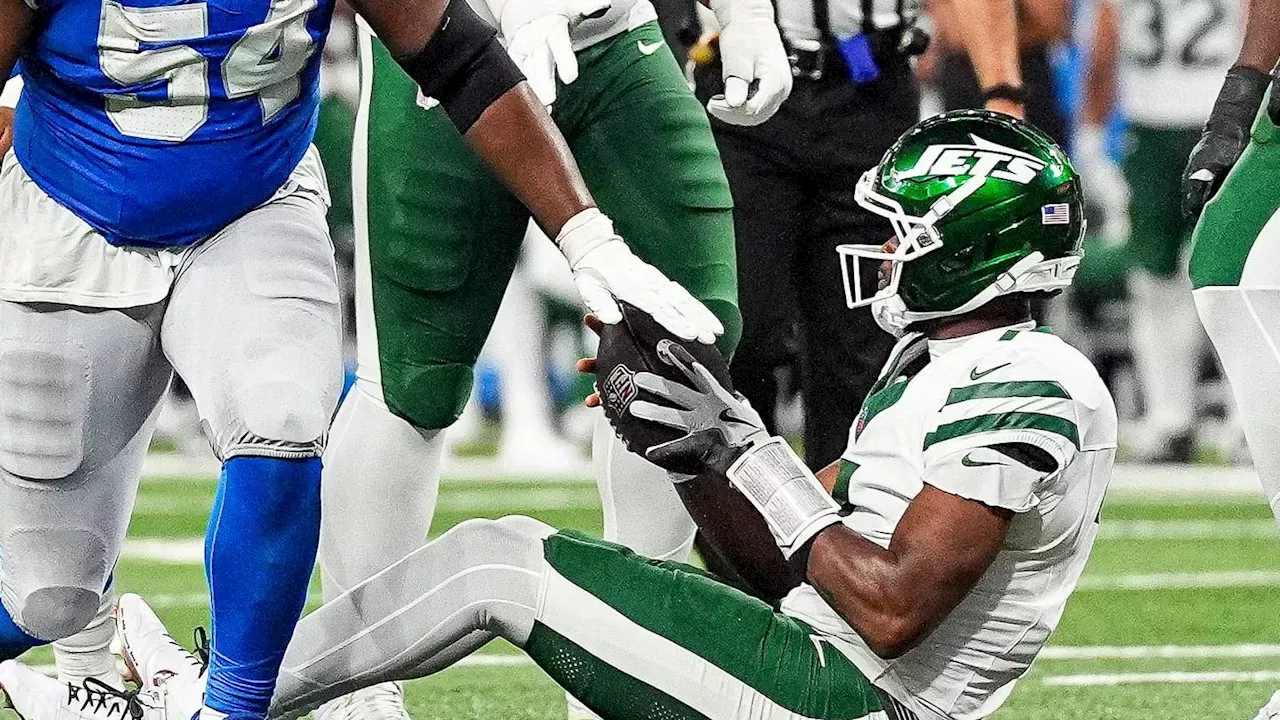
Smith’s afternoon ended on a heartbreaking note when an unblocked blindside safety blitz stripped the football as New York marched toward the red zone with under sixty seconds remaining. Film review highlights that Smith held the ball momentarily too long on several third-down situations, inviting interior pressure into his lap. Nevertheless, his poise against sophisticated coverage disguises kept New York within striking distance until the final defensive sequence.
Wide Receivers and Tight Ends Shine
Garrett Wilson finally reclaimed his rightful place as the engine of New York’s aerial attack, hauling in 10 receptions on 12 targets for 107 yards and a dynamic red-zone touchdown. Wilson consistently beat single coverage on intermediate dig routes and sideline outs, giving Detroit’s cornerbacks fits throughout four quarters of play. Outside of Wilson, however, wide receiver Adonai Mitchell remained quiet with only a single reception, illustrating the roster’s desperate need for complementary perimeter threats according to current sports entertainment analysis.
The real revelation emerged within the tight end room, which completely hijacked Detroit’s underneath zone concepts by generating 13 catches for 164 yards and two scores. Dynamic rookie Kenyon Sadiq logged 38 offensive snaps, recording seven catches for 105 yards and an explosive catch-and-run touchdown that electrified the visiting sideline. Veteran Jeremy Ruckert established single-game career highs in receptions and receiving yardage while securing a score, while giant target Jelani Woods contributed a critical 20-yard reception during an 80-yard scoring drive.
Ground Game Stagnates Behind Shaky Blocking
New York’s rushing attack hit a brick wall for the second consecutive week, logging a pitiful 58 yards across 19 team carries for an anemic 3.0 yards per attempt. Featured running back Breece Hall found virtually zero daylight, managing only 32 rushing yards on 13 carries for an abysmal 2.5 yards per rush. Power back Braelon Allen fared no better, registering just 14 yards on four bruising touches against an aggressive defensive box.
Detroit entered Sunday boasting the fifth-worst run defense in the National Football League, making New York’s ground failure particularly alarming for offensive coordinator Nathaniel Hackett. The absence of balanced run distribution forced Smith into obvious passing downs, allowing Detroit’s perimeter rushers to pin their ears back and collapse the pocket at will.

Trench Warfare Breakdown and Performance Metrics
The offensive line endured an unmitigated disaster at Ford Field, functioning as the primary catalyst behind the team’s Week 3 defeat. Facing a ferocious Detroit defensive line anchored by Pro Bowlers Aidan Hutchinson and Alim McNeill, New York’s front five yielded 24 total quarterback pressures, five sacks, and countless knockdowns. The line committed multiple momentum-killing holding penalties, including an infraction that wiped out a potential field-goal drive just before the halftime intermission.
Compounding the schematic misery, starting left guard Dylan Parham suffered a severe knee injury in the third quarter and was carted directly to the locker room. Without Parham, the interior pocket disintegrated rapidly, directly leading to back-to-back sacks when the offense threatened Detroit’s five-yard line. When evaluating pass-blocking win rate metrics compiled across the league, New York ranked in the bottom third for Week 3, leaving Smith vulnerable to blindside hits that ultimately sealed the outcome.
| Position Unit | Key Performers | Key Statistics | Final Grade |
|---|---|---|---|
| Quarterbacks | Geno Smith | 31/37, 321 YDS, 3 TD, 1 FUM | B+ |
| Running Backs | Breece Hall, Braelon Allen | 17 CAR, 46 YDS, 2.7 YPC | D |
| Receivers / TEs | Garrett Wilson, Kenyon Sadiq | 23 REC, 271 YDS, 3 TD | A- |
| Offensive Line | Dylan Parham, Joe Tippmann | 5 Sacks Allowed, 24 Pressures | F |
| Defensive Line | Quinnen Williams, Joseph Ossai | 1 Sack, 131 Rush YDS Allowed | C- |
| Linebackers | Demario Davis, Jamien Sherwood | 19 Total TKL, 2 TFL, 1 Sack | B- |
| Secondary | Andre Cisco, Azareye’h Thomas | 269 Pass YDS Allowed, 2 TD | C |
| Special Teams | Jason Sanders, Austin McNamara | 1/1 FG, 34.0 Return YDS Allowed | D+ |
By The Numbers: Pressure and Pocket Metrics
Detailed tracking data from Pro-Football-Reference team boxscores underscores the stark contrast in protection between both sides of the ball. When Geno Smith operated from a clean pocket, his completion rate hovered at an astounding 83.8%, demonstrating flawless rhythm and mastery over defensive coordinator Aaron Glenn’s offensive schemes. Under defensive harassment, however, that figure plummeted below 55%, illustrating how structural breakdowns neutered downfield opportunities.
Conversely, Detroit quarterback Jared Goff enjoyed immaculate operating room throughout the contest, completing 25 of 32 attempts for 269 yards and two touchdowns. Goff faced pressure on fewer than 22% of his dropbacks, enabling him to pick apart New York’s underneath zone coverages with precision timing. Until New York resolves its pass protection inefficiencies along the offensive interior, sustaining fourth-quarter comeback efforts will remain an unsustainable gamble.
Defensive Unit and Special Teams Analysis
New York entered Week 3 boasting the NFL’s stingiest defense in total yardage allowed, yet they surrendered 400 total yards to Detroit’s balanced attack. The primary failure rested on edge containment against dynamic running back Jahmyr Gibbs, who racked up 99 rushing yards and two scores on an even 5.0 yards per carry. Defensive end Joseph Ossai struggled to maintain gap integrity on cutback lanes, allowing Gibbs to slice through the perimeter for an uncontested 17-yard touchdown in the third quarter.
The linebacker duo of Demario Davis and Jamien Sherwood delivered ferocious tackling against interior runs but struggled significantly in spatial pass coverage. Veteran linebacker Demario Davis posted a team-high 10 total tackles, one tackle for loss, and one sack, demonstrating his relentless competitive motor at 37 years of age. Sherwood matched his intensity with nine combined stops, yet both defenders routinely surrendered intermediate throwing lanes to Gibbs, who added seven receptions for 65 yards and a receiving score.
Secondary Adjusts to Fitzpatrick’s Absence
The sudden absence of perennial All-Pro safety Minkah Fitzpatrick cast a massive shadow over New York’s defensive backfield throughout the afternoon. Safety Andre Cisco stepped into an expanded role, jumping from 44 snaps in Week 1 to playing all 65 defensive snaps on Sunday, recording five solo tackles and an opportunistic blitz sack. Young defensive backs Dane Belton and Azareye’h Thomas combined for 13 tackles while preventing vertical home runs for most of the contest.
Miscommunication doomed the secondary during Detroit’s decisive four-play touchdown march late in the final frame. Detroit exploited a blown coverage assignment down the left seam, finding wide receiver Isaac TeSlaa wide open for a devastating 49-yard reception that completely flipped field position. Fans tracking celebrity athlete updates know that without elite safety communication, high-octane passing attacks will punish the slightest hesitation.

Special Teams Blunders Limit Field Position
Special teams coordinator Brant Boyer’s coverage units suffered their worst performance of the early season, routinely spotting Detroit advantageous starting field position. New York yielded an egregious 34.0 yards per kickoff return, with Detroit return specialist Jacob Saylors breaking loose for an eye-popping 40.5-yard average. While reliable placekicker Jason Sanders converted his lone 42-yard field goal attempt, coverage breakdowns completely neutralized the offense’s hard-earned momentum.
Punter Austin McNamara endured an uncharacteristic shanked punt early in the first half that sailed out of bounds for a meager 31 yards, handing Detroit short-field scoring position. While McNamara rebounded later with a booming 57-yard punt to pin Detroit deep, injuries to key gunners Marcelino McCrary-Ball, Arian Smith, and Qwan’tez Stiggers left the unit fundamentally depleted.
Coaching Adjustments and Strategic Fallout
Head coach Aaron Glenn deserves credit for fostering relentless competitive fight within his locker room, rallying the offense from a 27-13 deficit late in the third quarter. The creative usage of multiple tight-end packages exposed Detroit’s linebackers and created high-percentage passing windows for Smith. However, Glenn’s failure to deploy an effective spy or defensive bracket against Jahmyr Gibbs on passing downs proved fatal to New York’s defensive structure.
Situational play-calling during crucial third-and-short sequences left much to be desired, as New York abandoned the running game entirely down the stretch. By ignoring the ground game, New York made their offensive tendencies entirely predictable for Detroit’s aggressive defensive front. As documented by national coverage across ESPN NFL team reporting, winning consistently on the road requires complementary football and uncompromising discipline in the trenches.
Expert Take: The Trench Talent Gap
When you dissect the film between the twenties, this contest was decided by trench execution rather than quarterback capability. Detroit’s offensive line functioned as a cohesive, violent unit, displacing defensive tackles and opening cutback lanes for explosive perimeter runs. In stark contrast, New York’s offensive line looked disjointed, succumbing to simple stunt concepts and interior blitz pressures that derailed drives before they could develop.
If New York hopes to salvage its postseason aspirations, general manager Joe Douglas must immediately explore veteran trade options or practice-squad elevations along the offensive interior. The impending loss of Dylan Parham threatens to compound an already fragile pass-protection foundation. Without established stability upfront, elite passing weapons like Garrett Wilson and Kenyon Sadiq will remain handcuffed by accelerated pocket clocks and blown blocking assignments.
People Also Ask
What happened with the Jets position grades against Detroit?
The offensive line received a failing F grade after allowing five sacks and 24 quarterback pressures in the 34-27 loss. Conversely, the tight ends and wide receiver Garrett Wilson earned top marks for generating 271 receiving yards and three touchdowns.
Why did the Jets lose to the Lions in Week 3?
New York lost due to severe pass protection breakdowns, an anemic rushing attack that totaled just 58 yards, and blown secondary coverages without Minkah Fitzpatrick. A game-sealing blindside fumble by Geno Smith on the final drive halted the comeback.
How severe is offensive guard Dylan Parham’s injury?
Starting left guard Dylan Parham was carted off Ford Field during the second half with a significant knee injury and did not return. The team is conducting MRI evaluations to determine structural damage and potential recovery timelines.
When do the Jets play their next game?
New York travels to Soldier Field to face the Chicago Bears in Week 4 on Sunday, October 4. The Jets aim to snap their two-game losing skid and balance their regular-season record at 2-2.
Final Verdict on New York’s Trench Struggles
Reviewing the comprehensive Jets position grades reinforces that New York possesses the offensive firepower and quarterback stability required to challenge elite competition, but trench vulnerabilities remain a fatal flaw. Geno Smith proved his early-season resurgence is no fluke by throwing for 321 yards and three scores without an interception. However, football games in late autumn are ultimately decided along the line of scrimmage, where Detroit thoroughly bullied New York on both sides of the ball.
As Aaron Glenn prepares his squad for an urgent Week 4 showdown against Chicago, repairing the offensive interior and shoring up kick-coverage discipline must take precedence. If New York can stabilize its pass protection and integrate rookie Kenyon Sadiq into permanent featured sets, brighter afternoons lie ahead. Fans following exclusive sports team developments will watch closely to see if the front office executes urgent roster adjustments before trench injuries derail the 2026 season completely.
More Like This
For more updates, check out our latest entertainment and sports news.