Key Takeaways
| High Street Music reaches a historic two-decade milestone in Pottstown. |
| Founder Louis Rieger overcame 2008 recession and severe water damage to maintain operations. |
| The school remains a cultural cornerstone for local education and community events. |
| Rieger maintains a strict anti-AI stance regarding music composition and performance. |
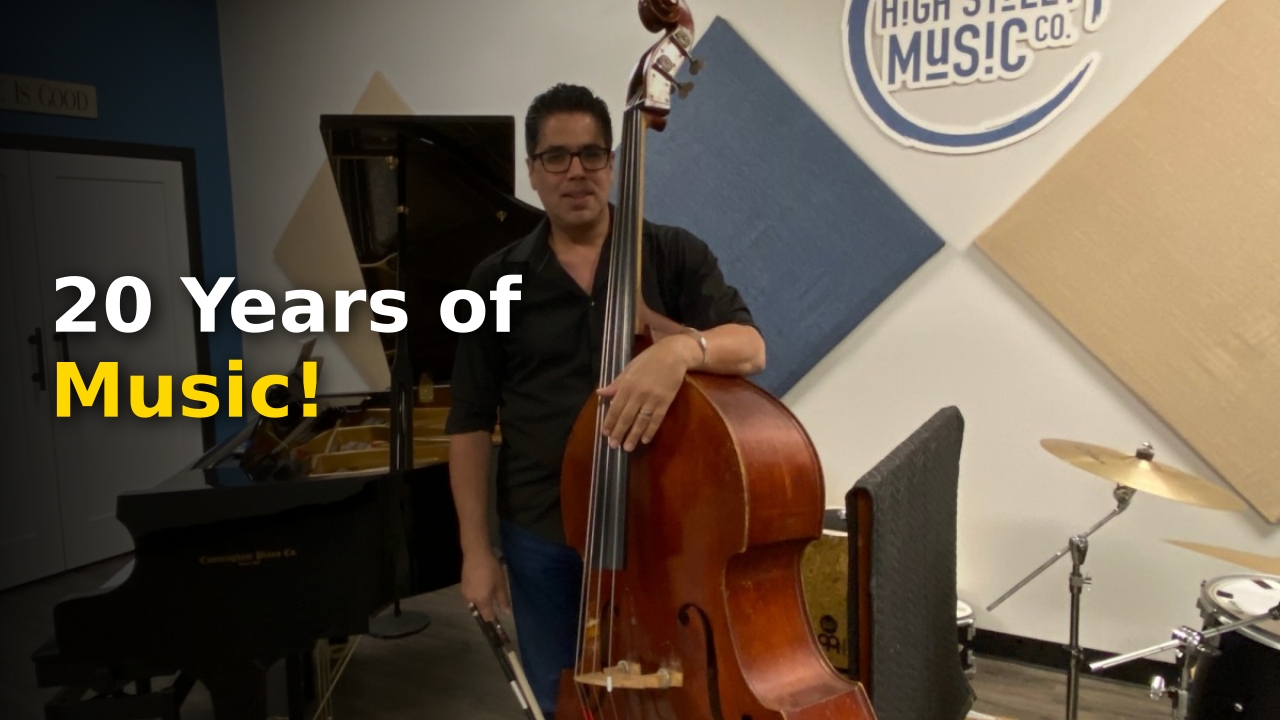
High Street Music 20 years of operation marks a significant cultural milestone for the Pottstown community as the school celebrates two decades of musical excellence. What started as a simple observation of a street address—135, the notes of a major chord—has evolved into a resilient institution led by Louis Rieger and his wife, Kristyn.
You might wonder how a small business survives two decades of economic volatility, including the 2008 recession and a global pandemic. The answer lies in the deep connection between the school and the Pottstown School District, where music programs have long served as a lifeline for budding artists. This article explores the journey of a local institution that refuses to bow to corporate pressure or artificial trends.
Building High Street Music 20 Years
Louis Rieger’s path to becoming a local music icon was paved with unconventional experiences, from his early days carrying a heavy bass to his time working for a corporate music chain. He learned early on that the corporate model of cold-calling and sales targets did not align with his vision of fostering genuine musical growth. When he landed in the 100 block of High Street, he knew he had found a home for his teaching philosophy.
The business model survived because of its focus on genuine instruction rather than mass production. During the financial downturn of 2008, when many small businesses shuttered their doors, High Street Music remained standing due to the Pottstown Schools music trust. By providing affordable lessons to students who otherwise could not access them, the school embedded itself into the very fabric of the city.
Rieger’s educational background, which includes a graduate degree in psychology from Immaculata University, heavily influences how he approaches students. He views the act of learning an instrument as a developmental milestone that requires human patience and skill. This perspective stands in direct opposition to modern shortcuts that prioritize speed over depth.

Teaching for Rieger has extended far beyond the walls of his shop. He has brought his expertise to Ursinus College and Montgomery County Community College, influencing a new generation of musicians. His commitment to the local arts scene is further evidenced by his decade-long involvement in the Pottstown GoFourth celebrations and his role as a pit musician for local high school theater productions.
Performance and Data Overview
| Metric Category | Historical Data Point |
|---|---|
| Years in Business | 20 Years |
| Core Instructional Staff | 9 to 12 Part-time Instructors |
| Academic Affiliations | Ursinus College / Montgomery County Community College |
| Major Resilience Events | 2008 Recession, Pandemic, Flood |
Resilience Through Crisis and Change
Operating a music school requires more than just musical talent; it requires a structural ability to handle disasters. Several years ago, a catastrophic incident occurred when a tenant above the shop caused a massive flood. Water poured through the ceiling, destroying mixing equipment, recording gear, and the physical infrastructure of the school.
Rieger recalls arriving to hear the sound of water rushing through the facility. While the incident was devastating, it provided a rare opportunity to redesign the space. The renovation allowed for a modern, acoustic-friendly layout that serves the current needs of his students better than the original configuration. It is a testament to the school’s ability to turn adversity into an upgrade.

The school’s stance on artificial intelligence in music is perhaps its most controversial and resolute position. Rieger describes the current landscape as a “tug of war” for the soul of musical expression. He argues that AI-generated compositions, which scrape the hard work of human artists, lead to a homogenized product that lacks a sense of accomplishment.
His students seem to agree with this sentiment. In recent surveys taken within the school, the vast majority of students rejected the use of AI in their creative process. Rieger believes that the effort involved in learning chords, writing lyrics, and mastering an instrument is the exact element that gives music its intrinsic value. You can find more exclusive local business updates on our community features page.
By The Numbers: An Expert Analysis
When analyzing the trajectory of High Street Music, one must consider the rarity of a boutique music school sustaining operations for two decades in a digital-first economy. Statistics suggest that over 50% of small businesses fail within their first five years. To survive for twenty requires not just a business plan, but a deeply integrated community relationship.
Rieger’s background in psychology provides a unique competitive edge that standard retailers lack. By understanding the pedagogical needs of his students, he retains them longer than the average music store. This long-term retention is a key driver of financial stability. It highlights how a service-oriented business can thrive by prioritizing the student experience over high-turnover retail transactions.
People Also Ask
What happened to High Street Music recently?
High Street Music is currently celebrating its 20th anniversary of serving the Pottstown community through music education and retail.
Who is the owner of High Street Music?
The school is owned and operated by Louis Rieger and his wife, Kristyn, who have managed the business since its inception.
Why does Louis Rieger oppose AI in music?
Rieger believes that AI-generated music lacks the human skill and effort required for genuine composition, arguing that it creates a homogenized sound.
How has the school survived economic downturns?
The school credits its survival to strong partnerships with local institutions like the Pottstown School District and a consistent focus on personalized student music education.
Reflecting on Two Decades of Growth
As High Street Music looks toward the future, the core mission remains unchanged. Rieger has no intention of pivoting to automated models or changing the way the school operates. His focus remains on the individual student’s journey toward better musical appreciation.
Whether it is through his own performance in school musicals or his teaching at local colleges, Rieger continues to be a central figure in the region’s arts scene. For anyone interested in the intersection of local culture and business resilience, High Street Music 20 years later serves as a prime example of success. It proves that despite the march of technology, there is still a massive demand for human-led, skill-based musical instruction.
More Like This
For more updates, check out our latest entertainment and sports news.