Key Takeaways
| Green Bay recorded just nine rushing attempts for 17 total yards against Atlanta. |
| The team has compiled only 146 rushing yards through three regular-season contests. |
| At 48.7 yards per game, Green Bay is currently pacing toward the lowest 17-game output in modern league history. |
| No NFL franchise has ever clinched a postseason berth while averaging under 73 rushing yards per contest. |
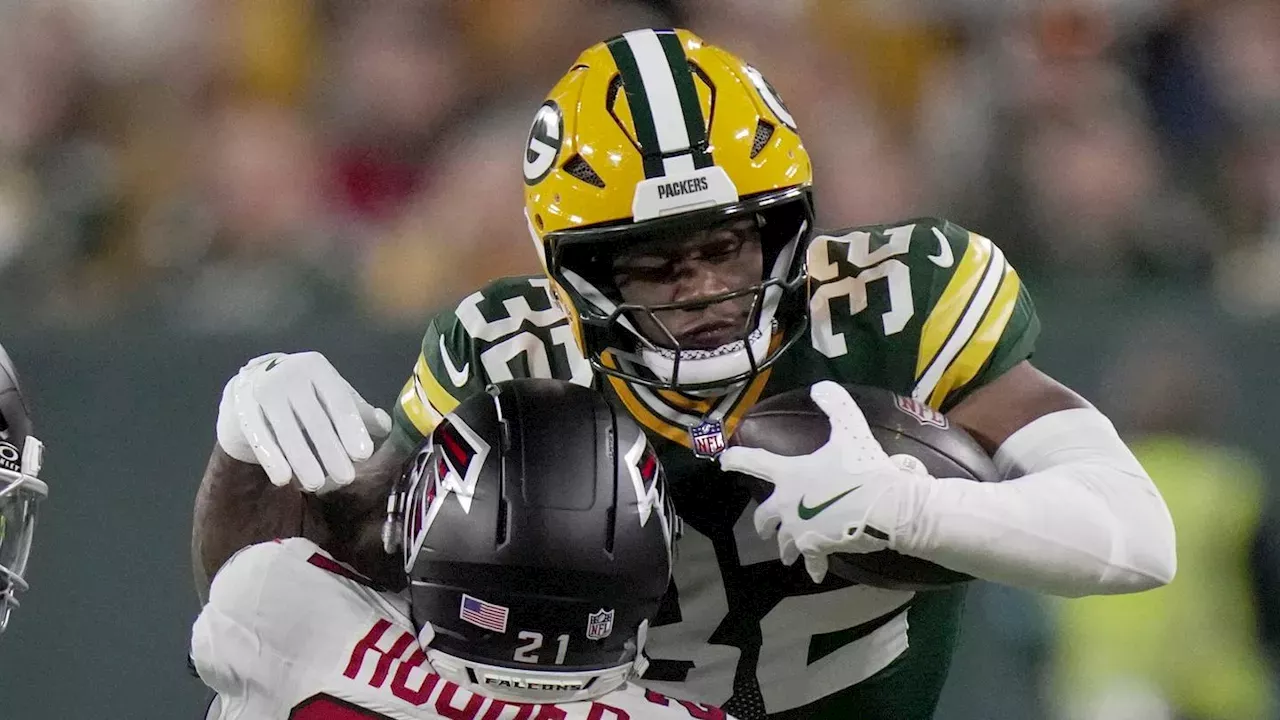
The Packers rushing attack has deteriorated into an unprecedented statistical anomaly, leaving the storied franchise searching for answers after a brutal blowout loss. If you tuned in to watch Green Bay take the field against the Atlanta Falcons on Thursday night, you witnessed an offensive system completely severed from ground production. Head coach Matt LaFleur abandoned balanced offensive football almost immediately, exposing quarterback Jordan Love to ruthless defensive pressure.
Generating a meager 17 yards on nine attempts, the performance marked the ninth-fewest rushing attempts and tenth-fewest yards by any professional squad in the past decade. Over the last 80 seasons in Titletown, the organization has carried the football fewer times only once, signaling an alarming tactical breakdown. The offensive line failed to generate interior movement, leaving rookie back MarShawn Lloyd and complementary runner Kaleb Johnson with nowhere to navigate between the tackles.
With only 146 rushing yards collected across the first three games, this roster has surpassed the 1994 squad’s previous historic franchise low of 169 yards. Fans seeking comprehensive sports breakdowns on trending sports analysis understand that modern offenses require balance to maintain tactical tempo. As LaFleur noted after the final whistle, abandoning balance completely strips away play-action deception, leaving defensive coordinators free to tee off on obvious passing downs.
Packers Rushing Attack Collapses Against Aggressive Atlanta Defense
The tactical collapse witnessed at Lambeau Field highlighted profound deficiencies across Green Bay’s offensive front. Running back MarShawn Lloyd, drafted in the third round out of USC to inject explosive physical dynamism into the backfield, managed just four carries. Fellow ballcarrier Kaleb Johnson also received four touches, while a lateral to tight end Tucker Kraft resulted in a recorded zero-yard carry and a costly fumble.
When an offensive play-caller dials up only eight genuine designed running plays over 60 minutes of professional football, disaster is inevitable. Atlanta loaded the box early, dared Green Bay to test perimeter containment, and systematically took away running lanes before handoffs could fully develop. Without a functional run game, the aerial attack became one-dimensional, forcing Jordan Love to drop back more than 50 times against relentless blitz pressure.
LaFleur conceded that the game plan quickly spiraled out of control as the scoreboard widened. When a defense knows a team cannot sustain drives via conventional line-of-scrimmage warfare, edge rushers ignore edge discipline and pin their ears back. The Falcons exploited this predictability thoroughly, holding the Green Bay backfield to an agonizing 1.9 yards per carry on Thursday night.

Evaluating Offensive Line Execution and Blocking Schemes
The foundational issue plaguing Green Bay’s run design rests squarely upon upfront execution. Miscommunications between interior guards and the center repeatedly allowed defensive linemen to shoot primary gaps before pulling linemen could establish leverage. Without consistent push, ballcarriers were forced to decelerate in the backfield, completely eliminating any secondary burst.
- Defensive tackles routinely established penetration before running backs reached the line of scrimmage.
- Perimeter blocking from wide receivers and tight ends failed to seal defensive cornerbacks on boundary tosses.
- Second-level linebackers flowed unimpeded toward cutback lanes due to missed combination blocks.
- Third-and-short conversions were entirely abandoned in favor of intermediate drop-back passes.
For an offense that historically relied on zone-stretch principles to create cutback angles, the lack of lateral quickness is baffling. Fans tracking roster shifts across celebrity sports culture recognize that elite offensive lines dictate line-of-scrimmage physical tone. Without reliable front-line dominance, Matt LaFleur’s play-calling becomes hamstrung by unfavorable down-and-distance scenarios.
Historic Lows: Tracking NFL Ground Game Futility Across Eras
Contextualizing Green Bay’s current output requires examining nearly a century of professional football data. According to official league archives curated by Pro-Football-Reference sports archives, the Packers’ three-game total of 146 yards represents the lowest mark in franchise history dating back to 1933. Prior to this season, the franchise floor over an opening three-game span belonged to the 1994 roster, which posted 169 yards.
A critical statistical shift occurred in 1947 when the National Football League determined that yardage lost to quarterback sacks would no longer detract from team rushing figures. When viewing historical metrics through this modern lens, Green Bay’s current per-game average of 48.7 rushing yards projects out to a full 17-game campaign of just 827 rushing yards. This projection places the current group below every single full-season rushing output in professional football history.
| Franchise / Season | Season Length | Total Ground Yards | Average Yards / Game |
|---|---|---|---|
| 1947 Boston Yankees | 12 Games | 973 | 81.1 |
| 1965 Washington Redskins | 14 Games | 1,037 | 74.1 |
| 1970 Boston Patriots | 14 Games | 1,040 | 74.3 |
| 2000 San Diego Chargers | 16 Games | 1,062 | 66.4 |
| Green Bay Packers (Projected) | 17 Games | 827 | 48.7 |
Excluding the strike-shortened nine-game season of 1982, no professional organization has ever sustained a ground output this depleted over a full schedule. The infamous 2000 San Diego Chargers previously held the floor for the 16-game era with 1,062 yards, averaging 66.4 yards per contest. Green Bay currently trails that historically inept standard by nearly 18 full rushing yards per game.
By The Numbers: The Historical Depth of Green Bay’s Ground Slump
To truly grasp the magnitude of this offensive stagnation, one must examine individual backfield production. Rookie ballcarrier MarShawn Lloyd currently sits atop the team leaderboard with a humble 68 rushing yards across three weeks of action. That translates to an average of 22.7 yards per contest, pacing out to an underwhelming 385 rushing yards over a full 17-game slate.
Should Lloyd remain the team’s top producer at this rate, it would mark the lowest yardage output by a franchise rushing leader since Michael Haddix gained 311 yards in 1990. Hall of Fame legend Paul Hornung accumulated 310 yards during a 12-game schedule in 1958, which translates to 439 yards in modern scheduling. Even dating back to 1926, player-coach Verne Lewellen totaled 275 yards in 13 contests, reflecting a pace higher than Green Bay’s primary weapon today.
Furthermore, individual player comparisons across the league reveal an embarrassing disparity. Falcons dynamic running back Bijan Robinson amassed more yards individually through three quarters on Thursday night than the entire Green Bay roster generated across three complete contests. Heading into the weekend, nine individual NFL running backs had surpassed the team’s collective three-game total in just two appearances.

Expert Take: The Direct Tactical Ramifications for Jordan Love
An offensive scheme that lacks a functional backfield completely cripples quarterback development and pocket protection. When analyzing film through professional analytical outlets like ESPN NFL team stats, defensive front-sevens play with aggressive disregard for run-action fakes. Cornerbacks press receivers aggressively on the outside, confident that safety help can cheat over the top without fearing draw plays or inside counters.
Jordan Love faces constant harassment because opposing defensive coordinators no longer assign defenders to balance the backside pursuit. When an opponent rushes four and drops seven into passing lanes while still dismantling the run with front-line players, the quarterback is forced into low-percentage throws into tight windows. This excessive drop-back volume drastically elevates injury risk and drives turnovers, transforming promising drives into stalled possessions.
Playoff Precedents and Tactical Hurdles for Matt LaFleur
From a macro perspective, the playoff implications of an anemic running game are definitively terminal. Since the 1970 AFL-NFL merger, 40 franchises have concluded a regular season with 1,270 rushing yards or fewer. Among that sample size of 40 teams, only three managed to finish with a winning record, and not a single squad achieved a record superior to 9-7.
More critically, no team in the extensive history of the National Football League has ever qualified for postseason competition while averaging under 73 rushing yards per contest. The current pace of 48.7 yards represents a statistical death sentence for postseason aspirations unless drastic operational shifts are implemented immediately. Championship football requires the ability to bleed clock, convert third-and-short opportunities, and physically wear down defensive fronts in cold weather.
Green Bay supporters visiting entertainment and sports media know that Lambeau Field in December demands an unapologetic power-running attack. If temperatures drop and winter conditions arrive in Wisconsin without an established ground identity, the offense will face catastrophic failures. Matt LaFleur must re-evaluate his personnel packages, simplify pre-snap pulling assignments, and commit to developing physical identity before the division race slips away completely.
People Also Ask
What happened with the Packers rushing attack against the Atlanta Falcons?
The Packers recorded only nine rushing plays for 17 total yards during their blowout loss to Atlanta. The backfield managed just eight true handoffs between MarShawn Lloyd and Kaleb Johnson, producing the franchise’s lowest single-game yardage total in a decade.
Why is the Packers ground game pacing toward an all-time NFL record low?
Through three games, Green Bay has accumulated only 146 rushing yards, averaging 48.7 yards per contest. Over a 17-game season, this pace projects to 827 yards, which would be lower than the worst full-season totals recorded by the 1947 Boston Yankees and 2000 San Diego Chargers.
Who currently leads the Green Bay backfield in rushing yards?
Rookie third-round draft pick MarShawn Lloyd leads the team with just 68 rushing yards across three games. His 22.7 yards per game average puts him on pace for just 385 yards over the full 17-game regular season schedule.
Can an NFL team make the playoffs with an underperforming run offense?
Historical league data shows that no NFL team has ever reached the postseason while averaging under 73 rushing yards per game. Green Bay must substantially increase its ground production to maintain realistic hopes of qualifying for the playoffs.
Restoring Physical Identity in Titletown
Rebuilding the Packers rushing attack is no longer just a secondary tactical preference; it is an urgent structural emergency for Matt LaFleur and his offensive coaching staff. Continuing to ask Jordan Love to shoulder 50 drop-backs per game while ignoring the ground game invites defensive chaos and offensive exhaustion. Physical football begins at the line of scrimmage, and until Green Bay recommits to winning primary leverage battles, their offensive ceiling will remain severely compromised.
With critical division matchups looming on the schedule, the team must identify foundational run designs that fit their personnel. Whether that involves utilizing two-tight-end heavy sets, incorporating quick downhill gap schemes, or establishing an identity behind rookie runners, adjustments must be executed immediately. The path forward demands accountability, schematic adjustments, and an uncompromising commitment to reviving one of football’s proudest ground traditions.
More Like This
For more updates, check out our latest entertainment and sports news.