Key Takeaways
| Game-Winning Play | Wade Meckler hit a walk-off single in the 10th inning to secure a 5-4 victory. |
| Ureña’s Dominance | Walbert Ureña pitched 7 scoreless innings, striking out 9 batters with 0 walks. |
| The Blown Save | Ben Joyce blew a two-run lead in the 9th after giving up a home run to Walker Jenkins. |
| Trout’s Clutch Challenge | Mike Trout successfully challenged an ABS strike three call, extending his at-bat to hit the tying single. |
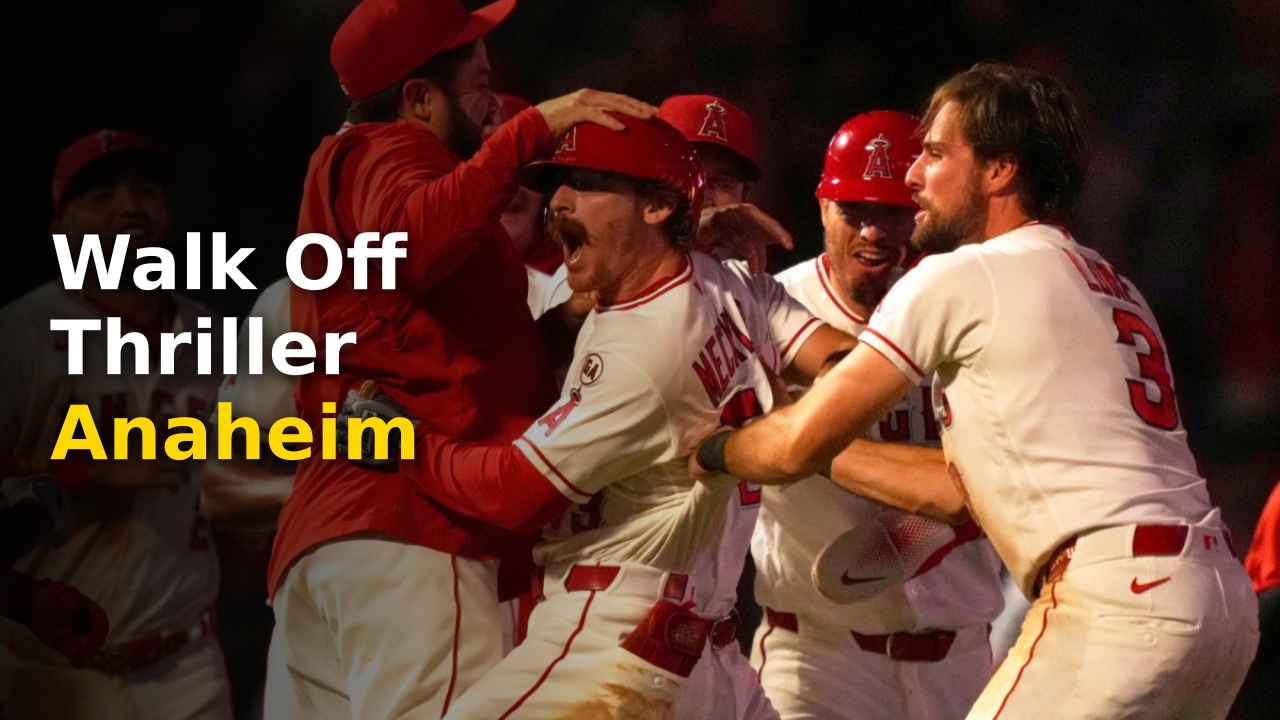
The Angels walk off Twins in a stunning 10th-inning thriller, securing a 5-4 victory that felt more like a grand redemption than just another regular-season mark on Thursday night in Anaheim. You know the exact feeling of watching a masterful pitching performance slowly unravel under the weight of late-inning bullpen volatility, but this time, the Angels flipped the script. In a season defined by heart-wrenching extra-inning defeats, the home crowd at Angel Stadium finally witnessed their club fight back, salvage a masterclass from their rookie sensation, and demonstrate the kind of late-game resilience that has been sorely lacking throughout this 2026 campaign.
For seven brilliant innings, right-hander Walbert Ureña put on an absolute clinic, silencing a potent Minnesota lineup with a combination of high-octane fastballs and devastating off-speed pitches. Yet, as has been the case so many times this year, the bullpen surrendered the lead in spectacular fashion during the late frames. High-velocity closer Ben Joyce found himself on the wrong end of a dramatic game-tying home run by one of baseball’s elite prospects, throwing the stadium into a collective state of déjà vu. Instead of folding under the pressure, however, Anaheim’s offense rallied in the tenth, utilizing smart base running, critical plate discipline, and a historic walk-off hit from rookie outfielder Wade Meckler to close the book on an unforgettable night.
This win improves the Angels to a 59-64 record, representing a crucial moral victory for a squad looking to establish an identity for the upcoming year. Despite their struggles, games like this offer a tantalizing preview of what this roster can accomplish when their young core executes under intense pressure. From the advanced analytics of Ureña’s pitching profile to the high-stakes chess match of the MLB Automated Ball-Strike (ABS) challenge system, let us dive deep into how this remarkable matchup unfolded in Southern California.
Anaheim Drama: Angels Walk Off Twins in Extra Innings
The tenth inning began with tension thick enough to cut with a knife as left-hander Blake Weiman took the mound for Anaheim. Navigating the automatic runner rule is always a tightrope walk, and Weiman quickly found himself in hot water after allowing two hits to the Twins. Minnesota successfully advanced and scored their automatic runner to take a brief 4-3 lead, threatening to blow the game wide open with the bases loaded. However, Weiman dug deep, executing a sequence of precise breaking balls to strand the runners and limit the damage to a single run, setting the stage for a dramatic bottom half of the frame.
As the Angels came up to bat, manager Kurt Suzuki emphasized tactical execution. With José Siri starting at second base as the automatic runner, Vaughn Grissom executed his job perfectly, hitting a deep fly ball to right field that allowed Siri to tag up and advance to third. This basic, fundamental baseball set the wheels in motion. Twins reliever Kody Funderburk then lost his command slightly, walking the dangerous Zach Neto. This put runners on the corners for the legendary Mike Trout, whose presence in the batter’s box instantly heightened the drama inside the stadium.

Trout’s at-bat was a masterclass in modern baseball strategy. With two strikes, Trout appeared to have struck out on a borderline pitch, but he immediately signaled for an ABS challenge. The tracking system showed the pitch had indeed missed the zone, overturning the strikeout and extending his life at the plate. On the very next pitch, Trout lined a sharp single into center field, easily scoring Siri to tie the game. Neto showcased elite baserunning instincts on the play, aggressively hauling from first to third on the hit, which put the winning run just ninety feet away.
This aggressive baserunning completely altered the defensive alignment, forcing the Twins to bring their infield in. Rookie outfielder Wade Meckler stepped up to the plate, fully aware of his season-long struggles against left-handed pitching. Rather than trying to do too much, Meckler focused on making early contact to avoid a two-strike count against Funderburk’s sweeping slider. He got exactly what he wanted on the very first pitch, ripping a hard grounder through the drawn-in right side of the infield. The ball found grass, Neto crossed the plate, and Meckler was instantly swarmed by his teammates to celebrate his first career major league walk-off hit.
Expert Take: The Tactical Evolution of Wade Meckler
According to advanced scouting departments, Meckler’s walk-off hit represents a massive development milestone for the rookie. Prior to this matchup, opponents heavily exploited his susceptibility to left-handed breaking balls, throwing them in nearly 38% of two-strike counts. By attacking the very first pitch of the at-bat, Meckler completely bypassed the pitcher’s leverage, showcasing the high-IQ adjustments that separate true big-league talent from temporary call-ups. This specific tactical adjustment is exactly what coaching staffs look for when evaluating a young player’s long-term viability in late-game situations.
Walbert Ureña Dominates on the Mound in Anaheim
Before the late-inning bullpen theatrics, the story of the night was the absolute dominance of starting pitcher Walbert Ureña. The young right-hander delivered what was arguably his finest performance in an Angels uniform, throwing seven scoreless innings while completely baffling the Minnesota hitters. Ureña’s stat line was pristine: nine strikeouts, zero walks, and only a handful of scattered hits. His ability to command his triple-digit fastball while maintaining a devastating changeup made him virtually unhittable from the very first pitch of the ballgame.
Ureña touched 100 mph on the radar gun nine times throughout the night, with his overall velocity sitting slightly above his yearly averages. But what truly set this start apart was his flawless command. Control has occasionally been an obstacle for the young hurler, but against the Twins, he started 19 of the 25 batters he faced with a first-pitch strike. He generated a stunning, season-high 22 whiffs, repeatedly forcing empty swings on pitches both inside and outside the strike zone. His catcher and manager, Kurt Suzuki, could hardly contain his excitement when discussing the performance afterward.
Currently sporting a 2.74 ERA, Ureña has solidified his position as the top starting pitcher in the Angels’ rotation this season, even outpacing established arms like Reid Detmers. There were concerns within the organization that the heavy workload of his first full Major League season might cause him to hit a wall in September. However, his performance on Thursday night put those worries to rest. Ureña’s meticulous physical preparation, arm care routine, and weight room dedication have allowed him to maintain peak physical condition deep into the grueling regular season schedule.
The only blemish on Ureña’s night was the lack of run support. The Angels’ offense jumped out to an early lead in the first inning, starting with a walk by Mike Trout and an infield hit by Meckler. Moisés Ballesteros drove in the first run with a blistering 109 mph line drive, followed by an RBI single from Denzer Guzman and another run-scoring hit by Oswald Peraza. After that three-run outburst, however, the bats went completely silent, leaving Ureña with a razor-thin margin for error that would eventually test the limits of the Anaheim bullpen.
The Late-Inning Bullpen Collapse and Ben Joyce’s Struggle
Holding a 3-1 lead entering the ninth inning, the Angels turned to their flamethrower, Ben Joyce, to shut the door. Joyce, who possesses one of the most electric arms in the sport, has experienced a turbulent season as he adjusts to the high-pressure closer role. He started the inning in dominant fashion, striking out the first two Minnesota batters with ease, using a combination of his signature high-velocity fastball and sharp splitters. With two outs, the Angels were just one strike away from securing a comfortable victory for Ureña.
However, the game turned on a dime. Twins catcher Victor Caratini managed to fight off an incredibly fast 103 mph heater, squeezing a single into shallow outfield. That brought up the exceptionally talented rookie Walker Jenkins, regarded as one of the top MLB prospects adjusting to major league pitching. Jenkins did not look intimidated by Joyce’s legendary velocity. He anticipated a fastball and got one, timing a 101 mph heater perfectly and launching a high, deep drive toward center field. Siri made a sensational, leaping effort at the wall, but the ball just cleared his glove for a game-tying two-run home run.
The blown save was Joyce’s third in his last nine opportunities, raising questions about his pitch selection when ahead in the count. While throwing 103 mph is a rare gift, major league hitters can catch up to any fastball if they anticipate the location. Despite the setback, Suzuki remained incredibly supportive of his young closer, pointing out that Joyce did not issue any walks during the appearance. In past struggles, poor control had been Joyce’s undoing; on this night, he threw strikes and simply got beat by a great swing from an elite young hitter.
This resilience from the coaching staff is crucial for Joyce’s development. Navigating the mental hurdles of being a big-league closer is often more difficult than refining physical mechanics. By maintaining confidence in Joyce’s explosive toolkit, the Angels are playing the long game, betting that these late-season hardships will eventually mold him into one of the premier late-inning weapons in the American League.
By The Numbers: Pitching Performance Comparison
To truly understand the contrast in styles and outcomes from Thursday night’s pitching staff, let us look at the key metrics from the three main hurlers who took the mound for the Angels:
| Pitcher | Innings Pitched | Strikeouts / Walks | Max Velocity | Earned Runs Allowed | Total Whiffs |
|---|---|---|---|---|---|
| Walbert Ureña | 7.0 | 9 / 0 | 100.4 mph | 0 | 22 |
| Ben Joyce | 1.0 | 2 / 0 | 103.1 mph | 2 | 4 |
| Blake Weiman | 1.0 | 1 / 0 | 94.2 mph | 1 (unearned) | 2 |
This table highlights the stark contrast between Ureña’s sustained dominance and the brief, high-leverage struggles of the relief staff. While Joyce threw significantly harder, his reliance on the fastball in a two-strike scenario proved costly against an opponent guessing red. Weiman, despite possessing lower raw velocity, utilized movement and placement to minimize damage in the extra frame, earning praise for keeping the game within reach.
Historically, the Angels have struggled significantly in extra-inning games throughout 2026, recording a dismal 5-14 record in games going past the 9th inning. This victory marks a crucial step in reversing that trend, showing that the team can execute late-game strategies even when their initial plans fail. Rebuilding a franchise requires mastering these high-pressure scenarios, and the lessons learned during this game will undoubtedly pay dividends for the young roster moving forward.
Analyzing the Game’s Long-Term Implications
This dramatic victory does more than just add a win to the ledger; it provides a blueprint for how the Angels’ rebuild can succeed. Having an ace-caliber starter like Walbert Ureña gives the team a massive advantage every five days. When you pair that starting pitching with the offensive capabilities of young core players alongside a healthy, veteran presence like Mike Trout, the pieces of a highly competitive team begin to fall into place. Trout’s continued guidance remains invaluable, as demonstrated by his legendary performance and his clutch hitting under pressure, which you can read about in this breakdown of Mike Trout’s legendary career milestones.
Furthermore, the development of the Angels’ younger position players, such as Zach Neto and Wade Meckler, is progressing rapidly. Neto’s intelligent, aggressive baserunning to take third base on Trout’s single was the quiet catalyst for the walk-off victory. It put immense pressure on the Twins’ defense, forcing them to bring the infield in and giving Meckler an easier path to driving in the winning run. These small, winning details are often ignored in box scores but are highly valued by baseball insiders and analytics departments alike.
As the front office looks ahead to the off-season, identifying reliable bullpen depth will undoubtedly be a top priority. The physical talent in the relief corps is undeniable, but consistency is the hallmark of a playoff contender. Combining a dominant starting rotation with a lock-down bullpen is the ultimate goal, and this game served as a stark reminder of both the incredible potential and the current limitations of the Angels’ roster. You can explore more about how the front office plans to address these needs in our analysis of Angels franchise rebuilding milestones as they prepare for a competitive future.
People Also Ask
What happened with the Angels walk off Twins game today?
The Angels defeated the Twins 5-4 in a thrilling 10th-inning comeback. Rookie Wade Meckler hit the game-winning walk-off single to drive in Zach Neto, salvaging the game after the bullpen blew a late lead.
Why is Walbert Ureña trending right now?
Walbert Ureña is trending because of his absolute dominance against the Twins, throwing seven scoreless innings with nine strikeouts, zero walks, and a season-high 22 whiffs. He currently holds the best ERA among all Angels starting pitchers at 2.74.
How many blown saves does Ben Joyce have this season?
Ben Joyce suffered his third blown save in his last nine relief outings during Thursday’s game. He surrendered a game-tying, two-out, two-run home run to Twins top prospect Walker Jenkins in the top of the ninth inning.
How does this victory affect the Angels’ season standing?
The victory brings the Angels to a 59-64 record. While they remain out of serious playoff contention for 2026, the win boosts team morale and provides crucial development points for their young players in high-pressure situations.
Building Momentum for the Future in Anaheim
Ultimately, when the Angels walk off Twins, it represents more than just a single checkmark in the win column. It acts as a powerful proof of concept for a franchise navigating a demanding rebuilding phase. Seeing young pieces like Walbert Ureña, Zach Neto, and Wade Meckler play central roles in a high-stakes, extra-inning victory validates the organization’s player development strategies and gives fans a genuine reason to be optimistic about the future of baseball in Anaheim.
As the final weeks of the 2026 season wind down, the focus remains squarely on growth, refinement, and building a winning culture. If the Angels can continue to pair elite starting pitching with clutch, situational offensive execution, they will soon transform from a gritty, rebuilding squad into a legitimate threat in the American League. For one night, at least, the bullpen’s mistakes were forgiven, the rookie’s brilliance was rewarded, and Angel Stadium celebrated a hard-fought, well-deserved walk-off victory.
More Like This
For more updates, check out our latest entertainment and sports news.