Key Takeaways
| Bypassed Protocol | Aaron Judge rejected a minor league rehab assignment entirely before returning to the Bronx in September 2026. |
| Slumping Return | The captain struggled in his first week back, hitting just .176 with a mere .398 OPS and nine strikeouts in five games. |
| 2023 Precedent | In 2023, Judge also skipped rehab after a long injury lay-off, recovering his elite form within ten games to post a 163 wRC+. |
| Elite Competition | Facing top-tier arms like Christian Scott and Nolan McLean in the Subway Series was deemed more productive than minor league games. |
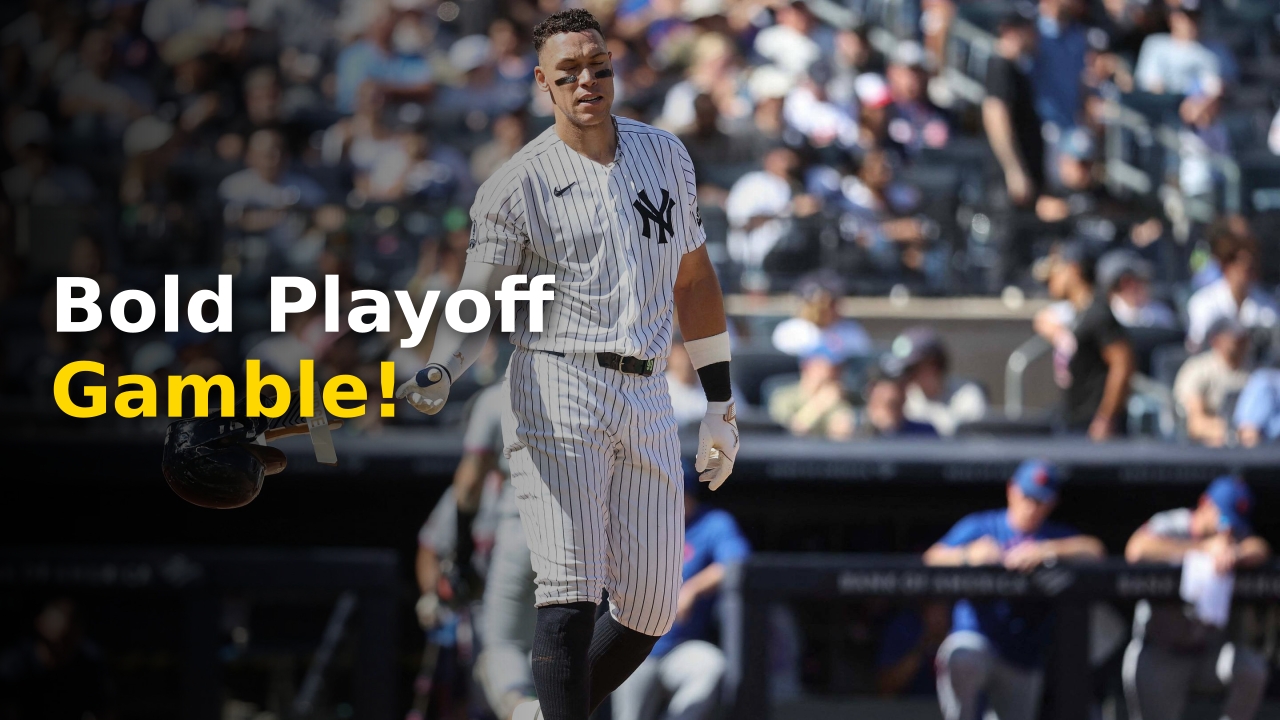
Evaluating the Aaron Judge rehab assignment decision requires a deep understanding of how elite Major League hitters calibrate their timing after returning from the injured list. You probably winced when you saw the New York Yankees captain walk back to the dugout after striking out three times in a critical Subway Series matchup. However, his decision to skip a minor league rehab assignment was a highly calculated move designed to prepare him for the postseason. This bold strategy has ignited a massive debate across the sports world as the Yankees fight for a division title.
The superstar outfielder bypassed a traditional minor league stint entirely, choosing instead to find his swing against Major League arms. Many fans and analysts questioned this decision, especially after his quiet performance during the team’s recent homestand. Yet, the logic behind his choice reveals a veteran player who understands the unique demands of his own body. Let us dive deep into the mechanics, history, and strategic outlook of this controversial decision.
Analyzing the Aaron Judge Rehab Assignment Decision
To understand why the Aaron Judge rehab assignment did not happen, one must look at the calendar and the quality of competition. By mid-September, Minor League Baseball seasons are rapidly winding down, leaving very few active affiliates to host rehab games. The Triple-A Scranton/Wilkes-Barre RailRiders have limited remaining contests, which would restrict Judge to a handful of sporadic at-bats. Instead of wasting time on long bus rides and facing minor league journeymen, the Yankees captain preferred to take his lumps at Yankee Stadium.
The decision is not without precedent for the 34-year-old outfielder. In 2023, when he missed nearly two months with a severe toe sprain, he similarly bypassed any minor league tune-ups. While he initially struggled in his first nine games back, his power stroke returned in spectacular fashion shortly thereafter. His preference has always been to calibrate his timing against elite pitching, rather than artificial batting practice in the minors.
Furthermore, the pressure on the Bronx Bombers is intense as they attempt to catch the Tampa Bay Rays. Bypassing a rehab assignment allowed Judge to remain in the major league dugout, offering leadership and a critical presence. His teammates benefit from his active participation, even when his bat is temporarily cold. The psychological impact of having the captain in the lineup cannot be understated during a high-pressure pennant race.
Ultimately, Judge insists he knows his body better than anyone else in the organization. He has established enough equity with the front office to call his own shots regarding injury rehabilitation. If he believes that a minor league assignment is a waste of valuable competitive energy, the team must trust his veteran instincts. Facing high-spin Major League pitches immediately accelerates his visual recognition, even if the early results are painful.
The Strategic Advantage of Live Major League Pitching
- Facing high-velocity fastballs and sharp breaking pitches in the majors forces immediate muscle memory calibration.
- Minor league pitchers often lack the command to consistently throw strikes, leading to unproductive plate appearances for rehabbers.
- The adrenaline of playing in high-stakes September games accelerates physical recovery and mental focus compared to empty minor league parks.
- Facing rookies like Nolan McLean and Christian Scott provides immediate data on the league’s top young arms.
- The Yankees coaching staff can monitor his swing mechanics in real-time using advanced Major League tracking technology.
Aaron Judge Return Statistics
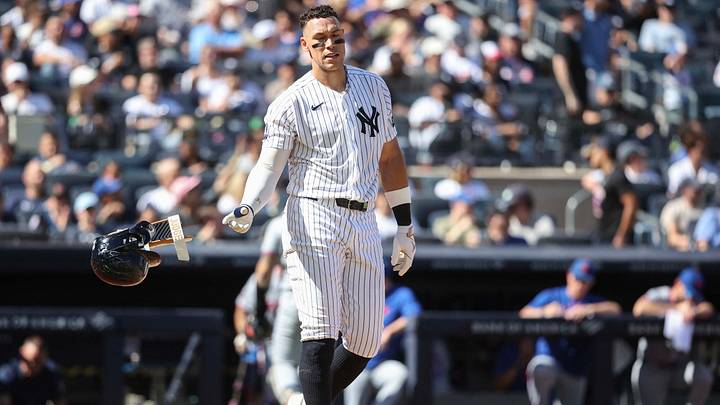
The early numbers following his return from the injured list are execution-style metrics that highlight his current physical adjustment phase. Over his first five games since activation, the captain has looked out of sync at the plate. He managed just three hits—all singles—and walked only once, leading to an alarming surge in strikeouts. This performance contributed to a painful .176 batting average and an icy .398 OPS over his first 17 at-bats.
On Sunday against the Mets, Christian Scott struck him out in all three of his plate appearances. While these numbers look catastrophic on paper, the Yankees hierarchy remains remarkably unfazed by the early slump. They view these games as a necessary training ground for the postseason, where he will face similarly elite pitching every single night.
Let us look at the precise statistical breakdown of his first five games back on the active roster. This data highlights both his plate discipline challenges and the lack of extra-base power since his return, demonstrating the steep climb ahead.
Comparing the 2023 Toe Injury and the 2026 Campaign
To project how this slump will resolve, we must examine the historical parallels from his remarkable career. In 2023, Judge missed 42 games after tearing a ligament in his right great toe at Dodger Stadium. He returned on July 28 of that year without playing a single minor league rehab game first, trusting his own internal clock.
His initial performance in 2023 mirrored his current struggles, as he hit just .183 over his first nine games back. However, once his timing locked in, he posted an astonishing 163 wRC+ with 18 home runs over his final 245 plate appearances. This historical precedent suggests that patience is a mandatory virtue when evaluating his current cold streak.
The physical demands of his massive 6-foot-7 frame require a precise mechanical synergy that only live repetitions can restore. His swing relies heavily on a strong lower-half foundation, which is always the last piece to return after an injury. Bypassing the minor leagues simply condenses this adjustment period into a shorter, albeit more visible, window.
According to MLB’s official updates on the Yankees captain, his refusal to rehab down in Scranton is a calculated bet on his own athletic intelligence. He has openly stated that minor league at-bats are essentially a waste of time for a hitter of his caliber. The physical and mental demands of the big leagues are the only true cure for his mechanical rust.
Expert Take: By The Numbers
Statcast data shows that Judge’s bat speed has remained elite, hovering around 77 miles per hour even during his recent strikeouts. His main challenge lies in his swing decision timing, particularly on sweeping sliders and high fastballs. In the minor leagues, he would rarely see these specific pitch sequences executed with major league precision. By struggling against the likes of Christian Scott now, he is building the necessary visual recognition to dominate in October.
Postseason Implications for the New York Yankees
The Yankees’ championship aspirations in 2026 hinge entirely on having a fully healthy and productive captain. If Judge can find his rhythm before the wild card or divisional round begins, the entire lineup transforms. His presence protects other key bats in the order and forces opposing managers to alter their pitching strategies.
With the Tampa Bay Rays currently holding a slim lead in the American League East, every game carries immense weight. The decision to let Judge struggle at the major league level is a calculated gamble on long-term postseason success. The front office is prioritizing his peak performance in October over short-term regular-season statistical elegance.
For more updates on how the team is managing its roster, check out our exclusive Yankees coverage. If the captain can repeat his 2023 resurgence, the rest of the American League will face a formidable obstacle.
Furthermore, the emergence of young talent like Nolan McLean and Zac Thornton in the Mets organization shows how fierce the local rivalry remains. Facing these top-tier prospects in the Subway Series served as a baptism by fire for the returning captain. While the immediate results were disappointing, the long-term developmental benefit is clear.
You can read more about other top performers in our baseball superstars database. The Yankees are betting that this tough love approach will yield massive dividends when the bright lights of the postseason shine.

Examining the Pitchers Who Defeated the Captain
During the high-profile Subway Series, the Yankees captain went head-to-head with some of the National League’s brightest young arms. Christian Scott, returning from major elbow surgery, showcased immaculate control and a devastating splitter. Scott’s ability to locate his fastball at the top of the zone completely neutralized Judge’s power zone.
Nolan McLean, a projected National League Rookie of the Year finalist, brought an elite high-spin slider that kept Judge guessing. McLean’s unorthodox delivery and exceptional breaking stuff are exactly what Judge needs to see to recalibrate his eyes. Bypassing the minor leagues meant facing these dynamic arms instead of Triple-A pitchers fighting for survival.
Finally, Zac Thornton utilized a deceptive changeup that exploited Judge’s early-season tendency to commit his hands too early. These matchups, while frustrating for Yankees fans, provided invaluable data for the hitting coaches. The technical staff can now dissect high-resolution cameras to adjust Judge’s footwork and hand path.
If you want to keep track of other elite players and their mechanical adjustments, visit our MLB player profiles hub. The science of the modern baseball swing requires continuous adaptation, especially after a long layoff.
Biomechanical Analysis of the Captain’s Swing
The swing of Aaron Judge is a marvel of modern sports science. At 6-foot-7 and 282 pounds, his kinetic chain must transfer immense force from the ground up through his torso and hands. Any disruption in his lower body, particularly his toes or ankles, alters his launch positioning.
During his 2023 toe injury, he struggled to transfer weight onto his back foot during the load phase. This forced him to rely almost entirely on his upper body, leading to a temporary loss of bat speed and contact quality. The 2026 injury, while different, presented similar challenges in his lower-half mechanics.
By facing major league pitchers immediately, Judge can test the stability of his foundation under maximum athletic stress. He cannot afford to develop bad habits by cheating on slower minor league fastballs. The faster reaction times required in the majors force his lower body to adapt instantly.
This high-intensity calibration is painful to watch in real-time, but it remains the fastest way to restore elite mechanics. If he can maintain his posture and stay back on breaking balls, the power will return overnight. The Yankees coaching staff is closely monitoring his launch angle and exit velocity to ensure he is not compensating for physical discomfort.
According to ESPN’s comprehensive New York Yankees coverage, the medical staff fully supported Judge’s decision to bypass Scranton. They agreed that the physical wear-and-tear of minor league travel outweighed any potential benefits of easy at-bats.
People Also Ask
Why did Aaron Judge reject a minor league rehab assignment in 2026?
Aaron Judge rejected the rehab assignment because Minor League seasons were ending, leaving very few games available. He also preferred facing elite Major League arms rather than minor league pitchers to accelerate his timing and postseason preparation.
How did Aaron Judge perform in his first five games back?
Judge struggled significantly, hitting just .176 (3-for-17) with a .398 OPS, zero home runs, and nine strikeouts. He was struck out three times by Mets pitcher Christian Scott on September 13, 2026.
Did Aaron Judge skip a rehab assignment in 2023 as well?
Yes, Judge skipped a minor league rehab assignment in 2023 after returning from a severe toe injury. Despite a slow start, he went on to hit 17 home runs in his final 48 games of that season.
Who were the Mets pitchers that Aaron Judge faced upon his return?
During the Subway Series, Judge faced top Mets pitching prospects Christian Scott, Nolan McLean, and Zac Thornton. Scott struck him out three times in their matchup on September 13.
The Verdict on Bypassing Scranton
In the final analysis, the decision to reject the Aaron Judge rehab assignment was both logical and necessary. While his immediate struggles are painful to watch, they represent a vital phase of his physical recovery. Facing elite major league pitching is the only way to prepare for the intensity of postseason baseball.
The historical precedent from 2023 suggests that fans should remain patient during this transition period. The captain has consistently proven that he knows his body and his swing better than the critics. As his timing returns, the Yankees will become an incredibly dangerous threat in the postseason.
Ultimately, the Yankees are playing for a championship, not regular-season statistics. Bypassing the minor leagues was a bold move, but it is the fastest way to unlock his MVP-caliber potential. When the bright lights of October shine, this controversial decision may be remembered as the turning point of the season.
More Like This
For more updates, check out our latest entertainment and sports news.