Key Takeaways
| Total Accountability: Cignetti enforces a zero-tolerance policy for slackers regardless of seniority or roster status. |
| Quarterback Standards: Star QB Kurtis Rourke was publicly criticized for his weight to reinforce the team’s high-intensity standards. |
| Uniform Discipline: Small details like socks and equipment are policed to build mental focus and collective mindset. |
| Data-Driven Welfare: Practices are kept under 90 minutes to maximize game-like intensity while reducing physical wear on players. |
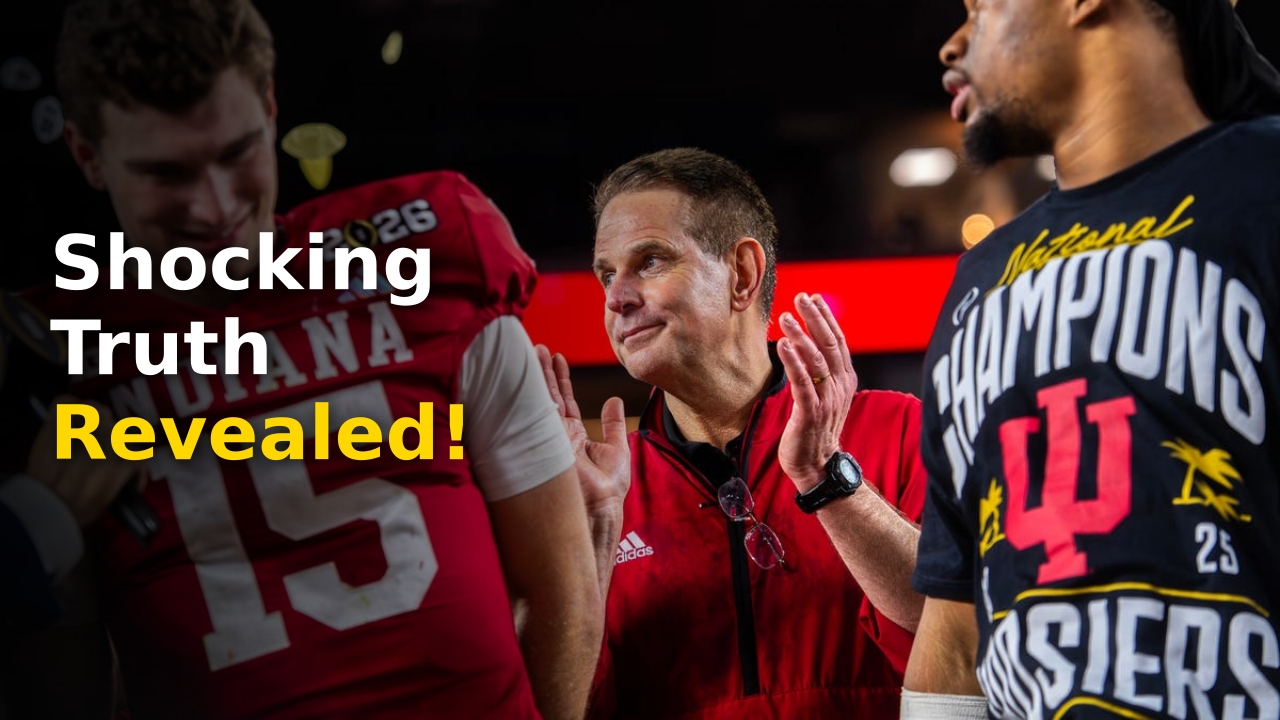
Curt Cignetti championship culture is not merely a coaching philosophy; it is an uncompromising, relentless pursuit of perfection that has effectively turned the Indiana Hoosiers into a formidable Big Ten contender. If you think your favorite team has high standards, you haven’t seen the level of scrutiny applied behind the curtain in Bloomington, where even the star quarterback is not safe from public correction. Longtime beat writers Mike Niziolek and Zach Osterman pull back the veil in their upcoming book, Unthinkable to Unstoppable, detailing exactly how the veteran head coach has successfully overhauled a culture that was once synonymous with mediocrity.
You might wonder how a coach can demand such total submission from modern athletes who are used to being pampered. The secret, as revealed in the text, lies in Cignetti’s radical transparency and his refusal to make exceptions for high-profile talent. By treating every player from the freshman walk-on to the starting signal-caller with the same rigid expectation, he fosters an environment where excellence is the only acceptable outcome. This is a story about the intersection of psychological warfare, athletic performance, and the simple belief that how you do one thing is how you do everything.
Understanding the Curt Cignetti Championship Culture
The foundation of the Curt Cignetti championship culture is built on the belief that talent is irrelevant without the discipline to sustain it. When Cignetti arrived at Indiana, he found a program that lacked the structural rigor of a champion. He immediately began disrupting the status quo, utilizing unannounced visits to the weight room to keep players on edge. These drop-ins were not intended to build rapport in the traditional sense; they were designed to test whether his players would crumble under pressure or rise to the challenge.
Tight end Zach Horton describes these early months as a jarring transition, noting that players often felt like they were being hunted. Cignetti’s methods—often called “hammering” the players—served as a filter. Those who could not handle the intensity were simply weeded out, leaving behind a group that was mentally hardened. This process mirrors the legendary organizational structures seen at powerhouses like Alabama or Ohio State, where the program is always bigger than the individual.
Perhaps the most public display of this discipline occurred when Cignetti addressed quarterback Kurtis Rourke. After Rourke arrived from Ohio carrying extra weight, Cignetti did not pull him aside for a private chat. Instead, he made his point clear in front of the entire team: “You can’t play this offense being a fat quarterback.” While it might seem harsh, Rourke himself later admitted that the public critique set a vital precedent. If the team leader can take criticism, then every other player on the roster is expected to do the same without complaint.

This, in many ways, is the essence of the Cignetti way. It is not about being liked; it is about building a cohesive machine where every cog performs its specific function at peak efficiency. Players who buy into this reality find themselves part of a group that moves with purpose, whether it is during a 90-minute, high-intensity practice or in the heat of a Big Ten battle. The transformation is as much internal as it is physical.
The Power of Tiny Details
Cignetti’s obsession extends to the smallest details, such as the specific color of socks players wear. While some might dismiss these as unnecessary power trips, former James Madison players like Mikail Kamara explain that these rules are essential. When a player is forced to change their socks for a practice, they are forced to shift their focus from their personal “swag” to the collective task at hand. These small, daily discipline drills teach players that they are part of a larger entity where the team’s identity takes precedence over their own.
By limiting uniform options and enforcing strict grooming and equipment standards, Cignetti ensures that Indiana football looks and plays like a disciplined unit. This uniformity serves as a visual metaphor for the team’s unity. When players step onto the field, they are dressed as one, and they are expected to fly around with equal intensity. This is a stark departure from programs that emphasize flashy branding, proving that the most successful coaches understand that discipline is the highest form of respect for the game.
Performance Data and Training Metrics
Cignetti balances his iron-fisted discipline with a modern, analytical approach to player welfare. Unlike coaches who believe in endless practice hours to show effort, Cignetti limits training sessions to under 90 minutes. This is a calculated strategy designed to keep players fresh and mentally sharp. The following table provides a snapshot of how Cignetti’s methods differ from traditional coaching models.
| Strategy | Old School Approach | The Cignetti Standard |
|---|---|---|
| Practice Duration | 120+ minutes | Under 90 minutes |
| Intensity | Variable | Game-speed at all times |
| Accountability | Peer-based | Publicly enforced by staff |
| Uniformity | Player expression permitted | Total adherence to protocol |
As indicated by this data, Cignetti’s program is built on efficiency. By keeping practices short, he minimizes the risk of injury and ensures that players are always engaged. This, of course, requires a total mental buy-in, as there is zero time for complacency. The players know that every rep counts, which forces them to treat every single drill with the seriousness of a game-winning play.

Background and Coaching Philosophy
Cignetti’s success at Indiana is not an overnight fluke. With over four decades of coaching experience, he has cultivated a process that is battle-tested. He has taken the best lessons from various programs and refined them into a singular, cohesive system. His stint at James Madison University provided the proving ground for these tactics, where he famously turned the program into a consistent winner by demanding the same level of discipline he now expects in Bloomington.
There is a unique expert angle to consider here: the psychology of the transfer portal. In an era where players frequently move between schools, Cignetti’s “buy-in” method is a filter. He does not care about your past accolades or the number of stars you had as a recruit. When he confronted defensive tackle CJ West, he made it explicitly clear: “This ain’t Kent State anymore.” This raw honesty is his calling card. It forces players to either accept the new, higher standard or find somewhere else to play.
By removing the “weeds” from the garden, as West so poignantly puts it, Cignetti creates an environment where only those dedicated to the goal remain. This is the definition of a championship culture. It is not something you buy; it is something you forge through constant, uncomfortable, and necessary friction. You can find more in-depth sports analysis on our main site, as we continue to track how these historic turnarounds redefine college football in the modern era.
People Also Ask
What happened with the Indiana football culture under Curt Cignetti?
Curt Cignetti implemented a rigid, high-accountability system that emphasizes discipline, uniform standards, and high-intensity, short-duration practices. This approach replaced previous, more relaxed methods, turning Indiana into a highly competitive Big Ten program.
Why is Curt Cignetti trending in college football news?
Cignetti is trending due to his dramatic turnaround of the Indiana football team and his uncompromising coaching style, which includes publicly holding star players accountable. His methods are the focus of a new book, ‘Unthinkable to Unstoppable’.
How did Cignetti handle star quarterback Kurtis Rourke?
Cignetti publicly challenged Rourke regarding his weight, stating that the team could not play with a ‘fat quarterback.’ Rourke noted that he understood the motivation behind the critique and used it to lead by example.
What does the book ‘Unthinkable to Unstoppable’ reveal?
The book provides an insider look at how Cignetti transformed Indiana football, detailing his specific coaching philosophies, the implementation of his culture-building tactics, and personal anecdotes from players.
Building the Future
As we look forward to the remainder of the 2026 season, the impact of these changes is clear. The Hoosiers are playing with a cohesion that was missing in previous years, driven by a staff that refuses to compromise on the “little things.” You can read more about the evolving landscape of college football recruiting and its impact on culture on our blog. Ultimately, Cignetti has proven that a championship culture is not about the facility, the uniform, or the talent level, but about the relentless, daily pursuit of a higher standard.
By demanding absolute accountability and stripping away the entitlement that often permeates college athletics, Curt Cignetti has built a foundation that will likely serve Indiana for years to come. Whether or not you agree with his “mean guy” persona, the results on the field are undeniable. The Curt Cignetti championship culture is here to stay, and it has set a new benchmark for what it means to be a winner in the Big Ten.
More Like This
For more updates, check out our latest entertainment and sports news.