Key Takeaways
| The Expanse Season 1 adapts a noir-thriller style missing from the first book. |
| Political heavyweights Avasarala and Errinwright were not in the Leviathan Wakes novel. |
| The book relies on body horror elements, whereas the show focuses on sci-fi aesthetics. |
| Showrunners opted for a political thriller expansion to build long-term tension. |
You might be surprised to learn that The Expanse Season 1 genre shift drastically alters the tone of James S. A. Corey’s original source material, Leviathan Wakes. While many adaptations struggle to capture the spirit of their books, this series did something arguably more daring: it rebuilt the genre of its first season to facilitate a more complex political narrative. By introducing high-stakes diplomacy earlier than in the text, the show transitioned from a space-mystery into a grand-scale political thriller.
If you walked into the series expecting a direct page-to-screen translation, you likely noticed a discrepancy between the gritty, earth-bound politics of the television show and the more contained, investigation-heavy pacing of the inaugural novel. Understanding this The Expanse Season 1 genre shift requires looking at how showrunners restructured the plot to include characters that were otherwise absent from the initial literary entry. This decision ultimately paved the way for the series to become one of the most celebrated works of modern science fiction, as noted in IMDb’s detailed production history.
The Expanse Season 1 Genre Shift Explained
The primary reason for the shift lies in the strategic inclusion of Chrisjen Avasarala and Sadovir Errinwright. In the first book, Leviathan Wakes, the political machinations of Earth, Mars, and the Belt are largely relegated to the background, functioning as distant news updates consumed by Joe Miller. On screen, however, these characters serve as the anchors for a massive, multi-faceted political thriller that mirrors the scope of prestige dramas.
By giving these characters agency, the show transformed from a detective mystery into a layered power struggle. This change allowed the production to explore the geopolitical instability of the Sol system far more efficiently than the novel, which relied heavily on the limited perspectives of James Holden and Miller. The result was a tighter, more cohesive narrative that established the stakes for the entire system right out of the gate, preventing the slow-burn approach of the original written text from dragging in a visual medium.
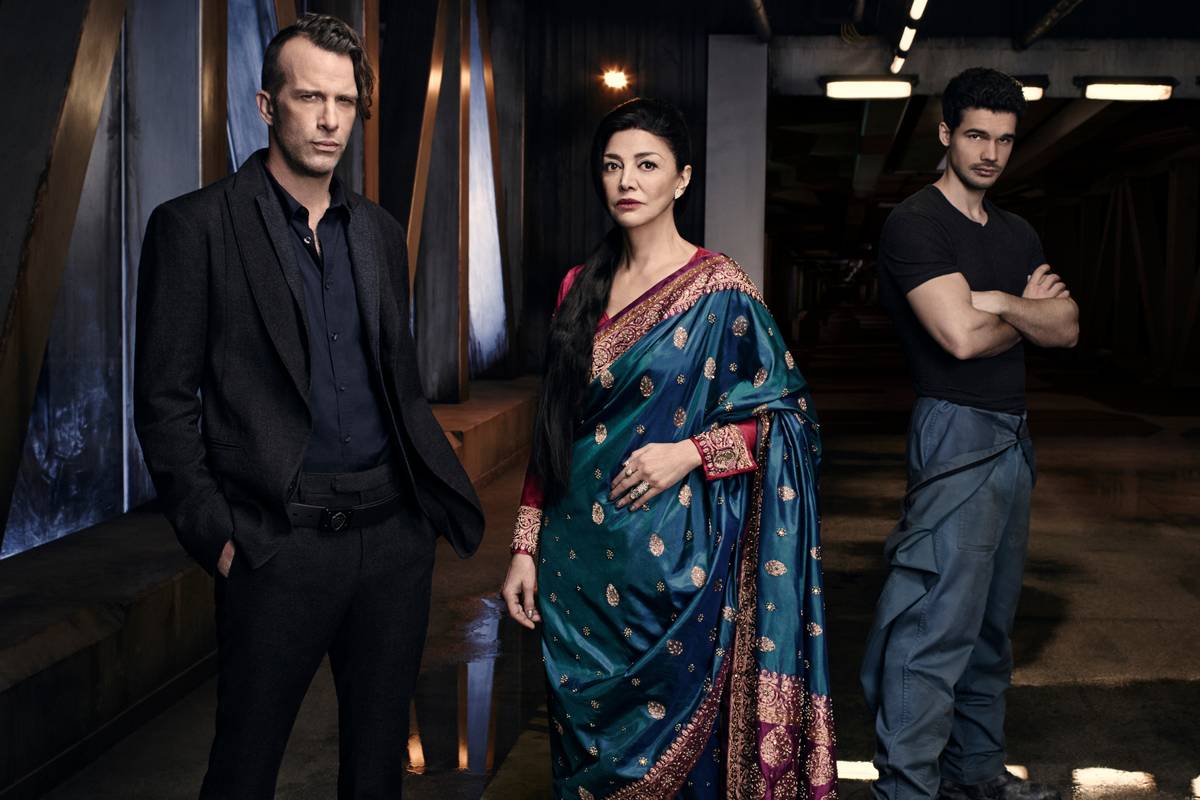
This structural change also highlights the inherent differences in medium. Television thrives on dialogue-driven tension, whereas novels often find depth in internal monologue or slower character studies. By pushing the political agenda to the forefront, the writers ensured that viewers were immediately invested in the power dynamics of the Belt versus the Inners. You can find more detailed breakdowns of sci-fi adaptation challenges on our site, illustrating why these creative pivots are often essential for long-running series.
Defining the Noir and Political Mashup
The show balances three distinct narrative arcs that defined its early identity:
- The space survival mystery following James Holden and the crew of the Rocinante.
- The noir-inspired detective investigation led by Joe Miller on Ceres Station.
- The high-stakes political maneuvering of Chrisjen Avasarala at the United Nations.
Without the political layer, the first book functions more like a focused, fast-moving space blockbuster. In contrast, the series utilizes its first ten episodes to build a world where every conversation holds geopolitical weight, effectively turning the screen into a chessboard for system-wide conflict.
Comparative Genre Analysis Data
When analyzing how the source material compares to the television adaptation, the disparity in focus becomes clear. The following table highlights the core thematic pillars prioritized by each medium during the introduction of the story.
| Narrative Element | Leviathan Wakes (Book) | The Expanse Season 1 (TV) |
|---|---|---|
| Political Scope | Limited/Background | High/System-wide |
| Genre Focus | Blockbuster Mystery | Noir Political Thriller |
| Avasarala Presence | Non-existent | Central Protagonist |
| Horror Elements | High/Graphic Body Horror | Subtle Sci-fi Aesthetic |
The Horror Elements of The Expanse
Beyond the politics, the way the protomolecule is depicted marks a significant departure from the source material. In the book, the horror is tactile, visceral, and deeply uncomfortable. The text describes the remains of crew members as a “fleshy mash,” evoking the body horror of John Carpenter’s The Thing. This grounded, terrifying imagery is a hallmark of the writing style of James S. A. Corey, which emphasizes the physical consequences of the alien presence.
The television show, by necessity, softens these edges. The protomolecule is rendered as a beautiful, glowing, blue substance—a classic trope of science fiction that feels more at home in a show like Star Trek than in a body-horror thriller. This aesthetic choice helps manage the viewer’s experience, preventing the show from alienating audiences with extreme gore while still maintaining the mystery of the entity’s origins.

Expert Take: Media analysts often point out that this visual pivot was essential for the show’s long-term sustainability. While the books could afford to be niche and experimental with their horror elements, a broadcast-style series needed a visual shorthand for “alien mystery” that wouldn’t result in an instant TV-MA rating that might limit its broader appeal during the initial pilot phase. You can read more about how visual shifts impact long-term show ratings in our latest industry deep-dive.
People Also Ask
Why was Avasarala added to The Expanse Season 1?
Showrunners added Avasarala to ground the political narrative of Earth and the Belt earlier in the series. Without her, the show lacked a central figure to explain the complex tensions between the planets that defined the later books.
How does the protomolecule differ in the books?
In the novels, the protomolecule is described as a graphic, fleshy, and visceral form of body horror that physically mangles its victims. The show depicts it as a more stylized, glowing blue sci-fi element to better fit a television format.
Did the creators approve of the genre changes?
Yes, James S. A. Corey (the pen name for Daniel Abraham and Ty Franck) were heavily involved in the adaptation. They supported the changes to the narrative structure, recognizing that television required a different approach to pacing and world-building than their prose.
Why is The Expanse called Game of Thrones in space?
The comparison stems from the show’s focus on shifting political alliances, power struggles, and a large cast of characters across multiple factions. While it lacks fantasy elements, the intensity of its political maneuvering is often likened to George R. R. Martin’s work.
Final Reflections on Adaptation
When you look back at the series, it is clear that the The Expanse Season 1 genre shift was a calculated success. It took a tightly wound space mystery and expanded it into a grand political epic, setting a gold standard for science fiction adaptations. While the original book remains a masterpiece of the genre, the television show’s willingness to diverge allowed it to capture the vastness of the Sol system in a way that truly resonated with global audiences. By evolving its tone early, the series ensured it would be remembered not just as a space show, but as a defining political thriller for a new generation of viewers.
More Like This
For more updates, check out our latest entertainment and sports news.