Key Takeaways
| The Bears lost their interception and takeaway leaders from the 2025 roster. |
| Key contributors Kyler Gordon and Coby Bryant are sidelined with significant injuries. |
| Coordinator Dennis Allen is tasked with integrating new starters at every level. |
| The team’s reliance on a takeaway-heavy scheme faces a massive reality check. |
The Bears defense enters opener with more questions than answers as the franchise prepares for a pivotal 2026 season kick-off against the Carolina Panthers. If you are a Chicago fan expecting a repeat of last year’s turnover-heavy success, the current state of the defensive depth chart might leave you searching for optimism in a sea of transition.
The defensive unit is currently undergoing a radical transformation that threatens to redefine the team’s identity. With significant departures in the secondary and the linebacker corps, the coaching staff is fighting to maintain the physical edge that once defined this Chicago Bears defensive philosophy.
Bears defense enters opener with uncertainty
When you examine the current roster, the sheer volume of lost production is staggering. The departure of safety Kevin Byard, the league’s interception leader, leaves a massive void in the backfield. Similarly, the exit of cornerback Nahshon Wright and the cost-saving decision to cut Tremaine Edmunds mean that the team has essentially gutted its turnover-generating core.
The injury report adds another layer of anxiety for supporters and analysts alike. With Kyler Gordon battling a persistent calf issue and Coby Bryant expected to miss significant time due to a knee injury, coordinator Dennis Allen is forced to rely on unproven talent. This environment is less than ideal for a team that relies heavily on complex, timing-based defensive schemes.
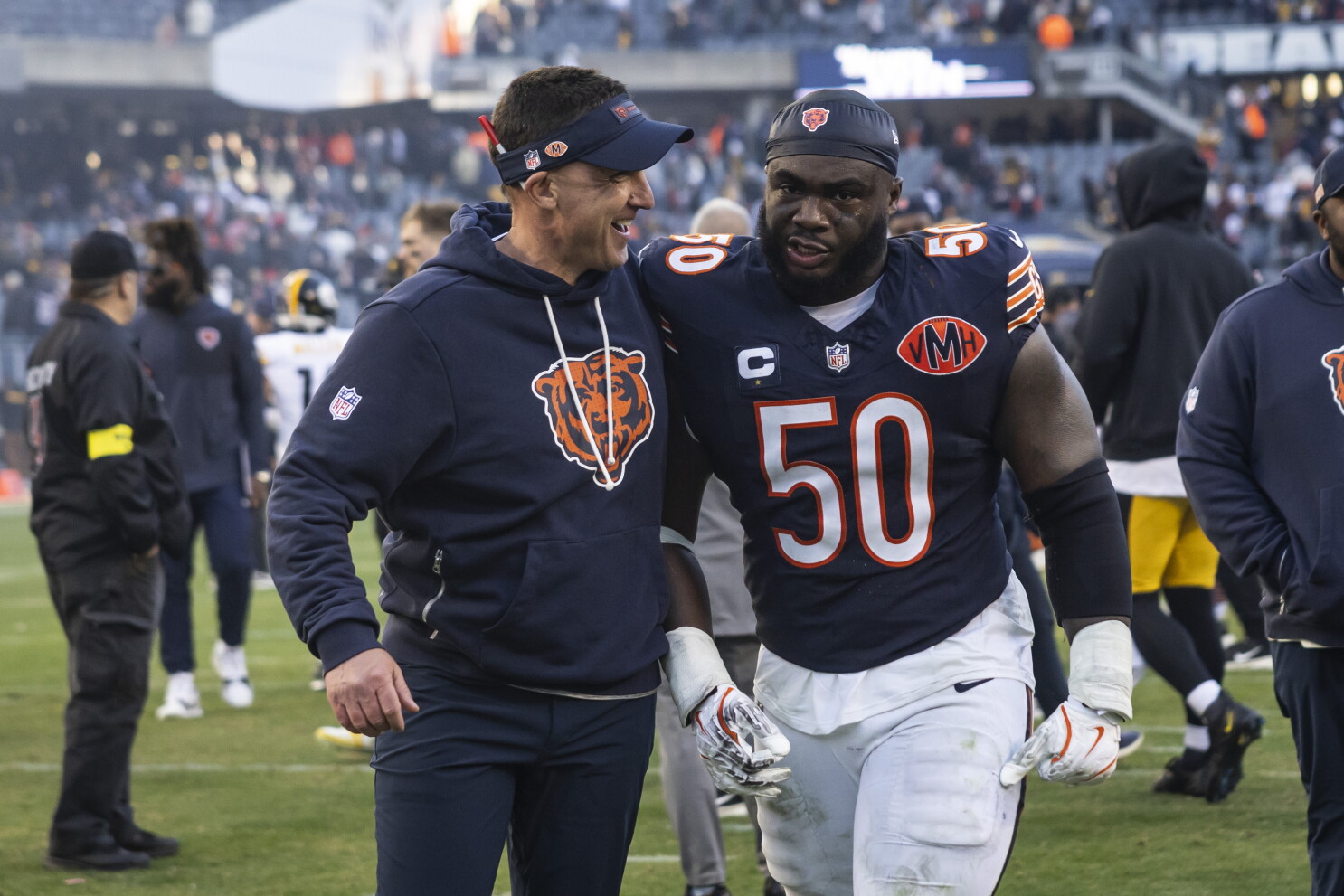
The team’s veteran presence, led by edge rusher Montez Sweat, remains the anchor of the locker room. However, even Sweat has admitted that replacing the high-level production of departed players is a monumental challenge. The coaching staff is banking on increased speed and fundamental discipline to overcome the lack of institutional familiarity across the starting lineup.
Defining the new defensive identity
Speed has become the primary mandate under Dennis Allen. By emphasizing quickness at the linebacker position with Devin Bush, the team hopes to mitigate the gaps left by veteran departures. Whether this speed can translate into stops on third down remains a primary concern for the coaching staff as they evaluate performance in real-time game scenarios.
2026 Roster Transition Breakdown
| Position Group | Key Departure | Replacement/Status |
|---|---|---|
| Secondary | Kevin Byard / Nahshon Wright | Dillon Thieneman (Rookie) |
| Linebacker | Tremaine Edmunds | Devin Bush |
| Cornerback | Kyler Gordon (Injury) | Rotation/Developmental |
The Faustian bargain of takeaways
Last season, the Chicago Bears defensive performance was largely masked by an unsustainable volume of takeaways. While the team successfully reached the postseason, they ranked in the bottom ten for points allowed. This numerical imbalance suggests that relying on turnovers is a high-risk strategy that likely cannot be replicated with a new, less experienced secondary.
According to ESPN’s analysis of the NFL defensive trends, relying on takeaway variance to win games is often a precursor to regression. For the Bears, the reality is that the front office has essentially traded established veterans for potential-based assets. This shift is a direct challenge to the team’s goal of making a deep run in the playoffs.
Montez Sweat and his counterparts understand that the margin for error is slim. The team is not just playing against opponents; they are playing against the clock as they try to establish chemistry. Without the high-impact turnovers seen in 2025, the defense will need to prove they can survive through traditional stops and physical play.
Analytical perspective on defensive gaps
Experts note that the lack of new edge rushers is the most glaring omission in the team’s off-season strategy. While internal growth from players like Gervon Dexter (prior to his trade) was expected, the current rotation lacks the punch required to collapse the pocket consistently against elite NFL quarterbacks. The pressure to produce now falls squarely on the shoulders of the existing defensive line rotation.
People Also Ask
Why is the Bears defense struggling with personnel this season?
The defense is struggling due to a combination of high-profile free agency departures and significant injuries to key starters like Kyler Gordon and Coby Bryant. These losses have forced the team to rely on rookies and depth players to fill critical roles.
How does the absence of Tremaine Edmunds impact the team?
The release of Tremaine Edmunds was a cost-saving move that stripped the team of its third-best interception leader among linebackers. His absence forces a reliance on Devin Bush to anchor the middle of the field.
What is the main concern for Dennis Allen in Week 1?
The primary concern is the lack of chemistry and the need to break in new starters across all three levels of the defense. Dennis Allen is focused on building foundational discipline over complex system execution.
When does the Bears secondary get back to full health?
Kyler Gordon is expected to miss at least four games, while Coby Bryant is ruled out until at least December due to his knee injury. The team will have to manage these absences throughout the first half of the season.
Looking ahead at the 2026 season
As the Chicago Bears roster updates continue to dominate local headlines, the focus remains on whether this experimental defense can hold steady. The season opener against the Panthers serves as the first real test of whether the emphasis on speed will replace the production lost in free agency. Ultimately, the Bears defense enters opener as a unit in flux, and the answers to the team’s championship aspirations will likely be written in the coming weeks.
More Like This
For more updates, check out our latest entertainment and sports news.