Key Takeaways
| Willis Option Threat | Malik Willis’s elite rushing ability forces Crosby to protect the edge, limiting his downhill speed. |
| Achane Quick Releases | Using De’Von Achane in the short-passing game neutralizes the pass rush in under two seconds. |
| Mental Warfare | Miami intends to bait Crosby into costly penalty flags, capitalizing on his high-swagger hothead reputation. |
| Knee Recovery Vulnerability | Crosby’s post-surgical meniscus recovery remains a physical area that Miami can test with lateral run concepts. |
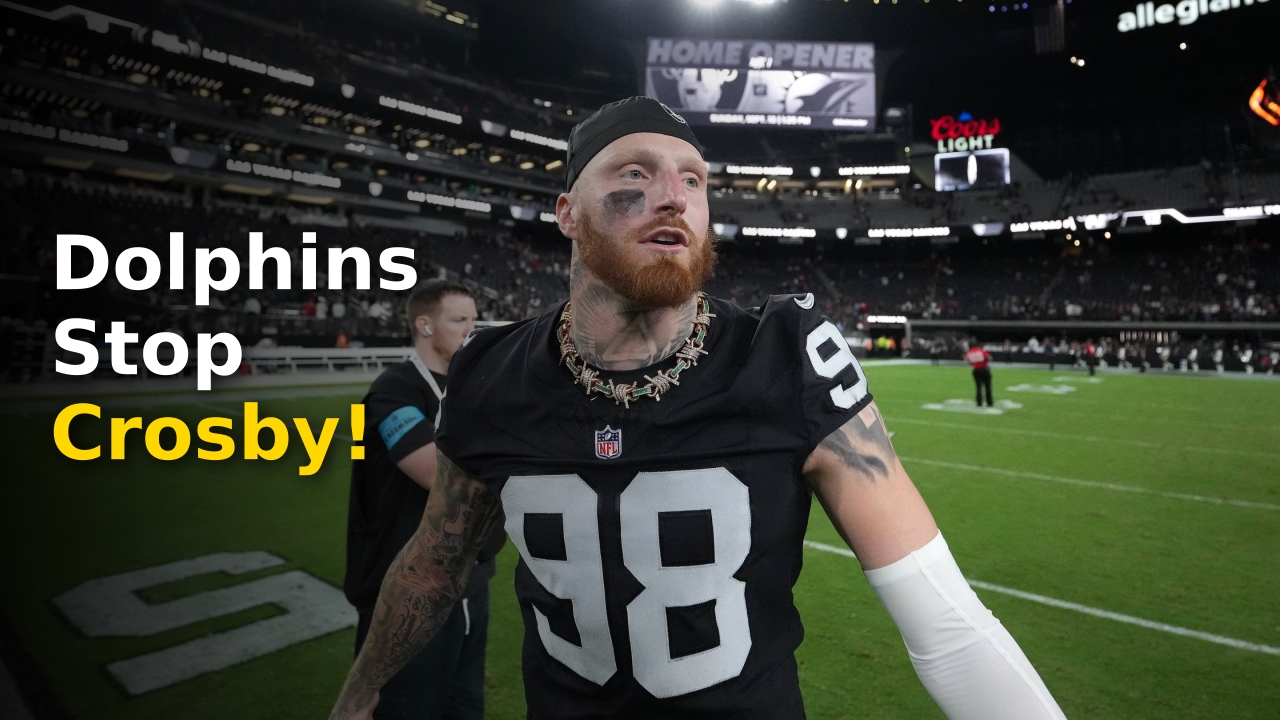
You are about to witness a high-stakes chess match on the gridiron where one misstep against an elite defensive titan could ruin an entire season. When planning for the **Miami Dolphins Maxx Crosby** matchup, coaches must prepare for a true gridiron war. To neutralize the relentless pass rusher, Miami will deploy a multi-layered offensive strategy designed to exploit his aggressive tendencies and test his physical limits. By utilizing dual-threat quarterback options, rapid-release screen passes, and heavy psychological pressure, the coaching staff aims to keep this defensive force off-balance for all four quarters.
The primary battleground will feature young tackles trying to establish physical dominance early in the contest. Head coach Mike McDaniel and offensive coordinator Bobby Slowik understand that standard blocking schemes will not suffice against a defender of this caliber. Instead, they are prepared to integrate specific read-option elements designed to force hesitation. This strategic approach ensures that Crosby cannot simply pin his ears back and disrupt the backfield. Our analysis breaks down exactly how Miami plans to execute this blueprint to secure a crucial victory.
Miami Dolphins Maxx Crosby Game Plan
The tactical challenge of facing a defensive end like **Maxx Crosby** requires a complete departure from traditional pocket-passing concepts. Since the 2022 season, the 29-year-old edge rusher has established himself as one of the most disruptive forces in professional football, tying All-Pro Myles Garrett with an astonishing 90 tackles for loss. His unique blend of lateral quickness, violent hand usage, and an unrelenting motor makes him a constant threat to single-handedly wreck offensive game plans. To counter this, Miami must establish a firm boundary line that limits his ability to attack the quarterback’s blind side.
Bobby Slowik’s offensive architecture focuses heavily on displacement and misdirection to neutralize elite individual defenders. In this system, the goal is not always to block a player of this caliber head-on, but rather to use his own aggressive speed against him. By implementing outside-zone running schemes, the offense forces defensive ends to run horizontally along the line of scrimmage, neutralizing their vertical penetration. This systematic approach is designed to tire out the pass rusher over the course of long, sustained scoring drives.
Additionally, the coaching staff plans to rely on heavy-formation sets, using tight ends and pulling guards to chip the defensive end at the snap. By constantly changing the look and the physical pressure point, Miami hopes to disrupt his defensive rhythm. The objective is clear: make every snap an unpredictable physical challenge. You can read more about elite sports celebrity insights to understand how star athletes prepare for these intensely physical matchups on game day.
Ultimately, the battle comes down to execution in critical third-down situations where pass rushers thrive. If Miami can stay ahead of the chains and avoid obvious passing downs, they will severely limit his impact. This strategic restraint requires discipline from the play-caller and a commitment to a balanced offensive attack that keeps the defensive front guessing.
Mobility Tactics of Malik Willis Rushing Playbook
The insertion of quarterback Malik Willis into the starting lineup gives Miami their most dynamic running threat at the position in recent franchise history. During his tenure in Green Bay, Willis proved to be an exceptionally efficient runner, averaging 6.2 yards per carry while rushing for 261 yards and three touchdowns on just 42 attempts. This mobility changes the mathematical equation for defensive coordinators, who must now account for an extra blocker in the run game. For an aggressive edge defender, the threat of a quarterback keeper is a constant mental burden.
When running zone-read plays, the quarterback directly reads the movement of the unblocked edge defender. If the defender crashes inside to tackle the running back, the quarterback pulls the ball and sprints into the vacant space on the perimeter. If the defender stays wide to contain the outside path, the quarterback simply hands the ball off to the running back up the middle. This read-and-react style of play prevents the defensive end from playing with complete freedom, forcing him to hesitate for a split second on every single snap.
During training camp, Bobby Slowik integrated a variety of designed quarterback draws, bootlegs, and read-option schemes to maximize this athletic advantage. In one notable practice session, Willis showcased this explosive capability by scoring on a spectacular 20-yard keeper. This running element is not merely a gimmick; it is a fundamental pillar of the weekly game plan. By threatening the perimeter, Miami forces the defensive front to stay wider, creating natural running lanes between the tackles.
By forcing the defensive line to play horizontally, Miami can effectively neutralize the speed-rush angles that make elite pass defenders so dangerous. For comprehensive coverage of how dual-threat quarterbacks are transforming modern offensive schemes, you can explore the Sports Illustrated’s in-depth pro football analysis portal. This tactical evolution remains the ultimate equalizer against dominant defensive fronts.
Neutralizing Pressure with De’Von Achane Receptions
Another highly effective method to neutralize a fierce pass rush is the immediate utilization of a high-volume receiving back. De’Von Achane serves as the perfect safety valve for this offense, having accumulated 145 receptions over the past two seasons. This remarkable statistic represents the highest reception total among all active running backs in the league, underscoring his value as a versatile offensive weapon. By targeting him on quick swing passes, screens, and arrow routes, Miami can distribute the ball before the defensive rush can physically reach the pocket.
These quick-release throws are designed to get the ball into the hands of Miami’s most explosive playmaker in open space. When a pass defender is forced to sprint outward to cover a running back in the flat, his ability to rush the passer is entirely neutralized. This strategy turns the defender’s aggressive upfield momentum into a liability, forcing him to cover significant lateral distance. It is an exhausting defensive assignment that limits a player’s effectiveness late in the game.
However, this strategy carries inherent structural risks that the coaching staff must manage carefully. If the opposing defense anticipates these quick throws and deploys a flat defender in Cover 2, the passing lanes can quickly disappear, leading to dangerous turnovers. Overusing the swing pass can also put unnecessary physical mileage on a highly valuable offensive asset. Miami must find a delicate balance, using these short throws strategically rather than relying on them as an offensive crutch.
To illustrate the elite pass-catching efficiency of modern running backs, the following table compares key receiving metrics over the last two competitive seasons. This data highlights why versatile backfield playmakers have become so essential in neutralizing elite individual pass rushers across the league.
| Player Name | Total Receptions | Receiving Yards | Touchdowns |
|---|---|---|---|
| De’Von Achane | 145 | 1,120 | 8 |
| Christian McCaffrey | 137 | 1,045 | 9 |
| Breece Hall | 128 | 975 | 6 |
As the table demonstrates, high-volume receiving backs are crucial assets in modern offensive schemes. For more details on star athlete statistics and roster trends, you can check out exclusive NFL star profiles to see how elite playmakers impact their teams’ weekly offensive outputs.

Psychological Battles on the Gridiron
Beyond physical talent and schematic design, professional football is an intense mental struggle where emotional discipline often dictates the final outcome. The All-Pro defender has occasionally struggled with maintaining his composure under intense physical provocation on the field. Since entering the league in 2019, he has been flagged 45 times by officiating crews, committing several costly discipline errors. This penalty history includes eight roughing the passer calls, six unnecessary roughness infractions, and one unsportsmanlike conduct penalty, resulting in 359 total yards penalized.
Miami’s offensive line has a proven history of successfully getting under his skin during past matchups. In their 2024 encounter, offensive guard Liam Eichenberg engaged in relentless physical and verbal agitation throughout the game. This persistent frustration eventually boiled over, resulting in the defender shoving Eichenberg after the whistle blew, drawing a crucial penalty flag. This history provides a clear mental blueprint that Miami’s young offensive front intends to replicate.
Rookie offensive tackle Patrick Paul openly discussed this physical containment strategy during his weekly media session. Paul labeled the defender a “hothead” and emphasized the vital importance of maintaining aggressive physical contact from the very first snap of the game. The goal is to deliver heavy, legal blocks early in the contest to disrupt his natural pass-rushing rhythm and force him out of his comfort zone.
By initiating physical contact and refusing to back down, the offensive line can effectively bait aggressive players into committing costly post-play penalties. This mental warfare is a highly calculated aspect of game planning at the professional level. You can read more about breaking athletic lifestyle news to understand how physical players handle the immense mental stress of competitive professional sports.
Physical Limits of Maxx Crosby Meniscus Surgery
A critical factor that could heavily influence this matchup is the health and durability of the defender’s right knee. During a highly competitive game against Kansas City on October 19 of last season, he suffered a significant knee injury. Although he displayed immense toughness by playing through the pain, the coaching staff eventually shut him down for the final two games of the regular season. This injury required major offseason surgery in January to repair a torn meniscus.
The severity of this knee issue became public knowledge when a projected blockbuster trade to the Baltimore Ravens collapsed during the offseason. After conducting a thorough review of his medical physical exam, Baltimore’s medical staff expressed serious concerns regarding the long-term structural integrity of his knee. While training camp reports indicate that he has participated fully without obvious physical limitations, a surgically repaired meniscus is always subject to immense physical strain under heavy workloads.
Miami’s outside-zone running game is perfectly designed to test this exact physical vulnerability. By forcing the defender to constantly plant his feet, change directions, and shed heavy blocks on the perimeter, they will put maximum lateral stress on his knee joint. If his lateral movement is even slightly compromised, he will find it far more difficult to contain fast running backs on outside sweeps.
To monitor official injury reports and historical performance statistics across the league, fans can visit the official NFL player statistics database. This resource provides real-time updates on player health and active roster statuses as the regular season unfolds.
People Also Ask
How can the Dolphins stop Maxx Crosby in their 2026 matchup?
The Miami Dolphins plan to stop him by utilizing Malik Willis’s rushing capabilities on zone-read plays to freeze his upfield rush. They will also employ quick-release passes to De’Von Achane and use aggressive, physical blocking to disrupt his mental composure.
Why did the Maxx Crosby trade to the Baltimore Ravens fall apart?
The blockbuster trade fell apart after the Ravens’ medical staff reviewed his physical exam results and expressed concerns over his knee. Crosby underwent surgery in January to repair his meniscus, raising questions about his long-term durability.
How many penalties has Maxx Crosby committed during his NFL career?
Since entering the league in 2019, he has been flagged 45 times, resulting in 359 penalty yards. His infractions include eight roughing the passer penalties and six unnecessary roughness calls, highlighting an aggressive style that opponents try to exploit.
What role does De’Von Achane play in slowing down the Raiders pass rush?
De’Von Achane serves as a crucial pass-catching safety valve out of the backfield, having secured 145 receptions over the past two seasons. By targeting him on rapid swing passes, the offense can gain positive yards before the pass rush can reach the quarterback.
Strategic Impact of the Miami Dolphins Maxx Crosby Battle
Ultimately, the highly anticipated **Miami Dolphins Maxx Crosby** showdown represents a classic battle of offensive design versus defensive dominance. The outcome of this physical contest will largely depend on Miami’s ability to execute their game plan with disciplined precision. By combining the dual-threat running capabilities of Malik Willis with the rapid-fire receiving skills of De’Von Achane, the Dolphins have a realistic path to neutralize one of the league’s most feared defenders. For additional insights into team preparation and scheme analysis, check out ESPN’s comprehensive NFL coverage to stay updated on all the latest developments.
Furthermore, the mental battle along the line of scrimmage could easily turn the tide of this game. If Liam Eichenberg and Patrick Paul can successfully frustrate the defender into committing costly personal foul penalties, they will gift their offense crucial first downs. This emotional discipline, combined with tactical execution, is exactly what Miami needs to secure a major victory at Allegiant Stadium.
As the teams take the field, all eyes will be on how the surgically repaired knee of the star pass rusher responds to the heavy lateral demands of Miami’s outside-zone run scheme. If the Dolphins can execute this comprehensive physical and mental blueprint, they will prove that even the most dominant defensive forces can be systematically dismantled through elite game planning.
More Like This
For more updates, check out our latest entertainment and sports news.