
Key Takeaways
| Discovery involves the largest maritime city fresco and mosaic complex ever found. |
| The site remained hidden beneath the Baths of Trajan for over three decades. |
| Public access is currently limited to small groups of 15 during a weekend trial. |
| The artwork features intricate details of a lost ancient port city. |
Ancient Rome’s biggest fresco and mosaic complex has finally opened its doors to the public, marking a historic milestone three decades after the initial discovery. Tucked away beneath the bustling streets near the Colosseum, these masterworks provide an unprecedented glimpse into the life and artistry of the first century A.D. For those seeking historic travel insights, this site is rapidly becoming a premier destination for archaeology enthusiasts.
Rome Mayor Roberto Gualtieri personally unveiled the “Painted City” fresco and the “Great Mosaic” this Tuesday. These artifacts were discovered during the 1990s excavation of the Baths of Trajan on the Oppio hill. The works are now open to the public in limited capacity to ensure their preservation against modern environmental stressors.
Understanding Ancient Rome’s Biggest Fresco and Mosaic
The significance of this discovery cannot be overstated, as it reshapes our understanding of Roman decorative arts. The “Painted City” fresco stands as the largest wall painting of its kind ever documented, featuring a mesmerizing birds-eye perspective of a walled port city. You can see detailed depictions of theaters, temples, and bustling public piazzas that have remained shielded from the elements for centuries.
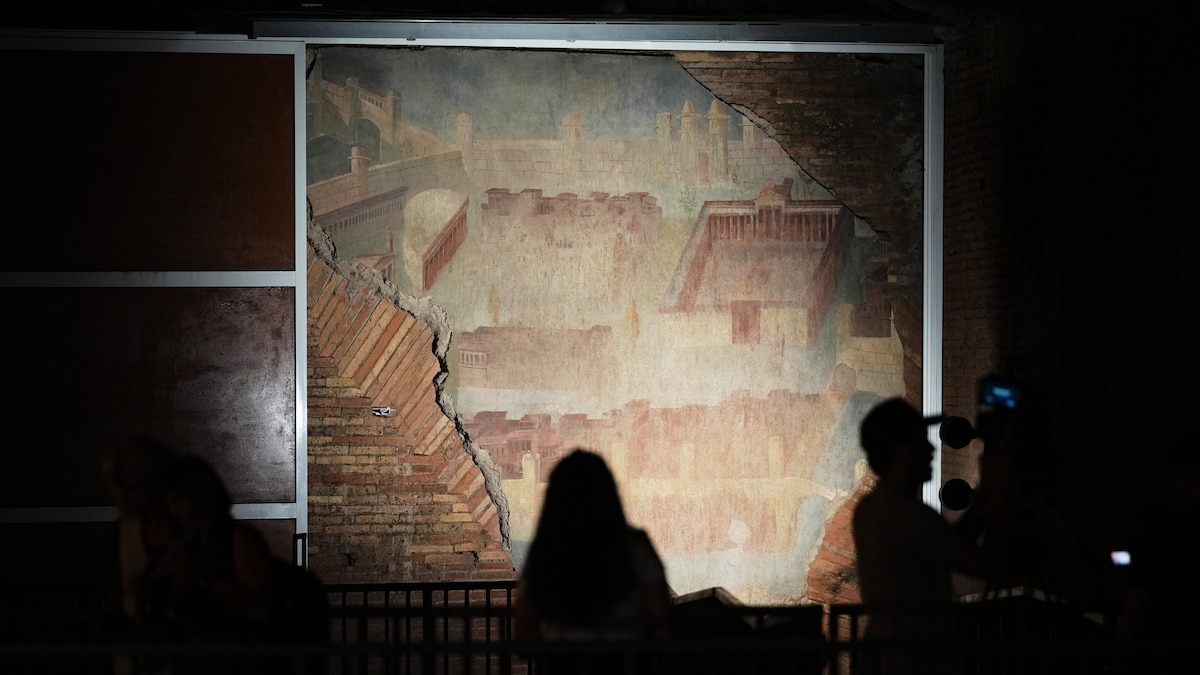
The colors, predominantly blues and terra cotta, offer a vibrant look at a civilization that defined the ancient Mediterranean. Claudio Parisi Presicce, Rome’s cultural superintendent, noted that the artistic quality of the preserved structures suggests this specific port was of immense importance to the Roman elite. The restoration team employed advanced chemical stabilization to consolidate the grouting, ensuring the delicate surfaces survive for future generations to study.
Beyond the fresco, the “Great Mosaic” stretches 15 meters high, showcasing a vertical hierarchy of Roman society. The top tiers focus on theatrical figures, while the lower levels provide a functional map of the city’s layout. This level of detail confirms that these works were not merely decorative but served as a prestigious display of wealth within the world’s largest bath complex at the time.
The Baths of Trajan Technical Overview
| Feature | Historical Detail |
|---|---|
| Year Dedicated | 109 A.D. |
| Total Area | 6 Hectares (15 Acres) |
| Location | Oppio Hill, Rome |
| Key Facility | Semicircular Library |
The Baths of Trajan were a masterpiece of engineering that incorporated elements of the earlier Domus Aurea, effectively repurposing the architecture of the past. The facility was designed with a unique trajectory to optimize thermal water temperatures, allowing for a more efficient and comfortable user experience. Experts agree that the complex served as a social hub for cultural engagement, not just physical hygiene.
By integrating a grand library within the bathhouse, the Roman authorities created a space where citizens could practice sport, engage in intellectual debate, and bathe simultaneously. You can view further details on Roman architecture at our archive. This duality of space highlights the Roman commitment to a well-rounded lifestyle that balanced the body and the mind.

Historical Context and Expert Analysis
Archaeologists emphasize that the “Painted City” fresco represents a rare surviving example of Roman landscape painting. Unlike other mosaics of the era, which often depicted mythological scenes, this piece serves as a historical document of an unknown city. This provides a tangible link to trade routes and architectural trends that defined the empire’s height.
Expert Take: The conservation of these colors after two millennia of burial is a result of the specific micro-climates maintained within the underground gallery. Claudio Parisi Presicce warns that even slight fluctuations in humidity could jeopardize the integrity of the plaster. Therefore, the trial phase—allowing groups of only 15 people—is a calculated effort to monitor atmospheric stability before expanding public accessibility.
People Also Ask
What happened with the ancient Rome fresco discovery today?
Authorities have officially opened the largest fresco and mosaic complex of ancient Rome to the public after three decades of restoration. The site is located at the Baths of Trajan near the Colosseum.
Why is the Roman fresco site opening in small groups?
Access is restricted to small groups to protect the delicate artworks from humidity and environmental changes caused by visitors. This trial period will help experts determine the long-term sustainability of keeping the gallery open.
How does this affect tourism near the Colosseum?
The addition of the Baths of Trajan gallery provides a significant new cultural stop for visitors near the Colosseum. It shifts interest toward the underground layers of the city often overlooked by standard tours.
When is the next opportunity to see the mosaic?
The site is currently in a trial period with weekend access. Interested visitors should check official Rome cultural heritage websites for booking information.
Final Thoughts
The public debut of ancient Rome’s biggest fresco and mosaic marks a turning point for historical appreciation in Italy. By carefully balancing the need for public access with the urgency of preservation, Rome is ensuring that these 2,000-year-old treasures remain for future generations. As studies continue into the origins of the city depicted in the fresco, you can expect this site to become a center of international research. Keep following our updates for the latest in global archeology news.
More Like This
For more updates, check out our latest entertainment and sports news.