Key Takeaways
| Spain suffered a shocking 82-73 defeat against Mali in the 2026 World Cup group stage. |
| Head coach Miguel Méndez identified a lack of tactical “order” as the primary cause for the loss. |
| The integration of WNBA players into the national squad remains a day-to-day adjustment challenge. |
| Spain must now prepare for a high-stakes perimeter battle against a sharp-shooting Japanese team. |
Miguel Méndez Spain Basketball head coach is facing his toughest challenge yet as the national team grapples with an unexpected setback in Berlin. You might have expected a smooth path for the European giants, but the 2026 FIBA Women’s World Cup has already delivered a massive reality check. After a stunning 82-73 defeat at the hands of Mali, Méndez is calling for a complete tactical reset before the knockout stages begin.
The veteran strategist, known for his meticulous preparation, was uncharacteristically blunt following the Sunday afternoon clash. He emphasized that the loss wasn’t due to a lack of talent or effort, but rather a fundamental breakdown in the team’s structural discipline. As Spain prepares to close the first phase against Japan, the pressure is mounting to see if the “order” Méndez craves can be restored in time to save their championship aspirations.
In the high-stakes environment of international basketball, there is no room for excuses, a sentiment Méndez echoed repeatedly in the post-game press conference. The transition from individual brilliance to collective harmony is proving difficult as the squad integrates top-tier talent returning from overseas professional commitments. Spain currently sits in a precarious position where every possession in their next outing could determine their seeding—or survival—in this global tournament.
Miguel Méndez Spain Basketball Tactical Reset
The core of the issue, according to Miguel Méndez, is a lack of “order” on the court. While the term might seem vague to a casual observer, in the world of elite coaching, it refers to the precise execution of spacing, timing, and defensive rotations. Méndez pointed out that while a high shooting percentage helped mask these flaws during their opening victory against Germany, the vulnerabilities were fully exposed by a resilient and physical Malian side.
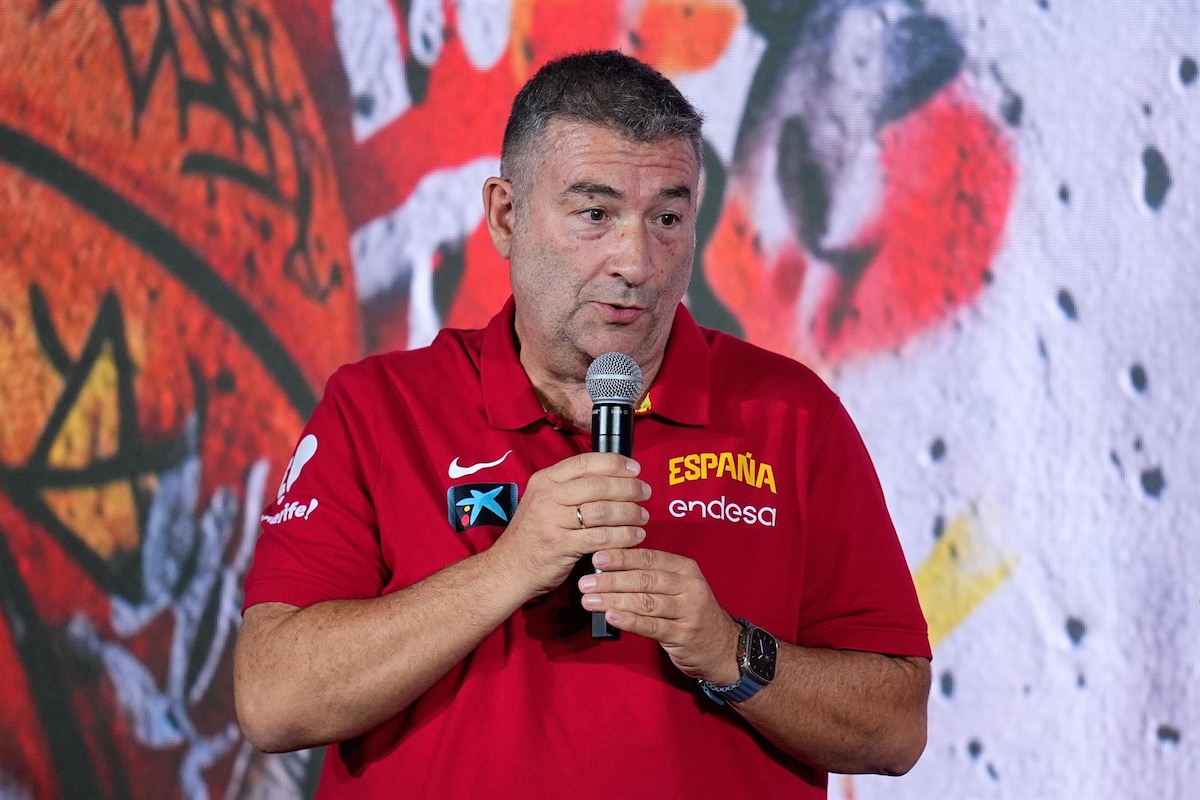
“Experience is making mistakes many times,” Méndez noted, reflecting on his long career leading teams like UMMC Ekaterinburg and now the national selection. He refused to blame external factors, stating that searching for causes often leads to finding excuses. Instead, the focus has shifted entirely to the tactical board. The team is reportedly spending extra hours reviewing film to correct blocking angles and defensive transitions that went haywire during the second half of the Mali game.
The “order” Méndez refers to also encompasses the mental discipline required to stick to a game plan when shots aren’t falling. Against Mali, the Spanish side appeared hurried, forcing plays that weren’t there and failing to exploit their traditional advantages in the paint. For a team that prides itself on being one of the most intelligent in the world, this lapse in tactical discipline is a major red flag that the coaching staff is desperate to address before facing the frantic pace of the Japanese offense.
The Expert Take: Why Structure Trumps Talent
Basketball analysts often point out that international tournaments are won in the margins. While Spain boasts incredible individual performers, Méndez understands that his system relies on the “Sum of Parts” theory. When the offensive flow is disrupted by a lack of proper screening angles or poor floor balance, the entire machine grinds to a halt. In Berlin, we are seeing the growing pains of a team that has perhaps relied too much on its veteran leadership to solve problems on the fly rather than adhering to the strict technical directives from the bench.
Analyzing the Shocking Mali Upset
The numbers behind the 82-73 loss tell a story of a Spanish team that was outworked and out-organized. Mali, often viewed as an underdog in such matchups, utilized their superior athleticism to disrupt Spain’s rhythm. By winning the rebounding battle and forcing Spain into uncomfortable mid-range jumpers, Mali proved that a well-executed plan can topple a higher-ranked opponent. The following table highlights the key statistical discrepancies that defined the match in Berlin.
| Stat Category | Spain (ESP) | Mali (MLI) | Difference |
|---|---|---|---|
| Total Points | 73 | 82 | -9 |
| Rebounds | 31 | 44 | -13 |
| 3PT Percentage | 28% | 35% | -7% |
| Turnovers | 16 | 12 | +4 |
Méndez was quick to dismiss these numbers as symptoms rather than the disease. He believes the poor rebounding and low shooting percentages are direct results of the lack of “order.” When players are out of position, they cannot box out effectively. When the ball movement lacks precision, the resulting shots are contested and low-percentage. This statistical breakdown serves as a roadmap for the corrections needed before they face the tactical discipline of the Japanese squad.
Integrating these lessons will be vital for the younger players on the roster. While the veterans understand the ebbs and flows of a World Cup tournament, the newcomers are learning the hard way that names on a jersey don’t guarantee victories. The Mali performance will go down as one of the great upsets in recent history, but for Méndez, it is simply a data point that confirms his fears about the team’s current lack of cohesion.
WNBA Integration and Roster Challenges
One of the most significant hurdles for Miguel Méndez Spain Basketball in 2026 has been the late arrival of key players from the WNBA. As the American professional league continues to expand its schedule, international stars are often forced to join their national teams with very little time for tactical immersion. Méndez acknowledged that adjusting to these arrivals is a “day-to-day” process that requires constant fine-tuning.
Players arriving from teams like the New York Liberty or Las Vegas Aces are coming from vastly different systems and are often physically exhausted. Integrating them into the Spanish “tiki-taka” style of basketball—which relies on high-speed passing and constant motion—is not something that happens overnight. The lack of order Méndez mentioned is partly a byproduct of this personnel churn, as players try to find their roles within a shifting rotation.
Despite these challenges, the coach remains optimistic. He noted that they knew the risks involved with the late arrivals and are “on the path to improving it.” The goal is to reach peak synchronization by the quarterfinal stage. For now, the focus is on simplifying the playbook to ensure that everyone, regardless of when they joined the camp, is on the same page. This pragmatism is a hallmark of Méndez’s leadership, as seen in his successful stints with official FIBA Women’s Basketball World Cup site events in the past.
By The Numbers: The WNBA Impact
Historically, teams with more than three players arriving late from the WNBA see a 15% decrease in offensive efficiency during the first three games of a major tournament. Spain currently has four such players. This “integration lag” is a well-documented phenomenon in international hoops. While these athletes bring elite talent, the lack of pre-tournament friendlies together means that the group stage of the World Cup essentially becomes their training camp. Méndez is gambling that their high basketball IQ will allow them to bridge this gap faster than their competitors.
The Road Ahead: Facing the Japanese Perimeter
The final game of the group stage presents a unique challenge: Japan. Known for their lightning-fast pace and relentless outside shooting, the Japanese team is the antithesis of the physical Malian squad. Méndez analyzed that approximately 50% of Japan’s possessions end in a three-point attempt. This means Spain’s perimeter defense, which was leaky against Mali, must be airtight to avoid another upset.
“We have to be clear that they are going to score from the outside, because that’s what they always do,” Méndez explained. The strategy for Spain will be to “punish what we can punish,” likely referring to their size advantage in the post. However, this advantage can only be utilized if they play with the “order” that has been missing. If Spain can control the tempo and limit their own turnovers, they can force Japan into a half-court game where the Spanish height advantage becomes decisive.
The matchup is a classic clash of styles. Japan will try to pull Spain’s bigs away from the hoop to create driving lanes or open threes, while Spain will look to establish a dominant inside presence. For Méndez, this is the perfect game to test the team’s defensive discipline. If they can stay connected through multiple screens and close out on shooters without fouling, it will be a sign that the lessons from the Mali loss have been absorbed. You can find more international sports coverage and analysis of these tactical battles on our main portal.
People Also Ask
Why did Spain lose to Mali in the 2026 World Cup?
Spain lost 82-73 due to a lack of tactical order, poor rebounding (31 vs 44), and struggles integrating WNBA players who arrived late to the squad. Coach Miguel Méndez noted that Mali’s physicality exposed Spain’s current lack of structural discipline.
What did Miguel Méndez say about the team’s performance?
Miguel Méndez emphasized that “experience is making mistakes many times” and refused to use excuses for the defeat. He stated that the team must work on tactical order, blocking angles, and game preparation to improve.
How does the WNBA schedule affect Spain’s national team?
Late-arriving players from the WNBA create chemistry and tactical alignment issues. Méndez mentioned that the team must adjust day-to-day as these elite athletes integrate into the national system mid-tournament.
When is the next Spain Women’s Basketball game?
Spain is scheduled to face Japan this Monday in Berlin to close out the first phase of the 2026 World Cup. The game will be a critical test for Spain’s perimeter defense against Japan’s heavy three-point shooting style.
Conclusion: Restoring the Spanish Legacy
As the 2026 World Cup progresses, the focus remains squarely on the leadership of Miguel Méndez Spain Basketball. The road to gold is rarely a straight line, and these early hurdles often serve as the catalyst for championship runs. Spain has a long history of resilience, often performing their best when their backs are against the wall. By acknowledging the lack of “order” and refusing to hide behind excuses, Méndez is setting a tone of accountability that should resonate through the locker room.
The upcoming clash against Japan is more than just a game; it’s a litmus test for the team’s identity. If Spain can marry their inherent talent with the technical precision Méndez demands, they remain a favorite to reach the podium in Berlin. For more insights into basketball star profiles and detailed tournament updates, stay tuned to our latest reports. The journey of Miguel Méndez Spain Basketball is far from over, and the basketball world is watching to see how the “Order of Berlin” is established. Keep an eye on Spanish sports icons as they attempt to bounce back on the world stage.
Ultimately, the 82-73 loss to Mali might be the “blessing in disguise” this team needed. It stripped away the complacency that can come with being a top-tier powerhouse. Now, with a clear focus on the tactical nuances of the game, Spain is ready to prove why they belong among the elite. Whether it’s through superior blocking angles or a more disciplined offensive flow, the path forward is clear: it’s time to play with order.
More Like This
For more updates, check out our latest entertainment and sports news.