Key Takeaways
| Hidden Cameo: The film features an alien character modeled directly after Martin Scorsese. |
| VFX Innovation: Industrial Light & Magic utilized VR technology to optimize IMAX framing. |
| Nature-Inspired Action: Rotta the Hutt’s movement patterns were based on elephant seal territorial brawls. |
| Cross-Industry Synergy: Chef collaborator Roy Choi helped design the film’s unique food truck props. |
The Mandalorian and Grogu secret Easter egg has sent shockwaves through the Star Wars fandom, revealing that legendary director Martin Scorsese essentially lives in a galaxy far, far away. You might have missed this subtle nod during your initial watch, but the character Hugo Durant is a direct physical and personality tribute to the mastermind behind Taxi Driver. Jon Favreau, known for his love of culinary culture and cinema history, ensured that the Ardennian pilot’s design captured the fast-talking, energetic spirit of the iconic filmmaker.
Bringing the beloved Disney Plus series to the silver screen required unprecedented technical precision. As the first Star Wars film in seven years, the team faced mounting pressure to elevate the visual language of Din Djarin and his Force-sensitive ward. From the complex animation of Jabba the Hutt’s son to the proprietary use of virtual reality headsets for IMAX framing, the production process was as demanding as it was innovative.
The Mandalorian and Grogu Secret Easter Egg Unpacked
The connection between the Star Wars universe and Martin Scorsese began with a creative collaboration that bridges the gap between high-concept sci-fi and human-centric storytelling. Jon Favreau, who famously directed the 2014 film Chef, reunited with culinary partner Roy Choi to flesh out the gritty, grounded details of the food truck on the planet Shakari. This cross-pollination of genres gives the production a unique texture that feels distinct from previous entries in the franchise.
When Lucasfilm executive creative director Doug Chiang and his team presented the initial tests for the character Hugo Durant, the resemblance was undeniable. The team focused on the alien’s eyes and facial structure, aiming to mirror the distinct look of the legendary director. Hal Hickel, the animation supervisor, noted that Favreau’s reaction was immediate laughter, confirming that the team had successfully translated the fast-paced, nervous energy of the director into the four-armed alien character.
This isn’t just a background prop; it represents a deep appreciation for cinematic craft. By integrating the persona of a director known for intense, character-driven narratives into the bustling, lawless edges of the Star Wars galaxy, the production team created a meta-narrative layer that resonates with film enthusiasts. You can catch more detailed insights on the technical evolution of the series at Bright Celebrity’s coverage of The Mandalorian and Grogu production.

From Chef to Sci-Fi
The collaboration between Favreau and Roy Choi highlights the director’s commitment to tangible, lived-in environments. Choi, the culinary genius behind the Kogi food truck empire, was brought in to ensure the props on Shakari felt authentic to a working-class environment. This level of detail extends from the menu design to the physical layout of the truck, which was eventually displayed at D23 for fans to admire.
Rotta the Hutt and Animal Dynamics
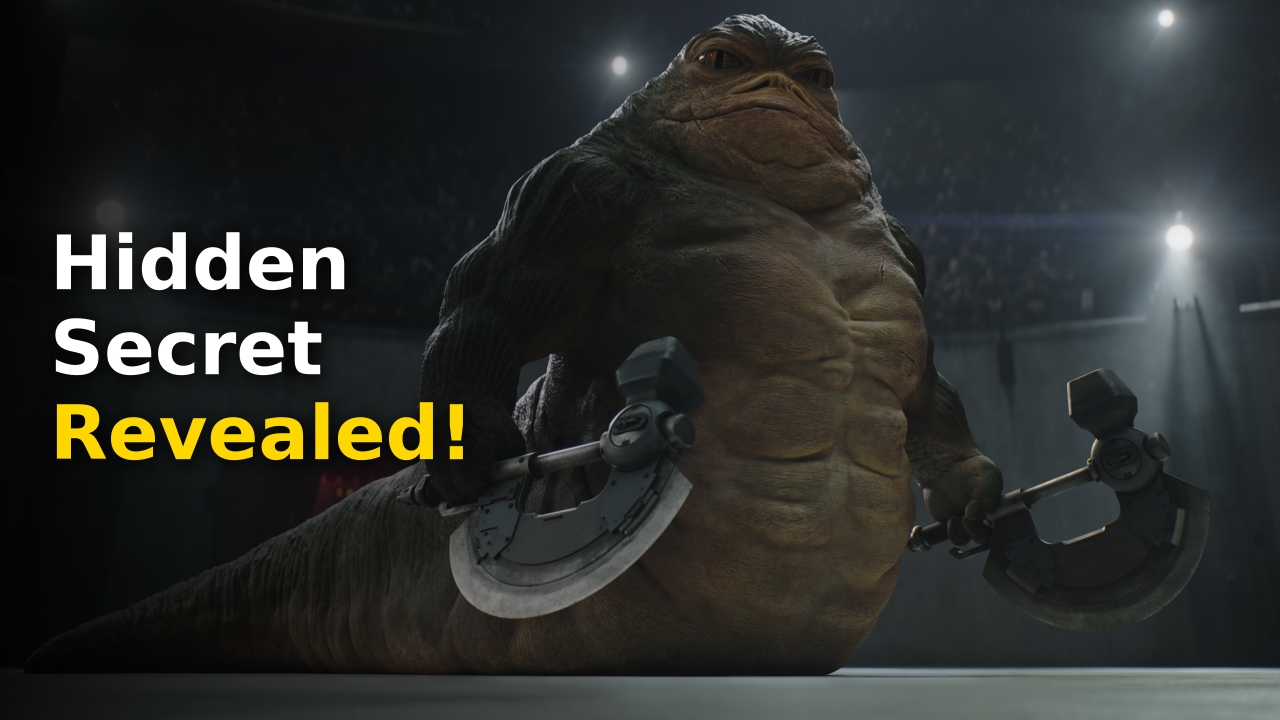
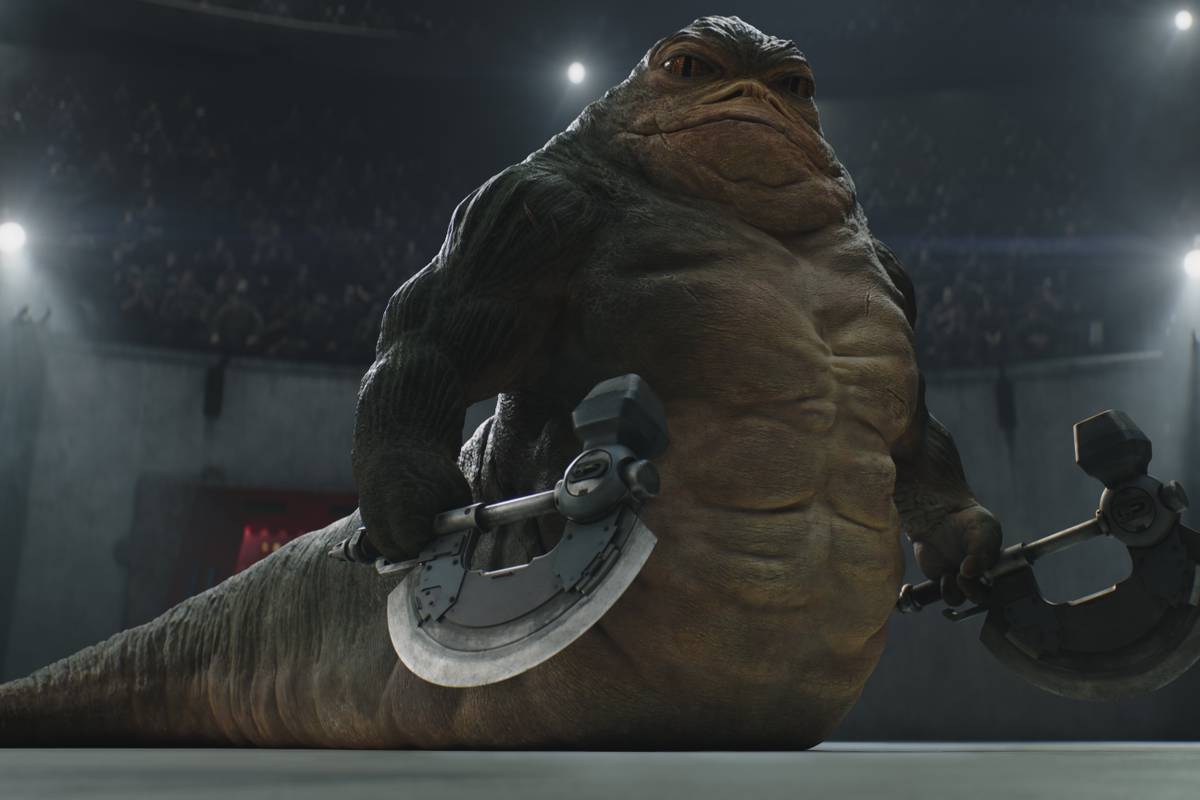
Designing Jabba the Hutt’s son, Rotta, proved to be one of the most significant challenges for the visual effects team. While previous portrayals of Hutts depicted them as sedentary, the team wanted this gladiator-style version to feel like an elite athlete. John Knoll, the senior visual effects supervisor, turned to the natural world to find a plausible way for a legless, massive creature to exhibit agility.
The team scoured National Geographic nature documentaries for inspiration, eventually settling on the behavior of elephant seals. These massive creatures weigh up to four tons yet engage in explosive, fast-paced territorial combat. By mimicking these physical movements, the team ensured that Rotta’s battles felt grounded in biological reality rather than relying solely on fantasy logic.
The process of creating this CG character was not without its hurdles. An initial physical head built by Legacy Effects was shelved after the team realized it lacked the authentic, gritty look of Jabba’s lineage. The animators pivoted, reworking the models and textures to ensure the character appeared as a menacing, fit competitor, shifting the aesthetic away from the friendly look originally proposed.
Technological Innovation in IMAX
Filming for IMAX presents a unique set of challenges that differ significantly from streaming production. On a standard television monitor, the field of view is limited, but an IMAX screen dominates the viewer’s peripheral vision. The team had to re-evaluate their editing approach to ensure viewers could process the action without being overwhelmed by the scale of the environments.
To solve this, the production team developed a custom application for the Apple Vision Pro. This allowed directors and editors to view raw footage through VR goggles, simulating the exact framing and perspective of an IMAX theater. This tool proved vital during post-production, helping the team decide when to pull back the camera to make the high-intensity sequences—like the opening AT-AT battle—more legible.
| Technique | Application | Outcome |
|---|---|---|
| VR Monitoring | Apple Vision Pro | Improved IMAX framing |
| Biomimicry | Elephant Seal study | Realistic creature movement |
| Legacy Practical | Physical head build | Discarded for CG accuracy |
Expert Analysis on VFX Evolution
By the numbers, the shift to IMAX for The Mandalorian and Grogu represents a massive leap in budgetary and technical resource allocation for the Lucasfilm team. Unlike standard episodic television, which relies on the ‘Volume’ stage, the cinematic release necessitated a hybrid approach that combined traditional physical props with high-fidelity digital assets. You can read more about the evolution of the series’ visual style at Bright Celebrity’s industry reports.
The expert consensus is that the use of VR tools for pre-visualization is the new gold standard. By understanding how the human eye tracks motion on an massive canvas, the team avoided the ‘visual fatigue’ often associated with large-format action sequences. This level of technical oversight is exactly why fans continue to return to the official IMDb page for the series to track its production milestones.
People Also Ask
What is the secret Easter egg in The Mandalorian and Grogu?
The film features an alien character named Hugo Durant who is designed to resemble legendary director Martin Scorsese. The animation team adjusted the character’s facial features and mannerisms to mirror Scorsese’s energetic, fast-talking style.
How did the team film for IMAX?
The production team developed a custom application for the Apple Vision Pro, allowing them to view footage in a virtual reality environment that simulated the experience of an IMAX theater screen.
Why was Rotta the Hutt redesigned?
The team felt the initial physical prop made the character look too friendly and not enough like Jabba the Hutt’s son. They pivoted to a fully CGI version modeled after the athletic and aggressive movements of elephant seals.
Is The Mandalorian and Grogu related to the Disney Plus series?
Yes, the film serves as a big-screen expansion of the events and character arcs established in the Disney Plus series, focusing on the continuing journey of Din Djarin and Grogu.
Final Thoughts on the Mandalorian and Grogu Secret Easter Egg
Ultimately, the inclusion of such nuanced references highlights the love and labor poured into the Star Wars galaxy. By embedding the Mandalorian and Grogu secret Easter egg within the fabric of the film, Jon Favreau has provided fans with a sophisticated blend of cinema history and technical wizardry. Whether you are a casual viewer or a die-hard fan of The Mandalorian, these production insights demonstrate that every frame is a result of calculated, creative decisions. Explore more updates and deep dives on your favorite shows at Bright Celebrity.
More Like This
For more updates, check out our latest entertainment and sports news.