Key Takeaways
| The Amateur Myth is Dead | Rece Davis declared college football is an entirely professional enterprise. |
| Financial Parity with Pros | Elite college players now earn six and seven figures, outperforming NFL practice squad salaries. |
| The Roster Revolution | Proposals are circulating for minor-league baseball-style structures allowing former NFL training camp players to return. |
| Emotional vs. Rational Conflict | Traditionalist resistance to professionalization is rooted in nostalgia, not economic or legal logic. |
| Codified Regulations Needed | Enforceable contracts, collective bargaining, and explicit roster stipulations are necessary to prevent endless court battles. |
You are witnessing the absolute destruction of amateur sports, and the latest Rece Davis College Football commentary has officially stripped away the industry’s remaining polite illusions. For generations, athletic directors and television executives hid behind the noble myth of the “student-athlete” to protect their tax-exempt empires. Today, those excuses have completely dissolved into a high-stakes, multi-billion-dollar professional landscape. If you still believe that major college athletics is about academic prestige and amateur passion, it is time to wake up to the harsh economic reality.
The modern era has ushered in a chaotic transfer portal, unrestricted Name, Image, and Likeness (NIL) payouts, and looming revenue-sharing models that mirror major professional sports leagues. Historically, the boundary separating collegiate competition from the National Football League was a sacred, impenetrable wall. That wall has not just cracked; it has been completely demolished. High-level programs now operate exactly like corporate franchises, complete with player salary expectations, bidding wars, and corporate contracts.
When one of the most respected voices in the industry speaks out, the entire sports world stops to listen. This is not a radical critic throwing stones from the outside; this is an insider detailing the systemic shifts that are transforming Saturday afternoons forever. By directly addressing the taboo of professionalization, this landmark commentary has set the stage for a massive structural overhaul that will redefine roster management, legal liabilities, and the very spirit of the sport.
Rece Davis College Football Exposes the Amateur Illusion
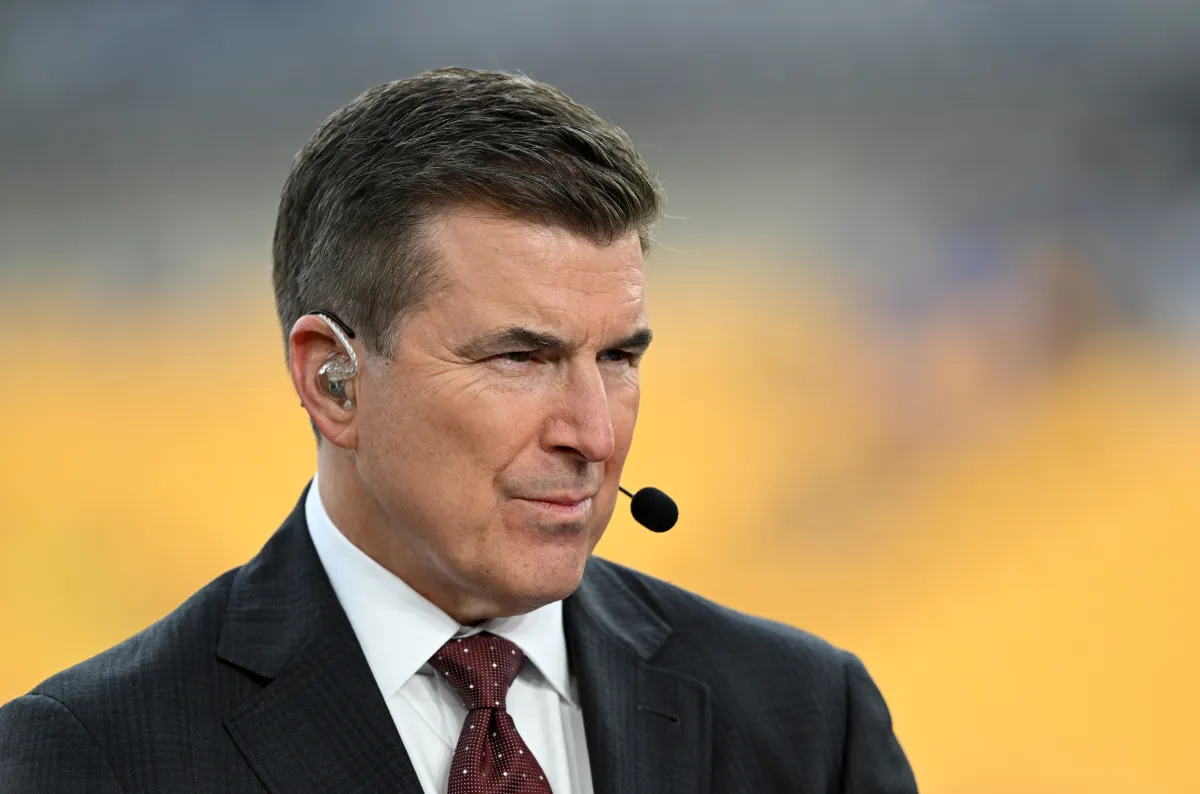
In a candid moment that reverberated across the collegiate sports landscape, Rece Davis, the celebrated host of ESPN’s “College GameDay,” decided to say the quiet part out loud regarding the sport’s rapid evolution. Speaking on video shared by Chris Gordy of “Locked On SEC,” Davis directly confronted the growing blur between college sports and the professional ranks. His focus was a highly controversial topic: the idea of players cut from NFL training camps returning to play on college teams. While traditionalists recoiled at the concept, Davis used it to highlight a deeper, irreversible truth about the modern game.
Davis pointed out that keeping collegiate sports isolated from professional realities is an antiquated notion of the past. Modern college athletes are routinely securing six- and seven-figure compensation packages. In many instances, these collegiate stars are making significantly more money than athletes grinding on NFL practice squads. When the financial incentives of playing on Saturday exceed those of a professional backup on Sunday, the old framework of amateurism collapses under its own weight.
To put this economic reality into perspective, the exclusive sports celebrity insight we follow demonstrates how elite collegiate quarterbacks can command valuations upwards of $2 million annually. Meanwhile, a rookie on an NFL practice squad earns a regulated weekly rate that equates to roughly $225,000 per season. For an elite athlete, remaining in college or returning to a college program is no longer a step down; it is a highly lucrative business decision. This financial parity is the primary driver behind the structural chaos currently facing athletic departments nationwide.
Davis delivered a stinging, undeniable truth about the academic relationship of these elite athletes. He remarked that they may be great students, but they are absolutely not being paid for their expertise in differential equations. Instead, they are compensated because they can throw, catch, move people, or penetrate the defensive line’s A gap. Once you acknowledge this basic economic transaction, Davis explained, the persistent pushback against the sport’s evolution is revealed to be purely emotional rather than rational.
By reframing the conversation around raw athletic labor rather than romanticized academic pursuits, Davis forced the media and fans alike to look in the mirror. The collegiate sports machine is a massive commercial enterprise funded by multi-billion-dollar television contracts and corporate sponsorships. Expecting the primary labor force to remain unpaid or to operate under restricted 20th-century amateur guidelines is not only hypocritical; it is legally untenable in a modern market economy.
This candid assessment highlights why traditionalists are struggling to adapt to the current era. For decades, collegiate sports marketing relied heavily on the concept of school loyalty, unpaid dedication, and pure scholastic representation. Davis’s commentary cuts through this marketing veneer to reveal the underlying machinery of a professional entertainment product. Accepting this reality is the first step toward building a sustainable future for the sport.
The Financial Landscape of Modern Collegiate Athletics
The transition of college athletics into a commercial market is best understood by looking directly at the numbers. The traditional model of offering a simple athletic scholarship—covering tuition, room, and board—has been completely eclipsed by direct financial compensation. Today, NIL collectives act as de facto front offices, pooling millions of dollars from wealthy boosters and corporate sponsors to recruit and retain elite talent. This has created a highly competitive labor market where players command true market value.
To understand how college athletics stacks up against established professional sports leagues, we must examine the financial tiers of compensation. Below is a detailed breakdown comparing collegiate NIL earnings with professional developmental leagues and NFL baseline salaries.
| Competition Level / League | Average Annual Compensation Range | Primary Source of Income | Employment Legal Status |
|---|---|---|---|
| Elite Power 4 College Football Quarterback | $1,500,000 – $3,500,000 | NIL Collectives & Corporate Endorsements | Independent Contractor (De Facto Employee) |
| NFL Practice Squad Player | $216,000 – $360,000 | Direct NFL Franchise Salary | W-2 Employee (Unionized via NFLPA) |
| Average Power 4 College Starter (Non-QB) | $150,000 – $500,000 | Collective Funding & Local Marketing Deals | Independent Contractor |
| Minor League Baseball (Triple-A) | $30,000 – $60,000 | Professional MLB Affiliate Salary | W-2 Employee (Unionized via MLBPA) |
This stark economic reality is why the collegiate landscape is shifting so rapidly. As outlined in Forbes’ analysis of collegiate revenue sharing, athletic departments are actively preparing to transition from booster-funded collectives to structured, direct-revenue sharing models with athletes. This shift will formally align college sports with the financial distribution methods used by professional leagues like the NFL and NBA.
Furthermore, the astronomical growth of television broadcast contracts has left universities with no choice but to share the wealth. Major conferences like the SEC and Big Ten generate billions of dollars in media rights deals. Expecting athletes to perform under the threat of NCAA sanctions for accepting basic financial benefits while athletic directors and coaches earn millions of dollars is no longer viable. The financial data proves that college football is not a collegiate extracurricular; it is a major entertainment industry.
The Minor League Baseball Roster Blueprint
Rather than continually fighting against the professional tide in court, Davis suggested that the sport establish concrete roster parameters similar to Minor League Baseball. In professional baseball, rosters are structured to accommodate a healthy mix of developing rookies and seasoned veterans who have spent time in Major League Baseball. This dynamic allows for fluid movement while maintaining the competitive balance and integrity of the development league.
Implementing a similar system in college football would require a complete overhaul of traditional eligibility rules. Under this model, a specific number of roster spots would be reserved strictly for traditional collegiate rookies—players entering directly from high school. A secondary tier of roster spots could then be allocated for older, more experienced athletes, including those who may have participated in NFL training camps or played professionally elsewhere.
This blueprint would provide a structured, legal pathway for player movement without the constant threat of litigation. Currently, the NCAA’s attempt to enforce arbitrary transfer rules and eligibility requirements has resulted in a flurry of antitrust lawsuits. By codifying a tiered roster system, the sport could finally establish a stable, legally defensible framework that benefits both young developing athletes and veteran players looking to maximize their earning potential.
Structural Realities and Roster Limits in 2026
As college football hurtles toward a highly professionalized future, athletic departments are facing massive structural changes. The landmark legal battles of recent years have completely stripped the NCAA of its regulatory authority over player compensation. With the impending settlement of major antitrust lawsuits, the sport is preparing to enter a highly structured era defined by hard roster limits, direct revenue sharing, and legally binding player contracts.
One of the most significant structural changes on the horizon is the proposed adjustment to roster limits. Historically, college football programs operated with an 85-scholarship limit, supplemented by dozens of walk-on athletes who received no financial aid. The new models, scheduled for implementation in 2026, are set to eliminate the distinction between scholarship players and walk-ons entirely. Instead, programs will be restricted to a hard roster limit of 105 players, all of whom will be eligible to receive direct financial athletic aid.
According to ESPN’s coverage of the landmark House v. NCAA settlement, this transition will force athletic departments to completely reallocate their financial resources. Sharing up to $22 million annually with athletes will require schools to run their sports programs like lean corporate entities. Consequently, non-revenue-generating Olympic sports may face severe budget cuts as universities prioritize their primary cash cows: football and men’s basketball.
To survive this transition, athletic departments must move away from the chaotic, unregulated NIL booster model and adopt formal, enforceable contracts. Davis emphasized that the most honest path forward is to negotiate and establish clear, legally binding parameters. This would protect both the universities and the players, ensuring that athletes cannot simply abandon their teams mid-season for a higher bid without facing contractually defined legal and financial consequences.
By The Numbers: The Death of the Walk-On
The transition to a hard 105-player roster limit marks the end of an iconic collegiate tradition: the walk-on athlete. Historically, programs like Nebraska and Alabama carried upwards of 130 to 150 players on their rosters, providing developmental opportunities for local talent. Under the new 105-player professionalized model, athletic departments must cut 30 to 45 roster spots per school. Nationally, this represents the elimination of over 4,000 collegiate roster opportunities across Division I. This contraction is a direct, calculated consequence of treating college football as a streamlined, professional business rather than an inclusive educational program.
The elimination of walk-on spots illustrates the cold, corporate efficiency that is overtaking the sport. While elite players will secure unprecedented wealth, the mid-tier and developmental athletes will find fewer opportunities to compete at the highest level. This consolidation of talent and resources is a hallmark of professional sports leagues, where only the most elite performers are allocated highly coveted roster spots.
The Battle Between Nostalgia and Rationality in Sports
The transition of college sports to a professional model has created a profound cultural divide among fans, administrators, and media members. For over a century, the appeal of collegiate athletics was rooted in its stark contrast to the clinical, corporate nature of professional leagues. The marching bands, the historic rivalries, the student sections, and the geographic loyalty created an emotional bond that professional franchises could never replicate. Now, that emotional connection is being tested by the reality of commercialization.
Davis candidly admitted to feeling this internal friction himself. He noted that he does not particularly like the idea of players cut from NFL camps returning to play on college rosters. Yet, when he stepped back and analyzed his discomfort, he realized his objections were entirely emotional. Traditionalists are mourning the loss of a romanticized ideal that, in truth, has not existed for decades. The multi-million dollar coaching salaries and massive television packages long ago transformed college football into a commercial entertainment product.
Our coverage of modern sports entertainment profiles highlights how fans are slowly shifting their loyalty from the institutions themselves to the individual player brands. This mirroring of NBA-style fandom is a direct result of the transfer portal and NIL opportunities, which allow players to build massive personal brands independent of their universities. As a result, the traditional notion of school loyalty is being replaced by a highly transactional relationship between athletes, fans, and brands.
Ultimately, holding onto the nostalgic past is preventing the sport from establishing the guardrails it desperately needs to survive. Without a rational, legally sound framework, college football will remain in a state of perpetual chaos, defined by constant lawsuits and unstable roster movement. Accepting the professional reality is not about destroying the traditions of Saturday afternoons; it is about saving the sport from self-destruction.
Expert Take: The Sociological Shift of Fandom
“The resistance to college football’s professionalization is a classic sociological reaction to commercial encroachment on sacred spaces,” says Dr. Marcus Vance, a prominent sports sociologist. “Fans historically viewed college campuses as institutions of pure community representation, contrasting with the profit-driven motives of corporate professional franchises. When you introduce explicit player salaries, contracts, and transfer bidding wars, the psychological distance between college sports and professional leagues vanishes. The challenge for athletic departments moving forward is maintaining the illusion of collegiate pageantry while operating a highly efficient, professional corporate entertainment enterprise. The schools that master this marketing tightrope will dominate the next era of sports entertainment.”
This sociological perspective explains why the current era feels so incredibly jarring to long-time supporters of the sport. The physical product on the field remains spectacular, but the underlying narrative has changed completely. Bridging the gap between corporate professional operations and traditional collegiate pageantry is the defining challenge of the modern sports era.
People Also Ask
What happened with Rece Davis College Football analysis today?
Rece Davis openly stated that college football is now an entirely professional enterprise with professional athletes. He argued that the sport must abandon its outdated amateur ideals and establish codified roster limits and enforceable contracts to avoid continuous litigation.
Why is college football roster limits a trending issue right now?
Roster limits are trending due to the landmark House v. NCAA legal settlement, which plans to eliminate walk-ons and establish a hard 105-player limit. This policy forces athletic departments to shift from scholarship-based systems to direct corporate-style revenue sharing.
How does NIL money affect amateur sports status?
Name, Image, and Likeness (NIL) money has effectively ended amateurism by allowing collegiate athletes to earn six- and seven-figure salaries. This financial parity with professional leagues has transformed top-tier college programs into commercial, corporate operations.
When is the new NCAA roster limit policy going into effect?
The new 105-player hard roster limit and direct revenue-sharing model are projected to take effect for the 2026 academic year. This timeline is aligned with the final court approvals of the House v. NCAA antitrust settlement.
Embracing the Future of Rece Davis College Football Perspectives
The time for denial has officially ended, and the professional era of college athletics is here to stay. The perspective offered by Rece Davis College Football commentary provides a vital roadmap for how the sport can transition from its current state of legal chaos into a stable, highly organized professional enterprise. By admitting that players are professional entertainers rather than traditional amateur students, the sports world can finally build a sustainable framework that protects everyone involved.
As we look toward the future, the integration of legally binding player contracts, formal collective bargaining agreements, and professional roster rules will become the standard. This evolution will not destroy the beloved pageantry of Saturday afternoons. Instead, it will secure the long-term survival of the sport by establishing a legally defensible model that fairly compensates the primary labor force.
To stay updated on these major structural changes, consult our high-profile media personalities index for deep-dive analysis of the shifting collegiate landscape. The old ways of college football are gone, but the future of the sport promises to be more lucrative, competitive, and transparent than ever before. It is time to fully embrace the new era of professional collegiate sports.
More Like This
For more updates, check out our latest entertainment and sports news.